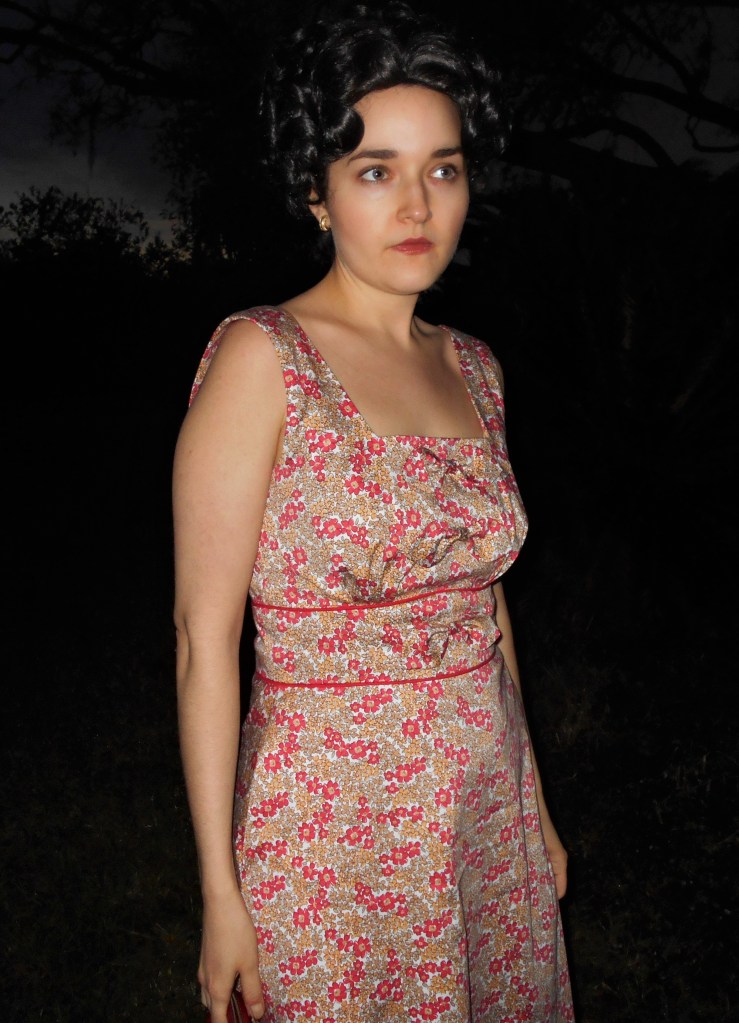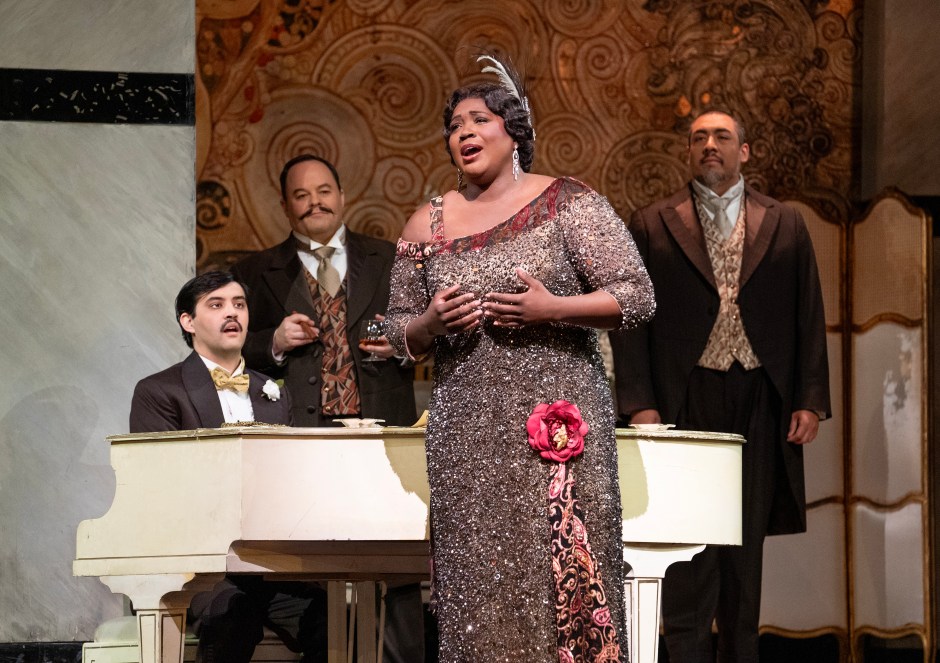
La Rondine

I was first introduced to Puccini’s operetta, La Rondine, as part of the Met’s free nightly streams during Covid. The stars were Angela Gheorghiu and Roberto Alagna. Notoriously, the performance marked one of their last engagements before their infamous divorce proceedings in 2009. Remembering how captivated I was by the glittering sets, jaw-dropping costumes, and the soapy heartache I endured as the final scene played out made my most recent trip to the theater a much anticipated one.
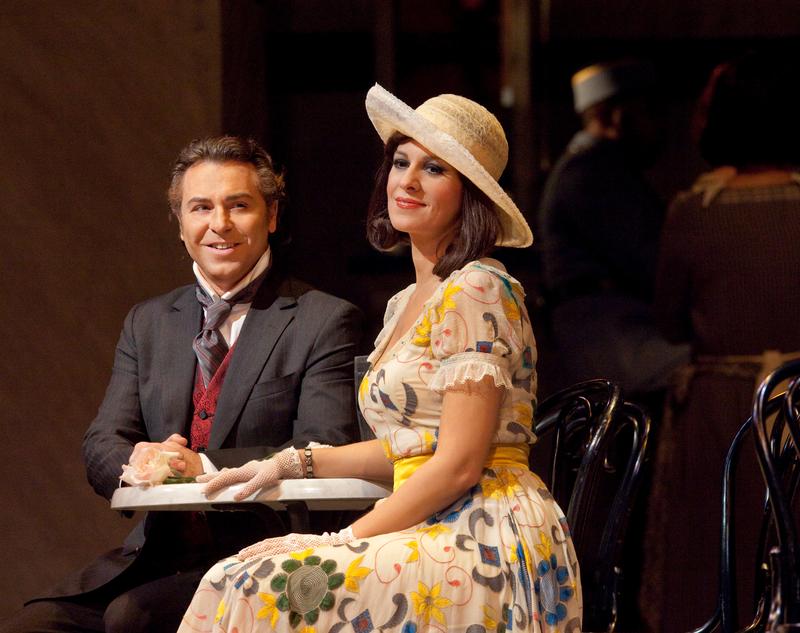
Roberto Alagna and Angela Gheorghiu in La Rondine / Metropolitan Opera (2009)

A due share of my attraction to La Rondine is the theme of true love over riches and fame. As a courtesan, the disguised Magda cannot forgive herself when Ruggero wishes to marry her at the end of the opera. She has deceived him about her identity and virtue and cannot continue her lie into marriage and motherhood. In the 2009 performance, the breakup ripped my heart out. But due to a lack of chemistry between the two leads in the 2024 revival, I missed out on the emotional catharsis I was so eagerly expecting. For an operetta whose entire success depends on the strength of chemistry between the leading lovers, I was left unmoved and unsatisfied.
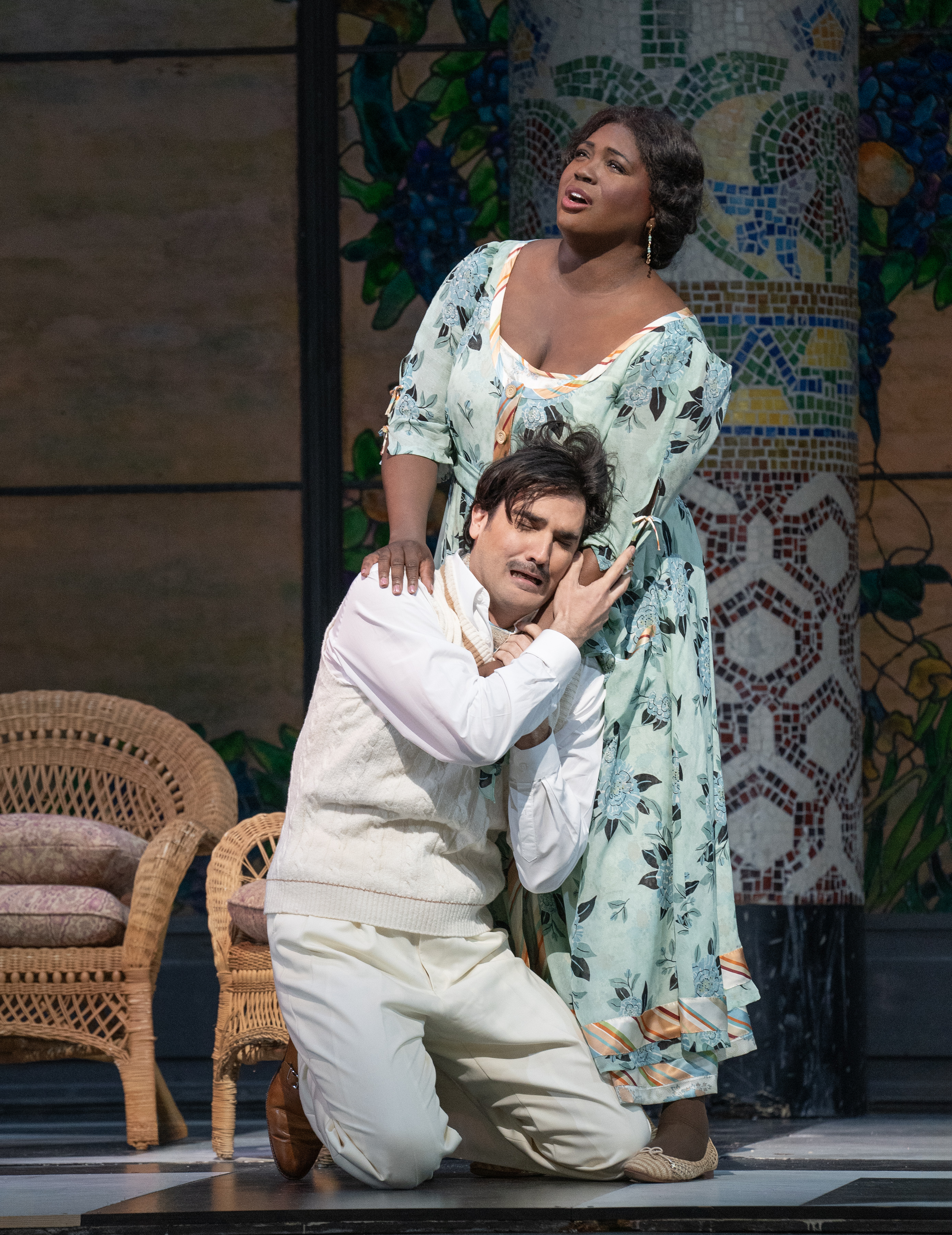
Jonathan Tetelman as Ruggero and Angel Blue as Magda in La Rondine / Metropolitan Opera

Rondine represented an opportunity for me to sew an artsy dress from the 1920’s, which stoked my creativity like an open flame. Looking through different designs of patterns with geometric influences, I aimed to have something similar in my dress that would be appropriate for the Art Deco era. A vintage construct from Lekala fit the bill.
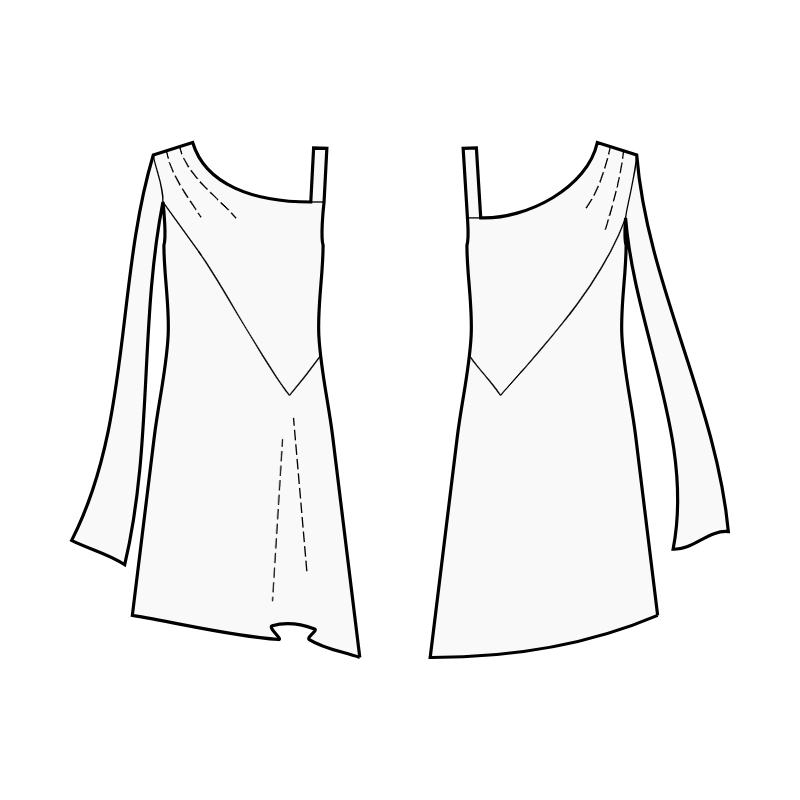
Lekala 1920’s dress pattern

What made this pattern one of interest were the simple, yet striking, details. Having previously struggled with bias cuts of fabric and worse, sewing blocks together at inverted angles, I was a bit intimidated to tackle another slippery nightmare. The sparse instructions didn’t help. However, I was wholly surprised to find that the pattern came together so quickly and so easily.
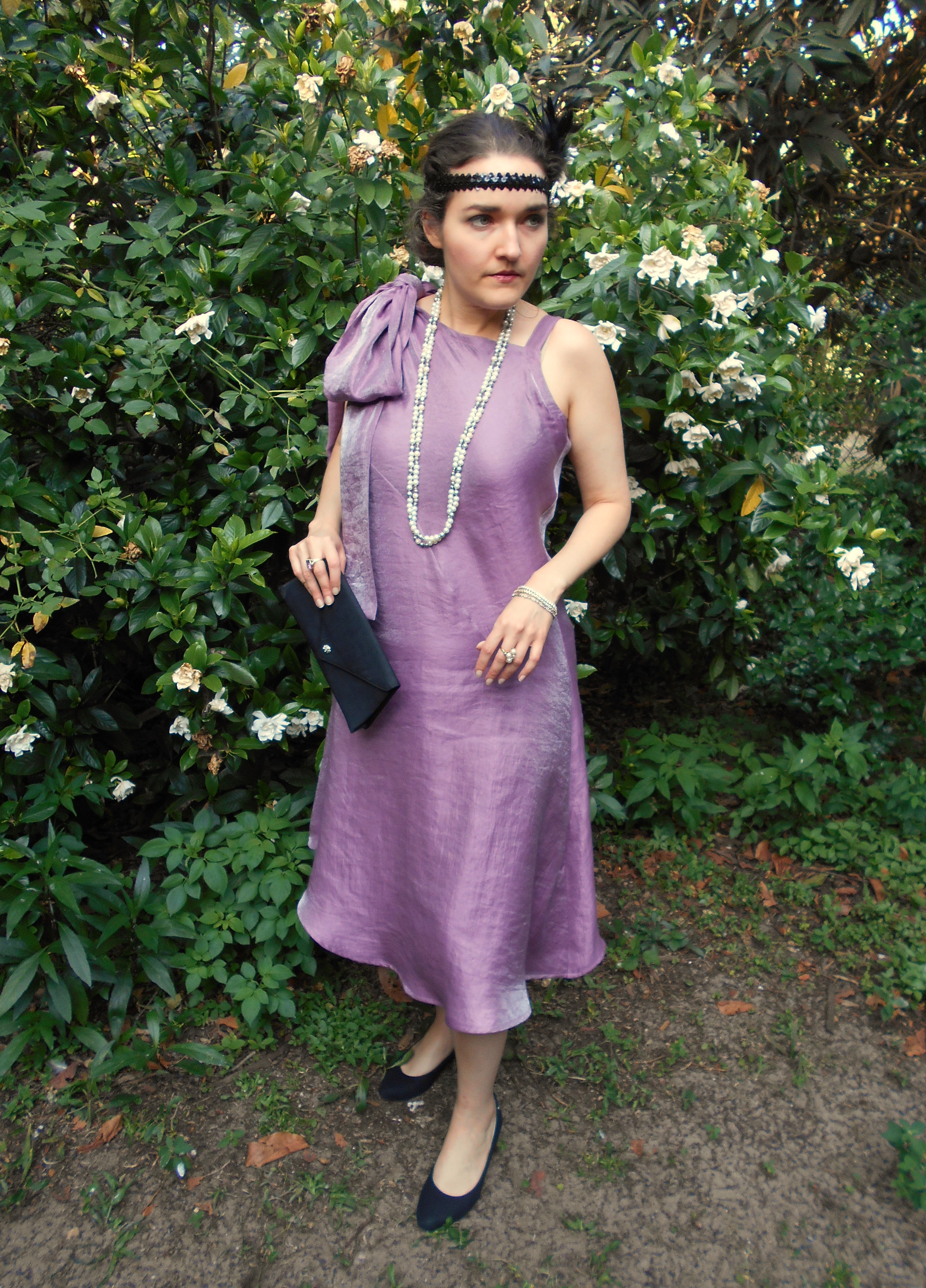
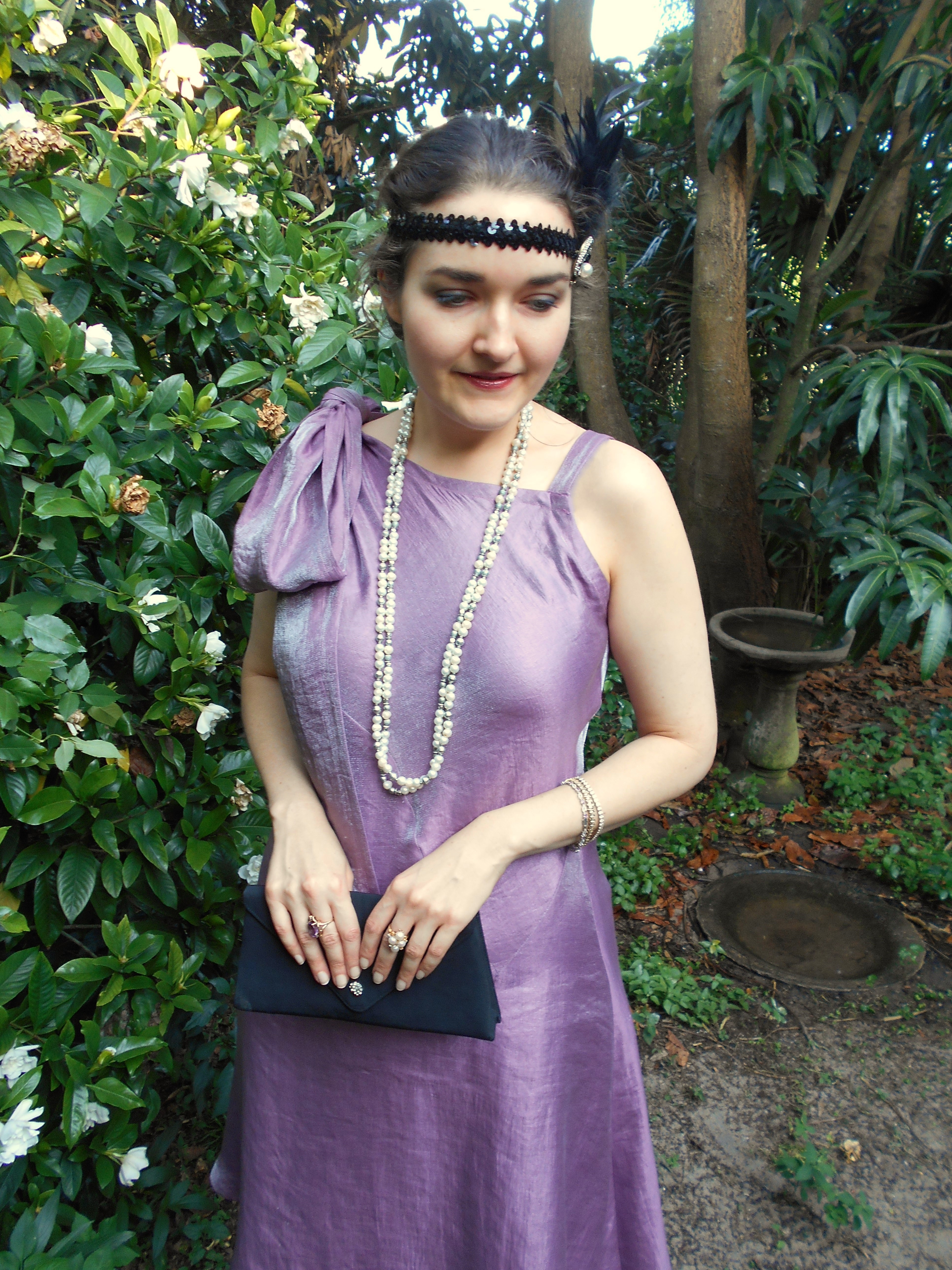
The pictures don’t do this fabric justice ! I used a rayon/nylon shimmer satin from designer Maggy London in a dusty grape/mauve color. As with most of my fabric purchases, I bought this beauty from Fabric Mart Fabrics.
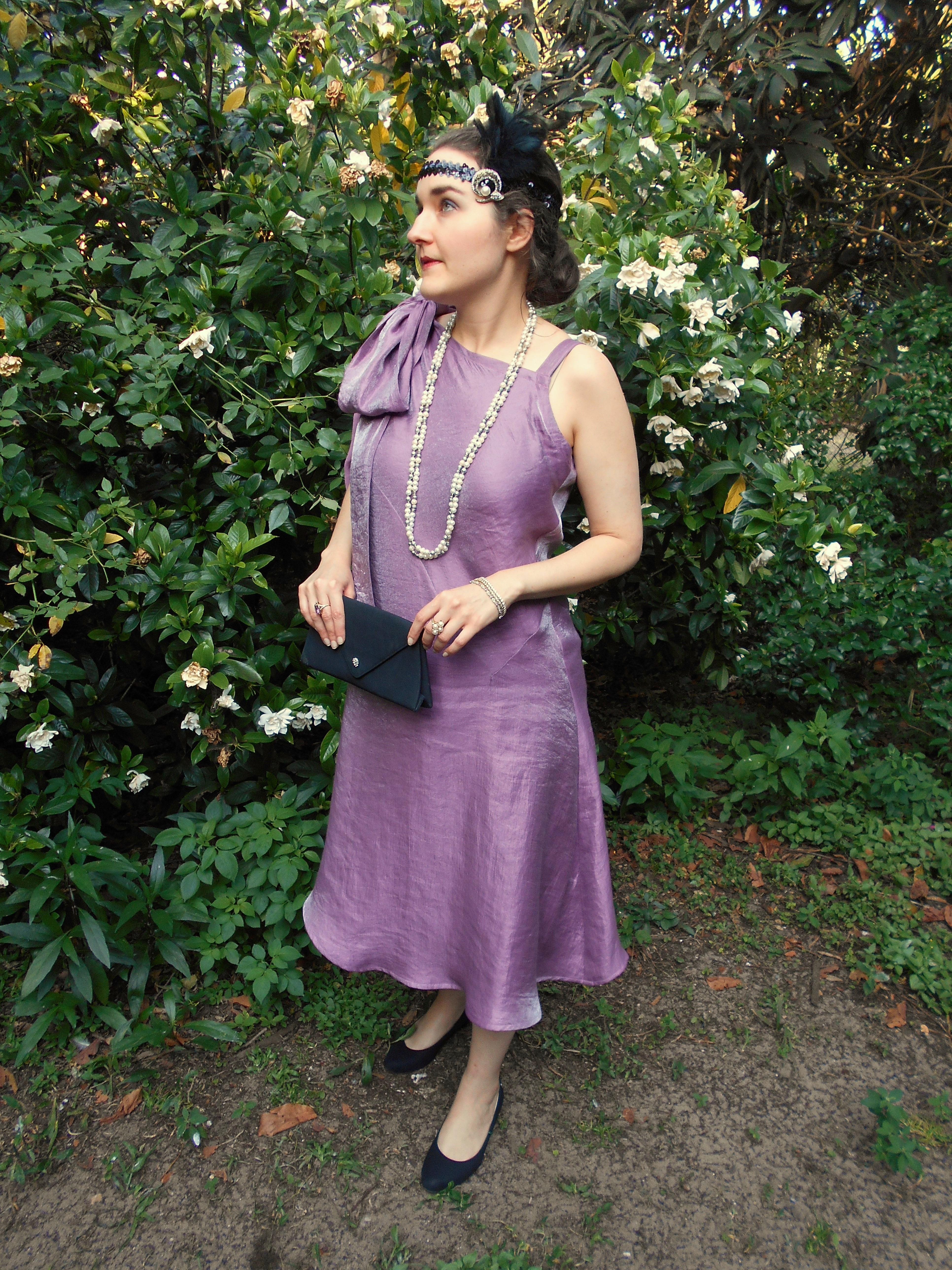
Confession: I don’t always accurately estimate the amount of fabric I need for each project. Such was the case with this dress. Therefore, I had to piece the lower back portions together and finished the new back seam (and side seams) with French seams. Piecing is period correct, correct ?
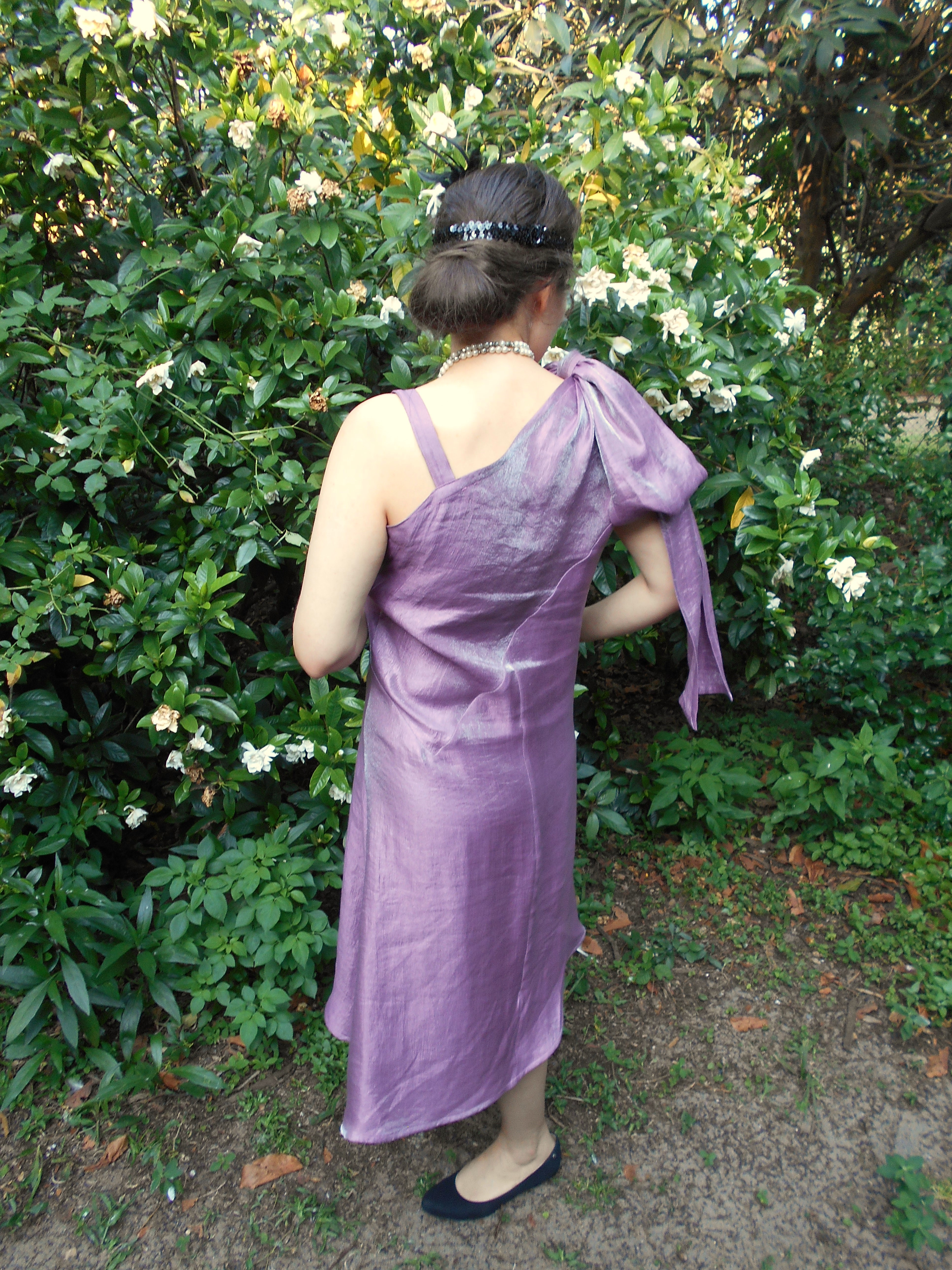
My mother was proud of her hairstyle for this one and I loved it. So elegant !
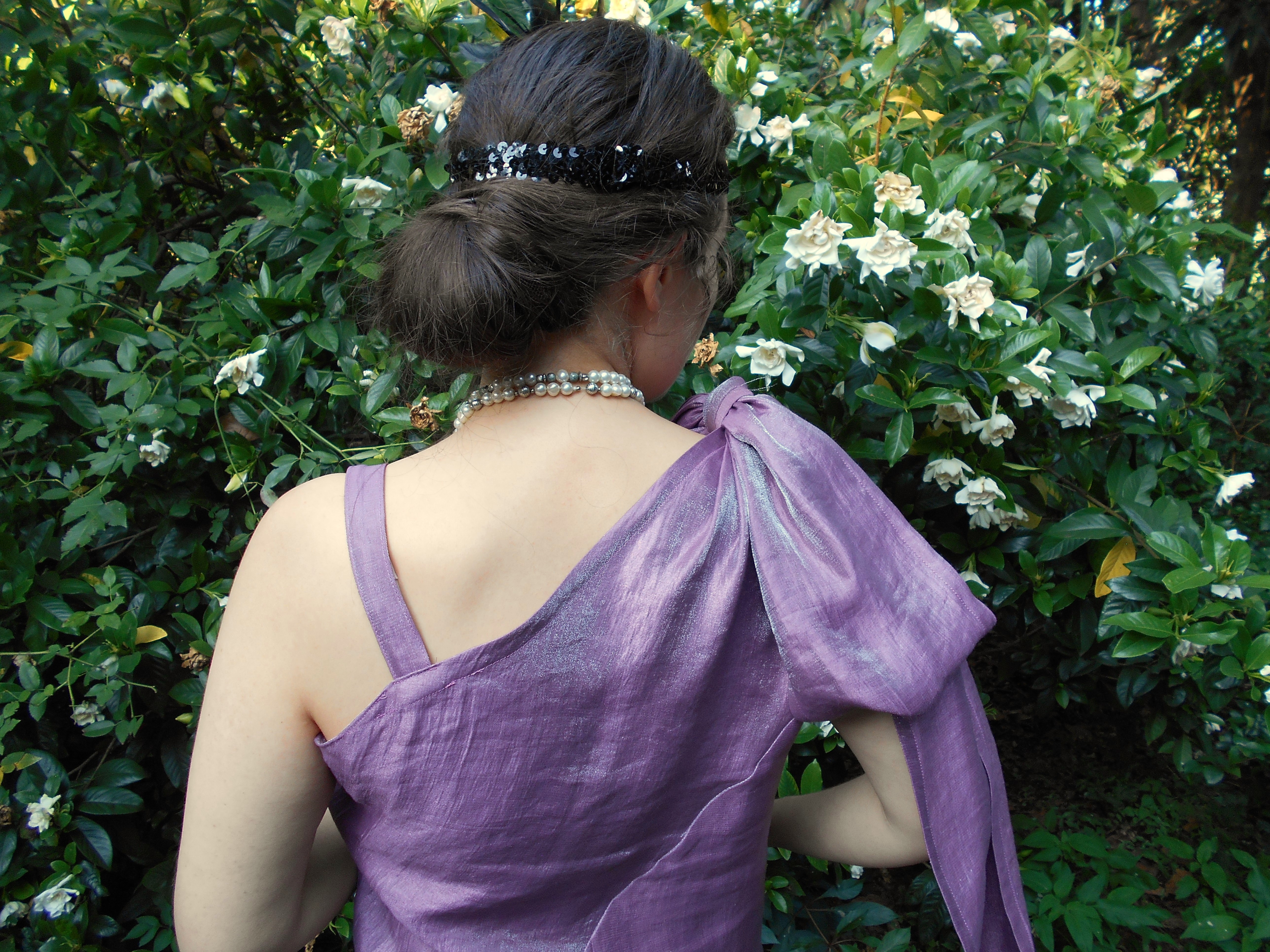
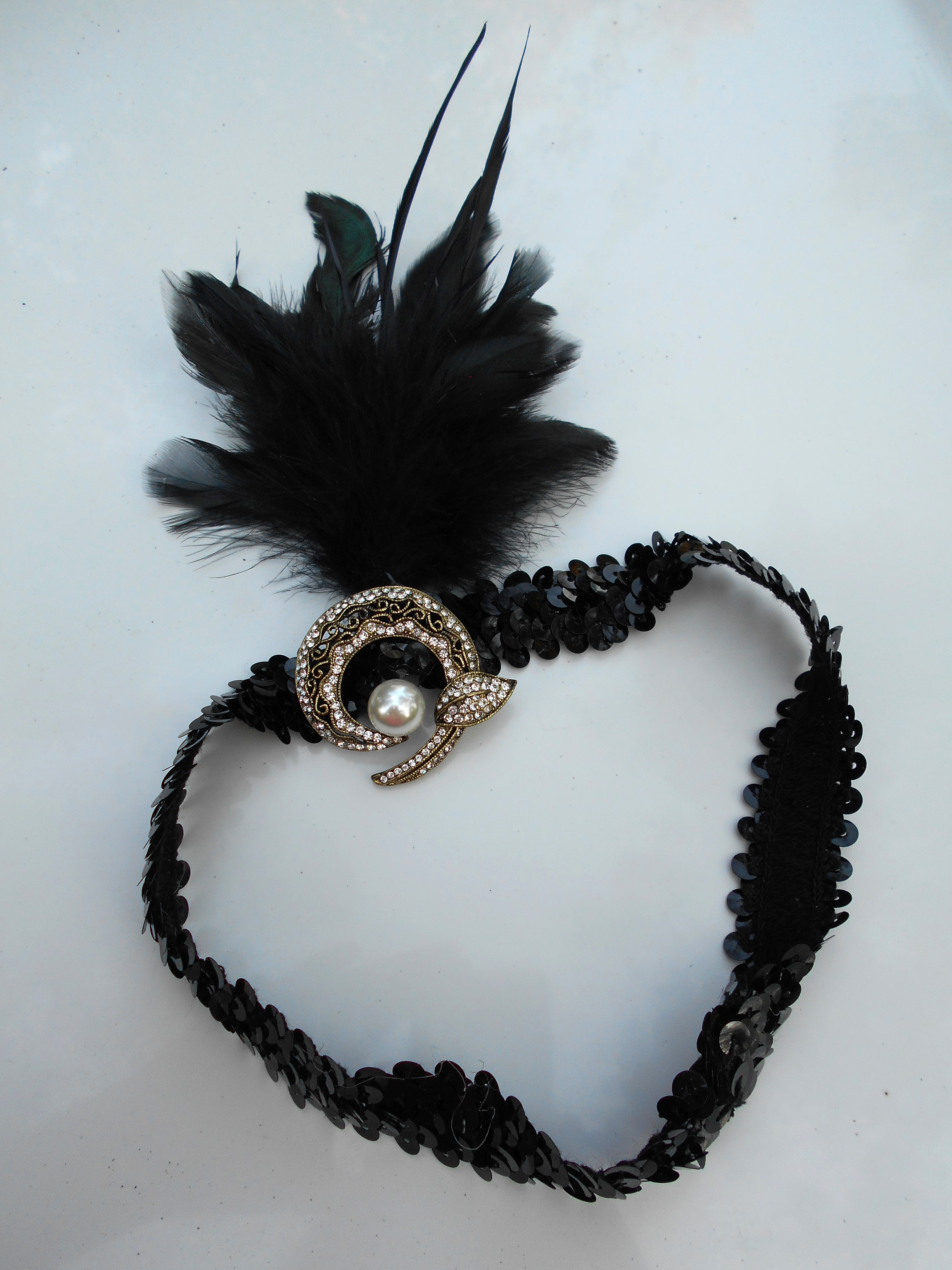
In order to make my flapper headband, I went to Joann Fabrics and found some odds and ends that seemed suitable: black sequin elastic on clearance, a brooch for $3.50, and plumage in the floral section. Shockingly, the headband only took me 10 minutes to fashion and that includes warming up the hot glue gun.
What’s a lady of the house to do without her strings of pearls ?! Accessorizing with lustrous orbs can never be out of vogue.
It truly is a pity that the operetta seen in theaters was without its springing passion. While many denounce La Rondine as being far from Puccini’s best work, it is filled with splendid music that aches for the true, soul love wealth cannot bring.

Toi, Toi, Toi,

Mary Martha

Casts and Credits

La Rondine ─ Giacomo Puccini (1917)
Live in HD air date: April 20, 2024

Cast:
Magda ─ Angel Blue
Ruggero ─ Jonathan Tetelman
Lisette ─ Emily Pogorelc
Prunier ─ Bekhzod Davronov
Rambaldo ─ Alfred Walker

Credits:
Conductor ─ Speranza Scappucci
Production ─ Nicolas Joël
Set Designer ─ Ezio Frigerio
Costume Designer ─ Franca Squarciapino
Lighting Designer ─ Duane Schuler
Live in HD Director ─ Gary Halvorson
Host ─ Julia Bullock
Revved Up Carmen

As a welcome reprieve from my hectic work life, I walked into the Met’s new Carmen with a mind weighted in skepticism while simultaneously struggling to maintain its openness. Modern productions are not my cup of tea. Revolting staging or not, one thing would be certain: the music would be terrific ! Here, I was delighted. Aigul Akhmetshina, the star out of nowhere, wowed me from the first note of her Habanera, albeit was marred by the hideous chain link fencing that first obscured her from view.

Aigul Akhmetshina in a scene from Carmen ─ Metropolitan Opera

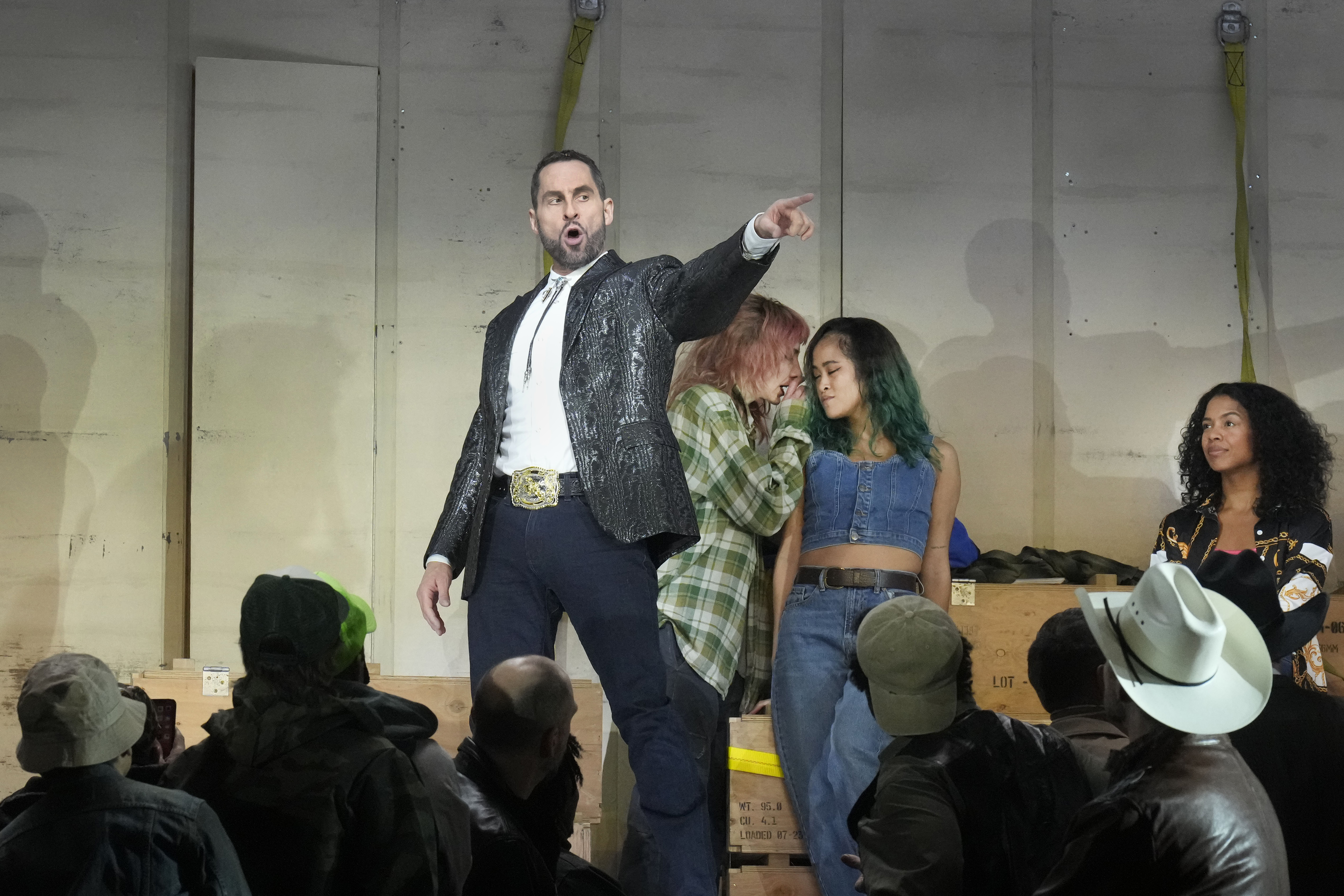
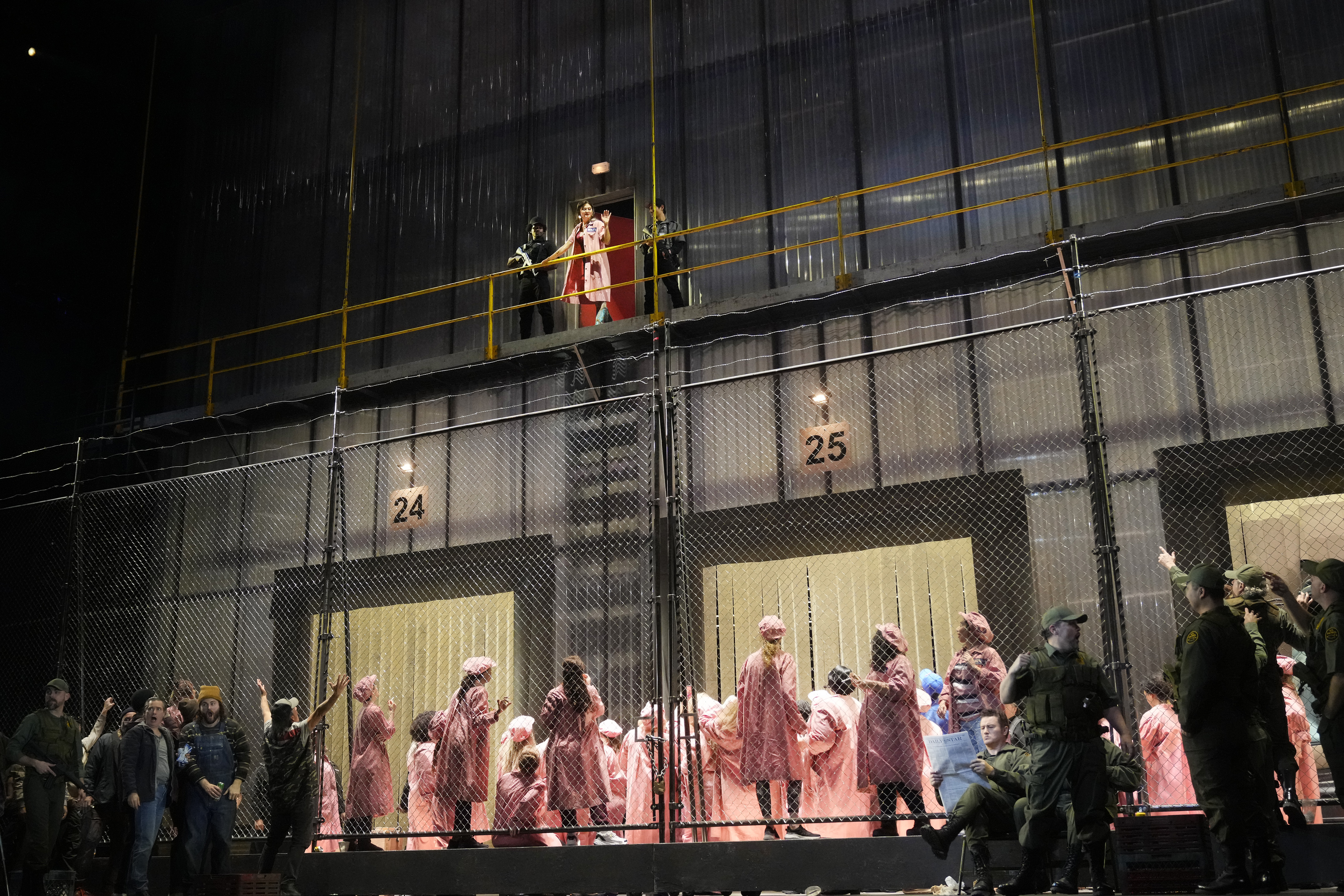
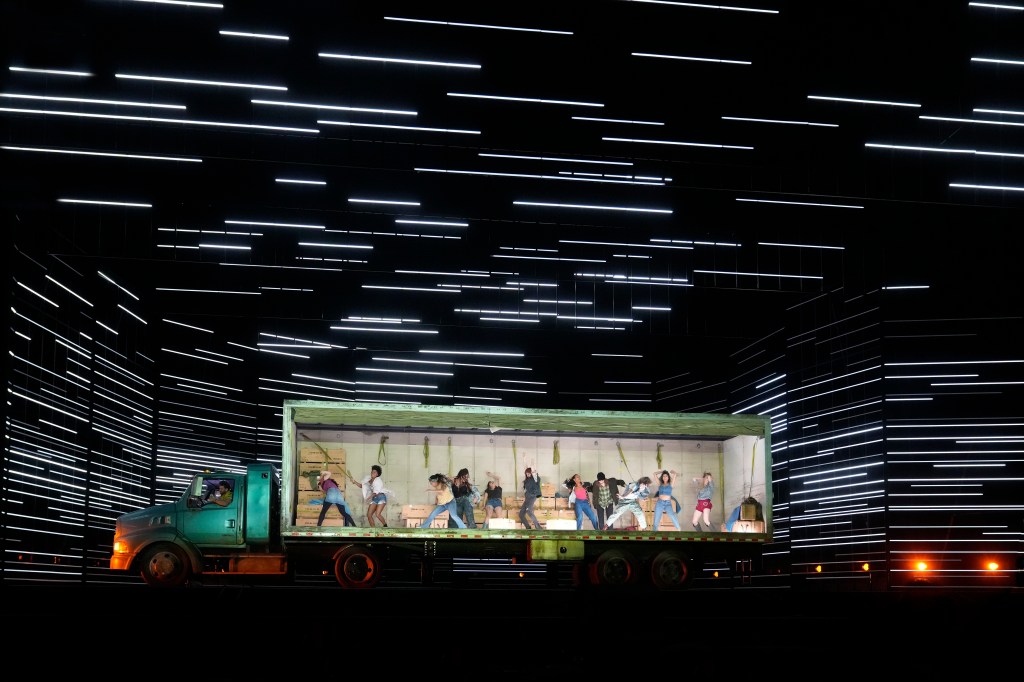
I didn’t hate the new production, which was set in a southern Texas border town replete with cowboys and contraband, but it didn’t resonate with me the way that the directors would have hoped. Some parts felt conceivable, like Escamillo’s spin as a rodeo champion, while others were contrived. Instead of in a cigarette factory, the girls in Act I worked for a weapons manufacturer, wearing pink uniforms. That was lost on me.

Kyle Ketelsen as Escamillo / Metropolitan Opera
A scene from Act I of Carmen / Metropolitan Opera

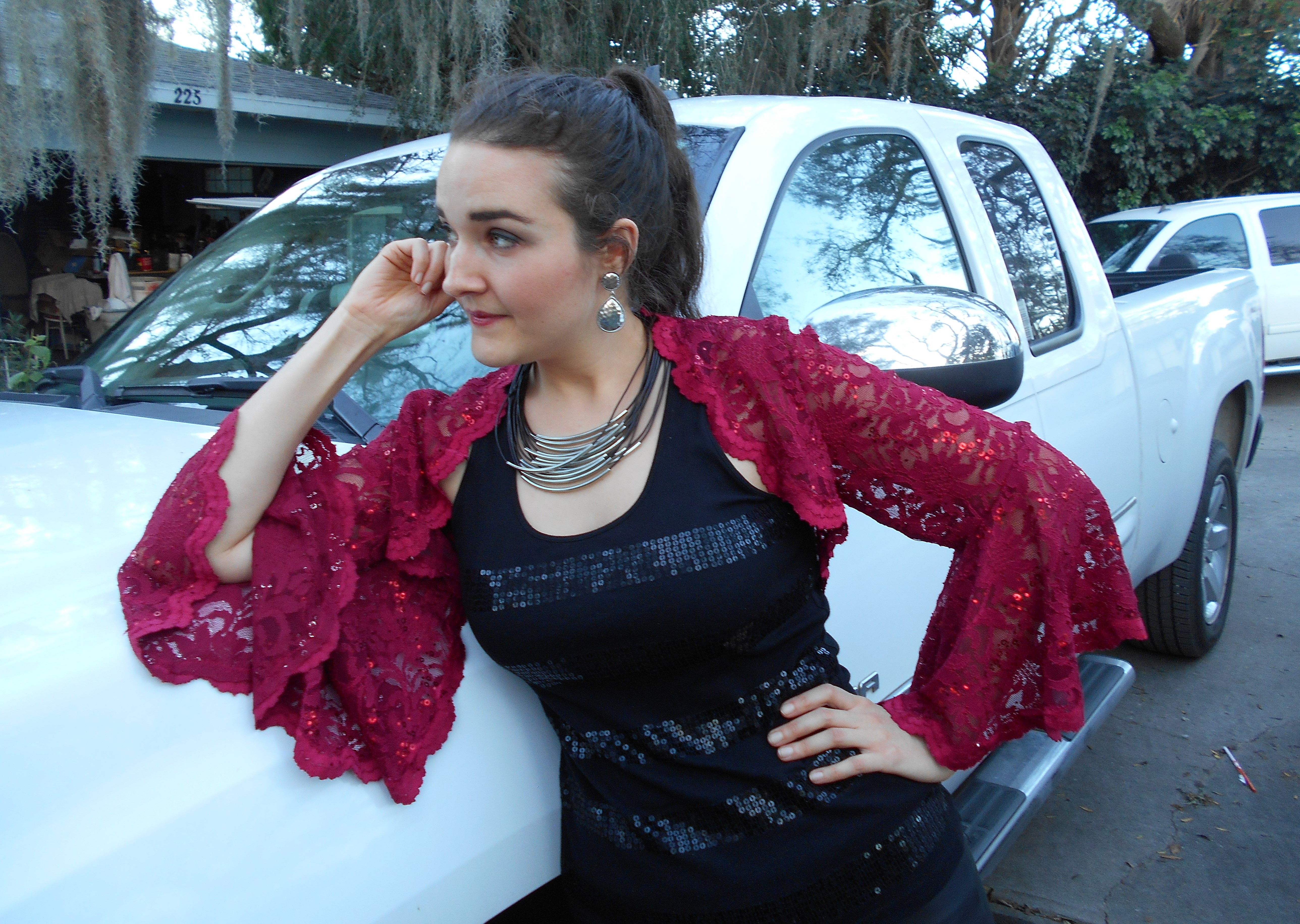
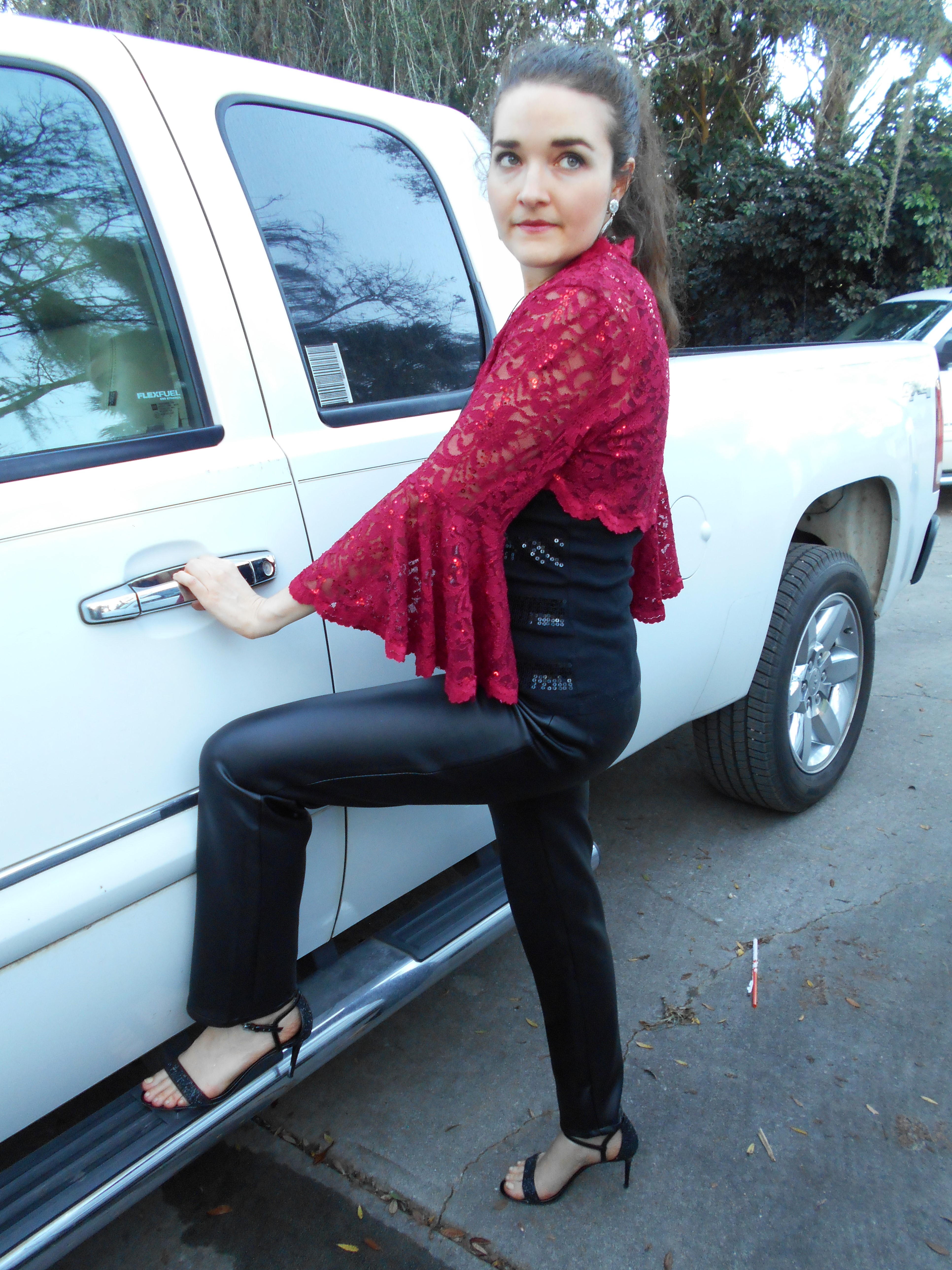
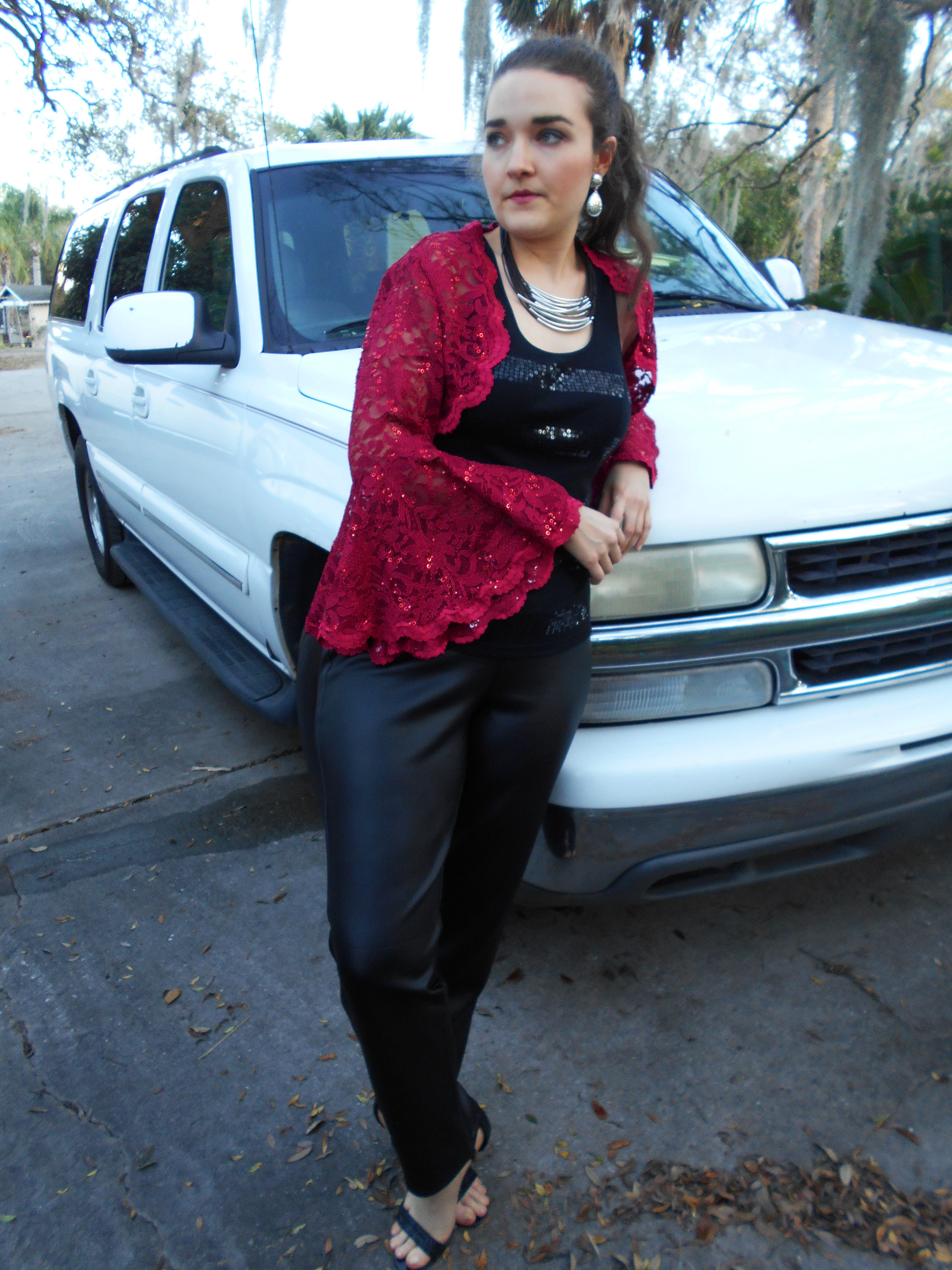
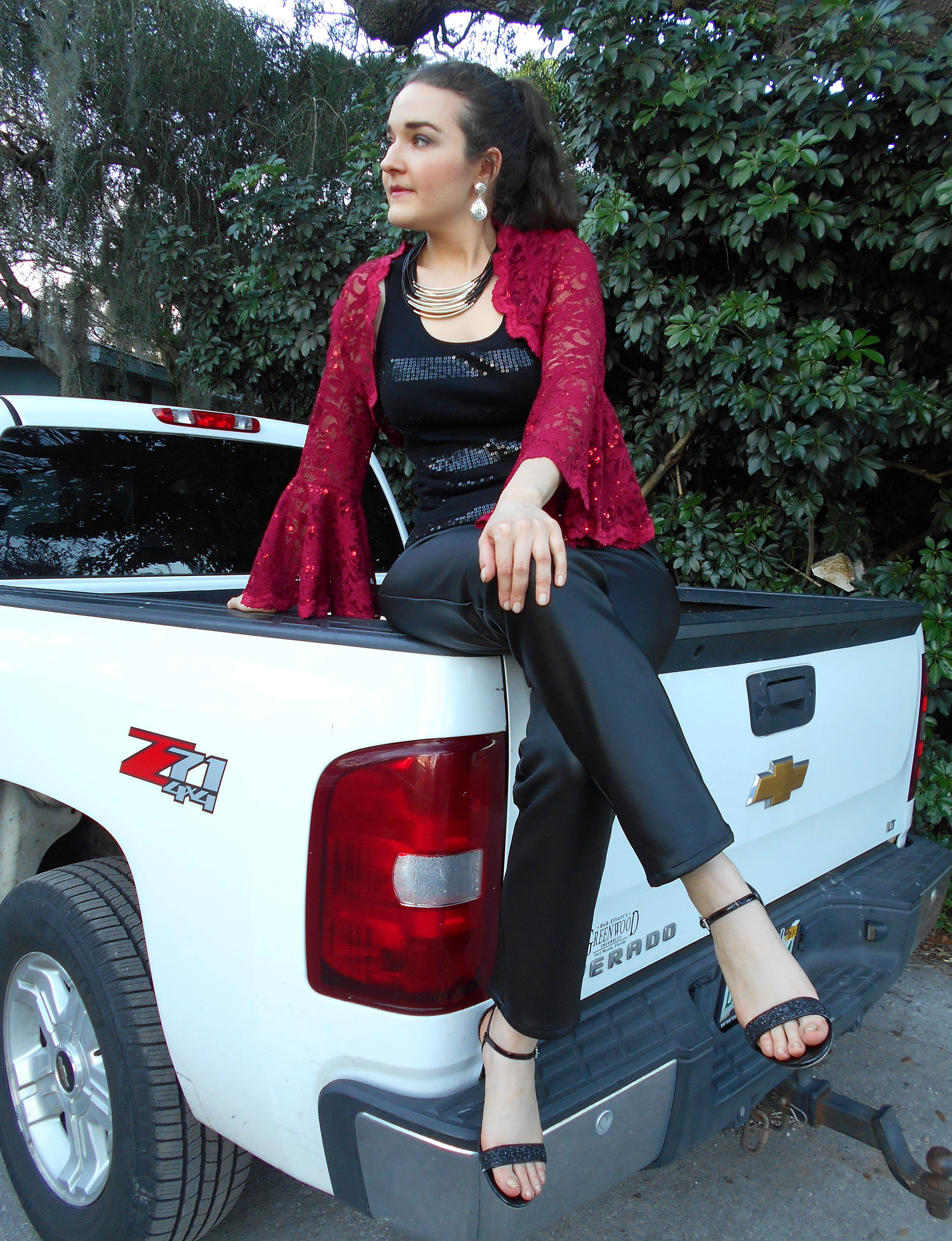
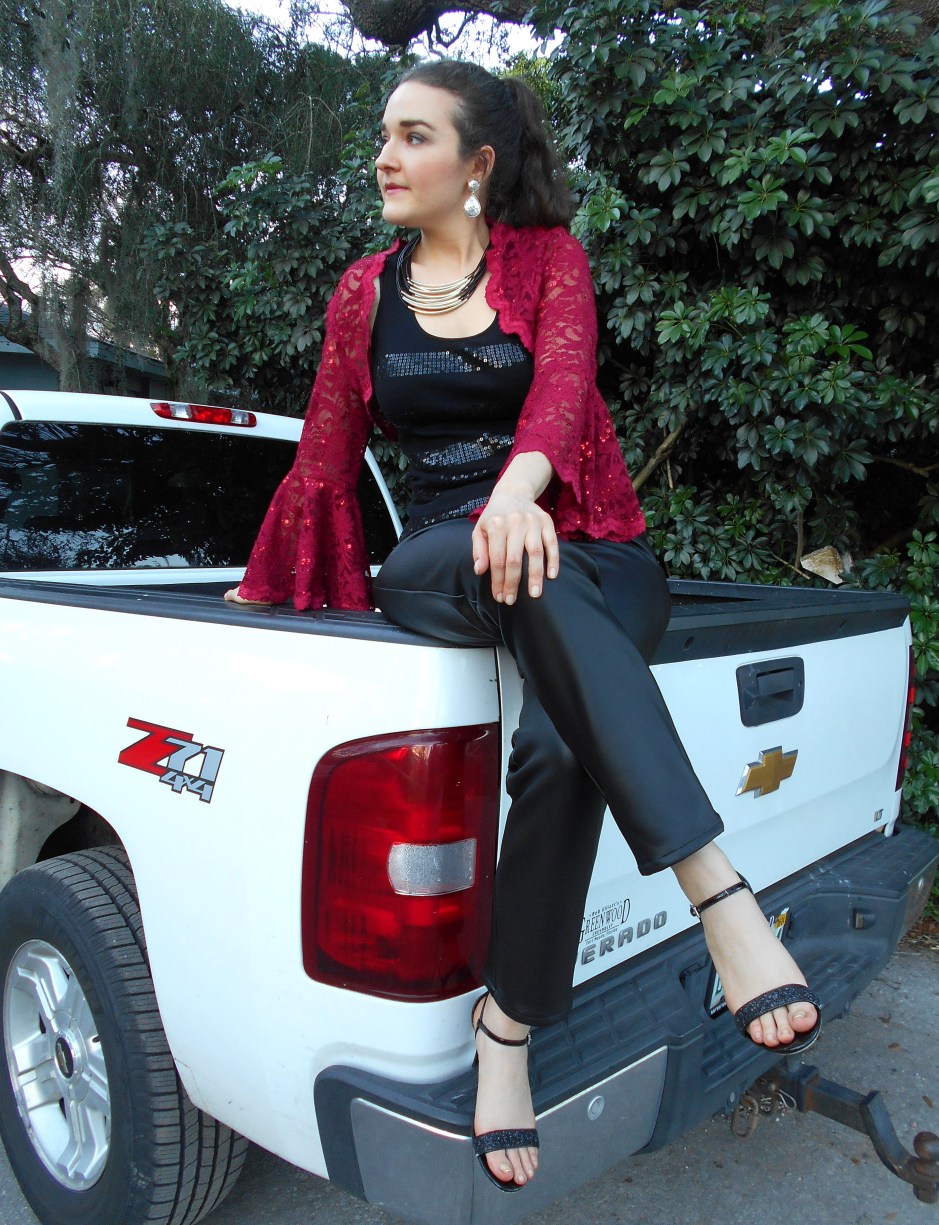
I’ve already pontificated about how the Met’s new, modern direction has mostly converted costume designers into professional shoppers (seriously─ all the clothes I saw in Carmen could be bought from Amazon or Goodwill), but it does allow me to create ready to wear garments for my regular wardrobe… or use pieces from my closet ! All of the clothes that I wore for Carmen were either created for other events or bought years ago at a consignment shop. Since cars and trucks were a focal point in Carrie Cracknell’s production, what could be a better photo backdrop than the cars and trucks in my own driveway ?

I wore the pleather pants I had sewn for the 2021 Wagnerians concert and the red scalloped lace bolero that was to resemble Lucia‘s “blood” back in 2022. Both were equally suitable for an edgy, “revved up” Carmen.

A metallic cylinder necklace, which was used in my Queen of the Night outfit for Die Zauberflöte, coincidentally mirrored the tubular LED lights that represented fast-passing highway lights in the production. How cool is that ?!

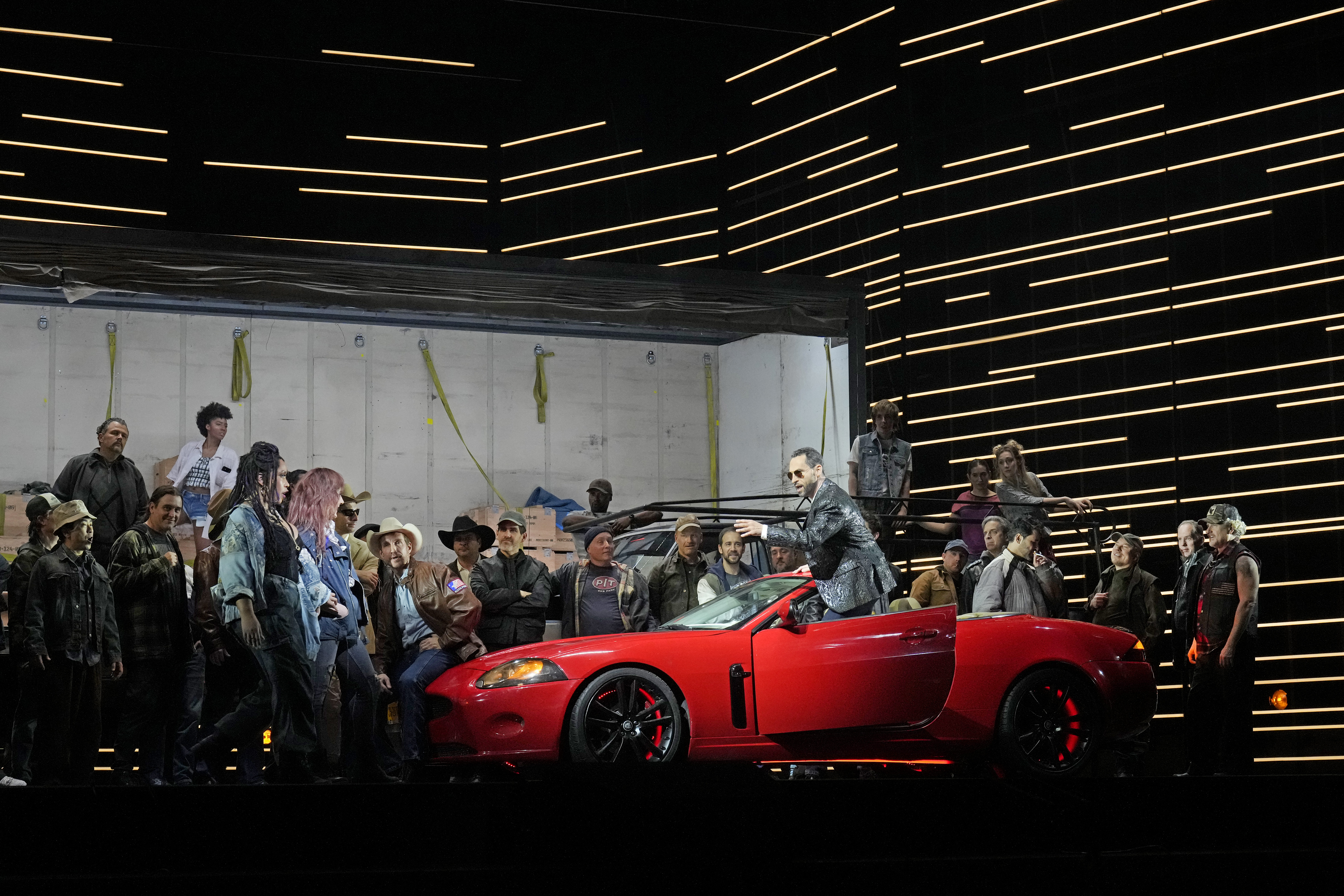
A scene from Carmen / Metropolitan Opera

Despite my ignorance of vehicular matters (I don’t drive), I enjoyed the assembly of automobiles used in the opera. That red Jaguar was saucy !

Kyle Ketelsen as Escamillo / Metropolitan Opera

But I had to settle for a white Chevy pickup truck instead.

Although I was amused by the updated landscape of the new production, I missed the glamour and languid luxury of a more traditional, Sevillian setting. All of these contemporary productions are starting to look the same: chain link fences, barbed wire, Walmart clothes, freakish facial tattoos, the unbathed masses… Hopefully there will one day be a reversal of trends and a renewed appreciation for art as beauty. Opera is too fine to be smothered in exhaust fumes.

Toi, Toi, Toi,

Mary Martha

Cast and Credits:

Carmen ─ Georges Bizet (1875)
Live in HD air date: January 27, 2024

Cast:
Carmen ─ Aigul Akhmetshina
Don José ─ Piotr Beczała
Micaëla ─ Angel Blue
Escamillo ─ Kyle Ketelsen

Credits:
Conductor ─ Daniele Rustioni
Production ─ Carrie Cracknell
Set Designer ─ Michael Levine
Costume Designer ─ Tom Scutt
Lighting Designer ─ Guy Hoare
Projection Designer ─ rocafilm/Roland Hovarth
Choreographer ─ Ann Yee
Live in HD Director ─ Gary Halvorson
Host ─ Matthew Polenzani

"Bess, You Is My Woman Now": the 1930's picnic dress

Oh, Bess… You is definitely my woman now… at least for the duration of an afternoon at the theater ! The creation my 1930’s feedsack frock for Porgy and Bess involved methods that would have left ingenious housewives of the Great Depression tickled pink.

Let’s begin !

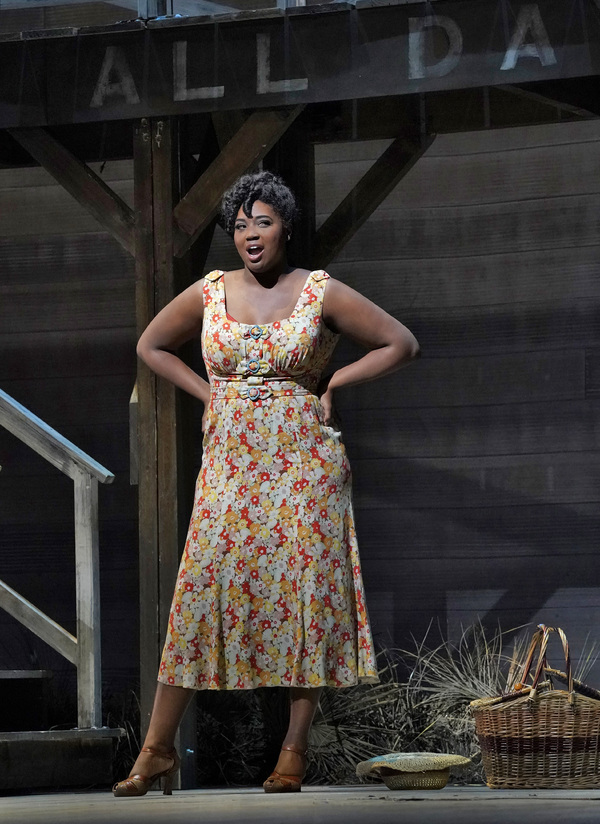
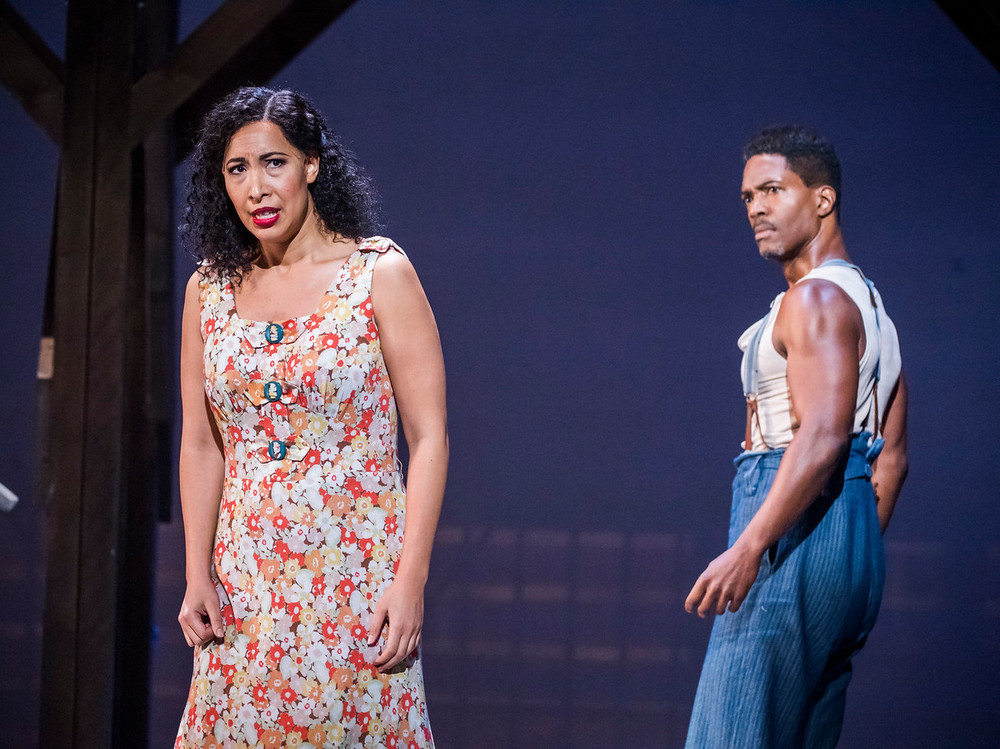
Starting off, my inspiration images were of the sundress worn to the “Kittiwah” Island picnic in Act II of the opera…

Angel Blue as Bess in Porgy and Bess / Metropolitan Opera

Don’t you love the floral print pattern of the material ? I did. So much so that I scoured the web in search of my perfectly matching feedsack print. (More about that in my post about the opera and my guest article for Fabric Mart’s blog.) While researching, I learned how the flour and sugar sacks back in the 30’s and 40’s used to be sold with colorful motifs stamped on them so housewives could sew clothes for their families after using the dry goods inside. Clever ? Yes !

Promotional poster for printed flour sacks

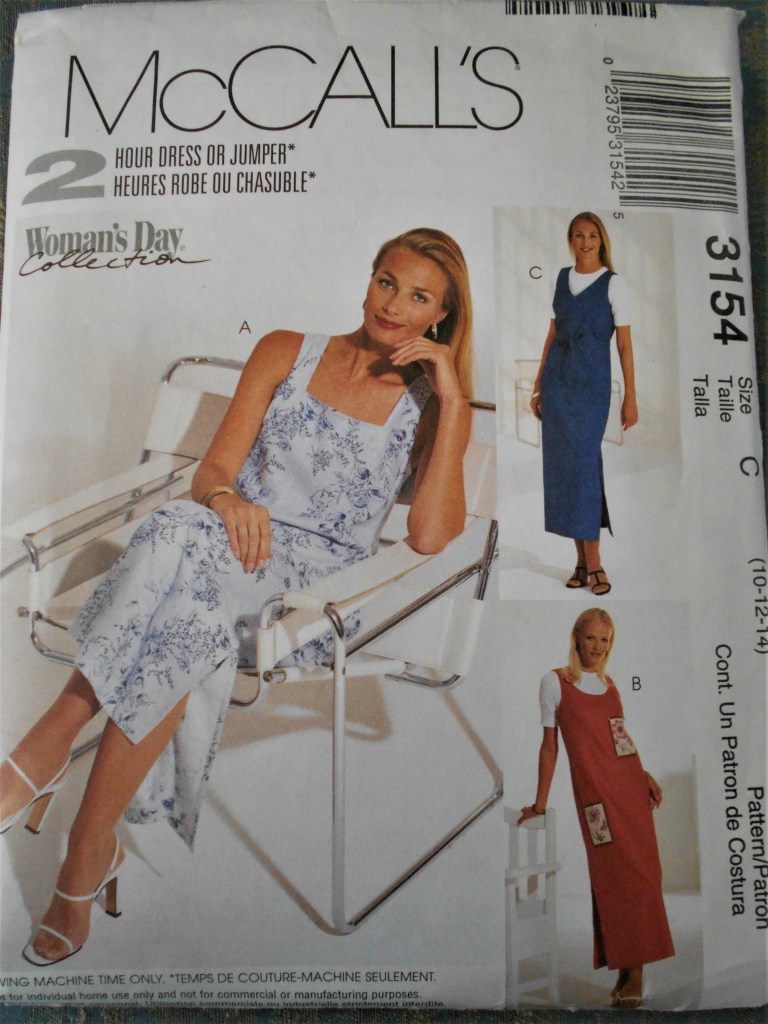
The Porgy and Bess dress had several attributes I wanted to replicate in my own frock. Namely, the underbust gathers, square neckline, and mid-calf hem. I thought of drafting my own pattern from scratch, but what’s the point when a commercial pattern with the same style will do the same ? Seeking simplicity, I perused through my mother’s pattern box and fingered over a never-before-used jumper pattern.

McCall’s 3154

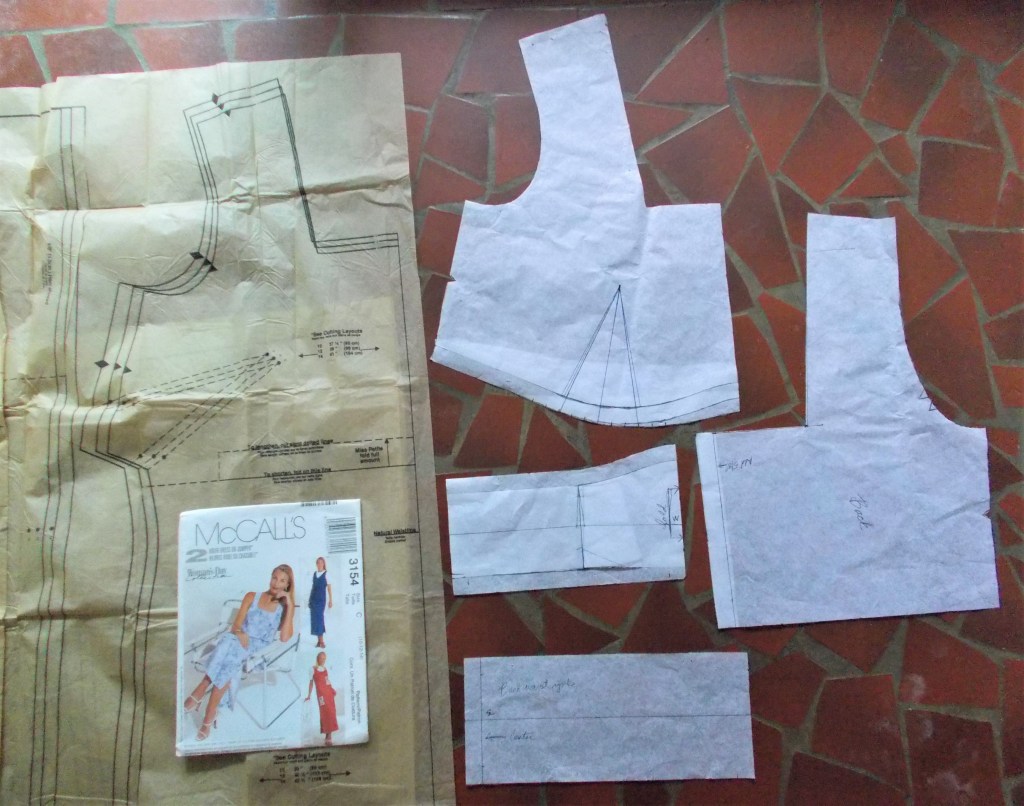
View A, here I come ! Since I only needed the bodice portion of the jumper, I traced its outline onto tissue paper, made the appropriate markings, and rotated the dart from the side to the waist. I also drafted an ascending waist yoke… very vintage.

The original pattern and the new patterns made

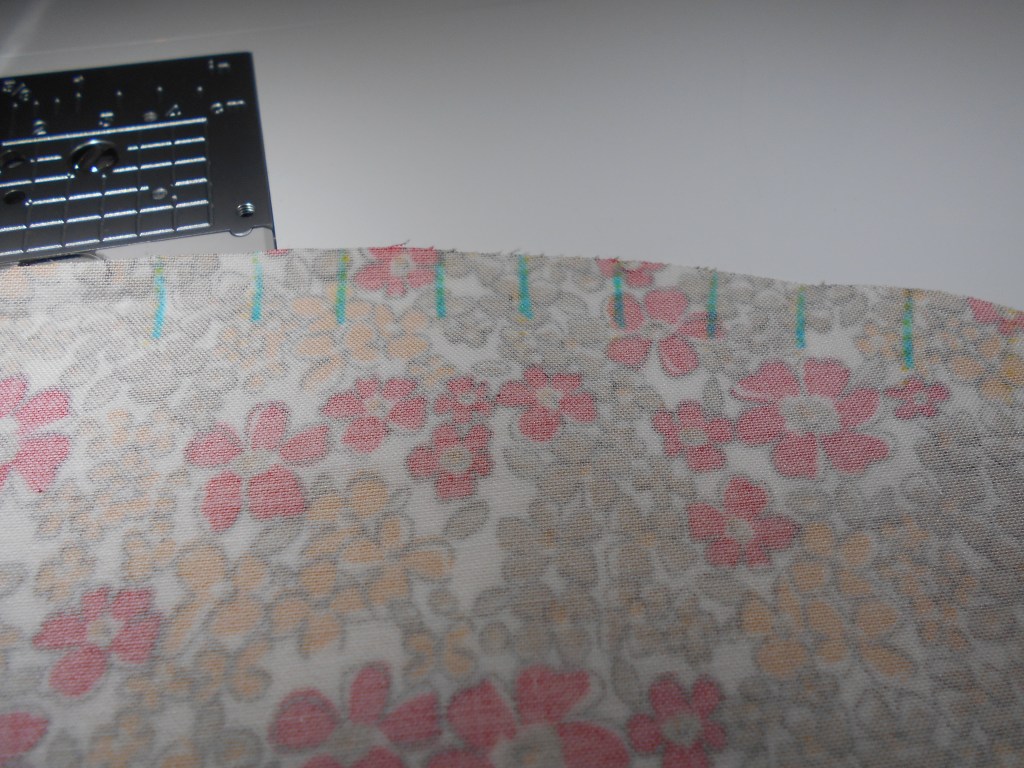
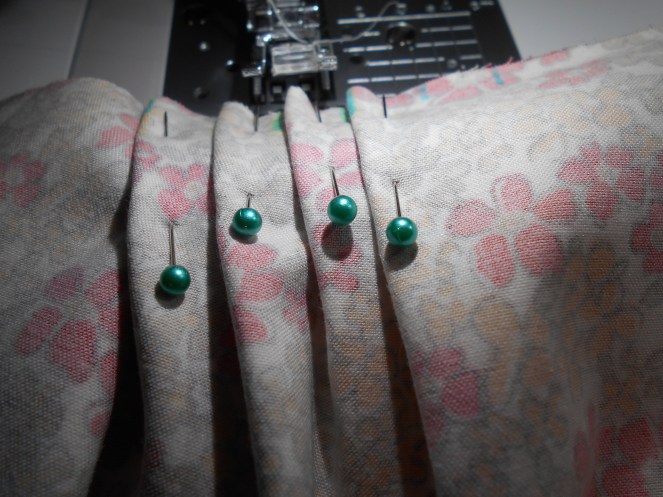
My muslin mock-up indicated some impending flaws. The back gaped and the gathers were thick and unflattering, especially when taking into consideration that the muslin was already thin. I ditched the idea. Using some of the same ingenuity from the Depression-era, I experimented with small pleats in place of the gathers, which were much more efficient and comely. I marked ½ inch lines along the area of the waist dart as a guide for the pleats…

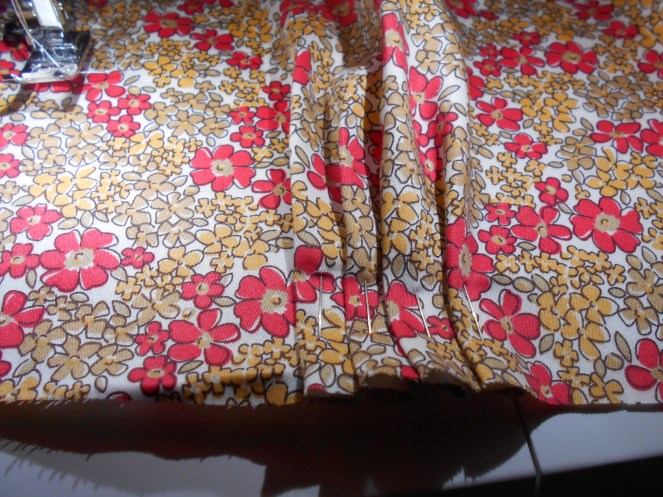
…and pinned them in place.

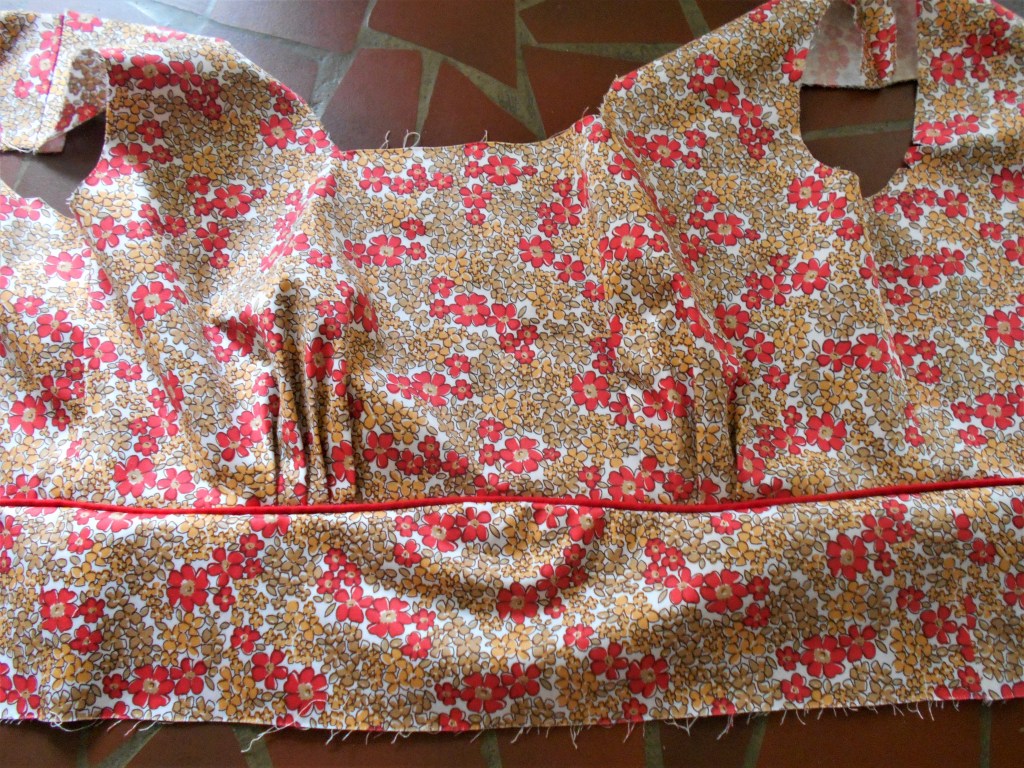
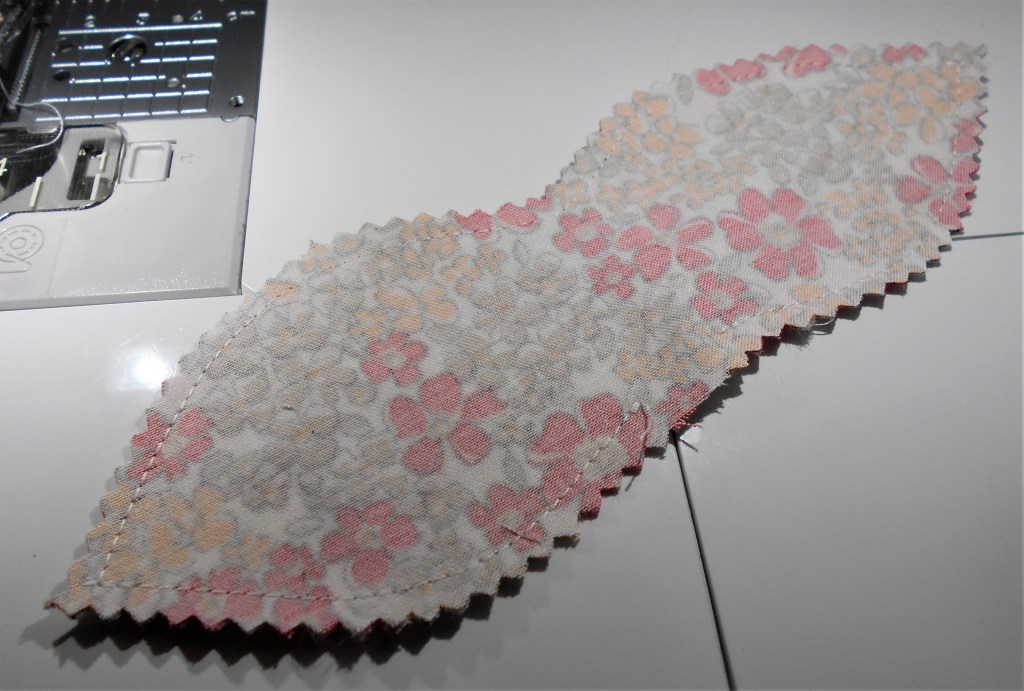
Attaching the waist yoke came next. First, I sewed a row of piping along the bottom seam line of the bodice…

…and then clipped the curves along the seam allowances.

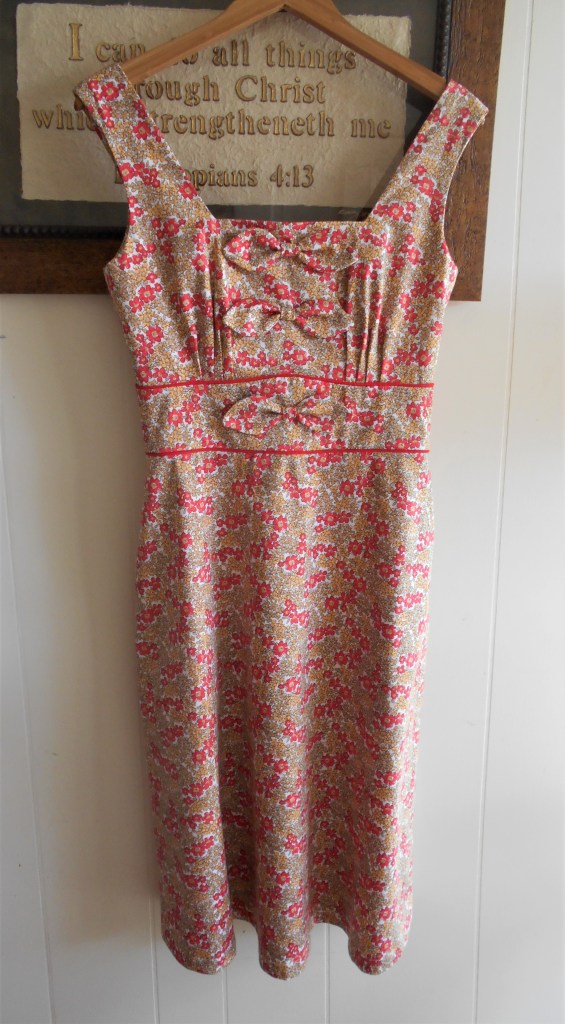
The yoke was now attached !

Time to work on the skirt…

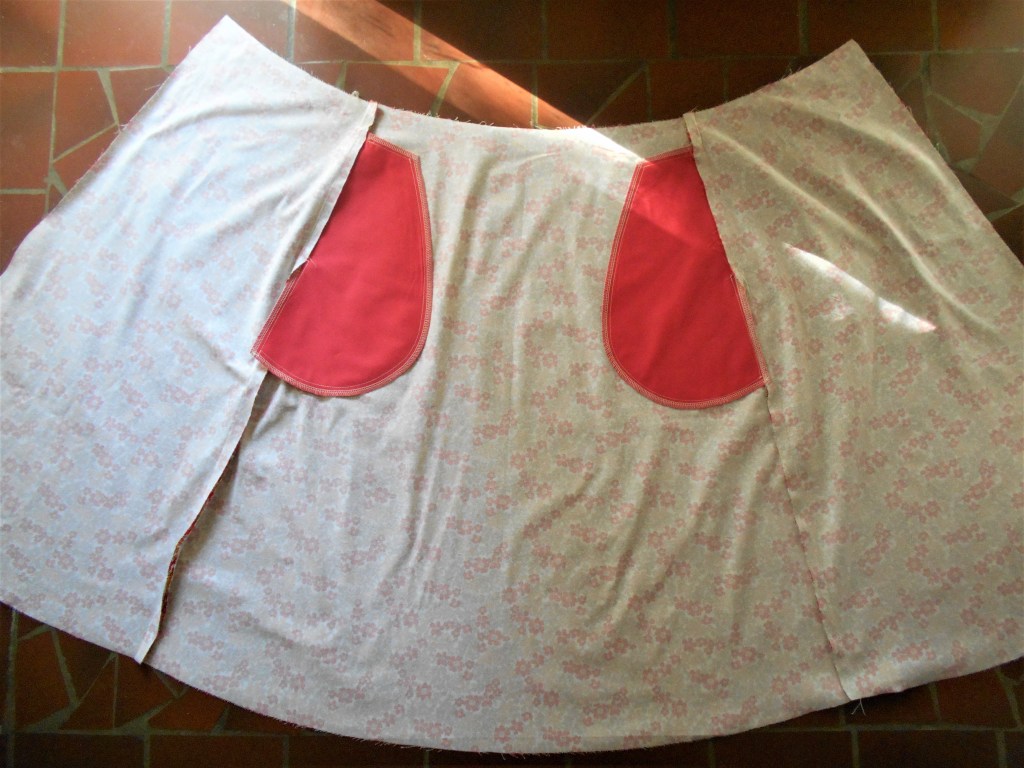
When I assembled my mock-up, I traced a basic A-line skirt pattern and altered the waist measurements to line up with those on the lower portion of the waist yoke. The pattern was straightforward and needed few adjustments once sewn. Two back halves were cut as well as one piece on the fold. I also added a pair of inseam pockets because… well, who doesn’t love pockets ?

The inside of the skirt

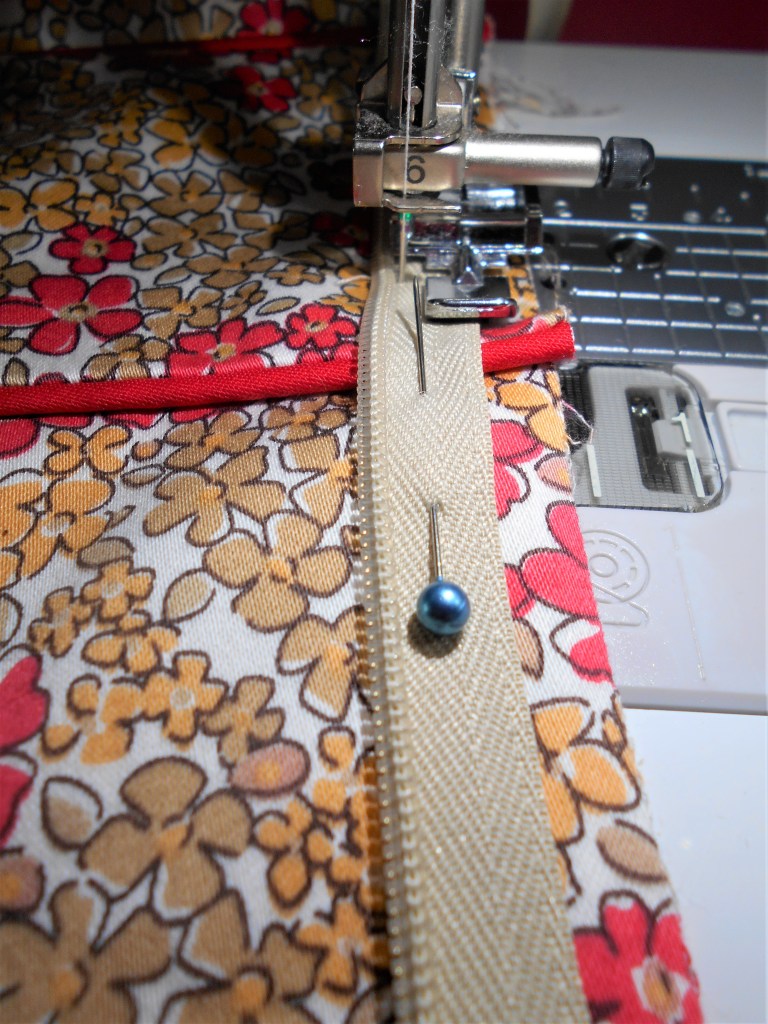
Now for the zipper ! Sewing over two rows of piping and seam allowances can be tough on sewing machines… but not for my Baby Lock ! A zipper foot certainly aided in gliding over the hilly terrain.

Sewing the zipper

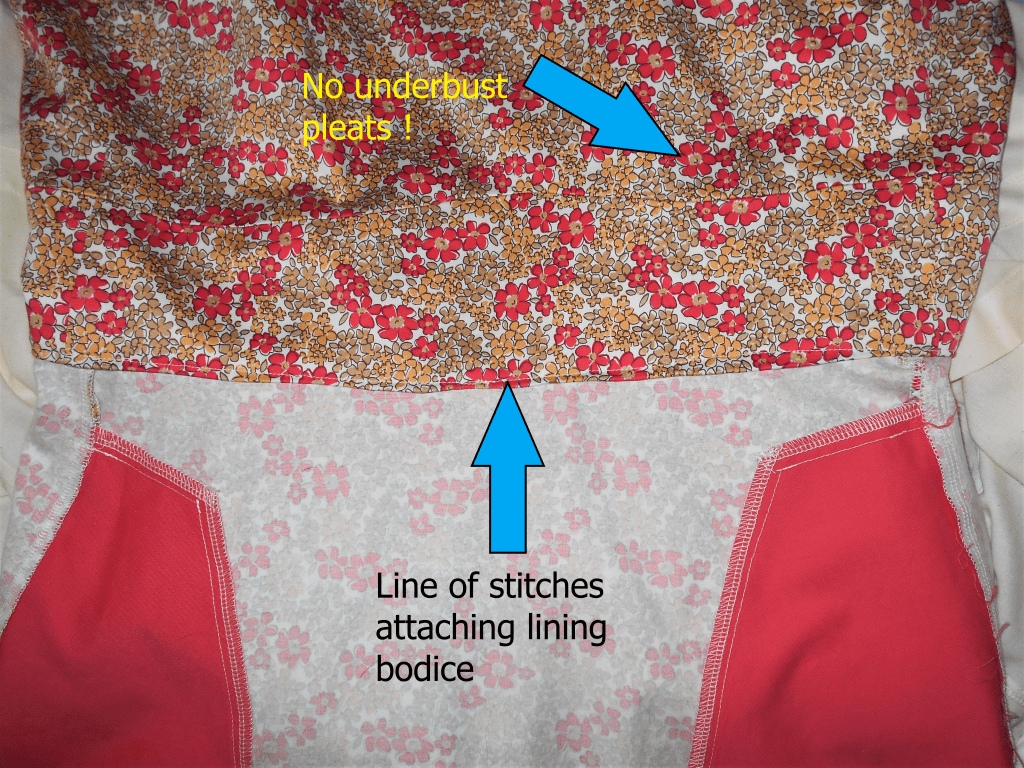
All that was left was to line the bodice, which also included the waist yoke. The easiest way to go about this was to cut identical pieces of the waist yoke (and remembering to close the dart of the front bodice piece before cutting !), sew them together with the bodice pieces along the seam lines, and then fold under the bottom ½ inch along the lower edge of the waist yoke. Here’s what the inside of the bodice looked like after I “stitched in the ditch” of the bottom row of piping from the front:

The dress basically finished, it was time to add the bows onto the front.

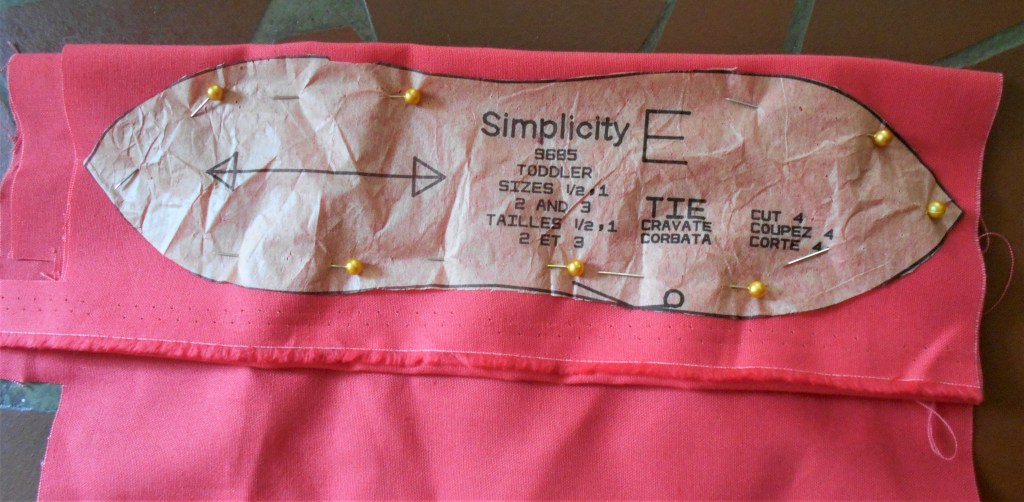
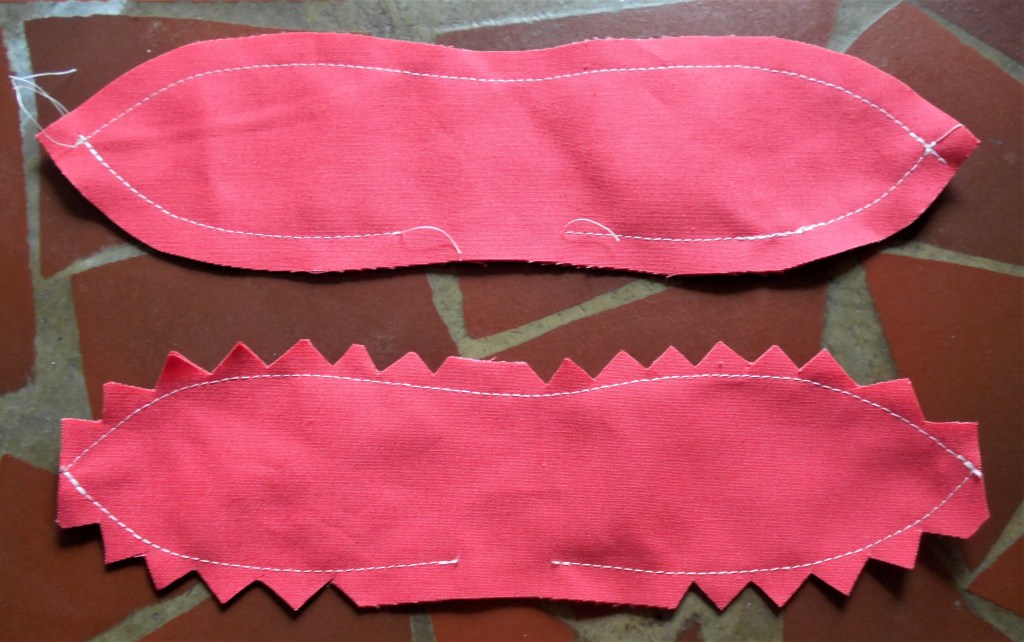
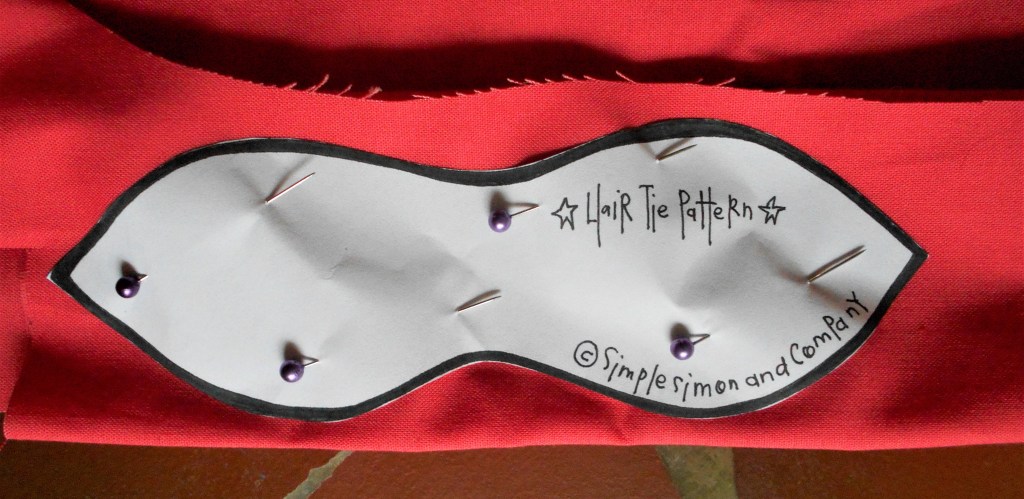
Cutting the right size and shape for a fabric bow can be a toss of the dice. Eyeballing a flat paper pattern piece can at times be tricky when gauging how the pattern will translate into fabric. Because I had such success with the tie bows for the baby clothes I had sewn recently, it followed in my logic that the same pattern would work again.

It didn’t work out. Too long, too flat, too thin ! Back to the drawing board… this time with a free pattern I found online.

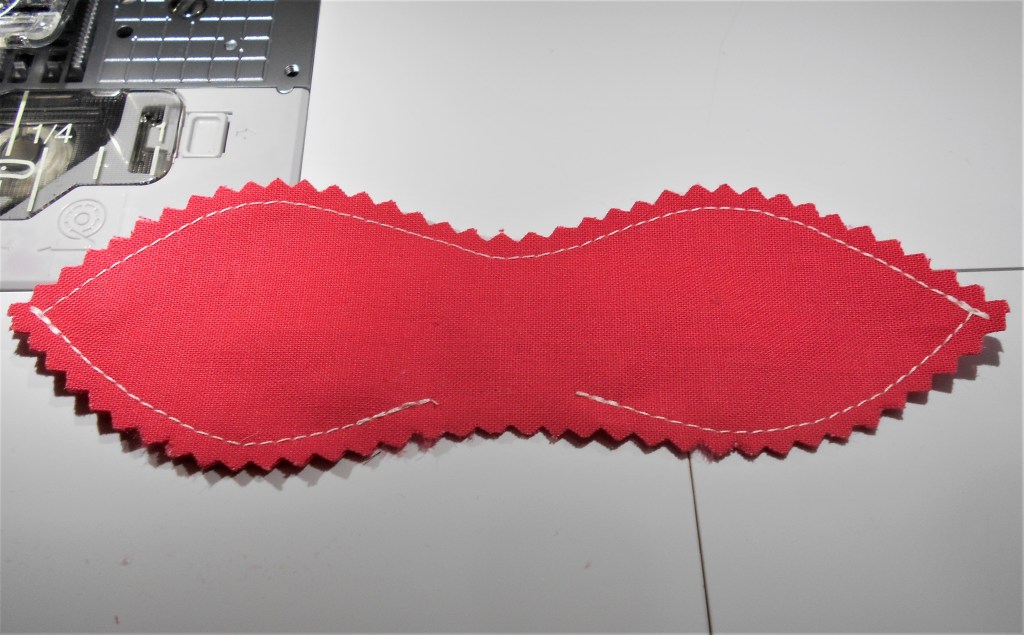
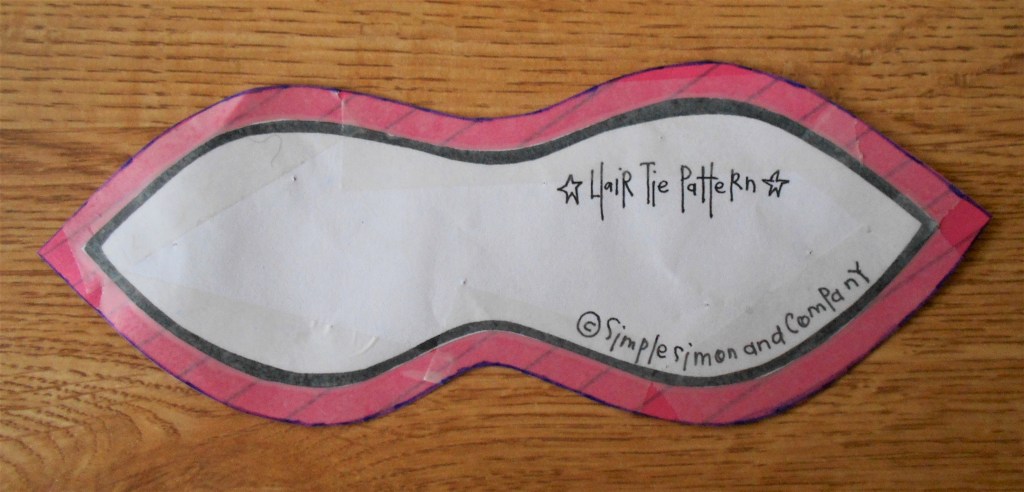
Close, but no cigar. However, by modifying the pattern just a bit (and swapping out the pocket lining material for the floral stretch poplin), I felt I could have a winner on my hands…

Success !

The additional ¼ inch seam allowance created a perfectly fashionable bow, which was pinched together in the center and sewn with a folded rectangle of fabric for the knot.

The bows were just subtle enough sewn down the front of the bodice, but too stiff for the tops of the shoulder straps.

Show time !

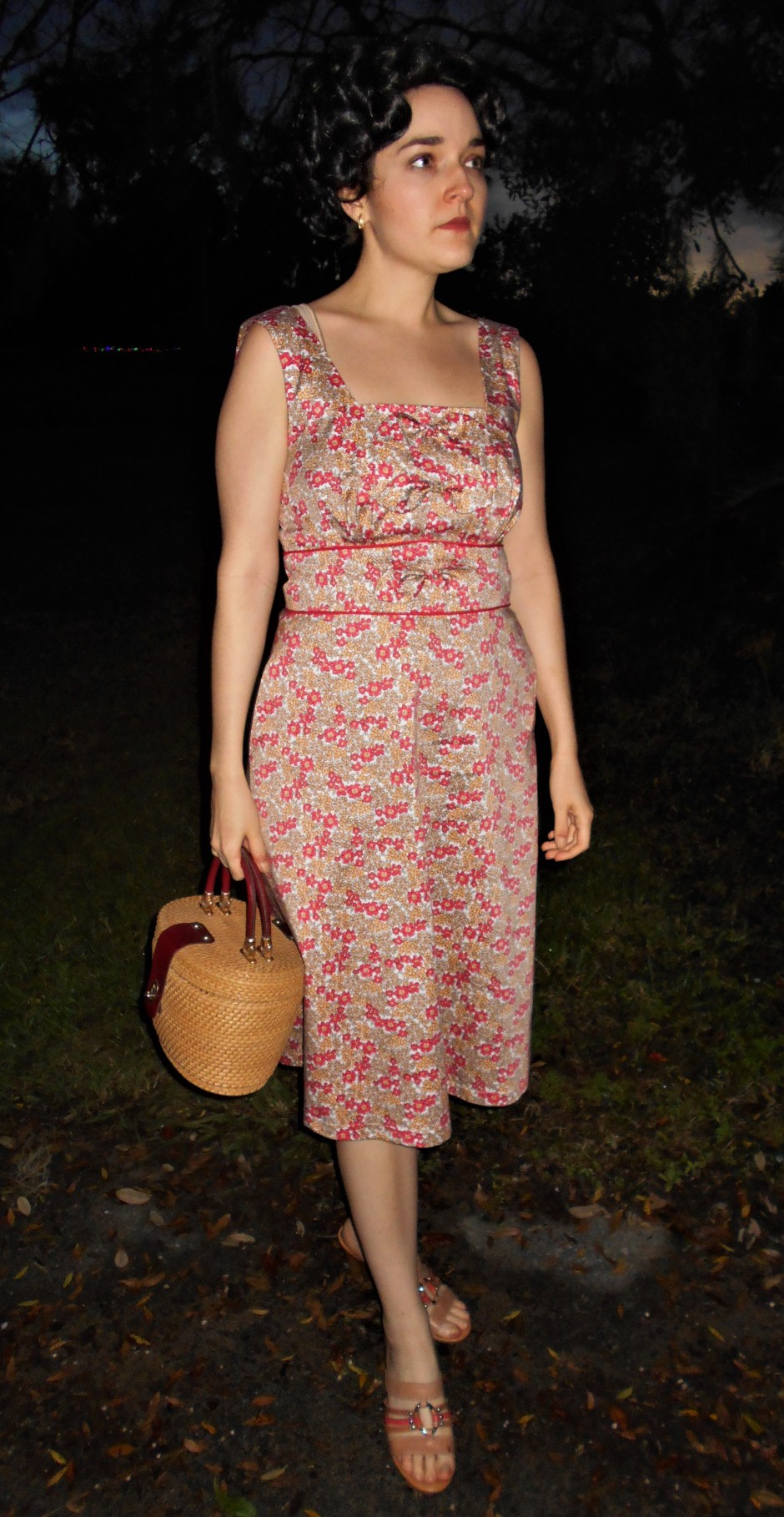
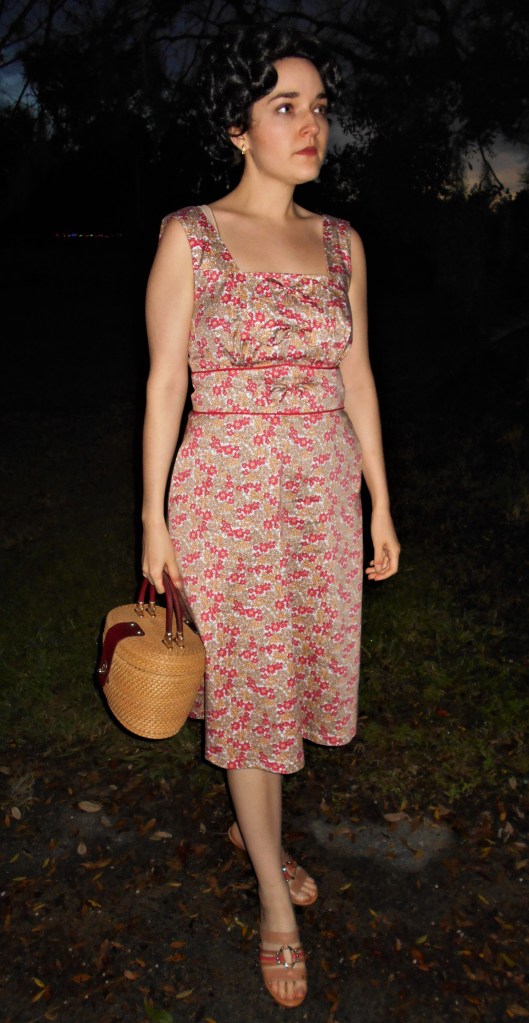
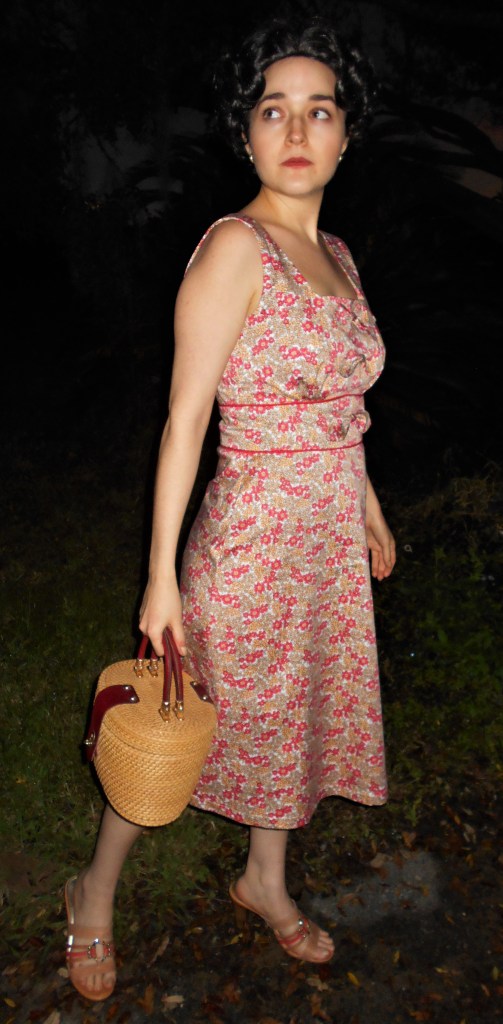
I wore a curly 30’s style wig and carried my mother’s Nantucket basket purse for my sundries.

Every project has a flaw and in this dress, it was the shoulder strap placement. I hypothesized that along the way in the multiple manipulations of the original pattern, the shoulder strap became deformed, was cut too wide, and as a result, wanted to slide off my shoulders. Therefore, I found myself constantly checking to ensure the dress concealed my bra straps. As evidenced by some of the pictures, that wasn’t always accomplished. Oh, well !

The dress had flaws, Bess had flaws. Perhaps the old line was more pertinent than I realized─ “Bess, we two is one !”

Toi, Toi, Toi,

Mary Martha

Porgy and Bess

Folk tale. Sing-a-long staple. Twentieth century masterpiece. Porgy and Bess is beloved for many reasons, but there’s probably none greater than being America’s opera. The title protagonists ─ lovable cripple, Porgy, and well-meaning drug addict, Bess, offer glimpses of an unlikely love by an even more unlikely pair in the Gershwins’ classic, which features hit tunes like “Summertime”, “I Got Plenty O’Nuttin'”, and “Ain’t Necessarily So”, just to name a few.

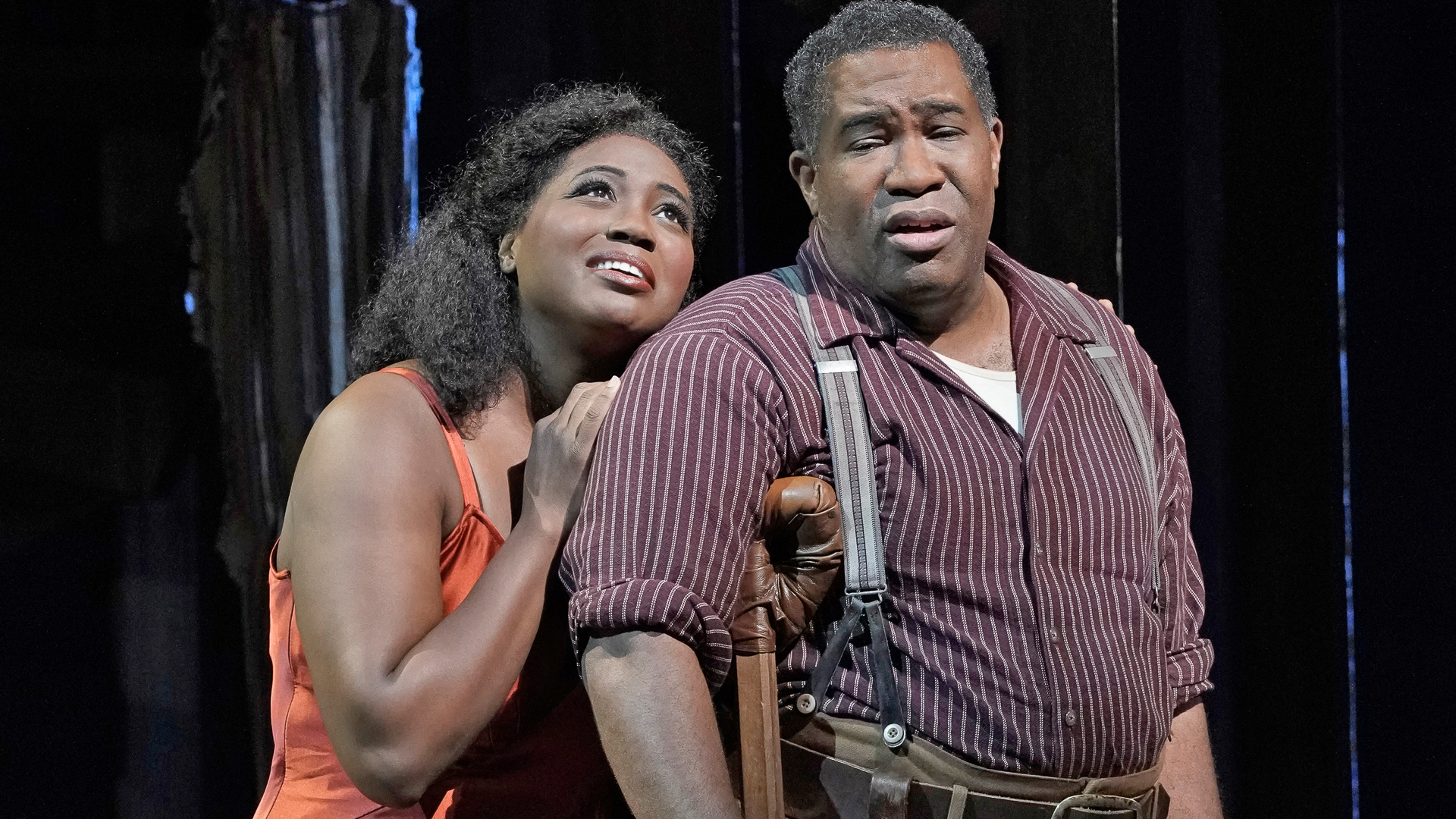
Angel Blue as Bess and Eric Owens as Porgy in Porgy and Bess / Metropolitan Opera

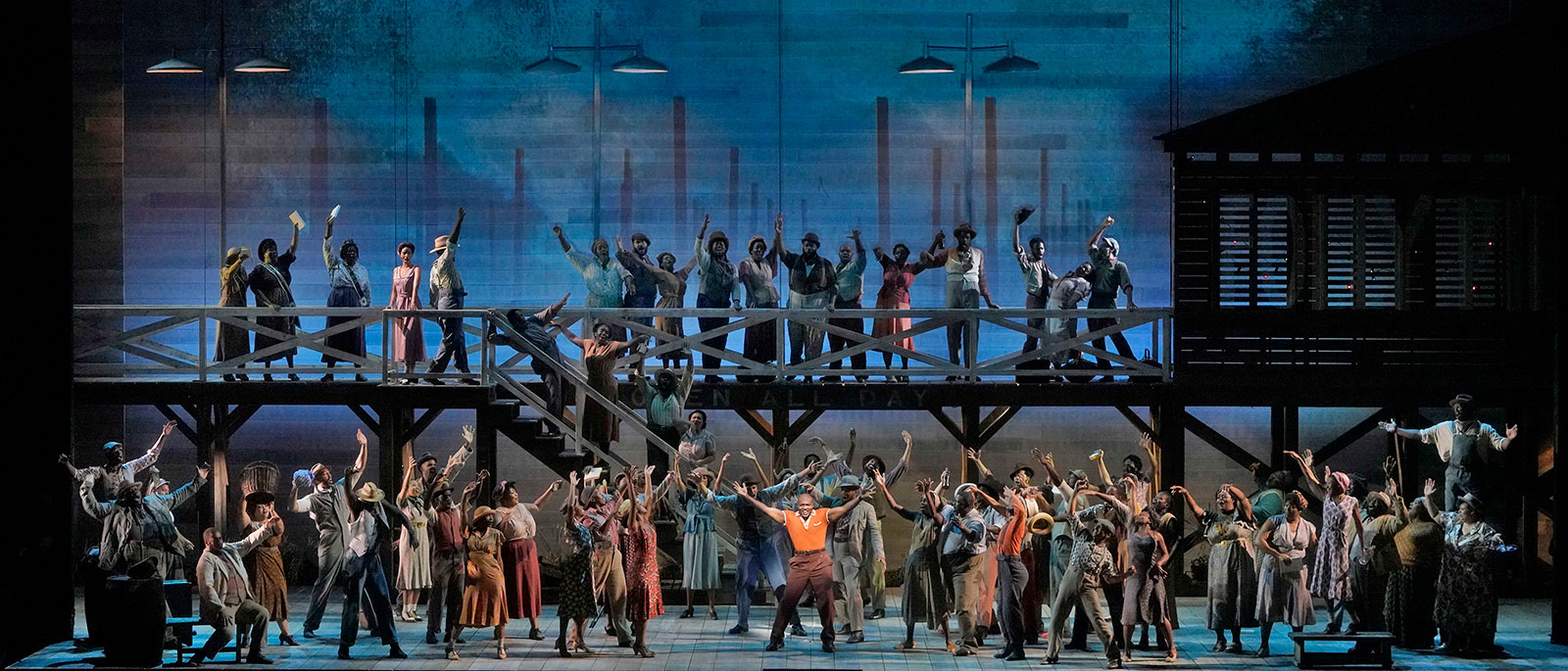
This was the first time in over 30 years that Porgy and Bess was making an appearance at the Met. In James Robinson’s new production, a highly skilled ensemble cast sauntered around the planked floor of Catfish Row, a slum in Charleston, South Carolina. Tough-talking matriarch Maria (played by veteran mezzo-soprano Denyce Graves), devoted young parents Clara and Jake, Bible-thumping Serena, slithering Sportin’ Life, and Bess’s brutish ex-lover Crown rounded out the cast of dynamic characters. While intentionally created to be rudimentary in its design, the linear wood slats of the settlement almost looked like a playground jungle gym with its inhabitants hanging out of open window frames and weaving around the pilings below.

A scene from Porgy and Bess / Metropolitan Opera

Also swinging beneath the rafters was Gershwin’s jazzy score, which easily identified itself as a frequenter of non-operatic revues. Because of its atypical approach in music (it’s not your run-of-the-mill bel canto or verismo !), I couldn’t help but think that Porgy and Bess belonged more on Broadway as a musical than it did at the Met as an opera. There was too much talk and jive and not enough singing for my tastes. Nevertheless, the opera made for an enjoyable afternoon of spirited routines and recognizable melodies.

A scene from Porgy and Bess / Metropolitan Opera

Porgy and Bess takes place during the early 1930’s as the Great Depression doles out its hardships. Along with the coastal Charlestonian locale, where a battalion of reeds stand tall on bordering estuaries, I had plenty of costume ideas swirling in my head… Ultimately, my plan was to blend the two setting features into a feedsack print sundress that would be perfect for a picnic on Kittiwah Island, just as in the opera. Using the past performance pictures from the English National Opera and Dutch National Opera as my inspiration (the Met’s production would be identical), I had my vision set.

Nicole Campbell as Bess and Nmon Ford as Crown in English National Opera’s Porgy and Bess

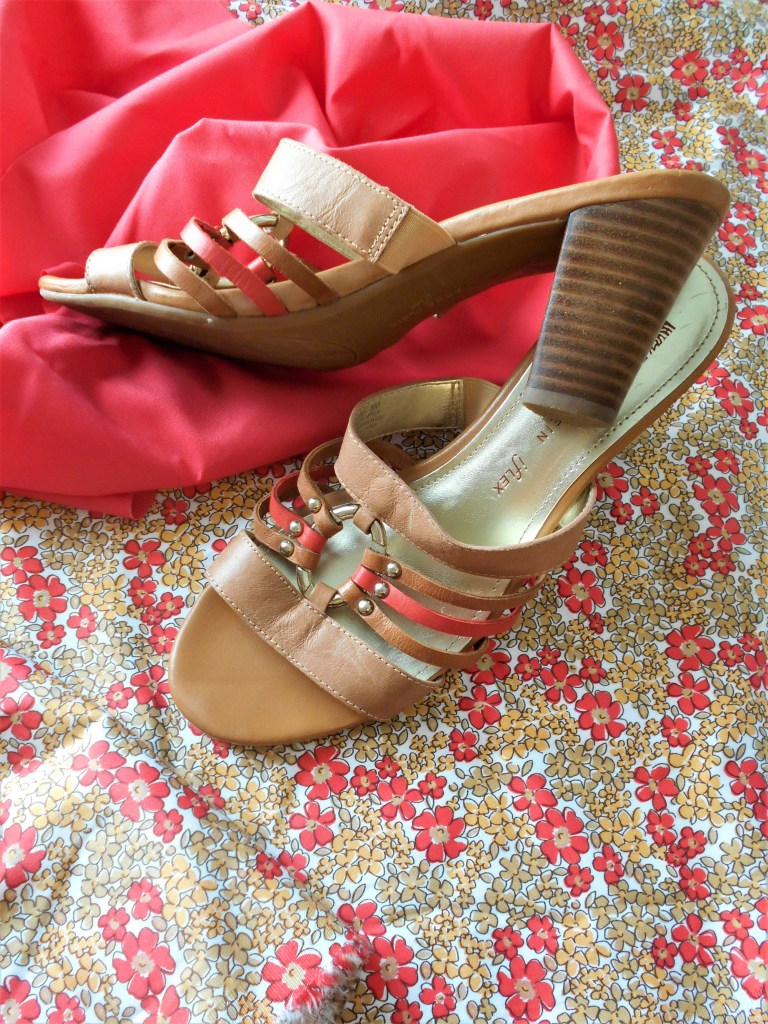
Bess’s picnic dress conveyed a myriad of 1930’s details in its design: underbust gathers, a separate waist yoke, and buckle tie bows to embellish the frock. Locating the right material was the first step and boy, did I find it ! I had one uncompromising requisite when shopping and that was that the fabric chosen HAD to match a pair of strappy block heel sandals I had in my closet. No exceptions ! Although I had perused the web and ordered samples in search of my ideal “feedsack floral”, I wasn’t wholly satisfied with the printed patterns and/or the colors… until I opened the newest edition of my swatch club mailer and pointed to a cotton stretch poplin. “That’s it !” I rejoiced.

Cotton stretch poplin and coordinating pocket lining material with block heel sandals
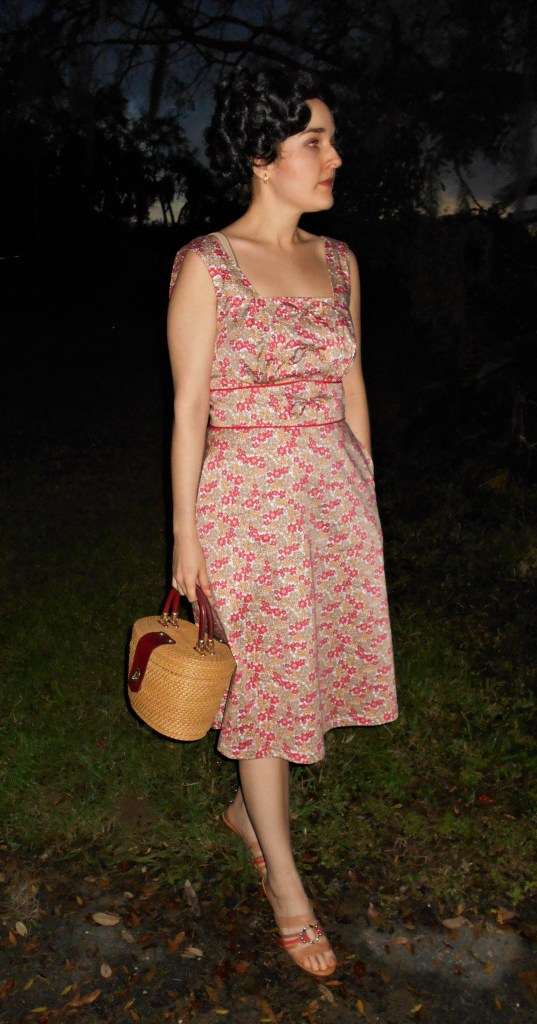
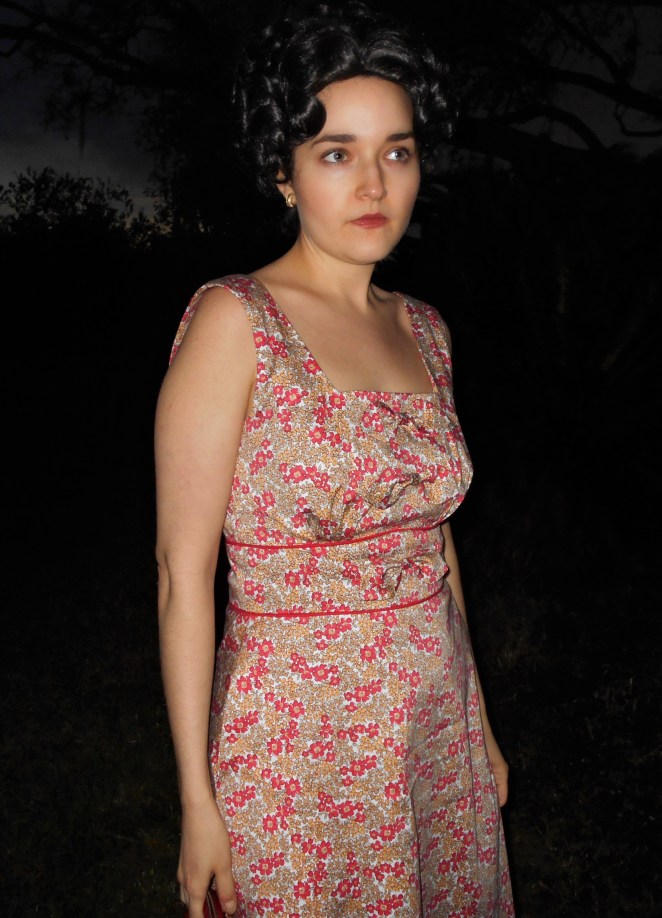
The fabric matched the shoes almost perfectly and I was (mostly) pleased with my cute 30’s sundress. Too bad the weather was nasty the day of the opera… I had to bundle my bare legs in a blanket at the theater because of the cold, wet February front that had wafted its way across the state. Ick !
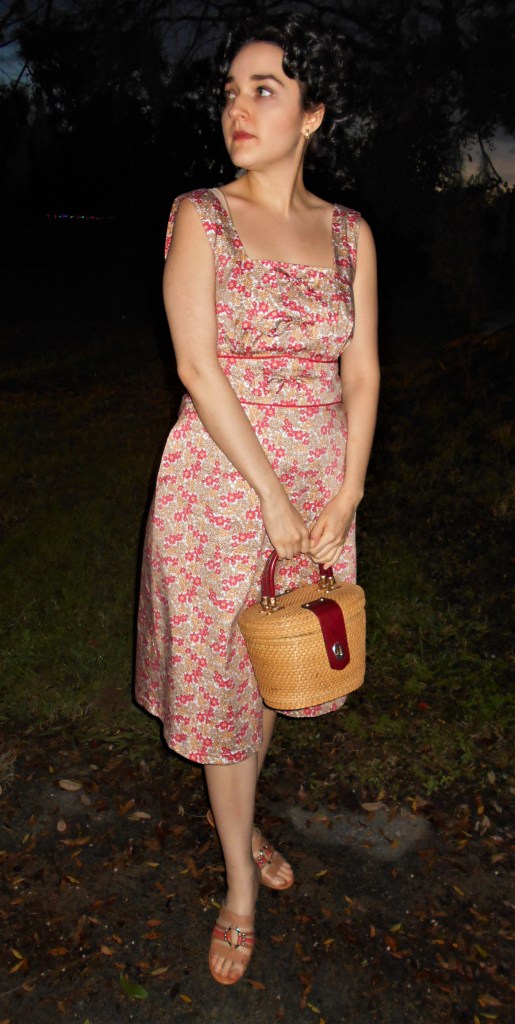
The weather may have been less than ideal that day, but the warmth of “Summertime” and the endearment of America’s greatest opera, Porgy and Bess, were enough to hearten the shrillest skies.

Toi, Toi, Toi,

Mary Martha


Curious about how I fashioned my feedsack frock ? Check out my tutorial post on its creation !
Cast and Credits:

Porgy and Bess ─ George Gershwin (1935)
Live in HD air date: February 1, 2020

Cast:
Bess ─ Angel Blue
Clara ─ Golda Schultz
Serena ─ Latonia Moore
Maria ─ Denyce Graves
Sportin’ Life ─ Frederick Ballantine
Porgy ─ Eric Owens
Crown ─ Alfred Walker
Jake ─ Donovan Singletary

Credits:
Conductor ─ David Robertson
Production ─ James Robinson
Set Designer ─ Michael Yeargan
Costume Designer ─ Catherine Zuber
Lighting Designer ─ Donald Holder
Projection Designer ─ Luke Halls
Choreographer ─ Camille A. Brown
Fight Director ─ David Leong
Live in HD Director ─ Gary Halvorson
Host ─ Audra McDonald