At the Hop

Although it may seem unfathomable, in all my years of costuming I have never dressed in the fashion of the poodle skirt from the 1950’s. The iconic getup has never been one of my Halloween costumes, nor worn as an outfit to an opera. Frankly, no opportunities had ever presented themselves !
Last year when my friend, Jacob, raved about his time at a fundraiser for Silly Sock Saturdays, I knew I wanted to go the following year. Since the theme for the charity event was a 1950’s sock hop, my opportunity for soda shop bop had undoubtedly arrived.
Without hesitation, I turned to Folkwear for my pattern. I already owned the 256 At The Hop pattern, which I purchased during an e-mail flash sale to add to my burgeoning pattern collection. It seemed frivolous at the time, but I knew I would have a use for it… someday.
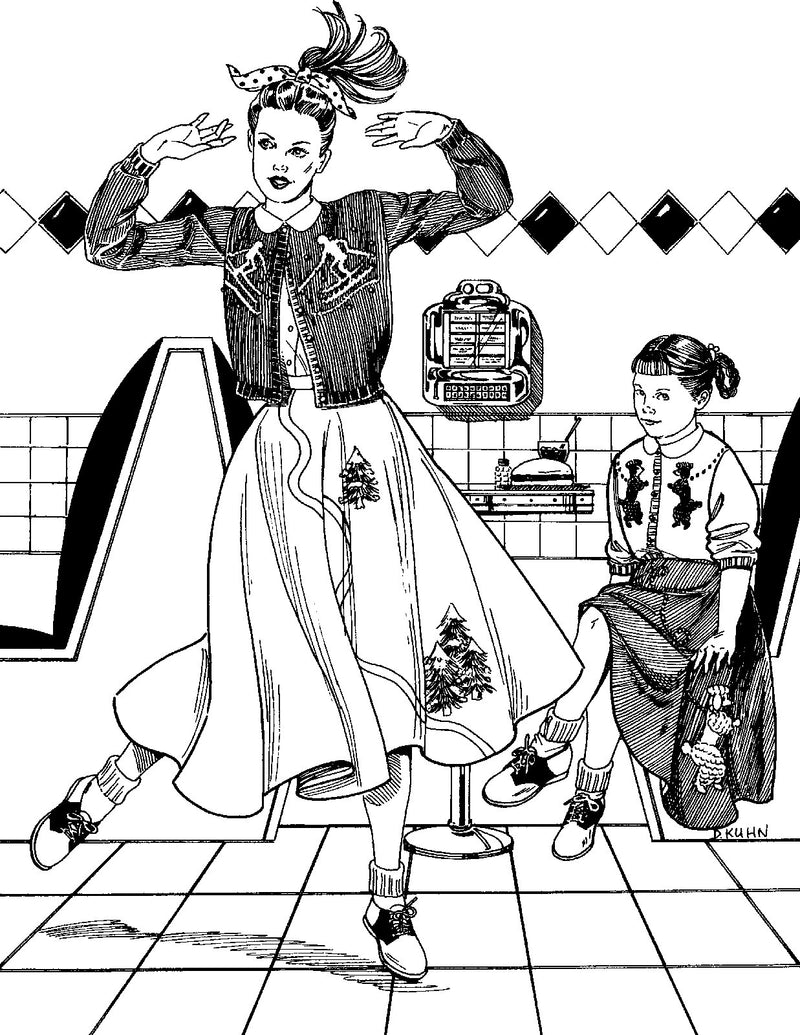
256 At The Hop / Folkwear Patterns

Keeping with tradition, I used a charcoal wool blend felt for the skirt, which I ordered from Fabric Wholesale Direct. Recently, FWD began a matching thread and zipper service, which made choosing complementary notions much less of a chore. The full circle skirt was sewn in a professional manner with its lapped zipper application.
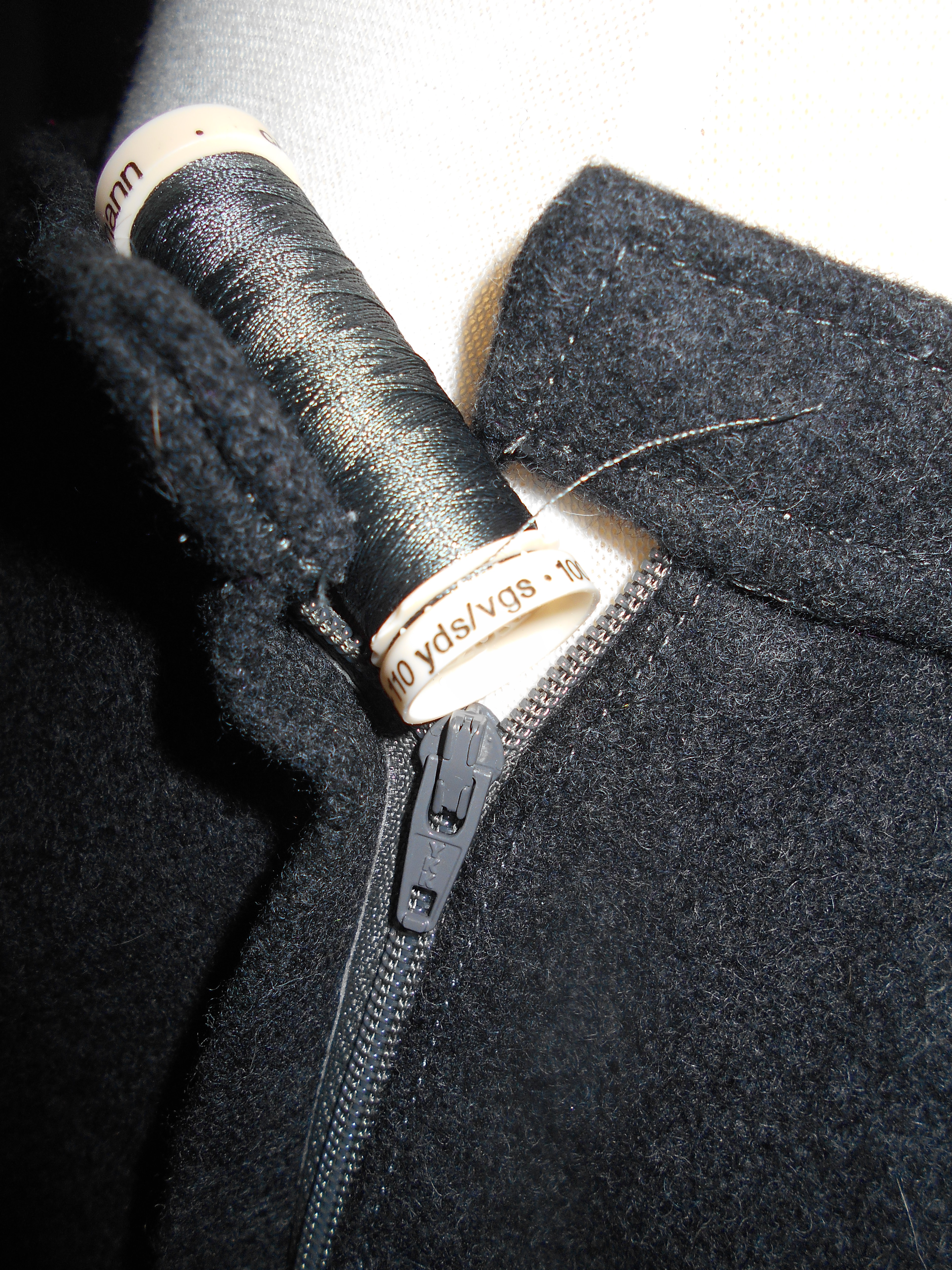
Matching thread and zipper for the charcoal wool blend felt

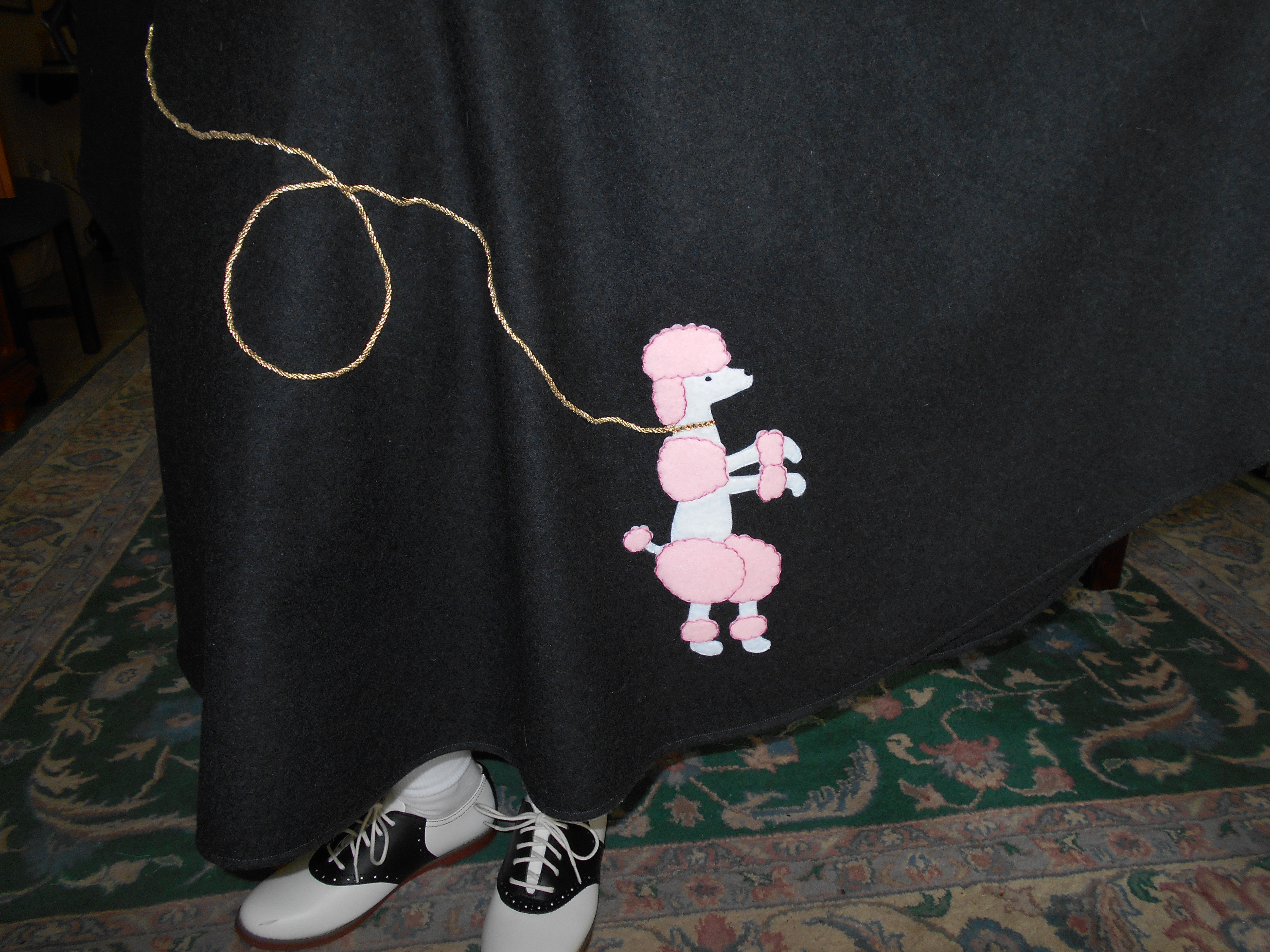
What’s a poodle skirt without its playful canine ? I used pink and white felt for the main construction of the appliqué and then hand embroidered its outline with a stem stitch.
Fitting the blouse was more of a challenge. Previously, I had sewn a wearable muslin of the Peter Pan collared blouse included in the pattern envelope. While it seemed to fit from the front, a test of simple arm movements proved the blouse to be very constricting and an impossibility for dancing. In need of assistance, I reached out to Katrina Walker, one of my fit teachers. A broad back adjustment was applied to the paper pattern as was a full bust adjustment. After raising the armhole slightly, my new blouse was much improved. Thank you, Katrina !
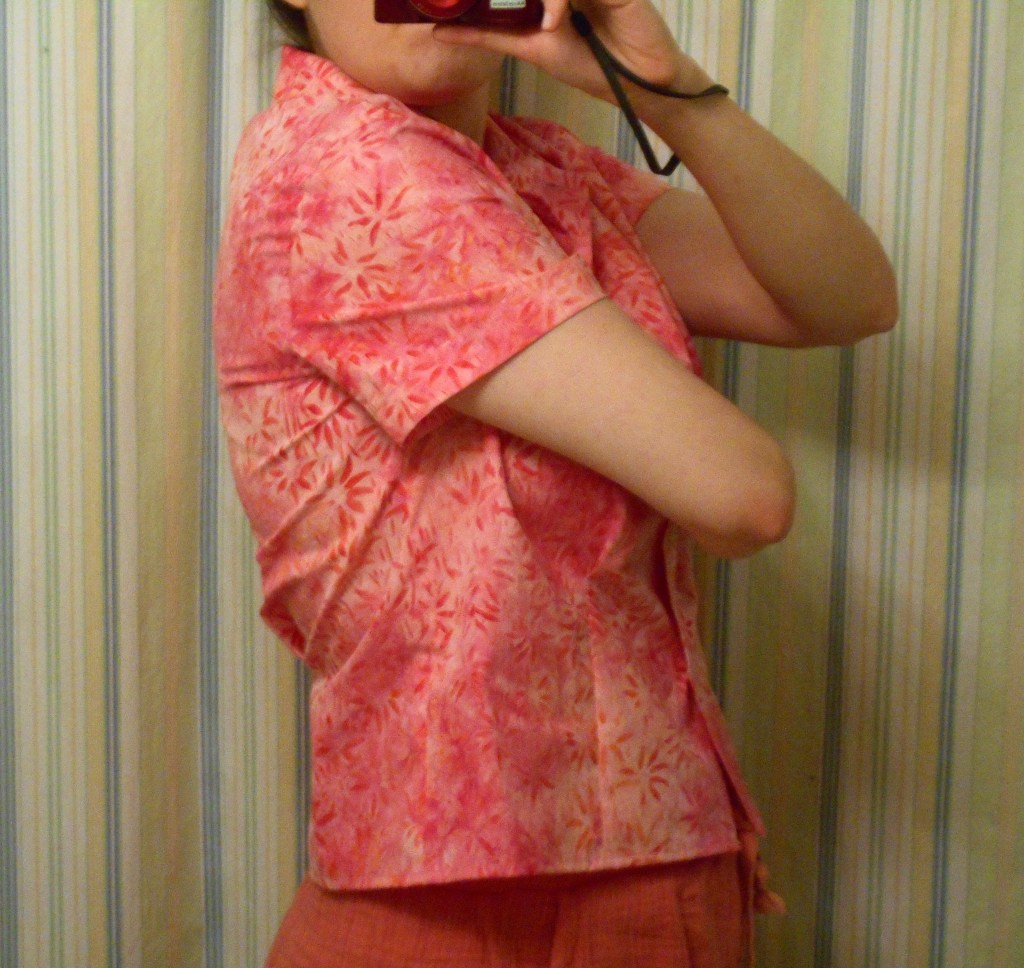
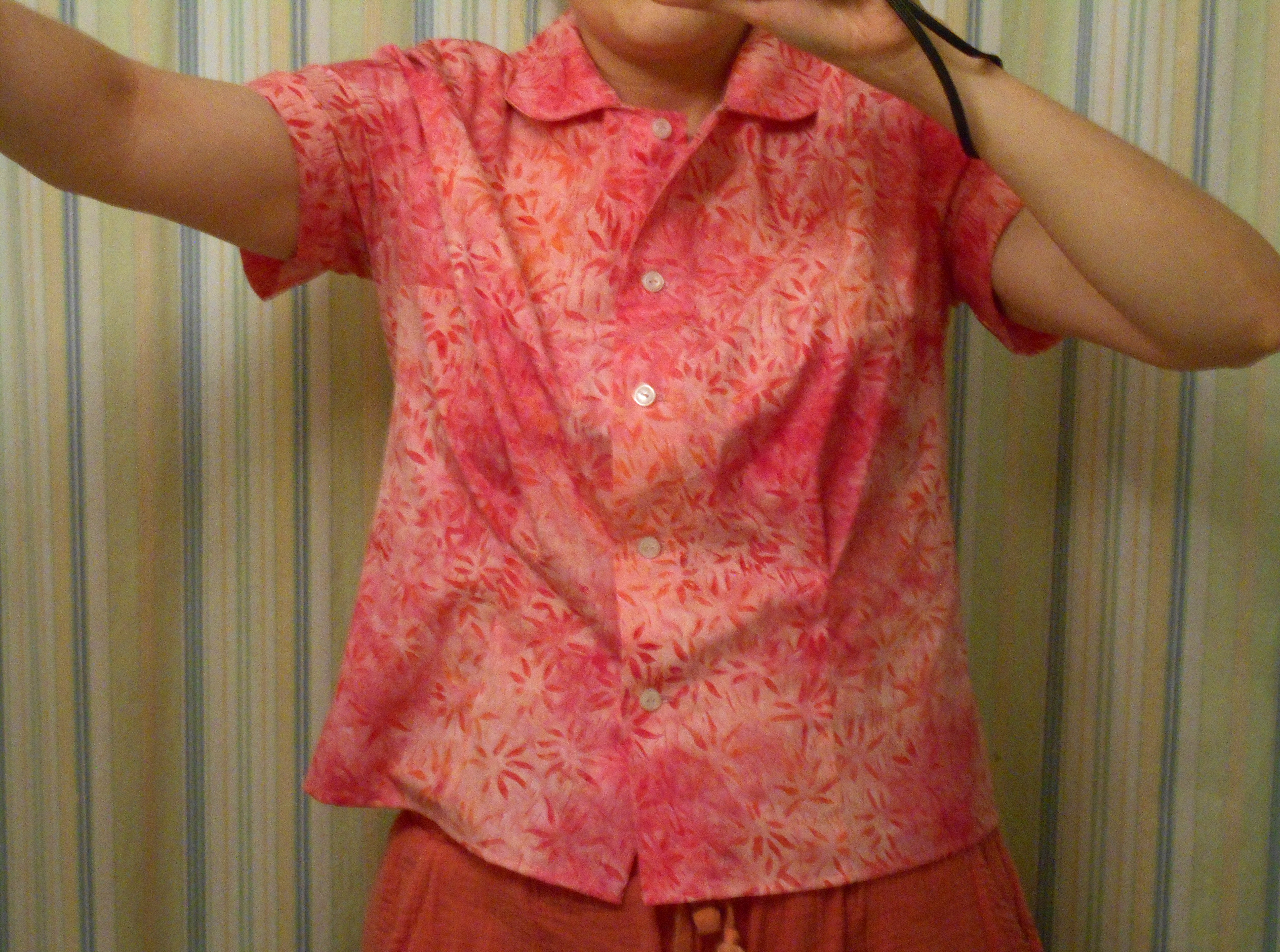
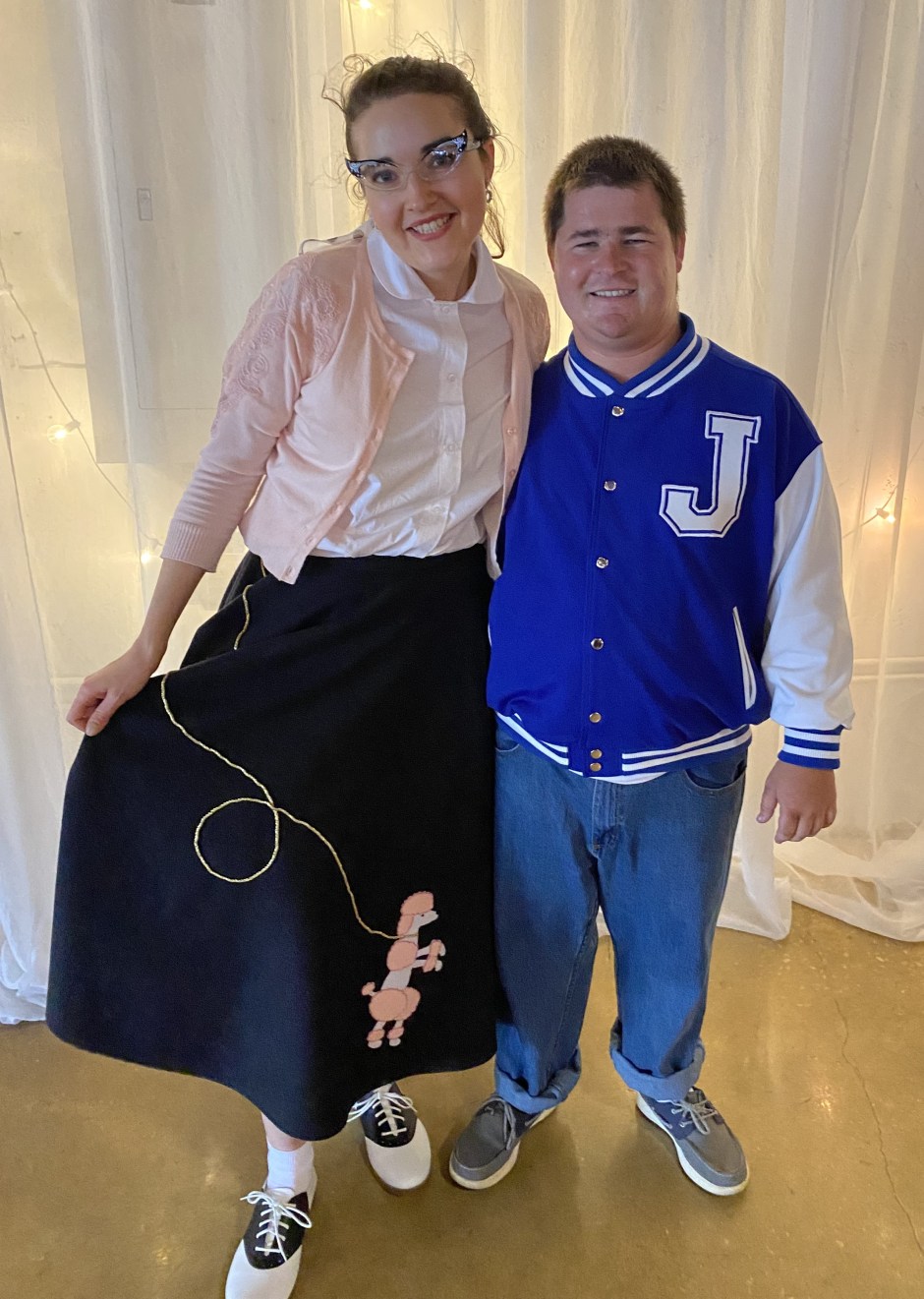
A consignment cardigan, saddle shoes, pink poodle bobby sox, and a polka dot chiffon hair tie made my outfit complete. Don’t forget about the cat eye glasses ! They were given to me as a birthday gift years ago. Thank you, Aunt Countess !
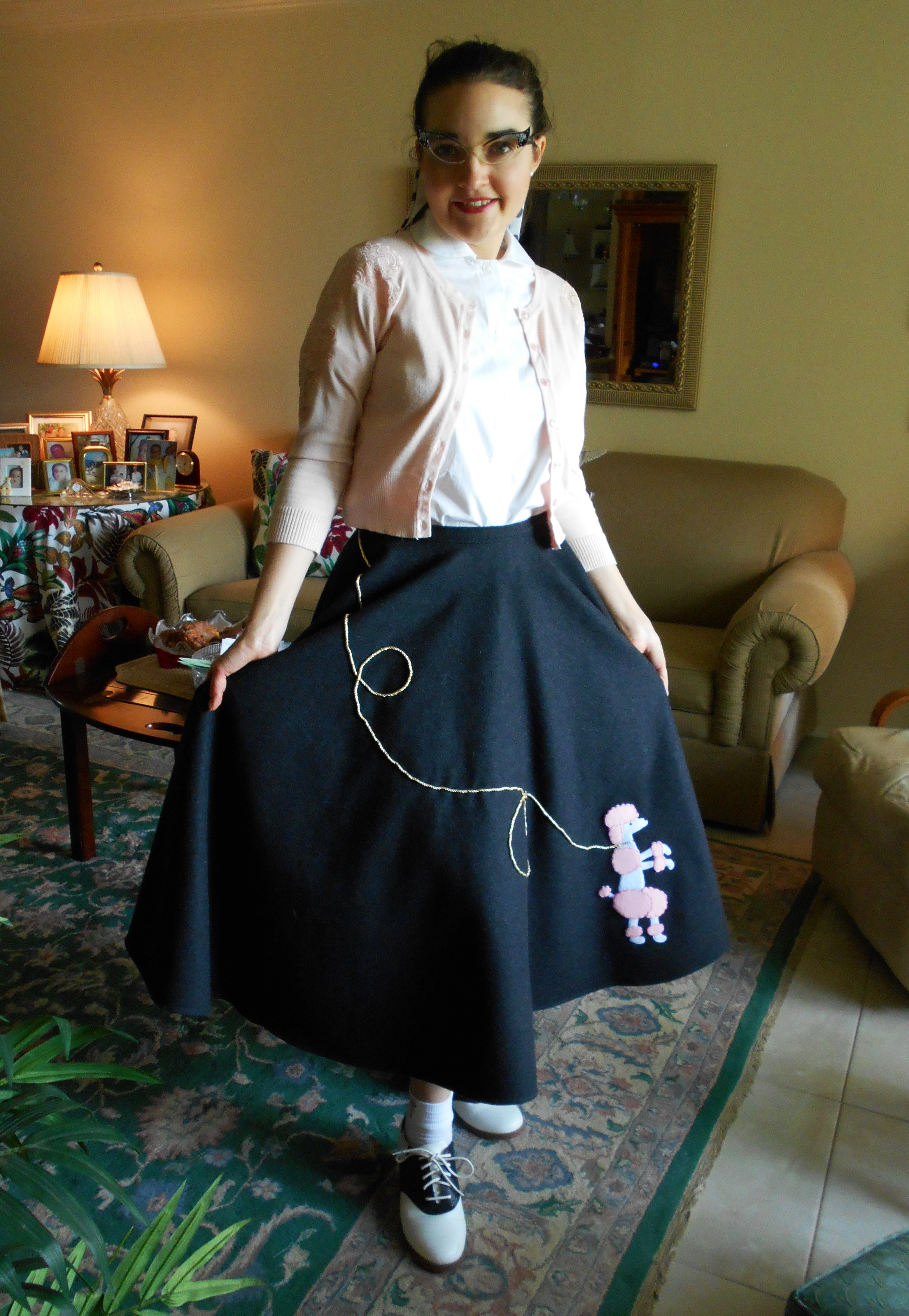
Miss Poodle was ready for the hop. But what about my friend ? Still thinking of the variety and versatility of Folkwear’s vintage patterns, I recalled their 251 Varsity Jacket pattern and realized it would be perfect for Jacob.

251 Varsity Jacket / Folkwear Patterns

After taking his initial measurements, I embarked through my usual fitting processes and altered the pattern to suit his needs. Particularly, it was imperative to widen the neck and shorten the sleeves of the pattern. For ease of wear and care, I chose a soft and spongy Ponte knit for the body and sleeves of the jacket. Stay tapes and PerfectFuse interfacing added stability to the welt pockets and facings. A tip for sewists: don’t skip this step ! It will elevate your garments from amateur to professional in a jiffy.
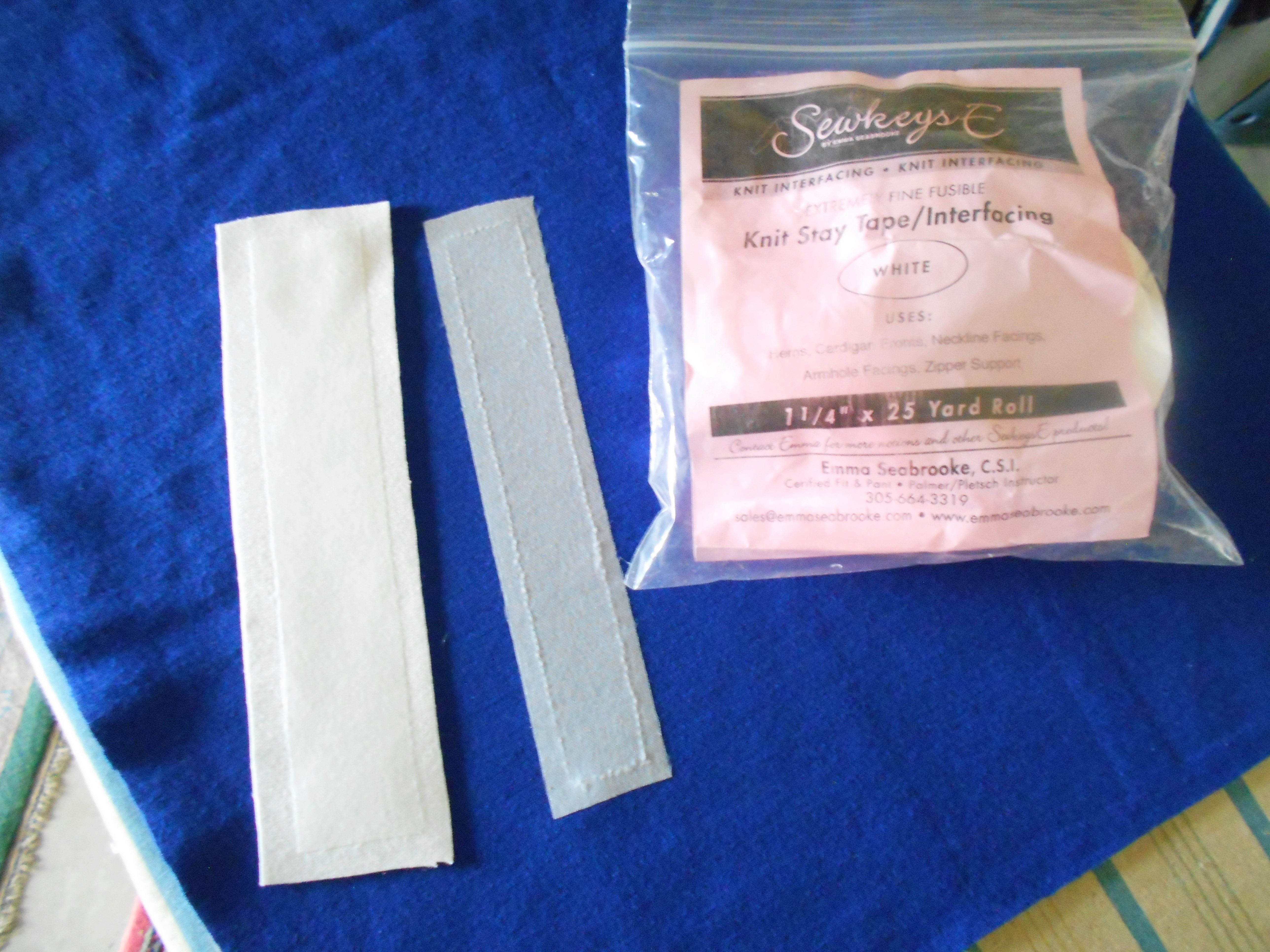
Sewkeys-E Knit Stay Tape fused to the pocket openings and welts

My model was a perfect participant. Jacob would curiously ask me questions as to my experience with working with models whereupon I had to gently let him down that he was not my first model to fit. However, his face beamed like the sun reemerging from the cover of the clouds when I told him a secret: he was my first male model to fit.
With supportive topstitching, striped ribbing, a fully lined interior, a machine appliquéd J, and silver snaps, the jacket was ready…
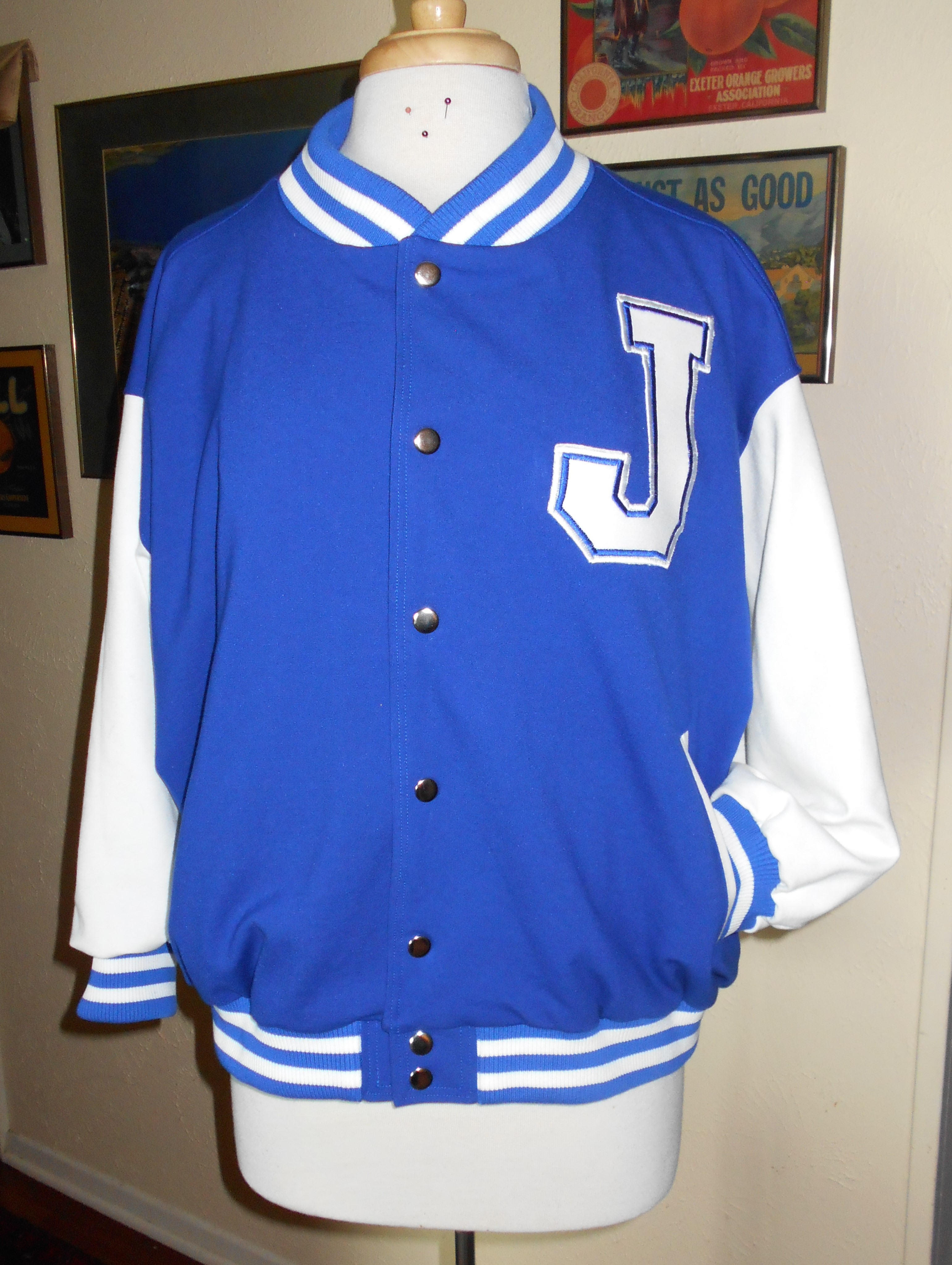
…and so were we !
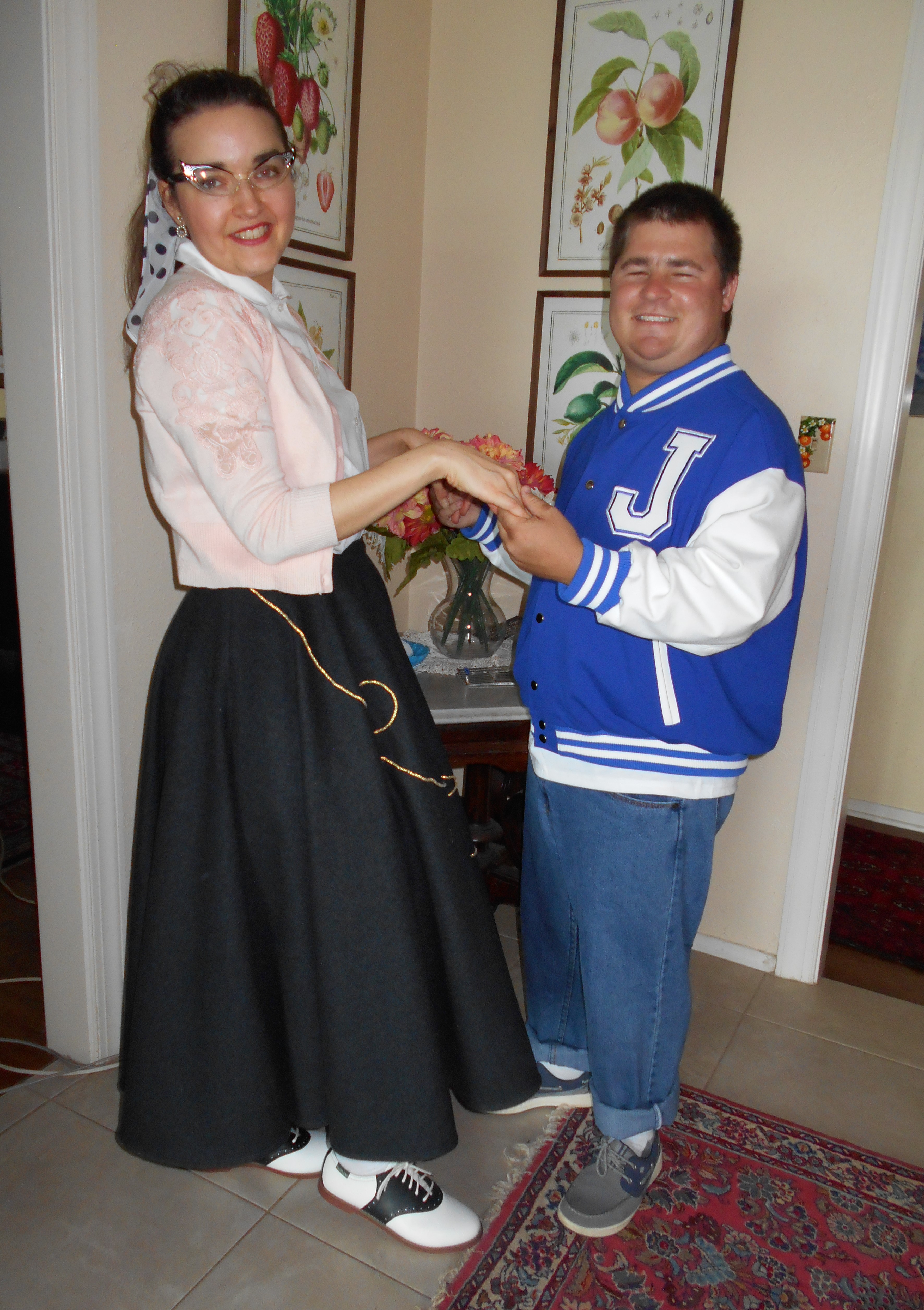
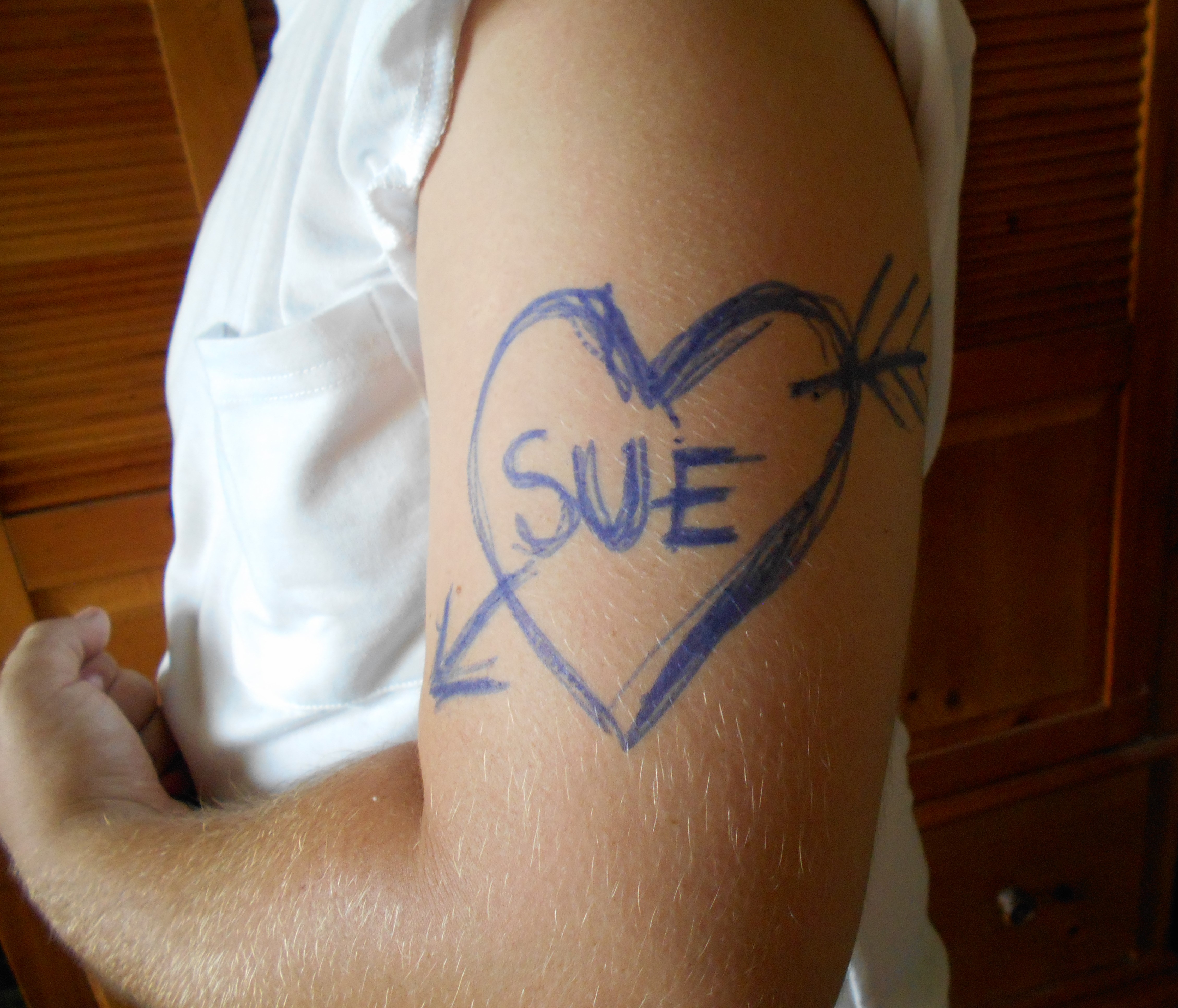
My mother gave Jacob a ballpoint pen “tattoo” on his arm, just like all the greasers of the 50’s. He said it kind of tickled and was “a little relaxing.”
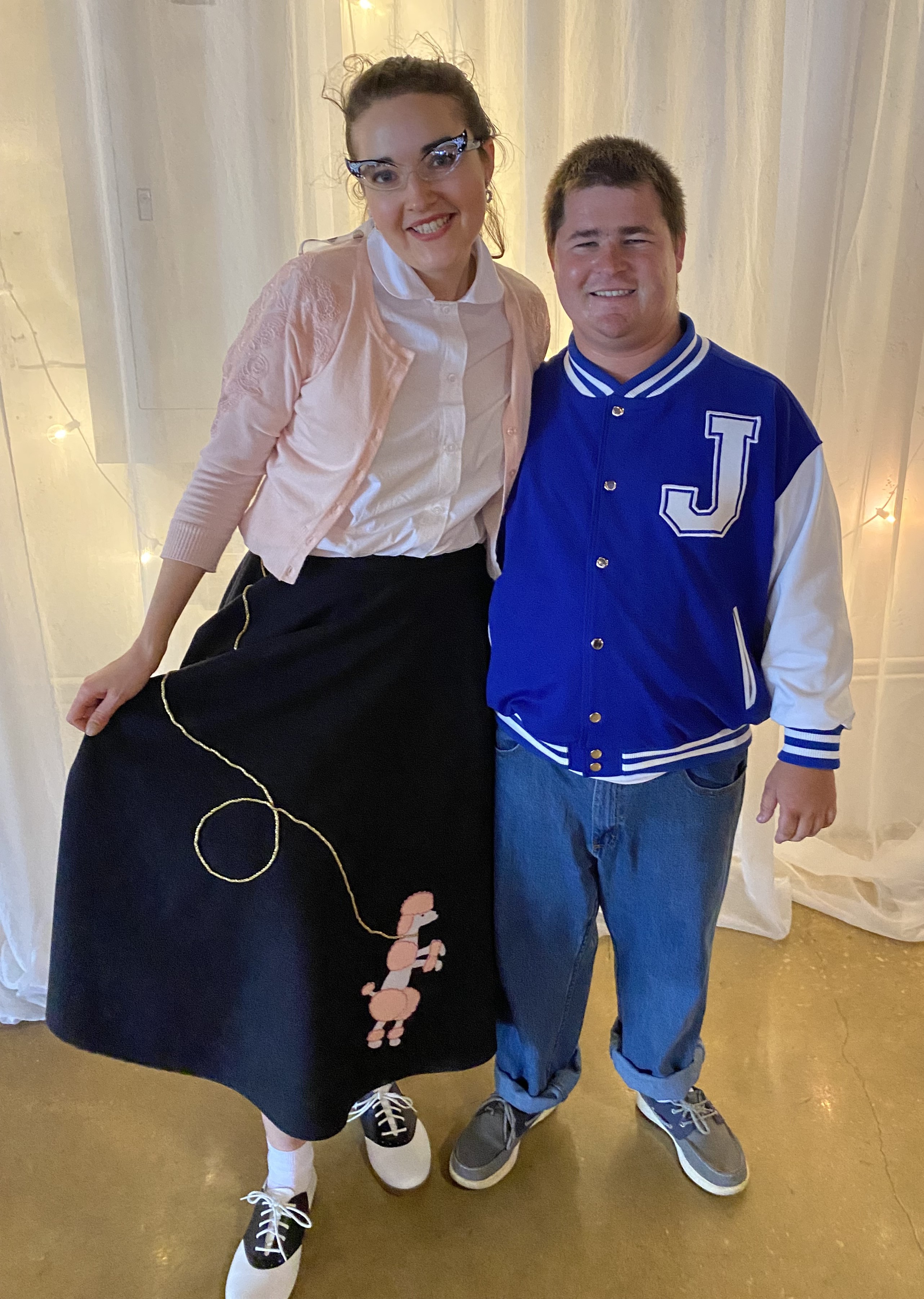
The fundraiser was a tremendous success ! Donations for socks and goodies were abundant and the music that played was hopping.
Rock around the clock !
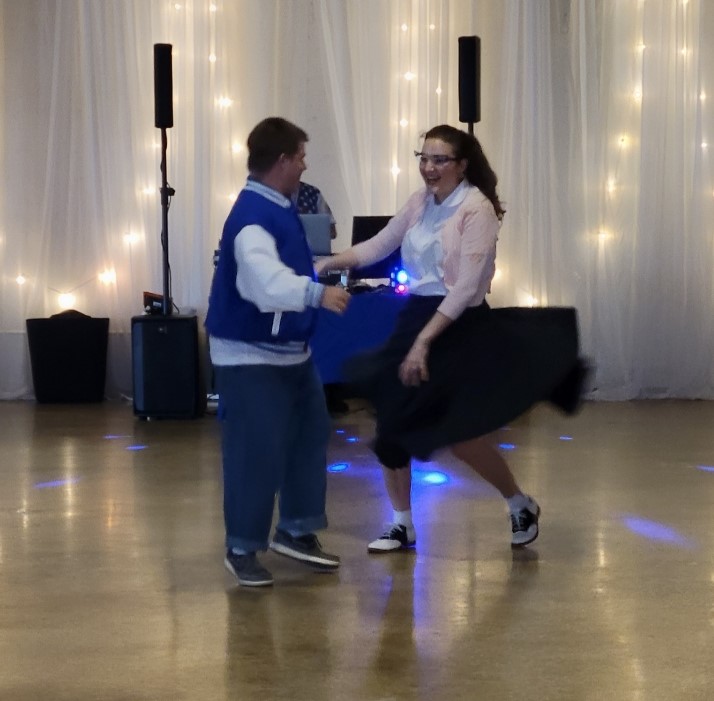
In between root beer floats, a generous candy bar, photo booth, cotton candy station, and a barbeque buffet dinner, Jacob and I danced the time away while wearing his mother’s high school and college class rings. How neat is that ?!
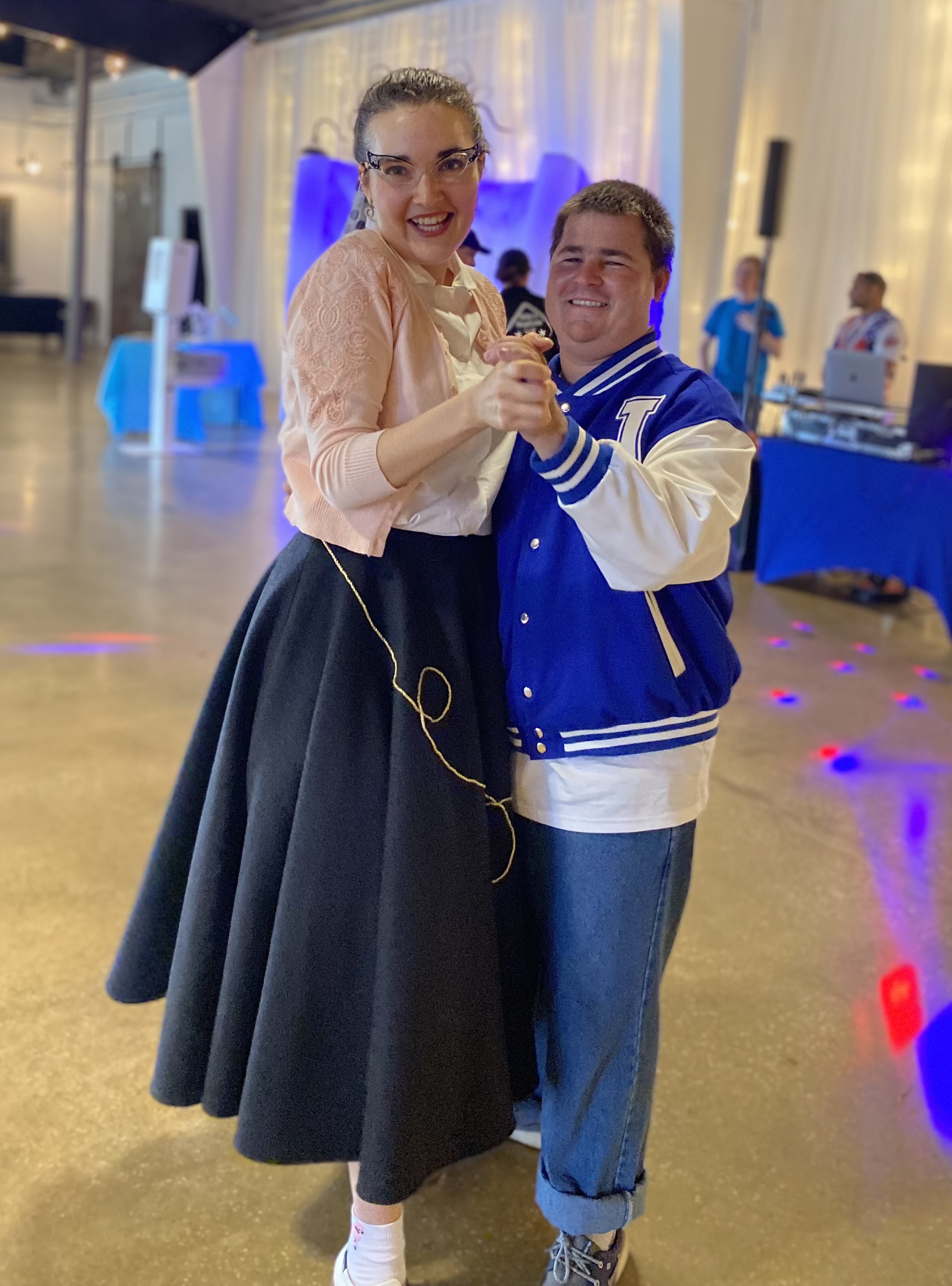
Excitedly, we cheered at the end of the evening when we won two of the raffle prizes: trips to Top Golf and the Titanic Exhibit. Whoo hoo !
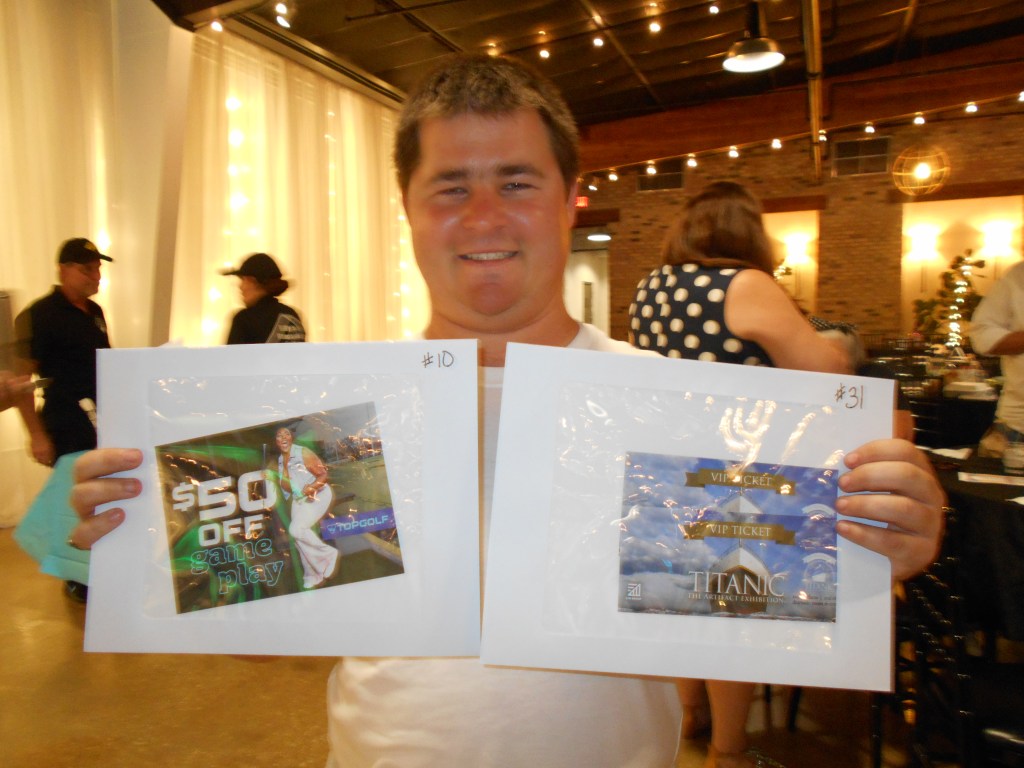
A thank you goes to the sponsors who made the event possible and for the benefactress who graciously invited me to sit at her table. Thank you, Mrs. Baker !
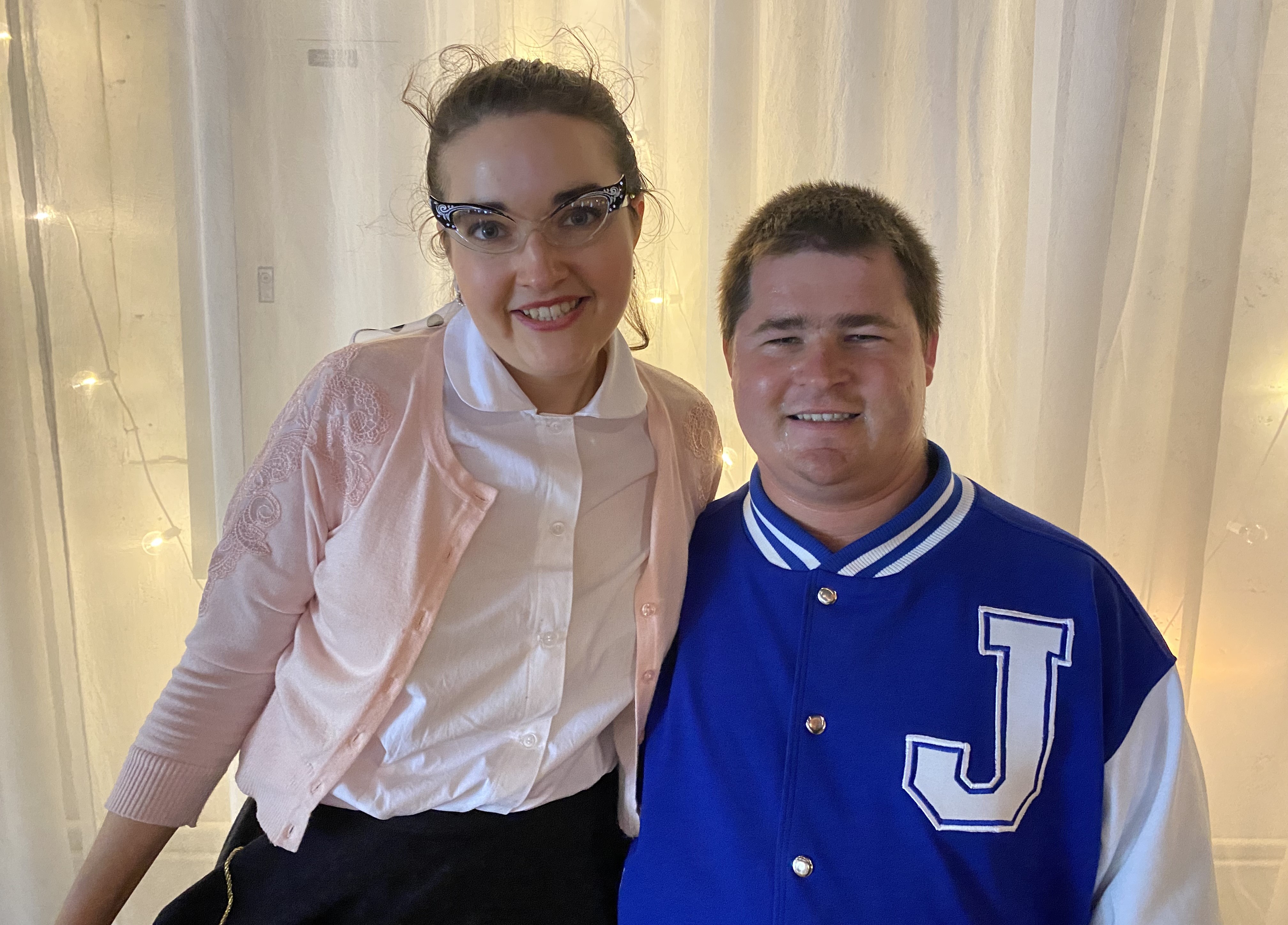
Whether attending a sock hop or just for confectionary fun, I highly recommend Folkwear’s vintage patterns for their authentic appeal and cultural connection. See you at the Hop !

Toi, Toi, Toi,

Mary Martha
Pearls and a “Perfect Fit” Blouse

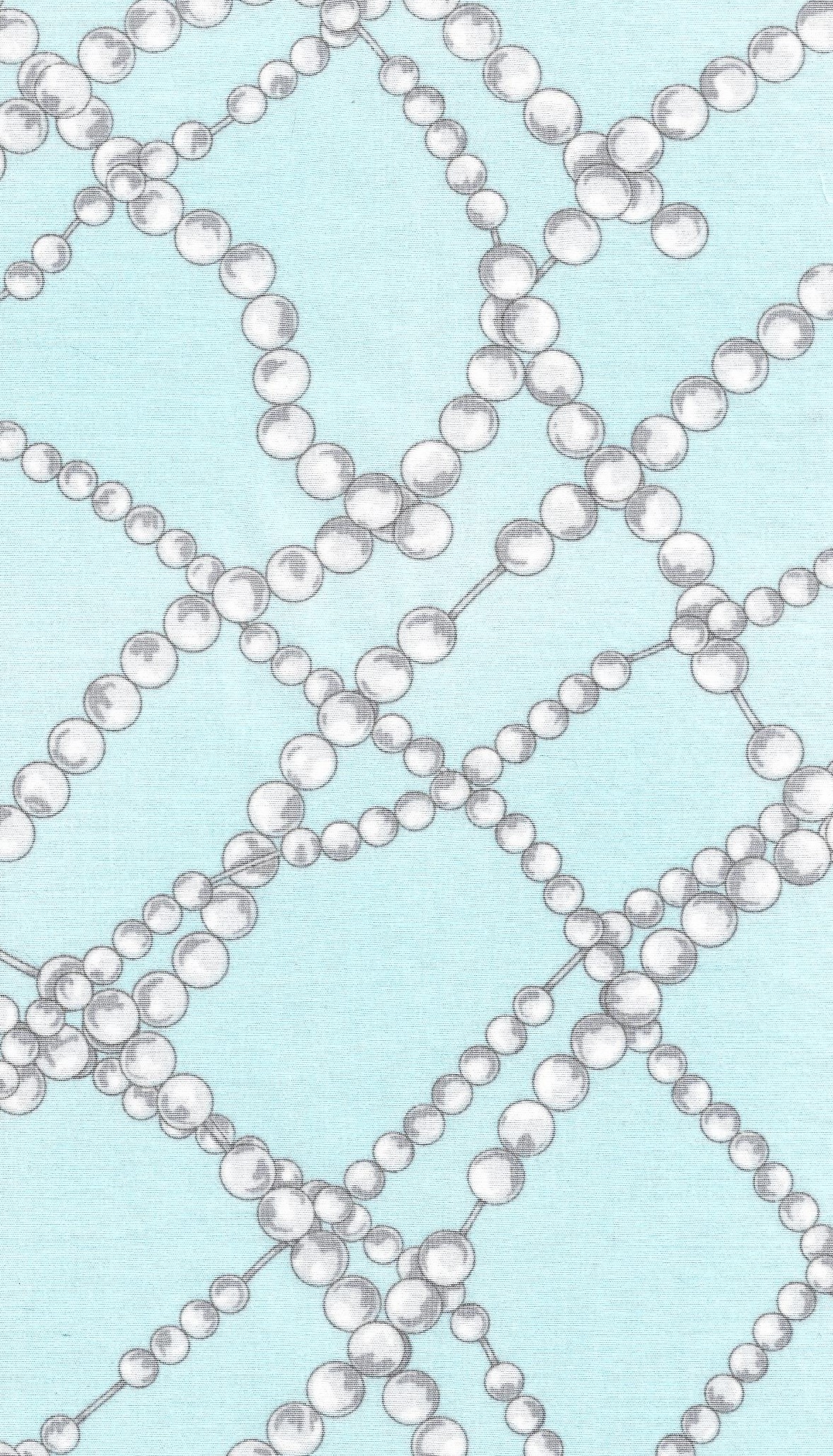
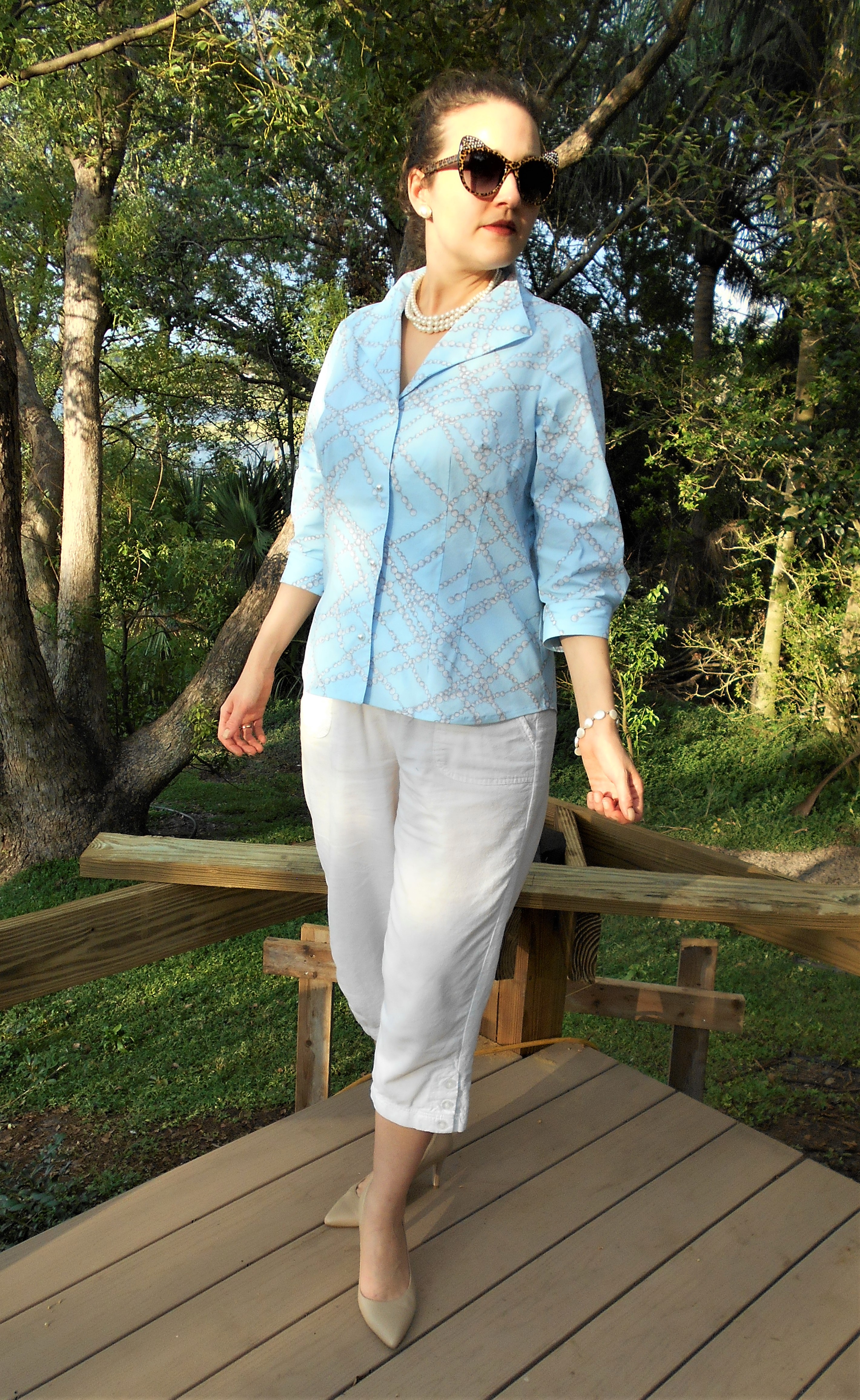
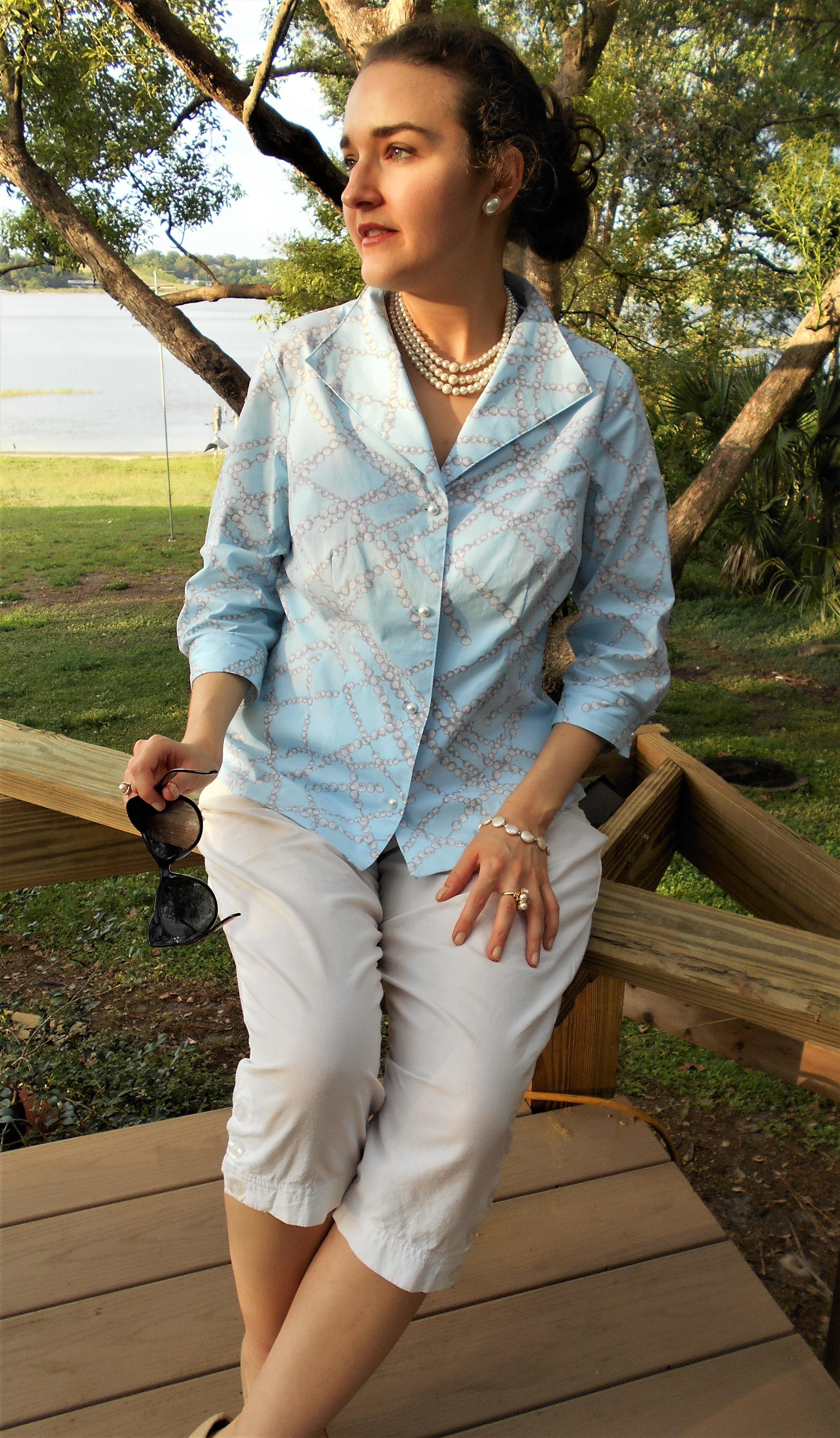
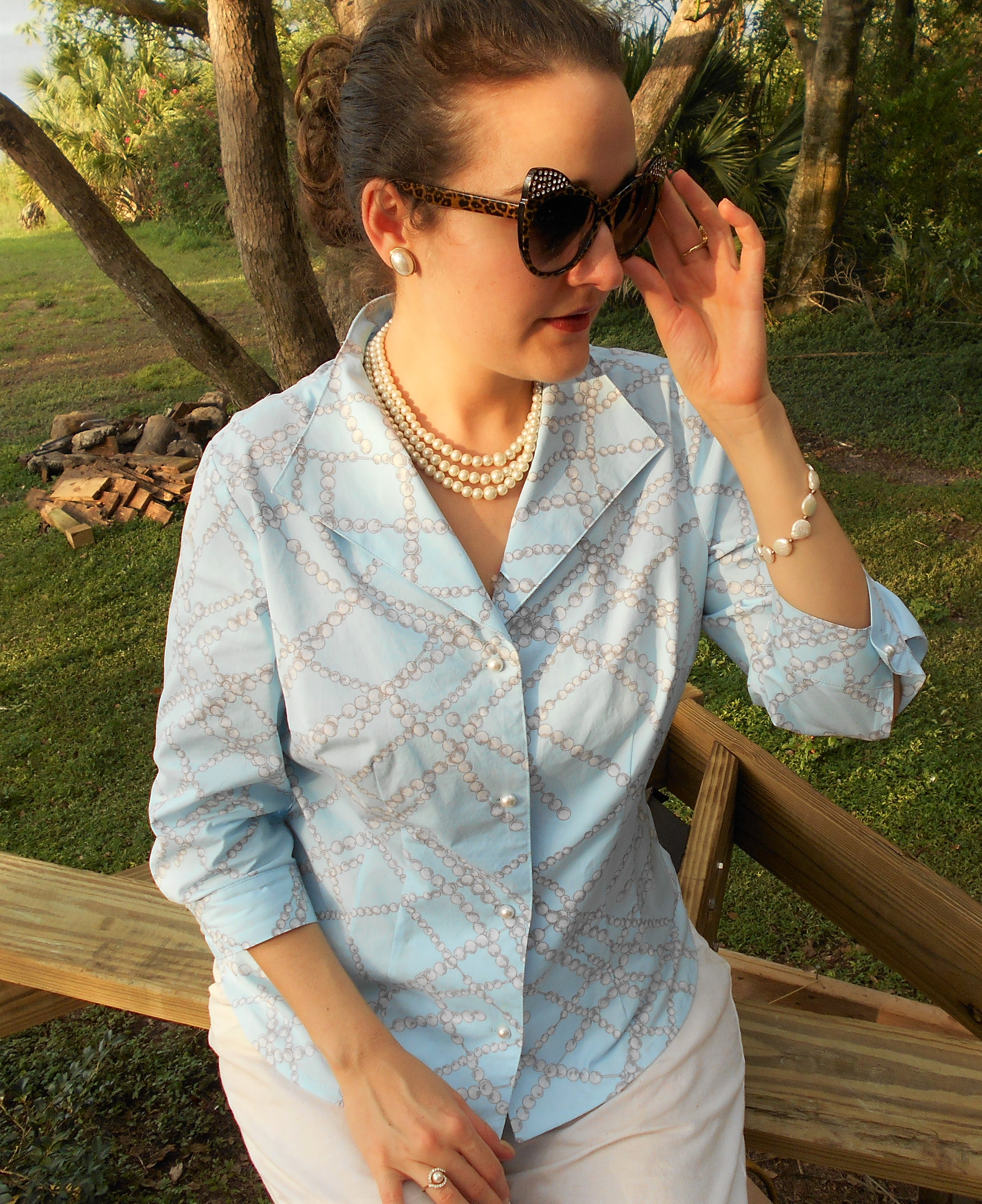
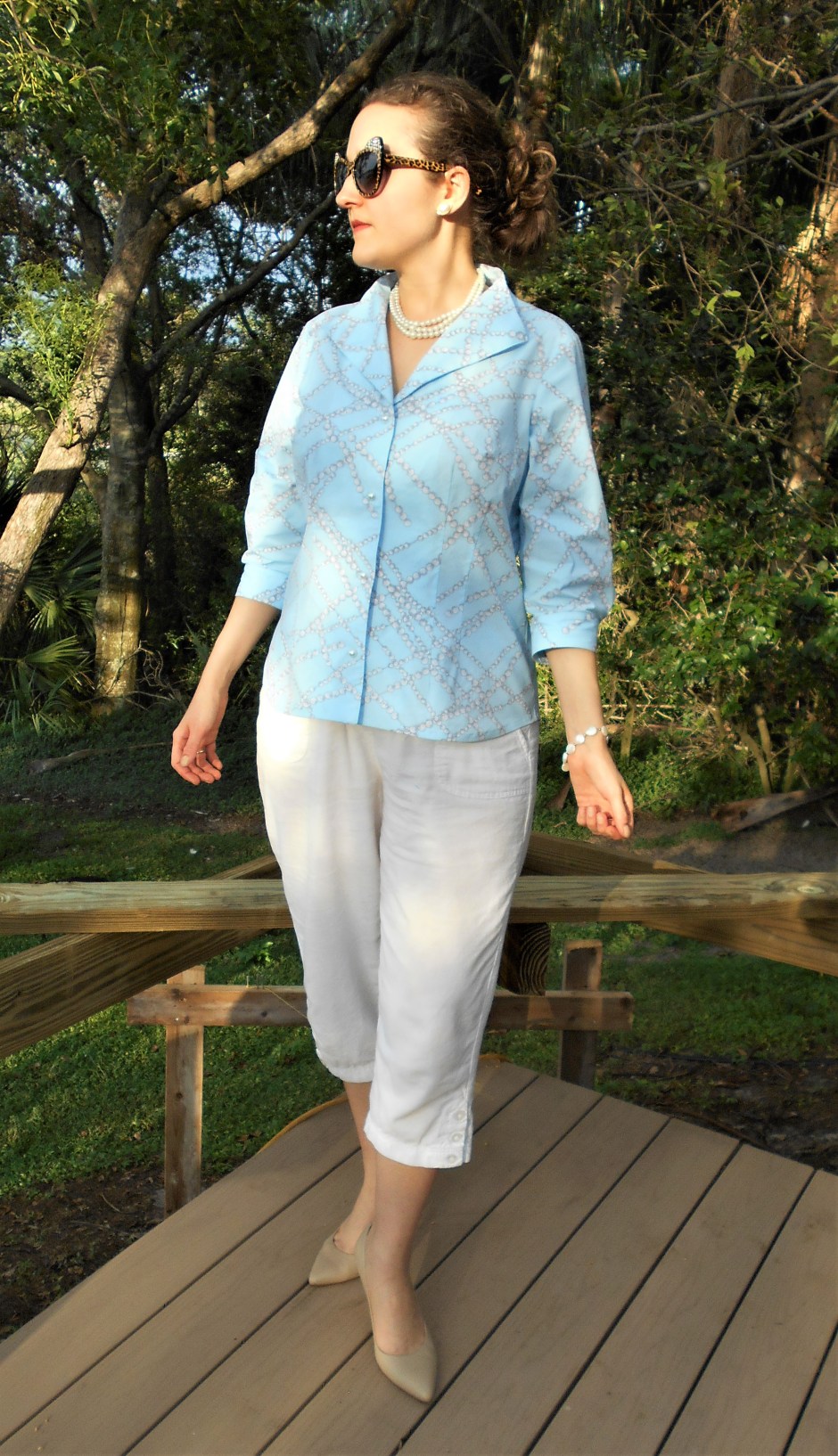
I love pearls the way a bear loves honey. They’re classic, a Southern staple, and compliment almost any outfit. When I came across a particular swatch of stretch poplin shirting, replete with strings of pearls across a pale sky blue background, I knew I had to have some.

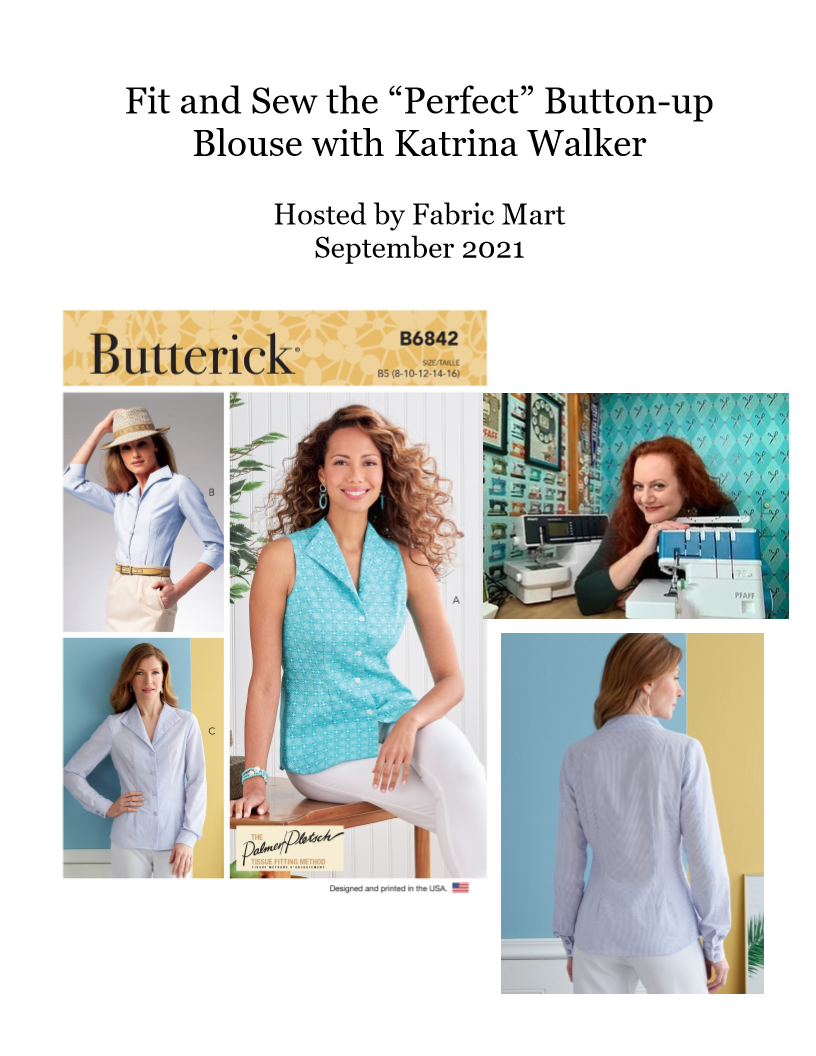
My intention with the pearl poplin was to finish my long-awaited “perfect” blouse from the fit and sew virtual class I took in September 2021 with Katrina Walker.

Unfinished projects irk me. Unfortunately, they happen all too often in my life. When I first began working on the “perfect” blouse in 2021, I had cut the pattern pieces out of inky black silk charmeuse. A lack of proper starching resulted in distorted facing pieces and collar points that had already been sewn and clipped before a detrimental flaw was noticed. The mistake was devastating and I relegated the project to File 13. Although my momentum was abated, I reasoned that a sturdier, easier-to-sew fabric (like poplin) would provide a confidence boost, just in case I one day decide to try my hand at a charmeuse blouse again.

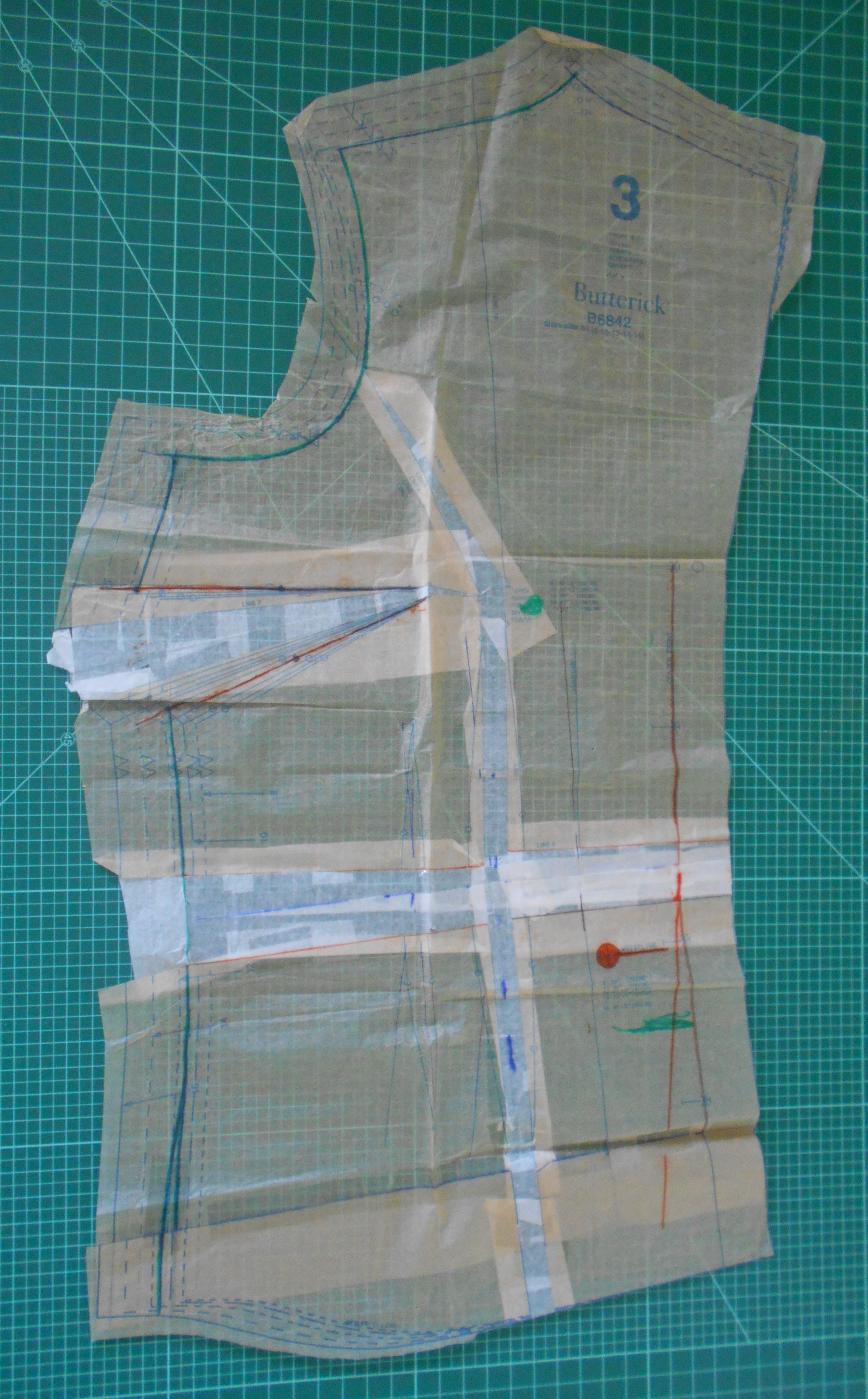
My pattern pieces were already altered from when I took the class in 2021, which made for an expedited experience.

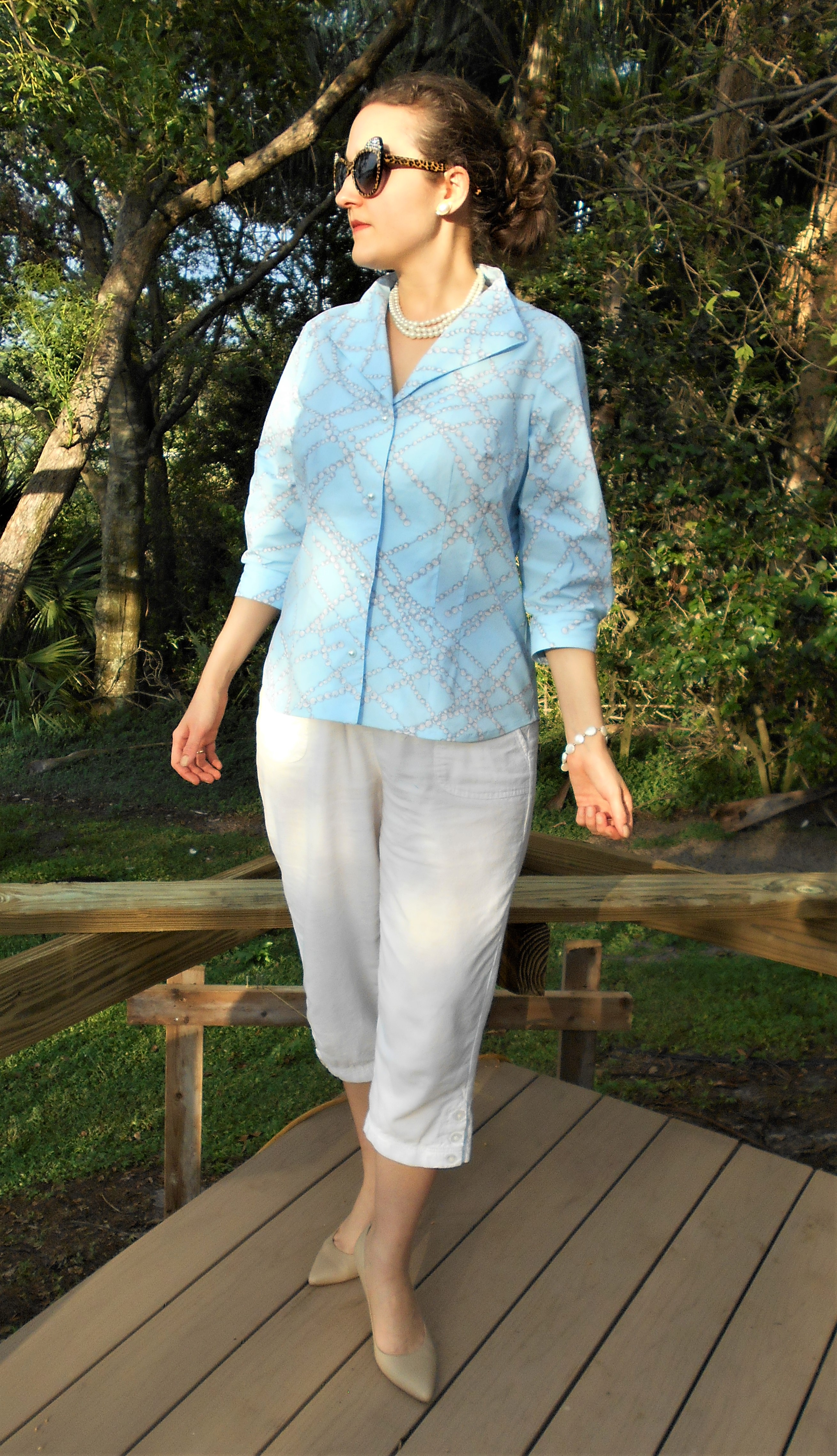
And after a relatively quick sew, my blouse was completed with pleasing results.

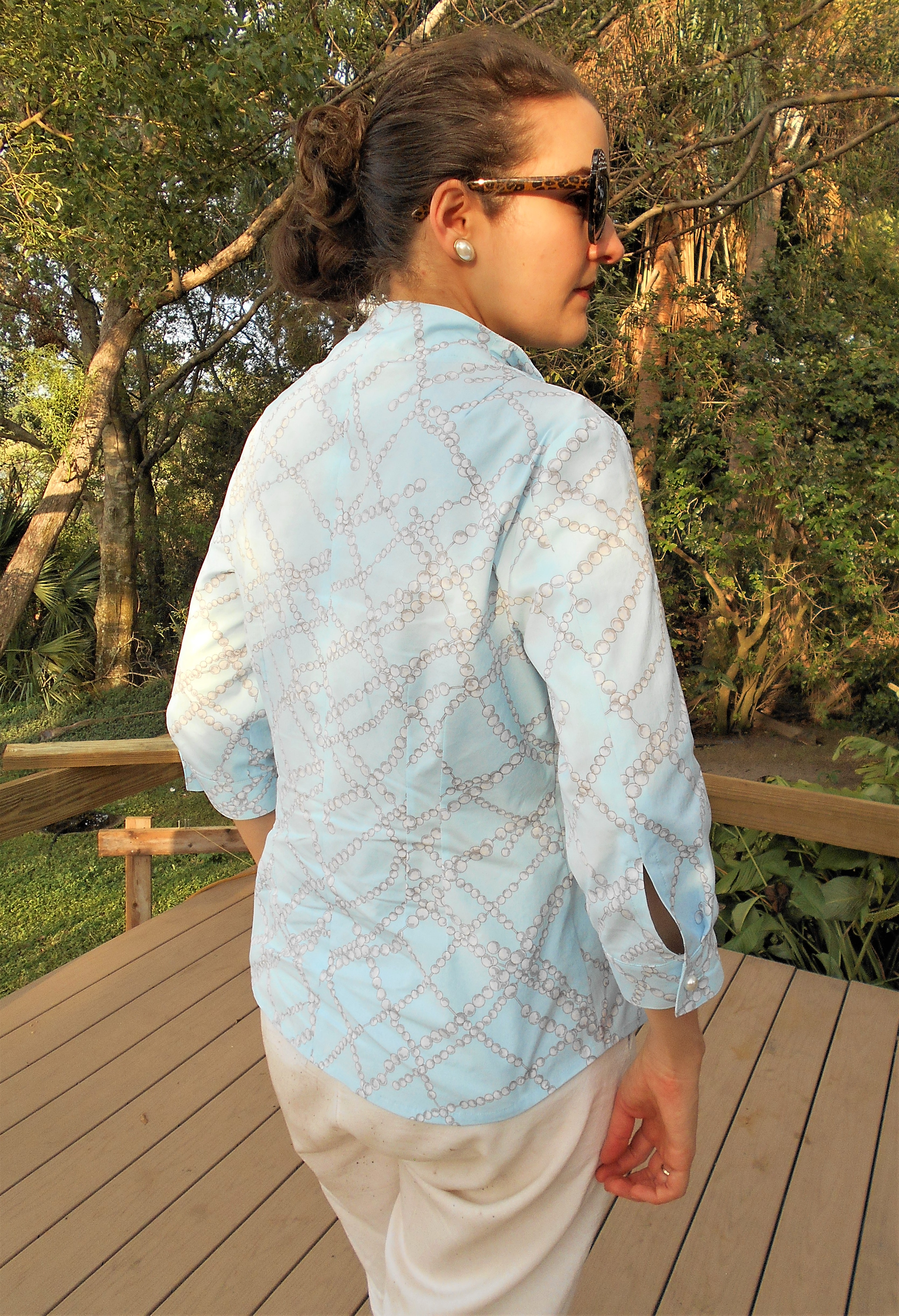
Fisheye darts at the front and back made for elegant shaping along the midsection…

…and ¾ sleeves added sophisticated flair.

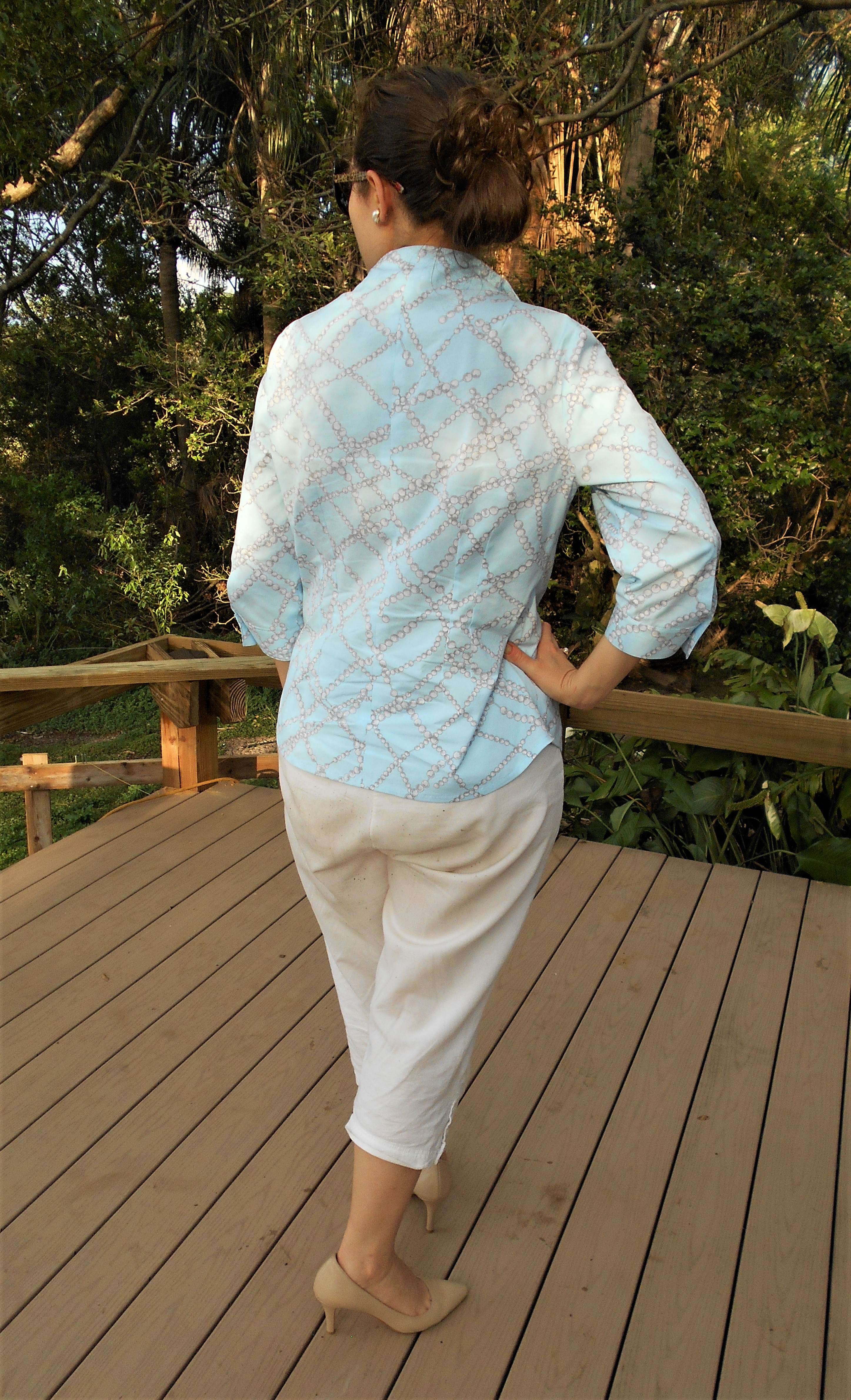
With most store bought shirts, one of my biggest complaints is the pooling of fabric at the small of my back. Applying a swayback and full bottom adjustment on the paper pattern piece gave me a smooth backside. Hooray !

If there was one thing I would change, it would be to double up the pearl buttons down the front since I feel at times that my top button is an inch too low.

Thanks to the lessons of Katrina Walker and a forgiving fabric, I now have the confidence to sew fitted blouses with numerous darts. And the best part is… my pearls match ─ perfectly.

Toi, Toi, Toi,

Mary Martha

Lohengrin: Swan Knight Bride

It’s no secret that I love a good secret, especially when that secret surrounds the identity of an individual. Much like my all-time favorite opera, Turandot, the German fairytale of Lohengrin is shrouded in mystery as to the name and origins of its central character. But my penchant for sworn confidences is only part of why Lohengrin reigns as co-champion for my favorite Wagnerian opera.

A scene from Lohengrin / Metropolitan Opera

Including the ethereal prelude, which felt like a cathartic sound bath under the spell of Yannick Nézet-Séguin’s rapturous orchestra, and the bated breath aria “In fernem Land” in Act III, I am moved to hallowed stillness by the nobility of the piece. The purity, blind faith, and exalted submission of the hero to a higher power elicits sighs of romantic grandeur from my heart. Perpetually, the opera inspires me to a greater character of soul. And while I have never been one to wear my heart on my sleeve, I think it can be veritably said that there is no female alive who does not inwardly swoon over a knight in shining armor, coming to the rescue of a damsel in distress. Myself, included.

Tamara Wilson, Günther Groissböck, and Piotr Beczała in Lohengrin / Metropolitan Opera

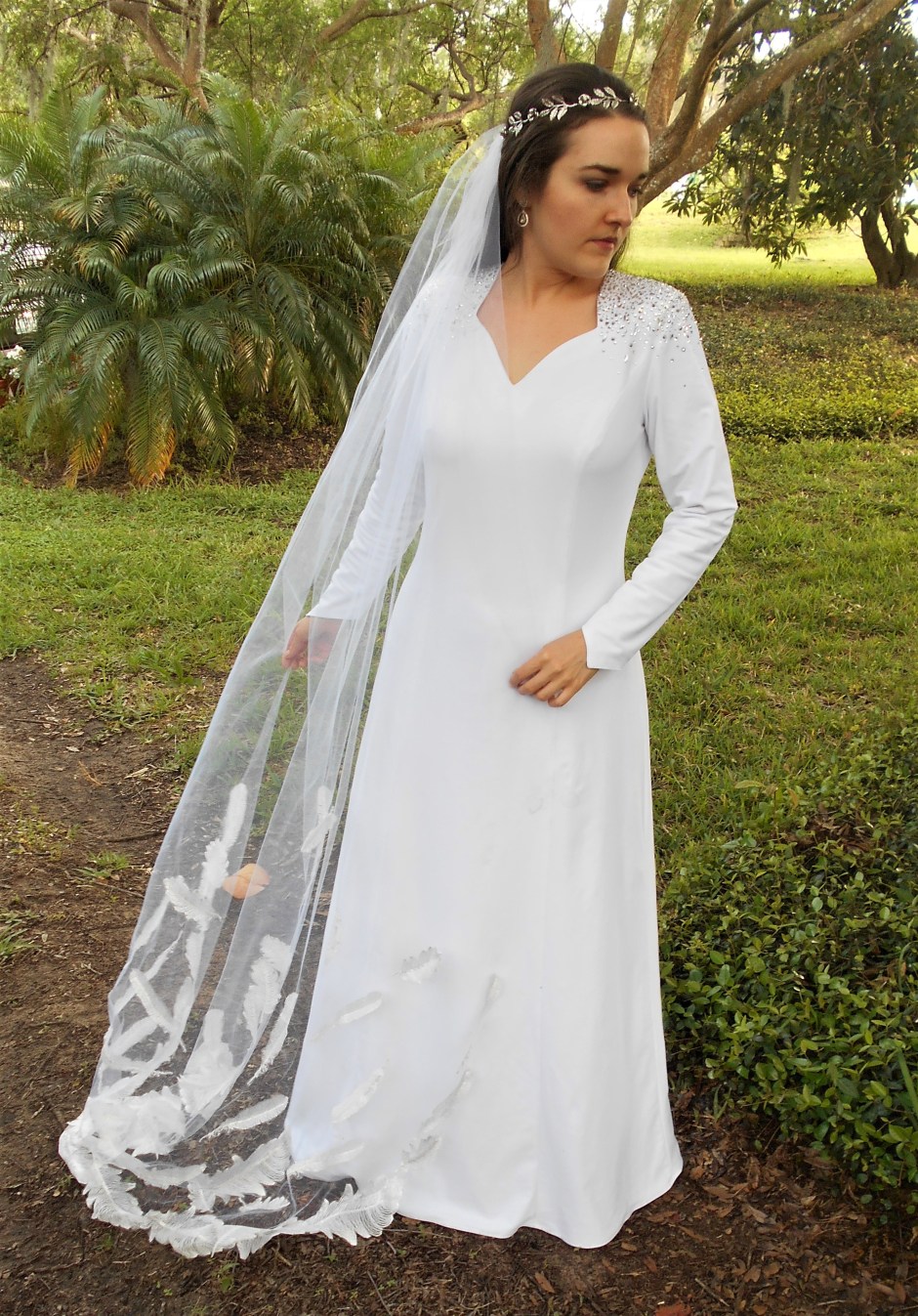
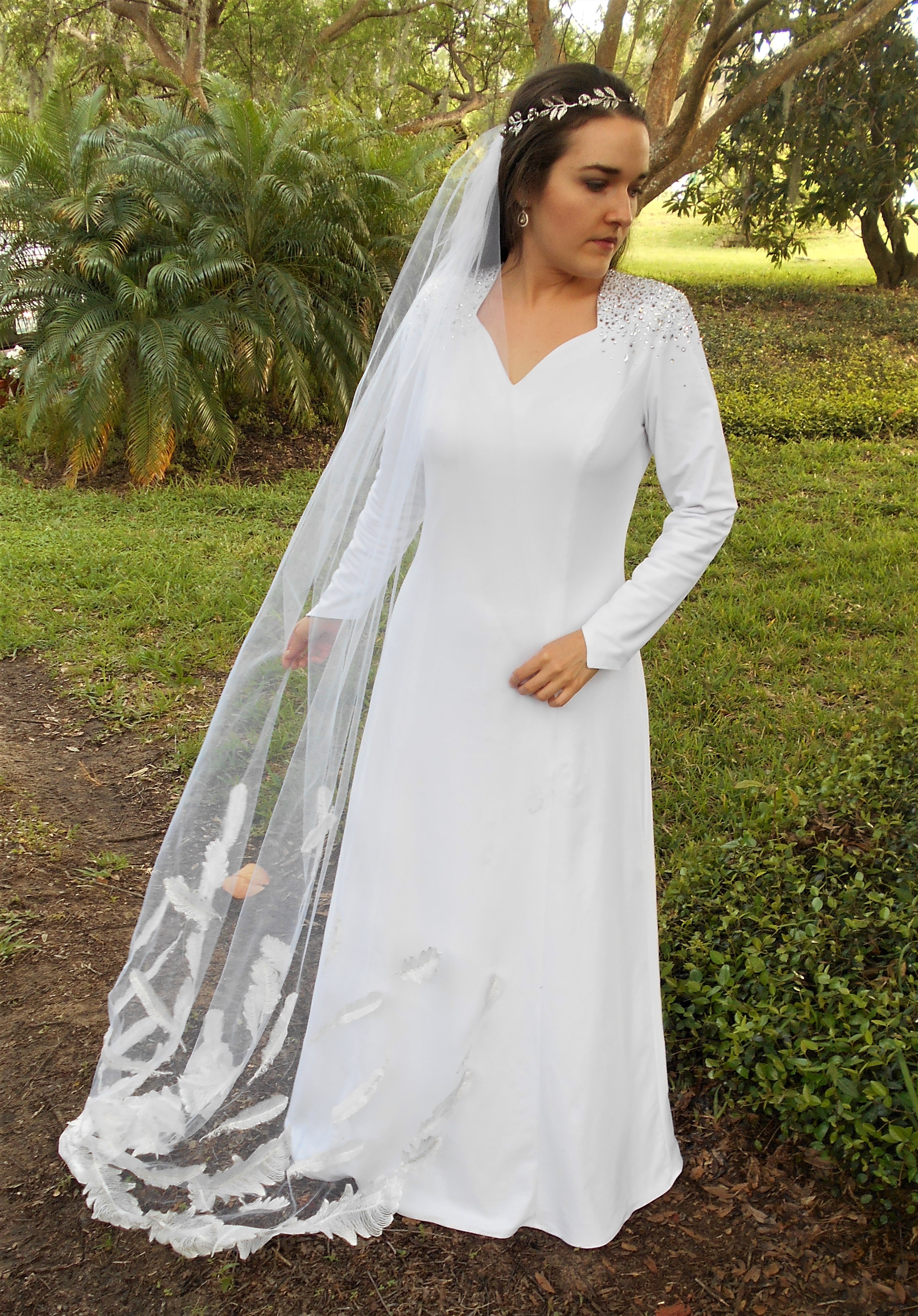
Before Lohengrin was ever scheduled to appear at the Met, I always knew what I would create for the occasion. Years passed before I could fulfill my vision for the opera, but my daydreams never waned. Finally, the moment arrived. Swan Knight Bride was the culmination of central plot points in the opera: the swan that tows the skiff carrying the knight to defend the innocent Elsa, who then becomes his beloved bride.
My idea was to assemble all these elements and blend them into a “Modern Medieval” look with simplistic styling. And so, the process began.

Creation

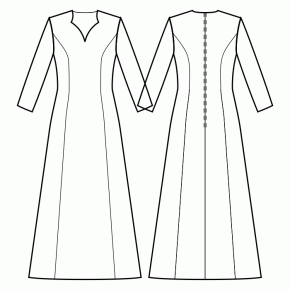
Starting with a proper foundation was important, especially since I had distinct parameters for how I wanted the gown to look. When I discovered the Sewist design website, I was in “dress dream” heaven. Below is the base gown I “designed” using the mix-and-match software offered for free by the company:

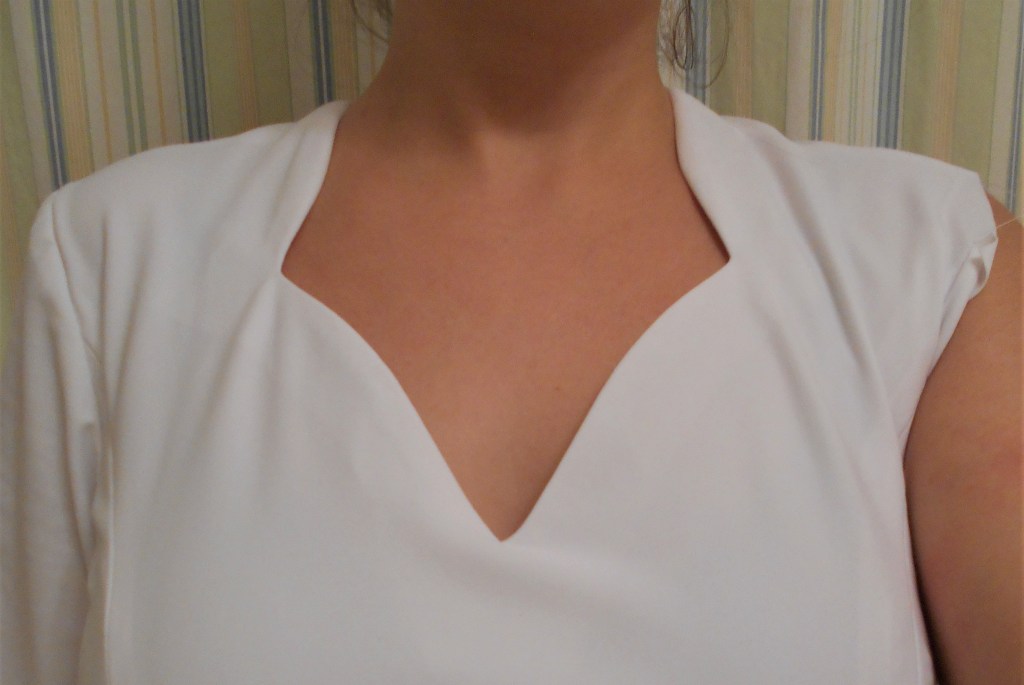
I loved the jewel sweetheart neckline as a sleek and stately alternative to a traditional Queen Anne neckline. Even with my customized pattern, I needed to do some additional fitting to account for my knit fabric and provide added stability around the pointed contours of the neckline. Taking a class from Katrina Walker on how to sew pretty necklines for knits paid off grandly as my heavy, slippery tricot fabric looked flawless after the techniques were applied. Thank you, Katrina !

Fitting the dress with a stabilized neckline

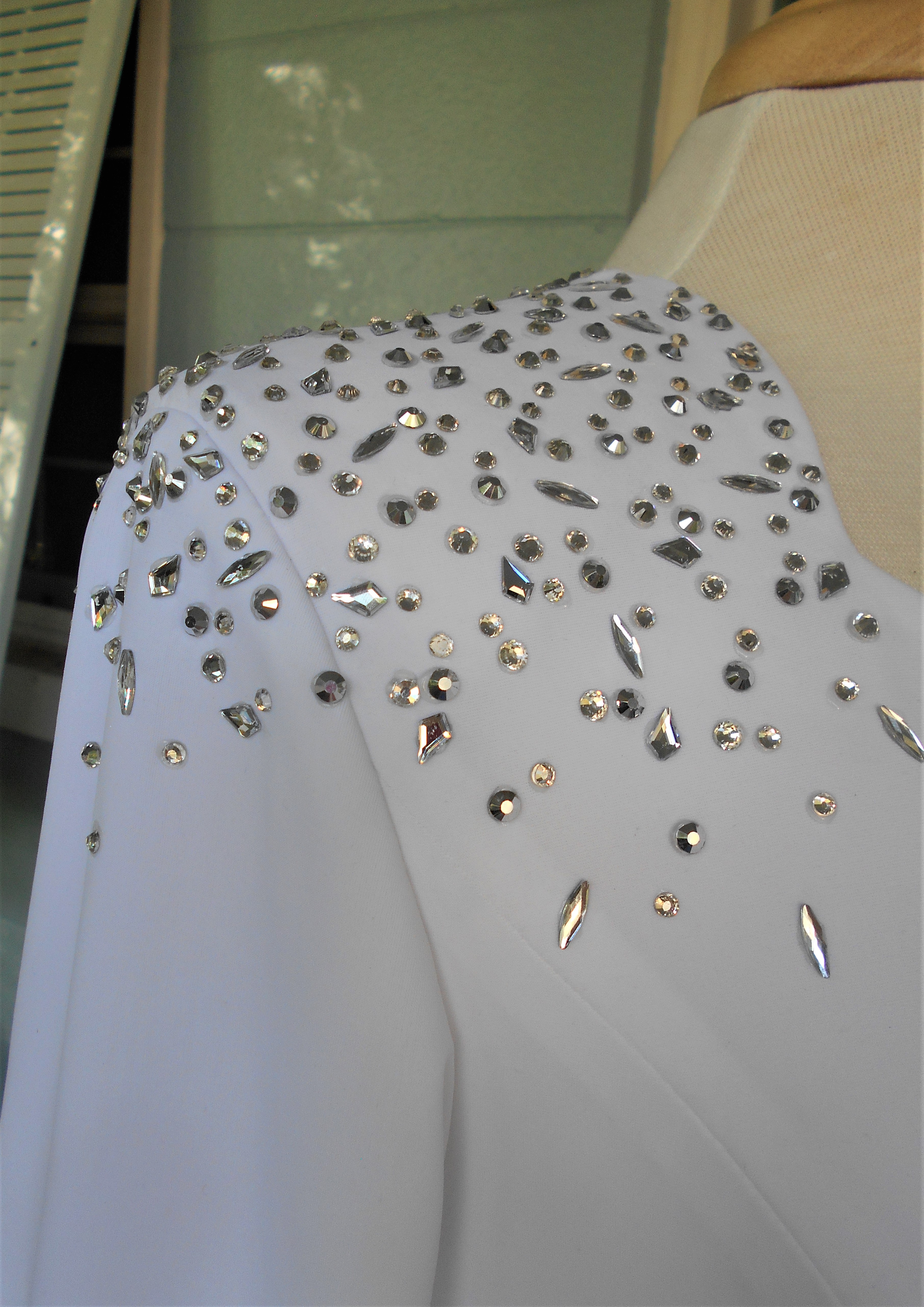
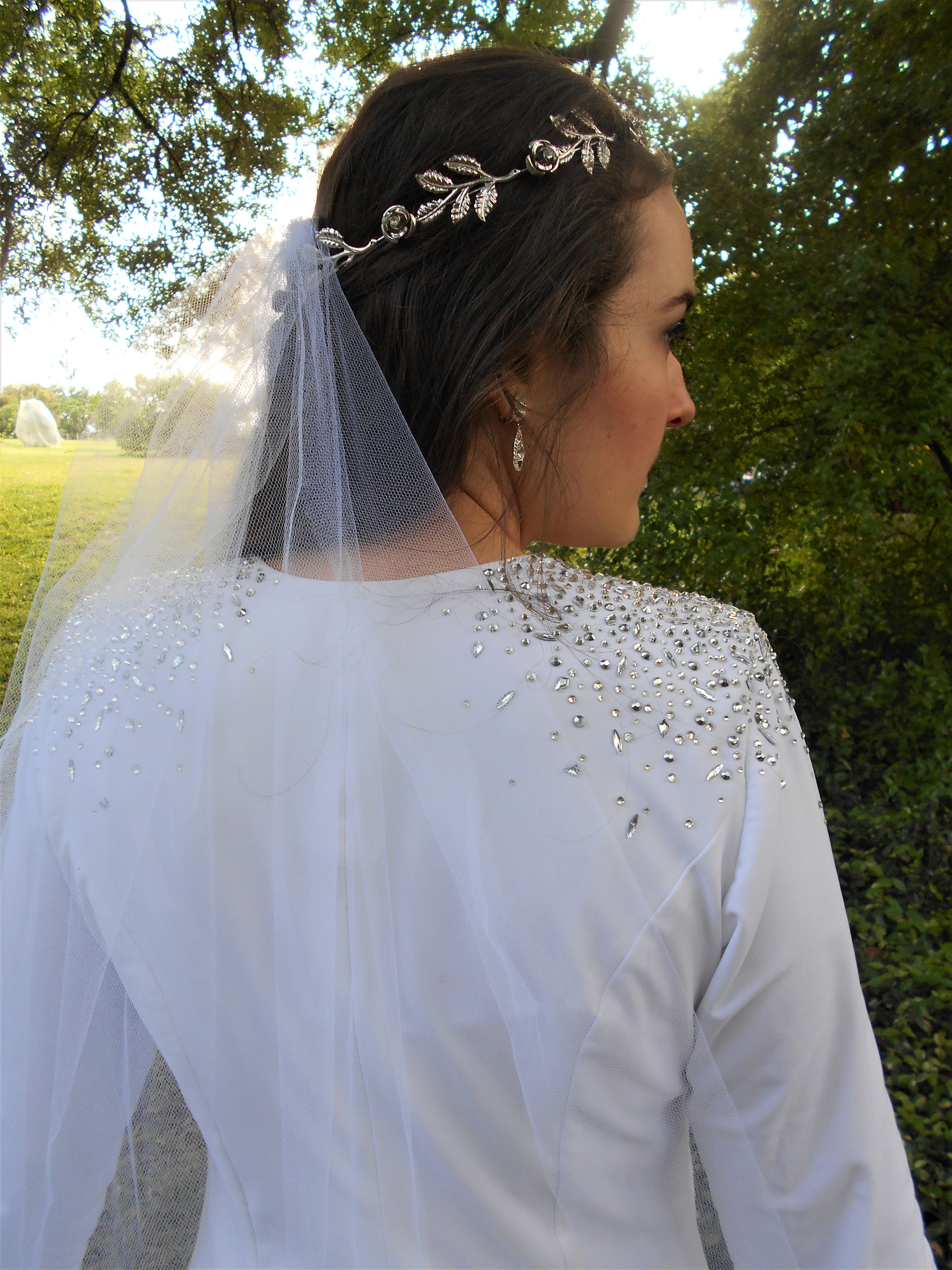
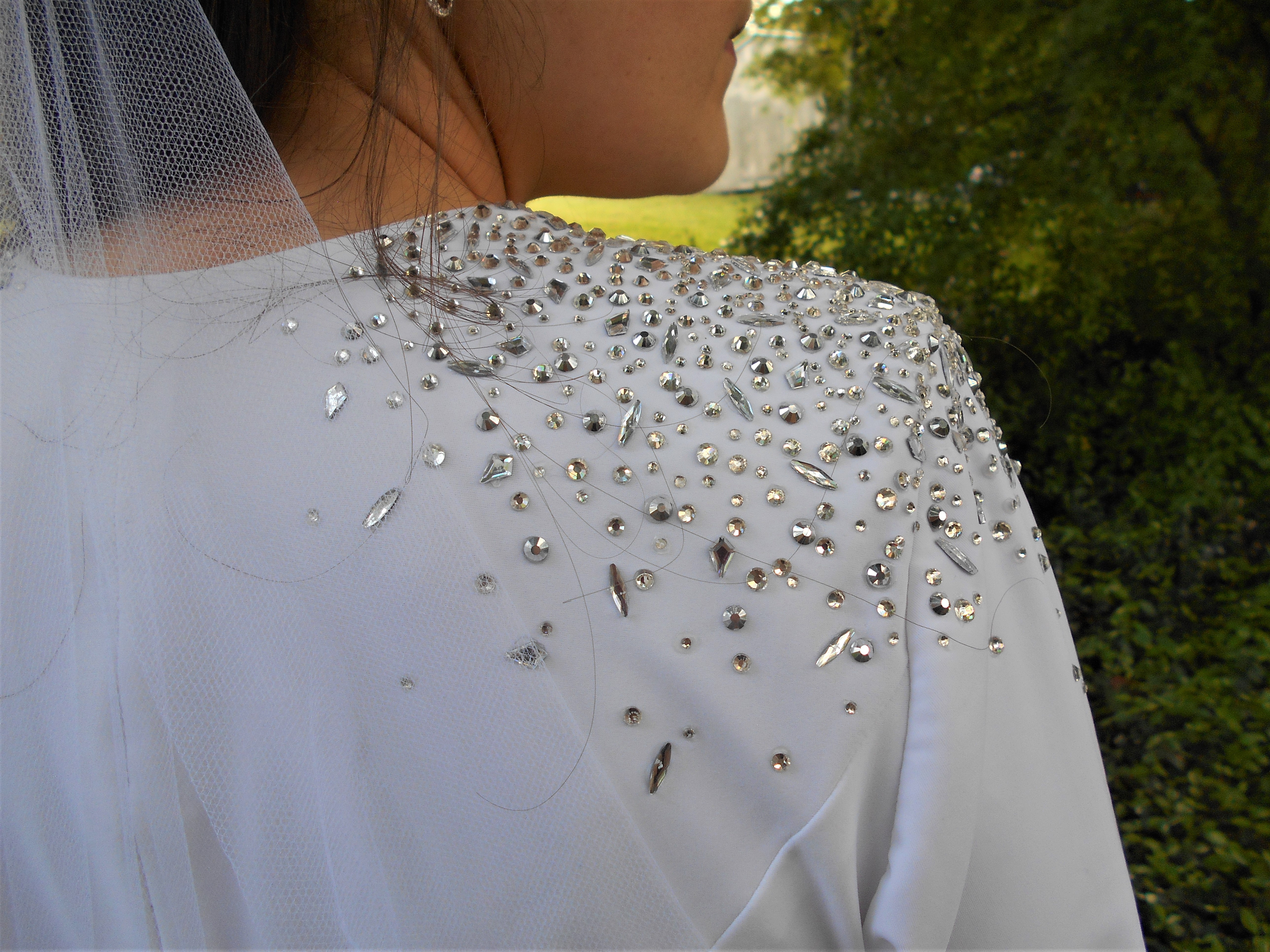
For the “knight” representation, my plan was to liberally bedazzle the shoulders of the gown with metallic rhinestones in a gradient effect as if some of the Grail’s mystic power had descended upon my shoulders. The plain gown underwent a resplendent transformation as each rhinestone was applied entirely by hand.

The knight’s “shining armor” in progress

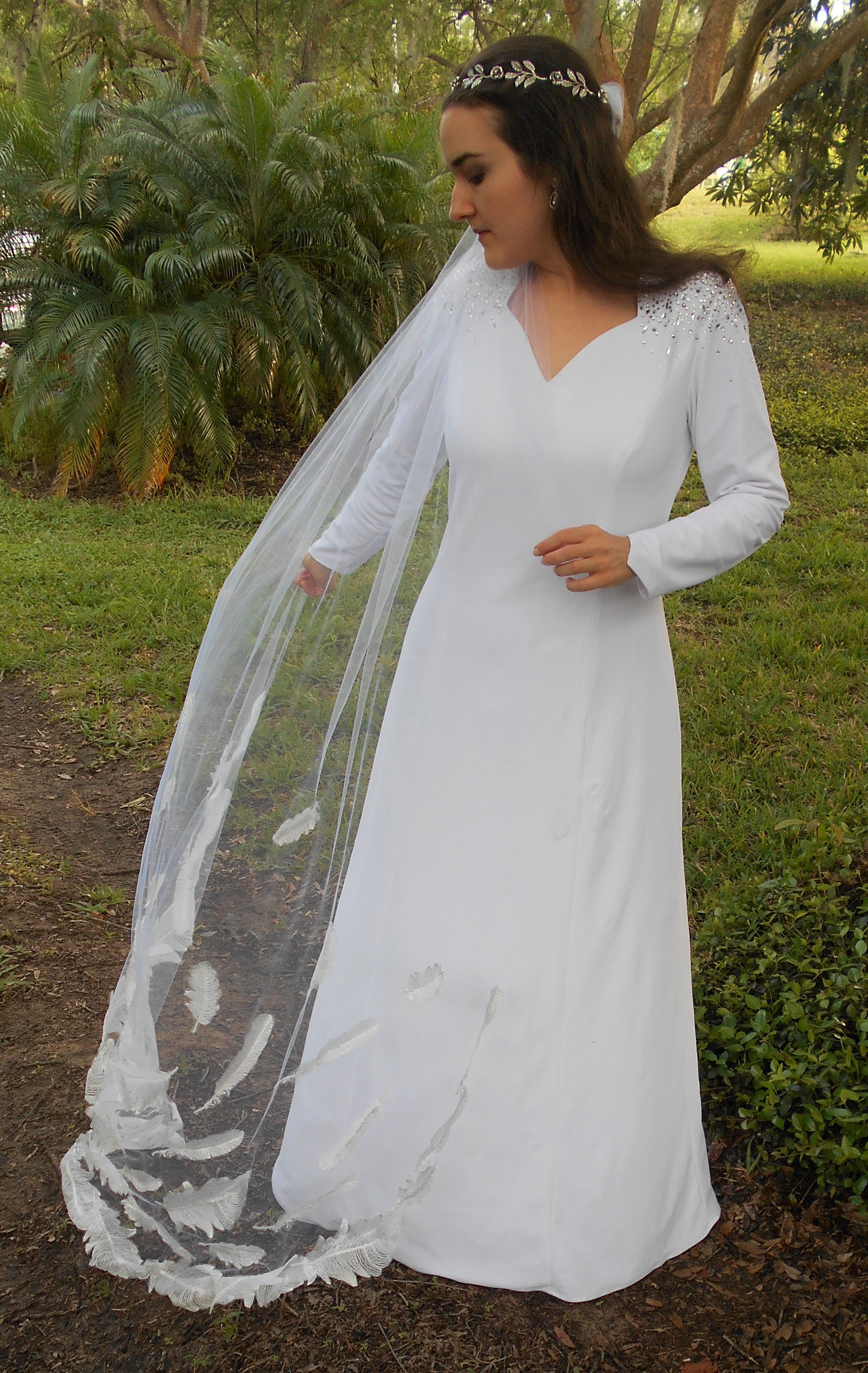
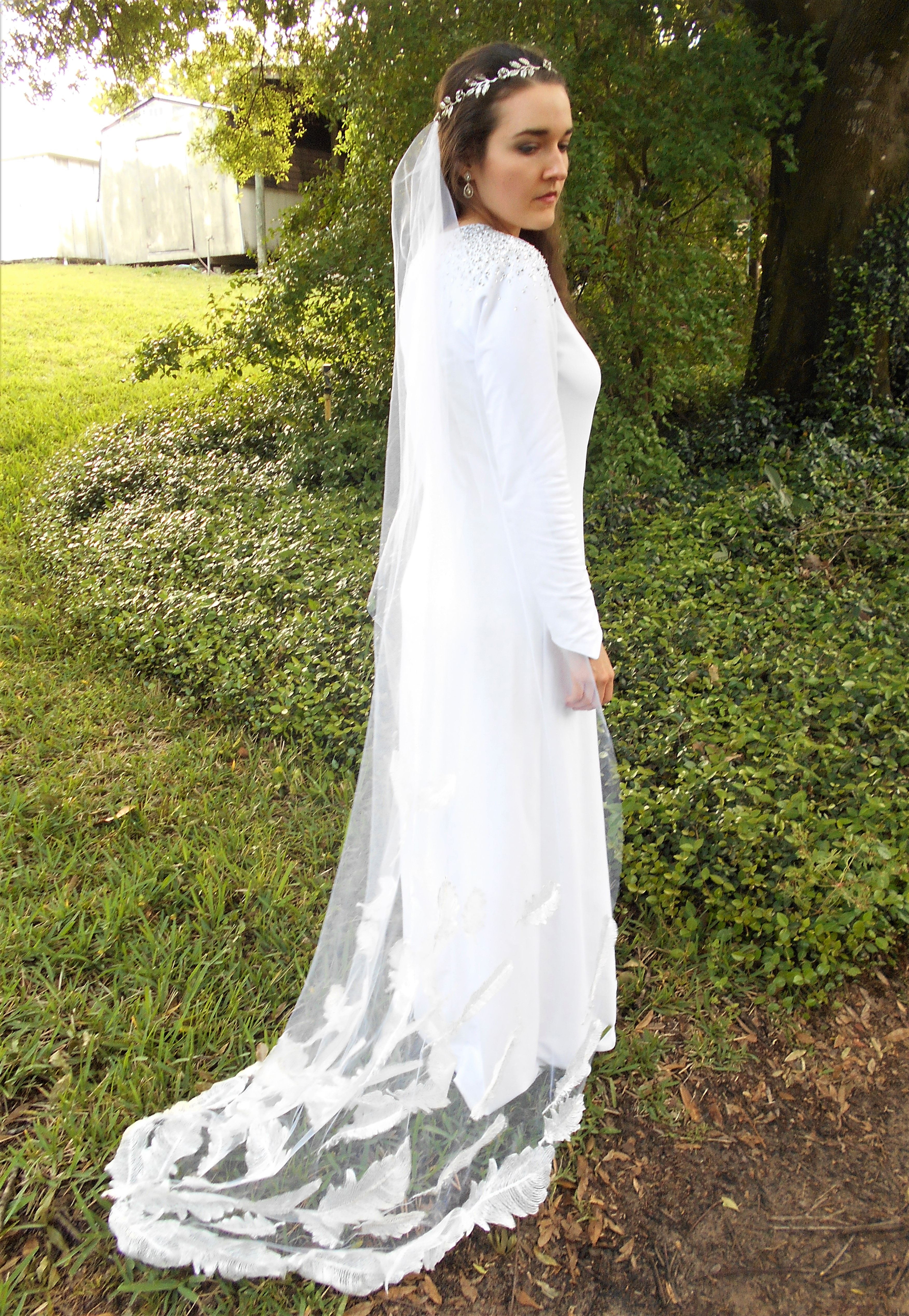
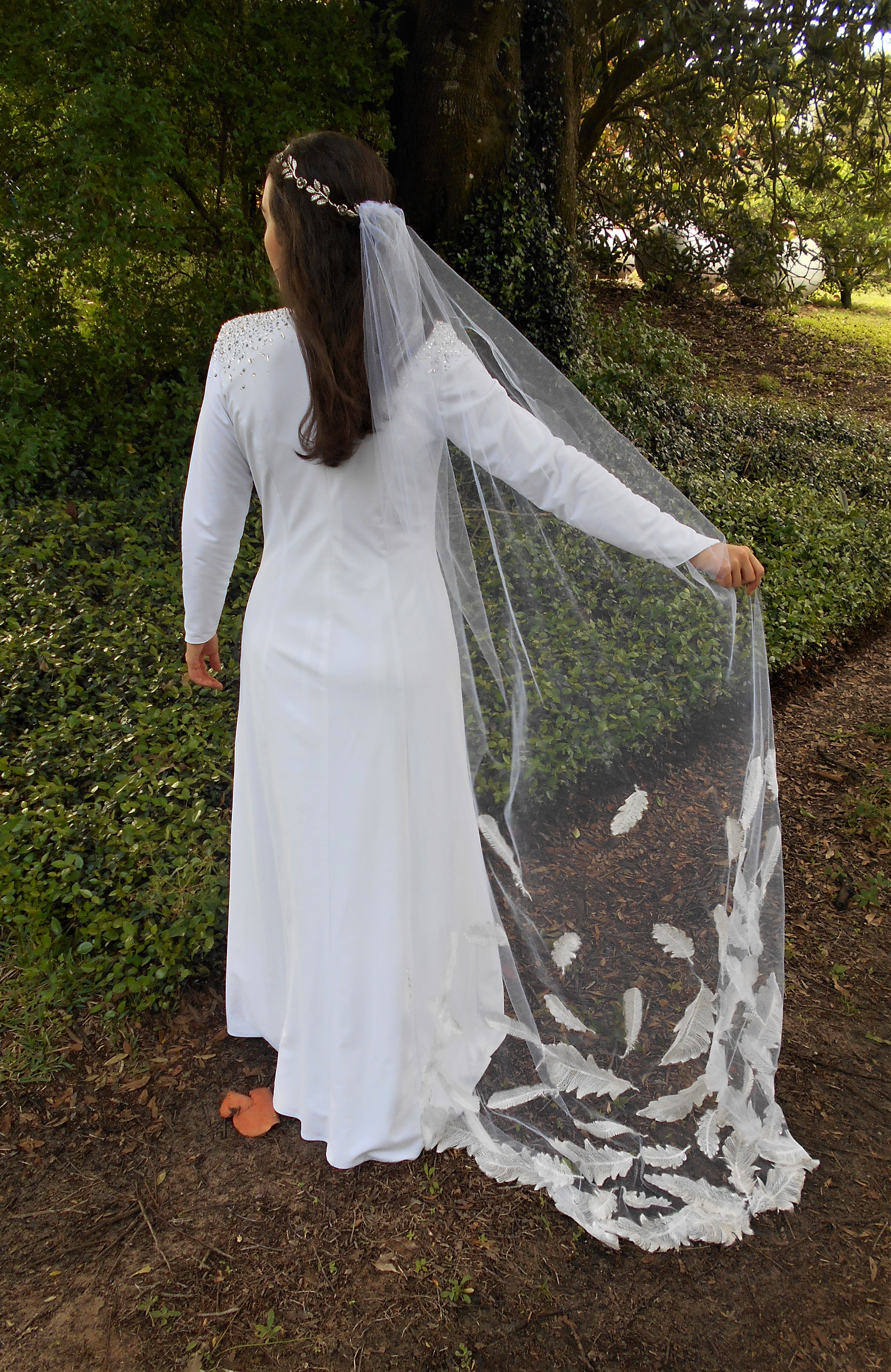
What’s a bride without her veil ? Here is where I decided to implement “mein lieber Schwan.” Mirroring the gradation on my shoulders, my aim was to have the veil look as if feathers were gently floating in soft swishes. Originally, I was just going to gather several yards of an embroidered tulle, but after realizing the mesh was too soft and stretchy for a veil, I opted to extract the feathers from the mesh using scissors and a soldering iron and then attached them onto a more suitable tulle.

With all components complete, I added an oak leaf crown to symbolize the meeting place at the beginning of the opera as well as to lend a Medieval touch to the outfit. Swan Knight Bride, at last !

The crisply turned out neckline and the sparkle from the silver rhinestones made me feel so glamourous and noble.

With hundreds of jewels applied by hand, the gown’s decoration was a labor of love… but so worth it !

A Medieval gown cannot be without its bridal point sleeves ! Altering the sleeve pattern to include them gave me fits, but they were gorgeous in the end.

To Wagner’s Lohengrin, only one thing can be said… “I do !”

Toi, Toi, Toi,

Mary Martha

Cast and Credits:

Lohengrin ─ Richard Wagner (1850)
Live in HD air date: March 18, 2023

Cast:
Lohengrin ─ Piotr Beczała
Elsa ─ Tamara Wilson
Ortrud ─ Christine Goerke
Telramund ─ Evgeny Nikitin
Herald ─ Brian Mulligan
King Heinrich ─ Günther Groissböck

Credits:
Conductor ─ Yannick Nézet-Séguin
Production ─ François Girard
Set and Costume Designer ─ Tim Yip
Lighting Designer ─ David Finn
Projection Designer ─ Peter Flaherty
Choreographer ─ Serge Bennathan
Dramaturg ─ Serge Lamothe
Live in HD Director ─ Gary Halvorson
Host ─ Christopher Maltman

My Costumes Were Featured in the P.E.O. Record

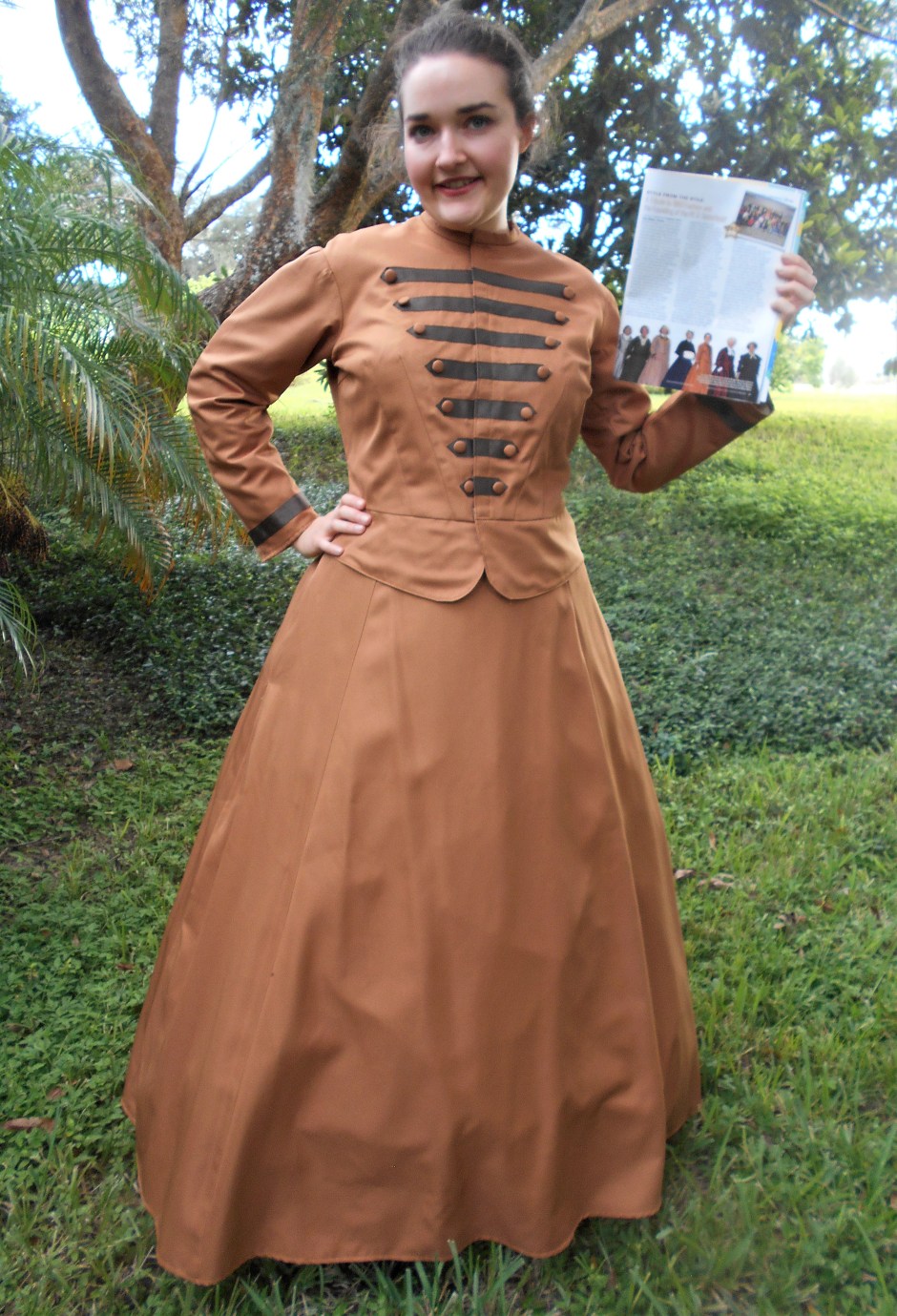
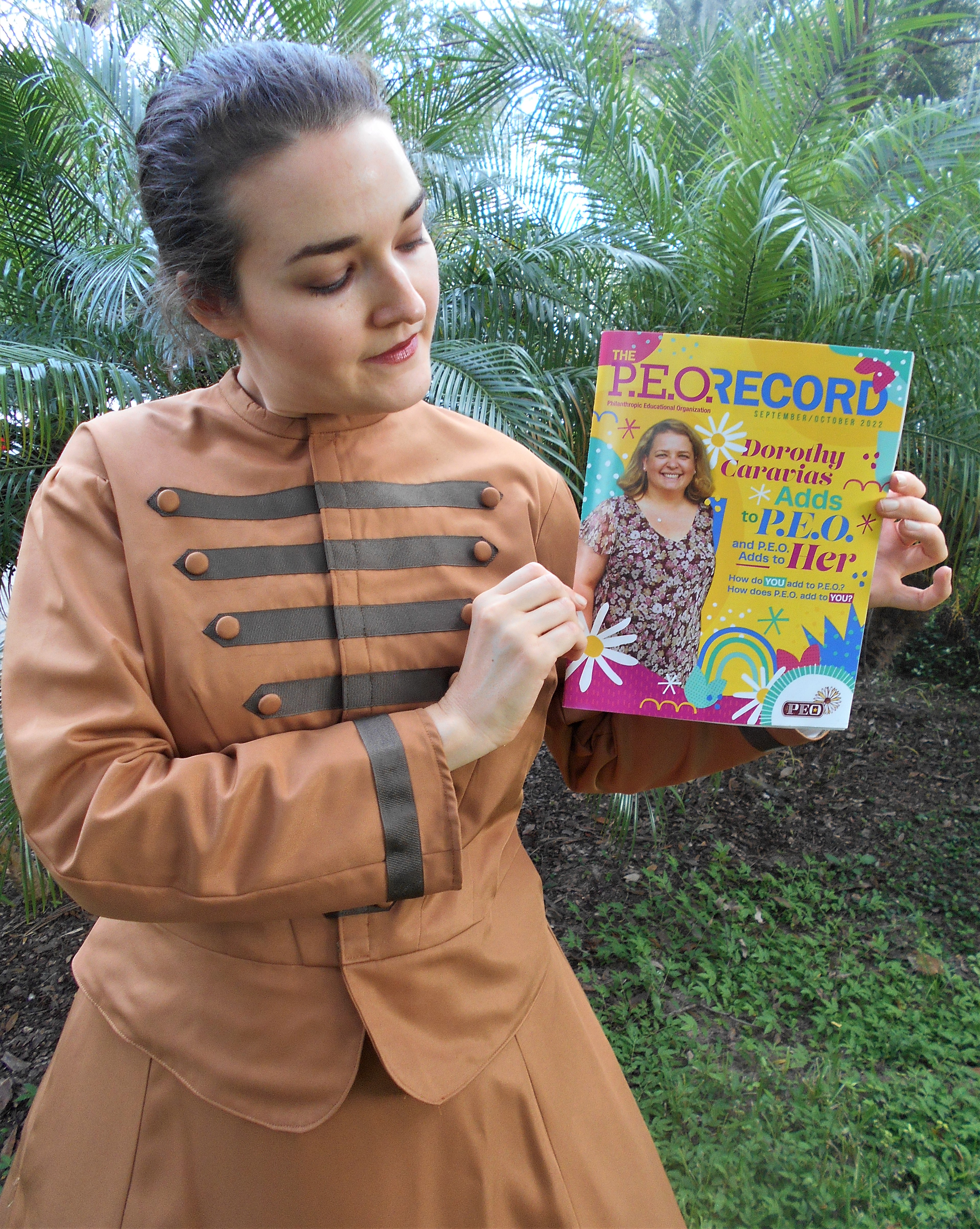
You read that right: my largest sewing project to date was recently featured in P.E.O.’s magazine, The Record ! Take a look at the published article below…

In a “behind the scenes” peek, I thought it would be interesting to share some parts of the process of how this gigantic endeavour came to life.

How It All Began

I conceived the idea when the timing was right. With the Met still closed in early 2021 and no operas for which to design costumes, I needed something to occupy my time and also wanted a new challenge of working with different body shapes and sizes. Could I accomplish this mammoth project ? I pondered. After searching for patterns and fabrics while tallying prices, I felt the goal was doable. My mind was made up, so I called my chapter’s president and treasurer to run my grand scheme by them. At the March business meeting, I pitched the idea to the entire chapter, complete with cost analysis sheets, lists of materials needed, and samples of prospective fabrics to be used. The response was a tsunami of yeses. My sisters were “game” for anything !

Pattern Selection

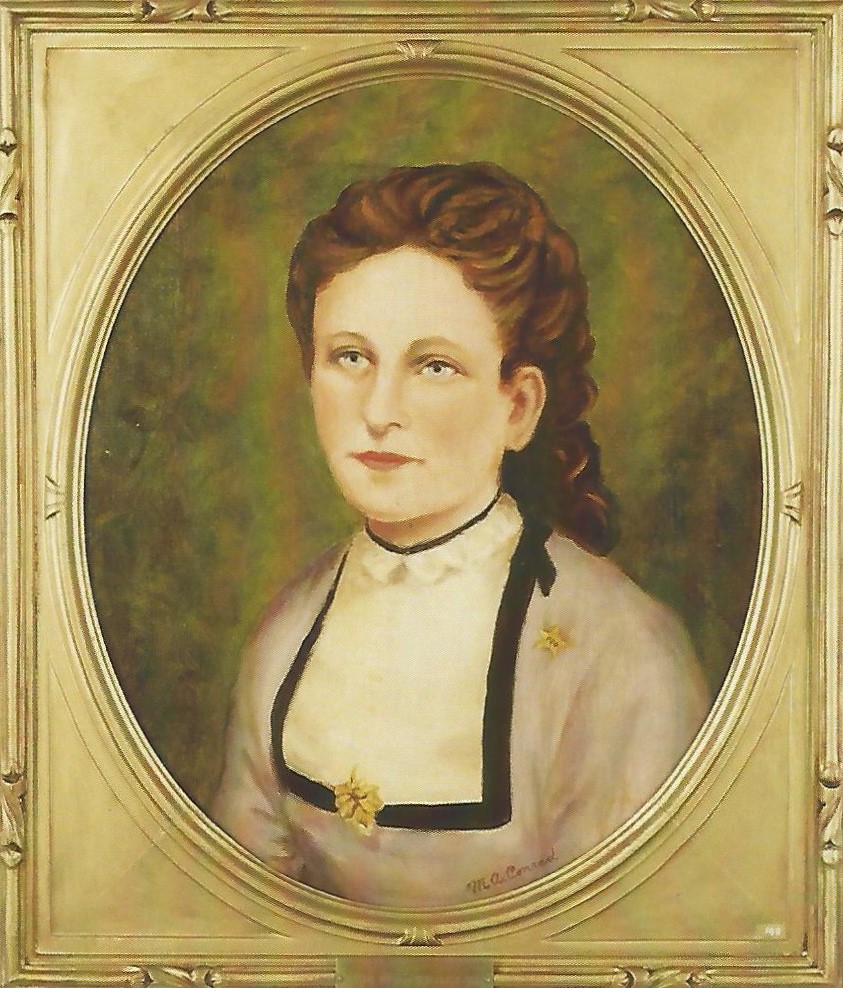
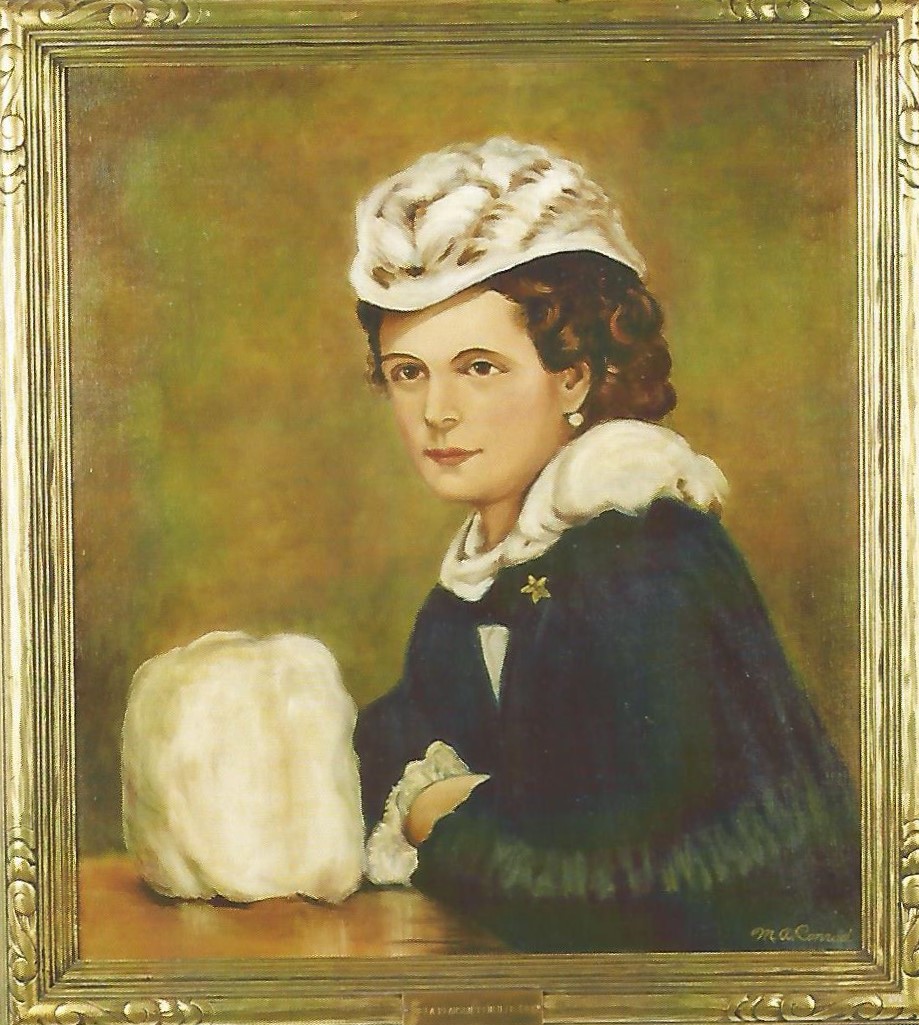
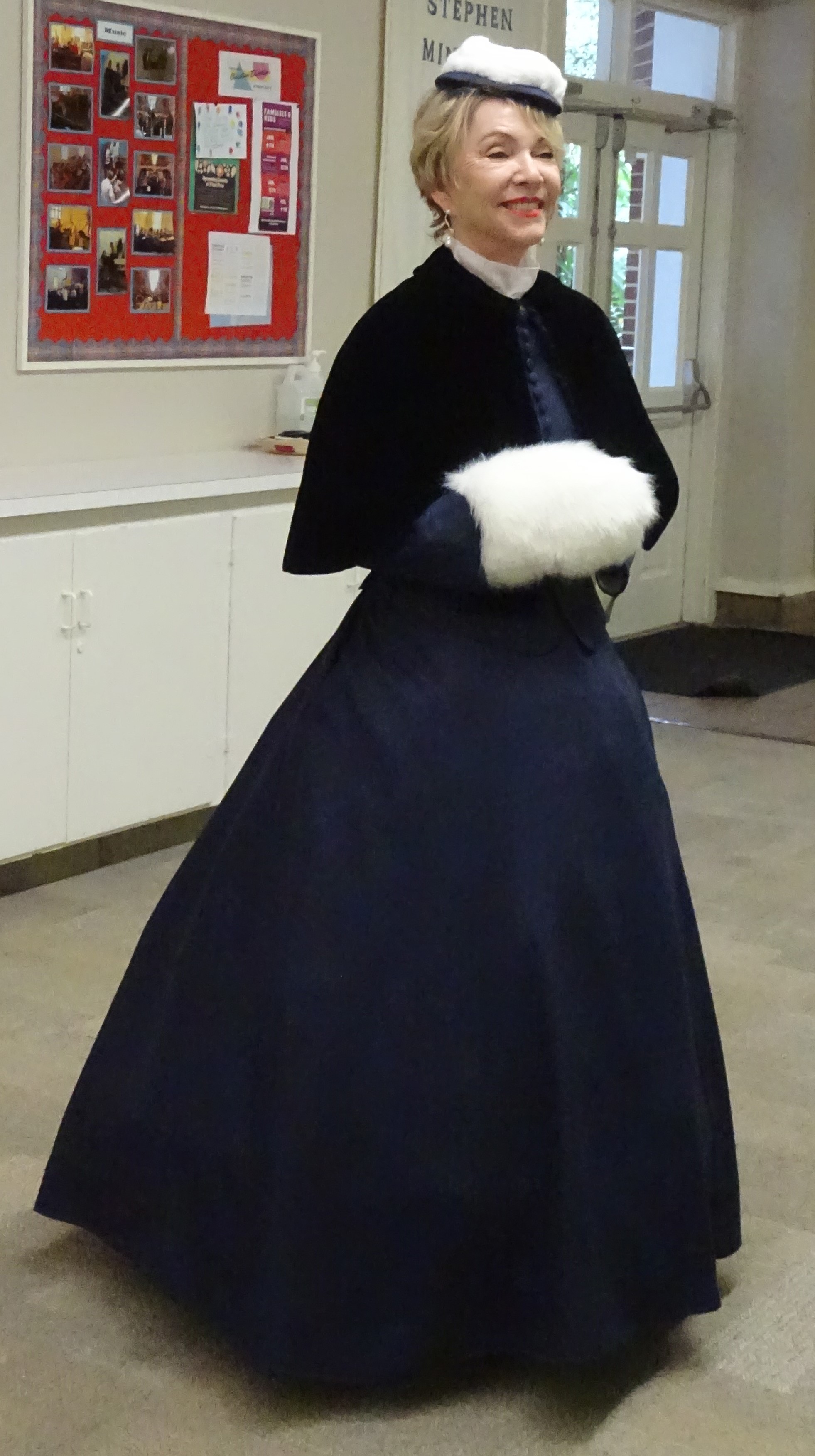
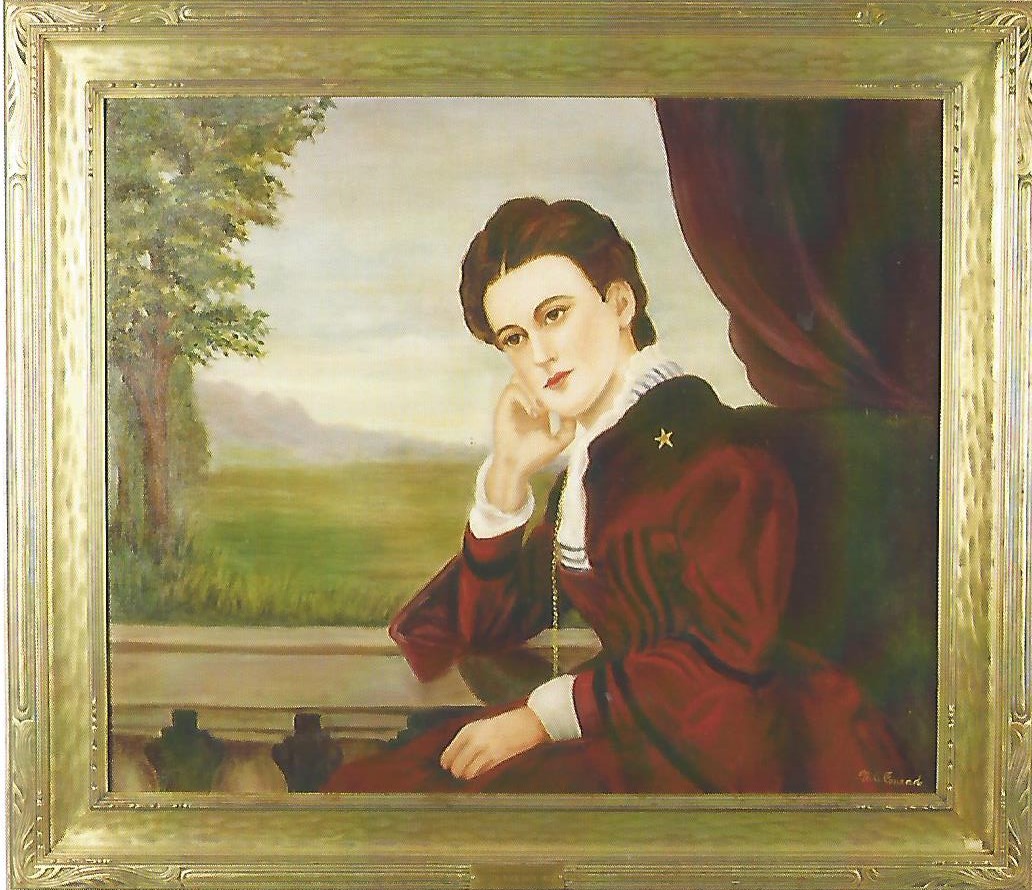
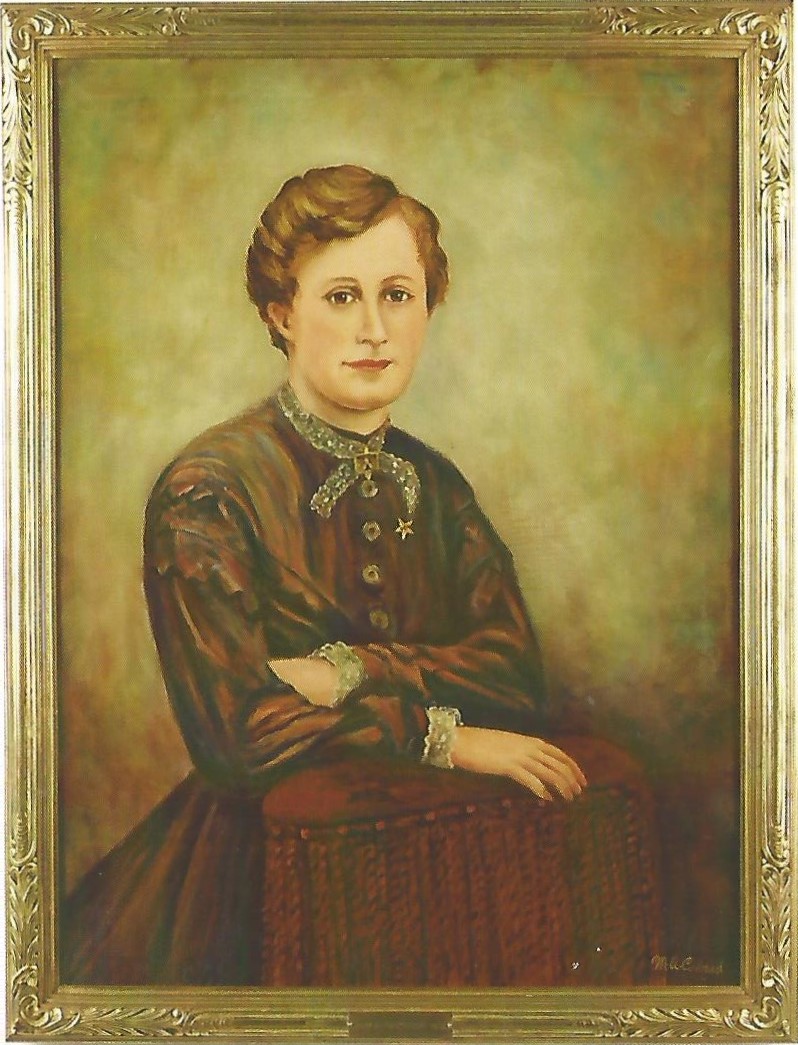
Researching the styles from 1869 was the first step in formulating my plan. From my experience with opera and historical costuming, I had plenty of resources for specialized pattern companies. Ultimately, I chose to use Black Snail Patterns for the bodice, Truly Victorian Patterns for the skirt, and Laughing Moon Patterns for the hoopskirts, bustle pads, and the chemisettes. Each pattern was selected based on its finished garment style and how well they could be adapted to suit the Founders’ official portraits.

The Undergarments

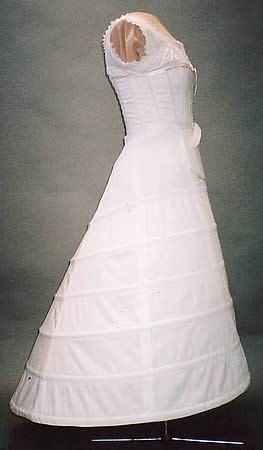
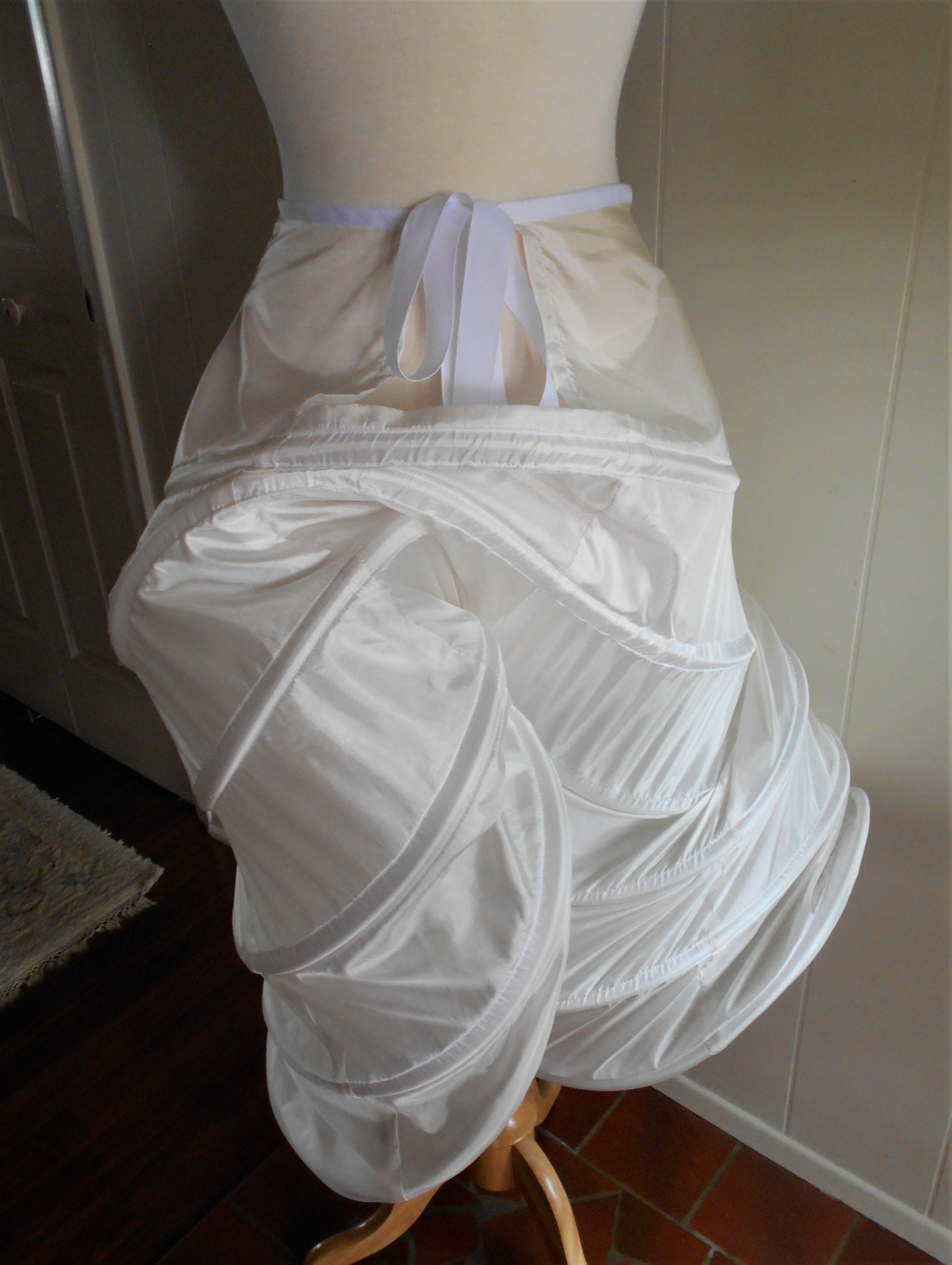
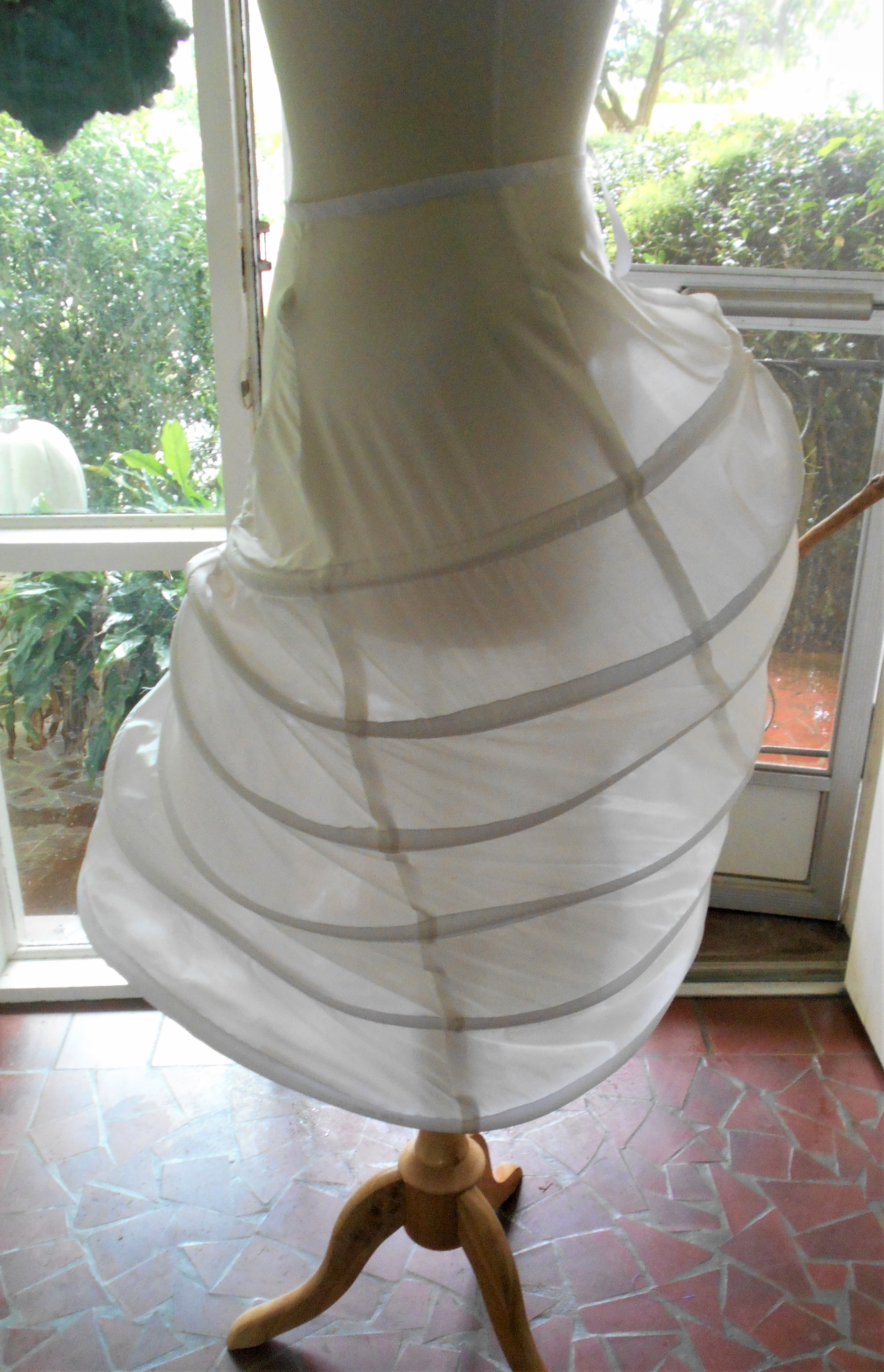
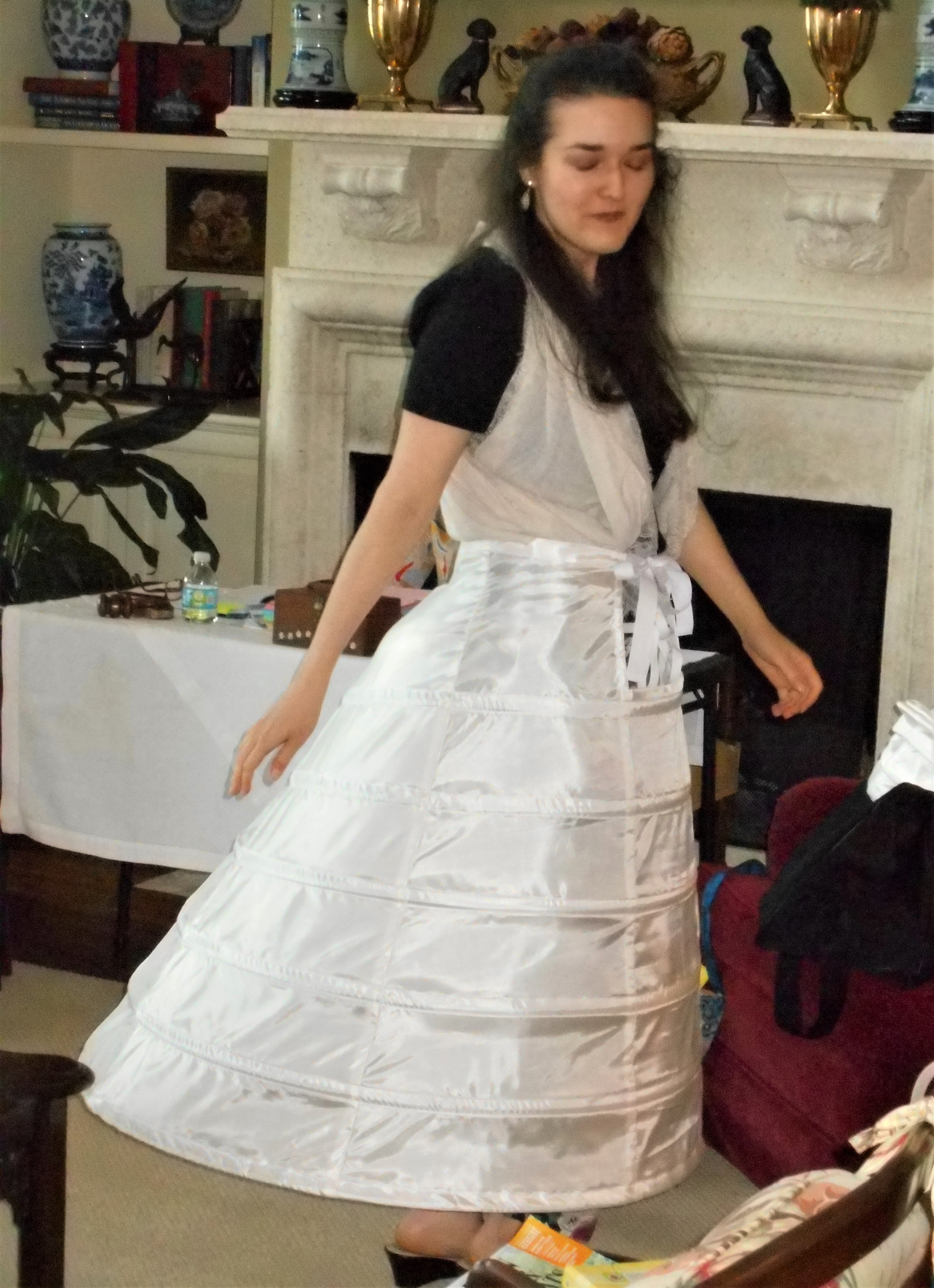
It was absolutely crucial to construct the supportive undergarments of the outfits first ! Without a well fitting hoopskirt and bustle pad, the skirts could not be measured correctly. In the spirit of thriftiness and the need to maintain a strict budget, I thought it would be ingenious to use polyethene plumber’s tubing for the hoops instead of real steel hooping. After all, I had seen blogs of people making hoopskirts out of hula hoops and similar items. But as you can tell, that didn’t work out.

Maybe for a topsy-turvy, whimsical costume, this curlicue tubing would have been a winner. But for my historical ensembles, I had to break with the budget and buy steel hooping… much better !

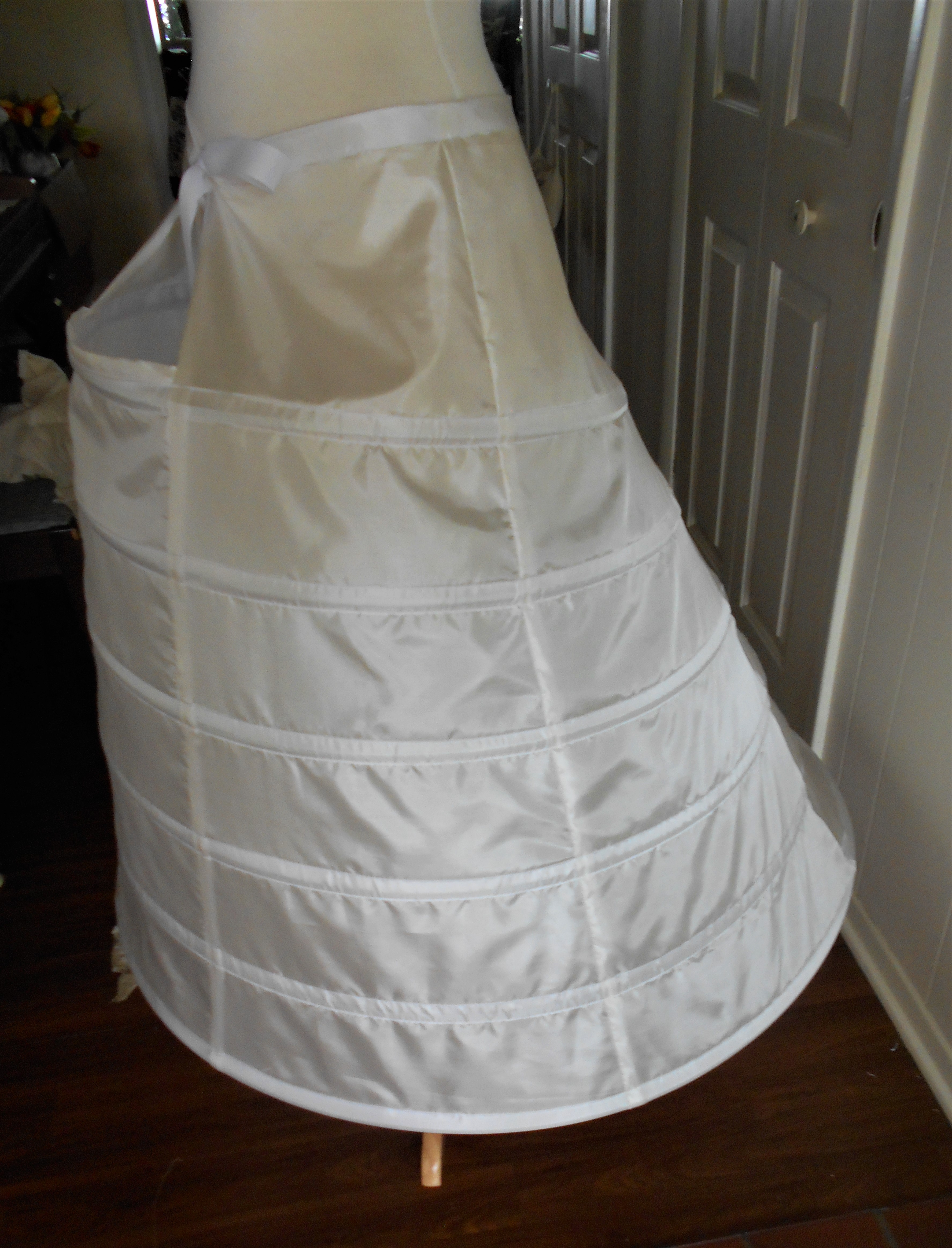
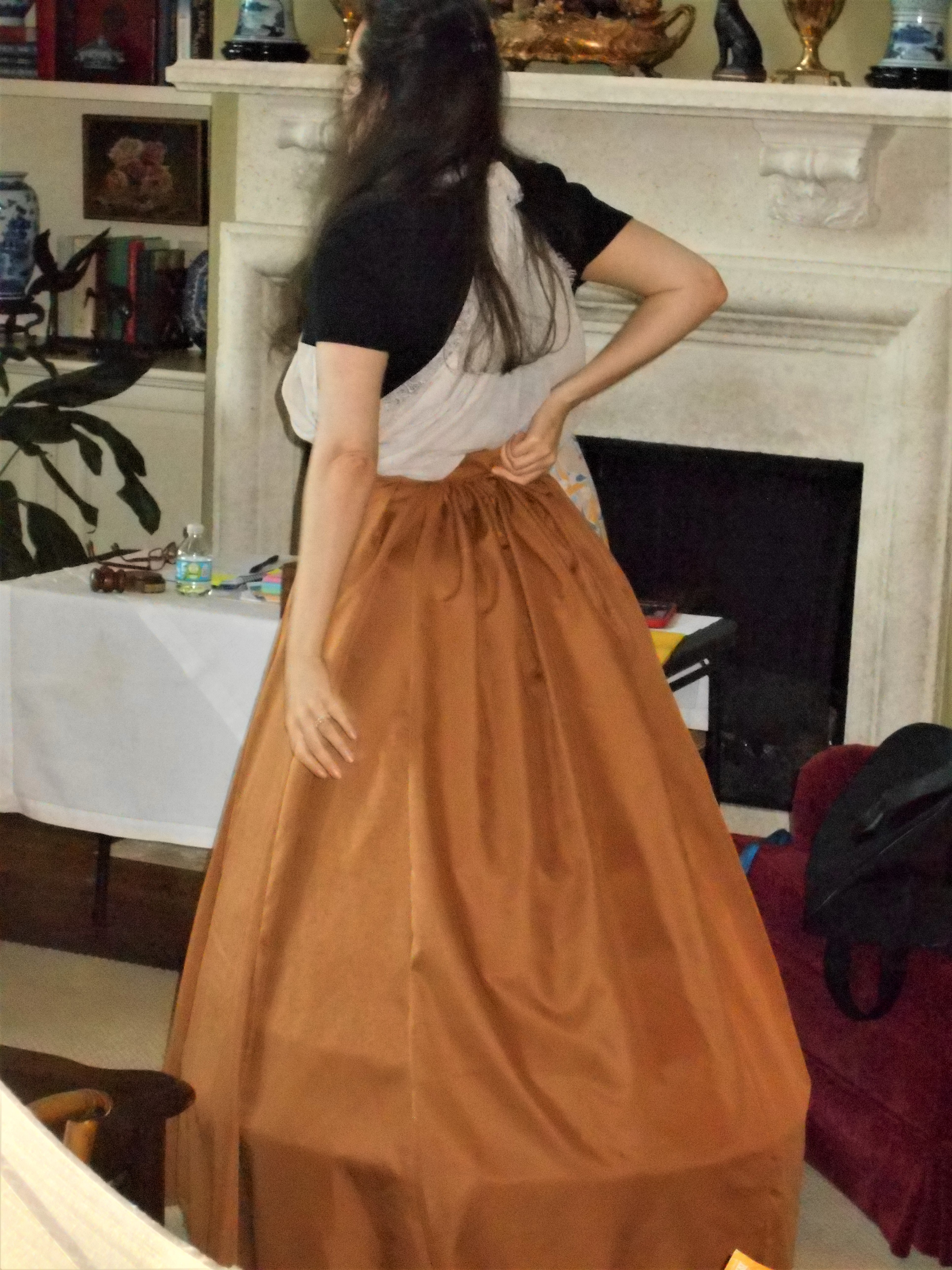
With everyone fitted to a comfortable size, we moved onto the skirts, which were much less tedious than threading steel boning through ribbon channels. In May, I gave a demonstration of the progress that had been made to my chapter sisters at one of our regular meetings.

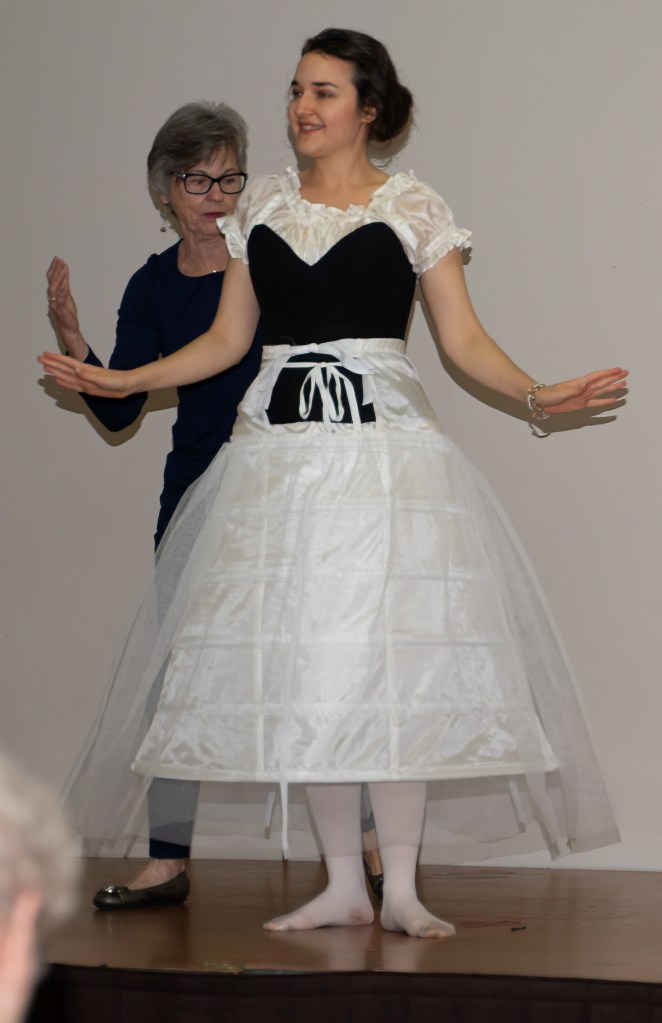
The hoopskirts had not yet been outfitted with crinoline mesh so the tunnels of steel were visibly apparent.

The skirt even had a pocket on the right side !

The Bodices

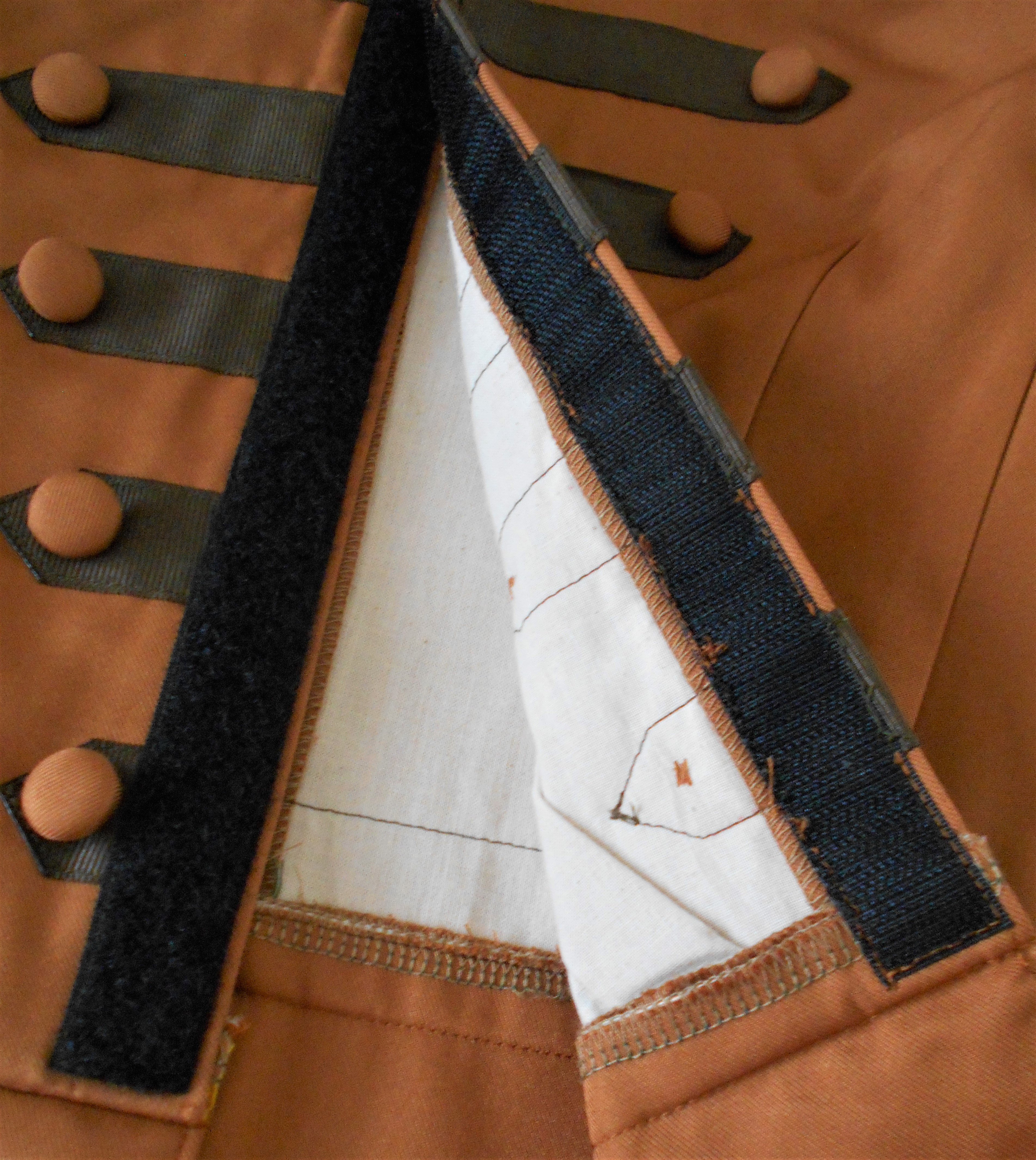
The Black Snail bodice pattern was historically accurate. Too accurate. Designed with the corseted body in mind, I knew I would have to make alterations since I had promised my models that they would NOT have to wear a corset, but also for the sake of convenience. Who would want to fasten all those itty bitty buttons down the front when the need for speed in dressing (and undressing) was of utmost importance ? One of the first changes made was to close the bodices with Velcro at the front. But that was just the tip of the iceberg !

Lynne’s Alterations

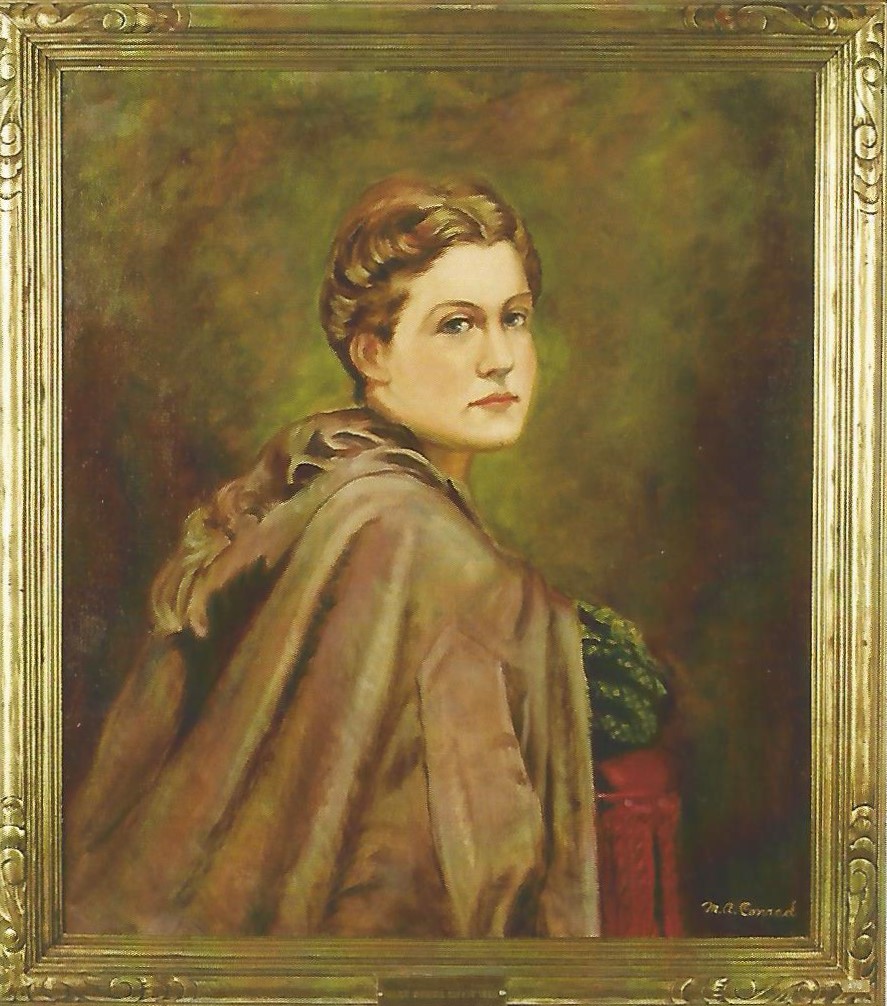
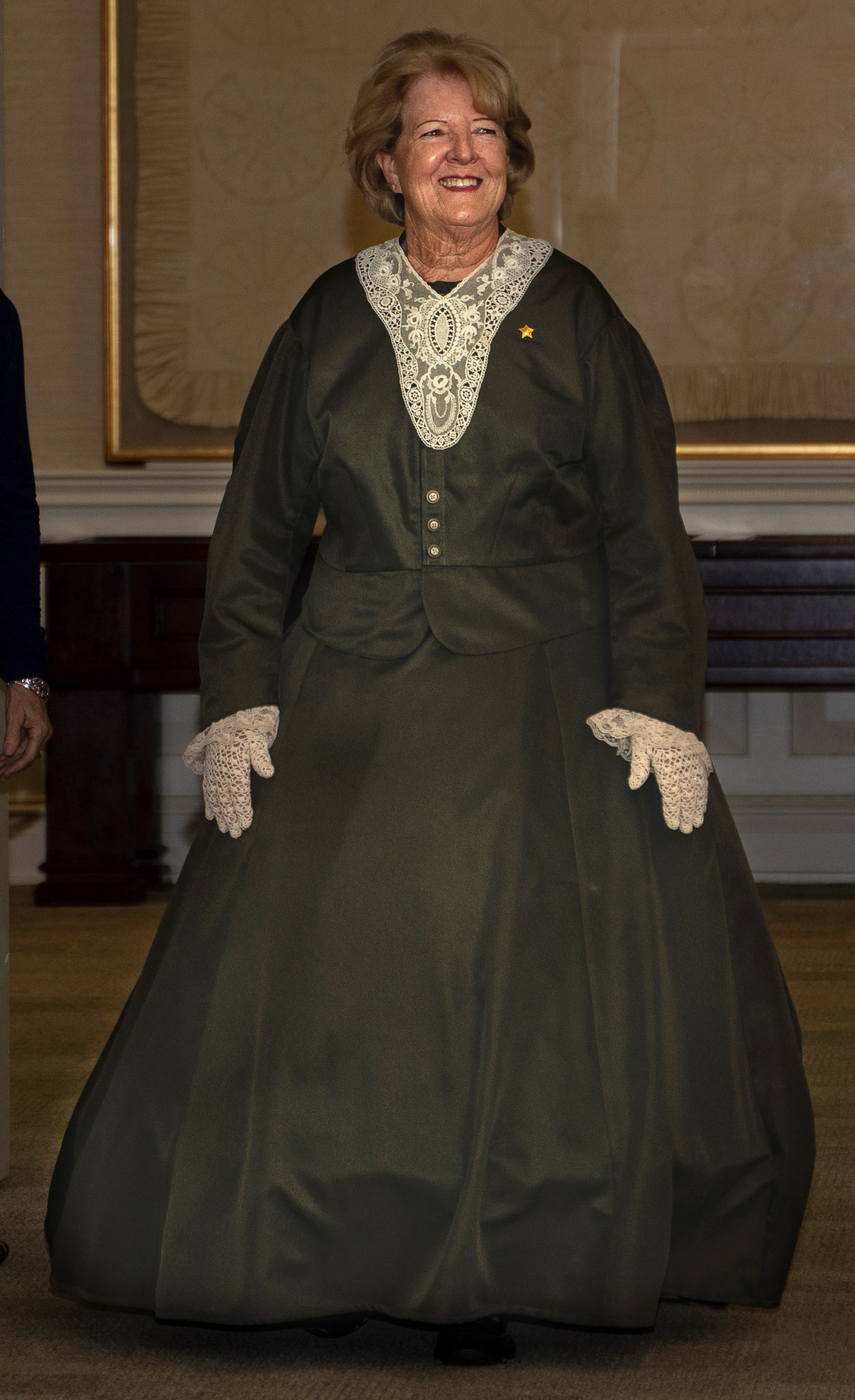
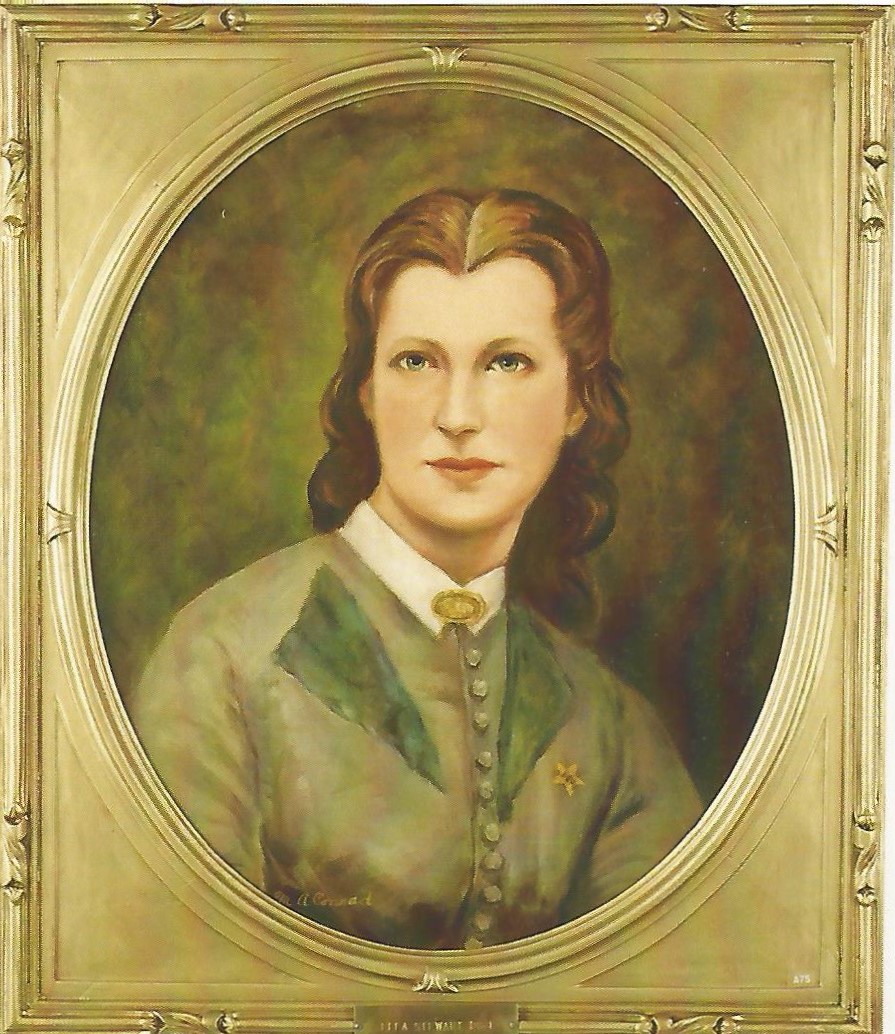
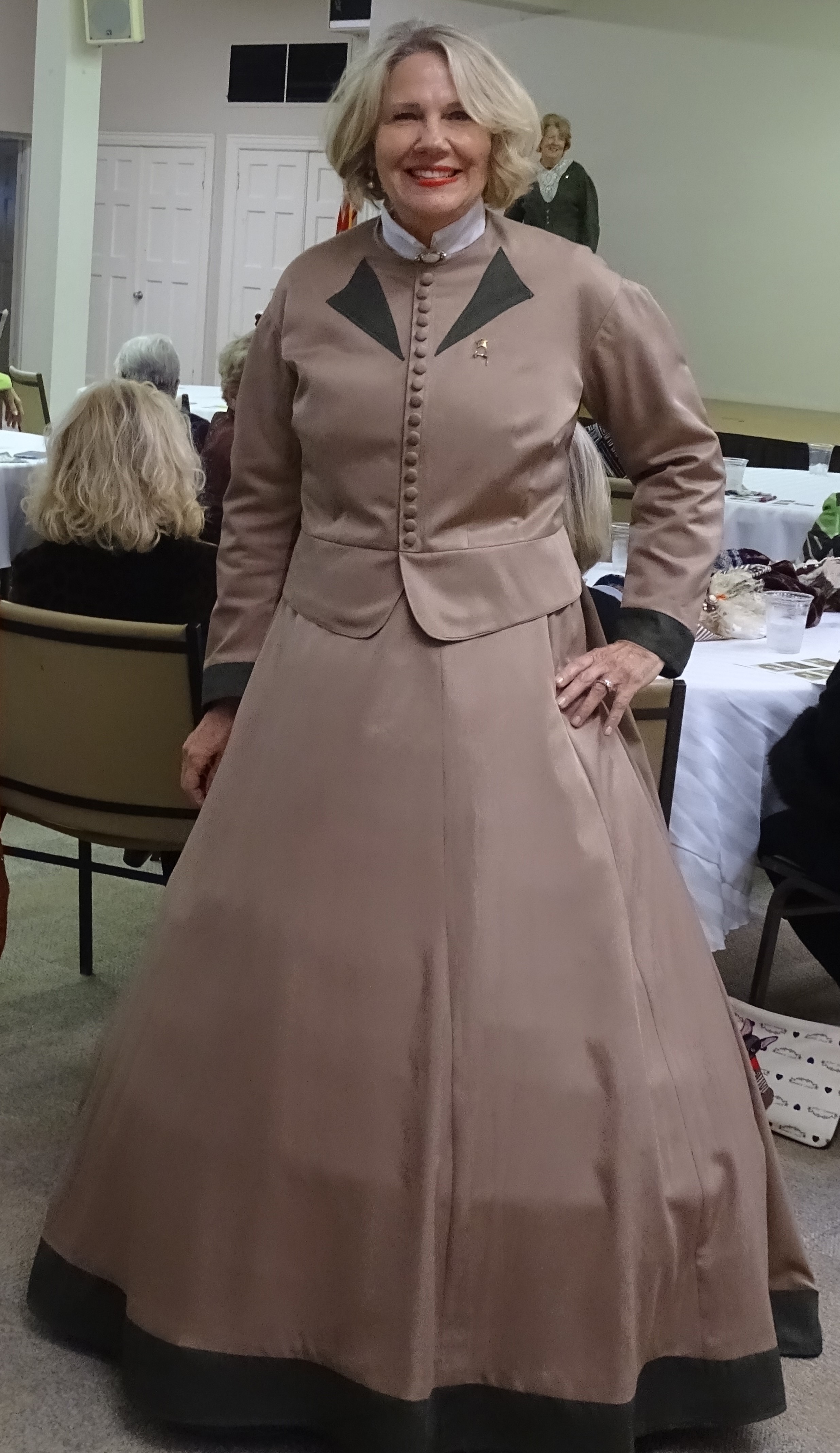
Out of all my models, I had the most challenging time fitting Lynne, who played Ella Stewart. While the pattern fit perfectly at the waist and bust, I could not manage to close the bodice at the neck, no matter how I finagled with the seams. Anne, who portrayed Mary Allen and was my invaluable “sous sewer,” thought inserting a small gore at the center back seam would add enough length for the neckline to meet at the front.

Nope !

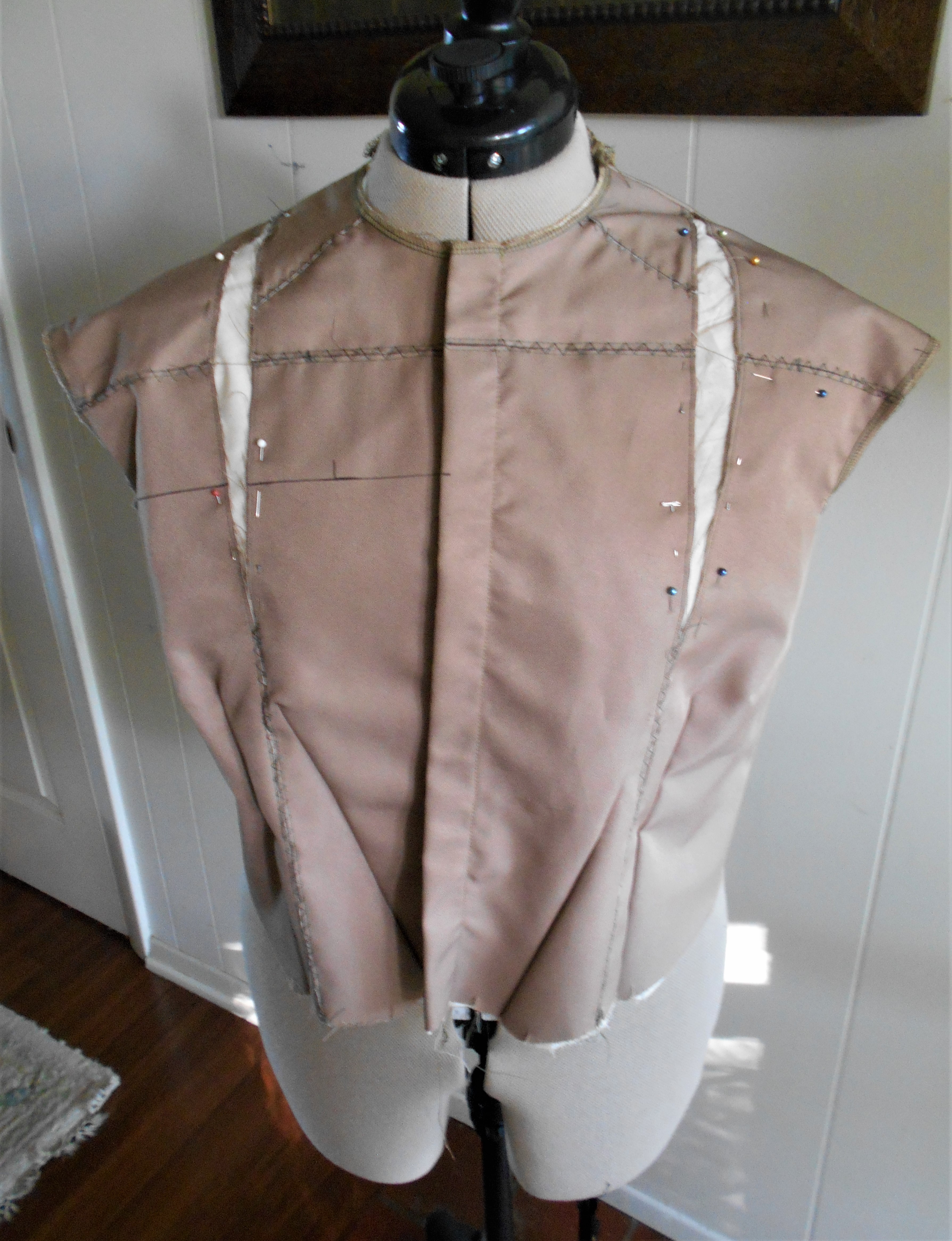
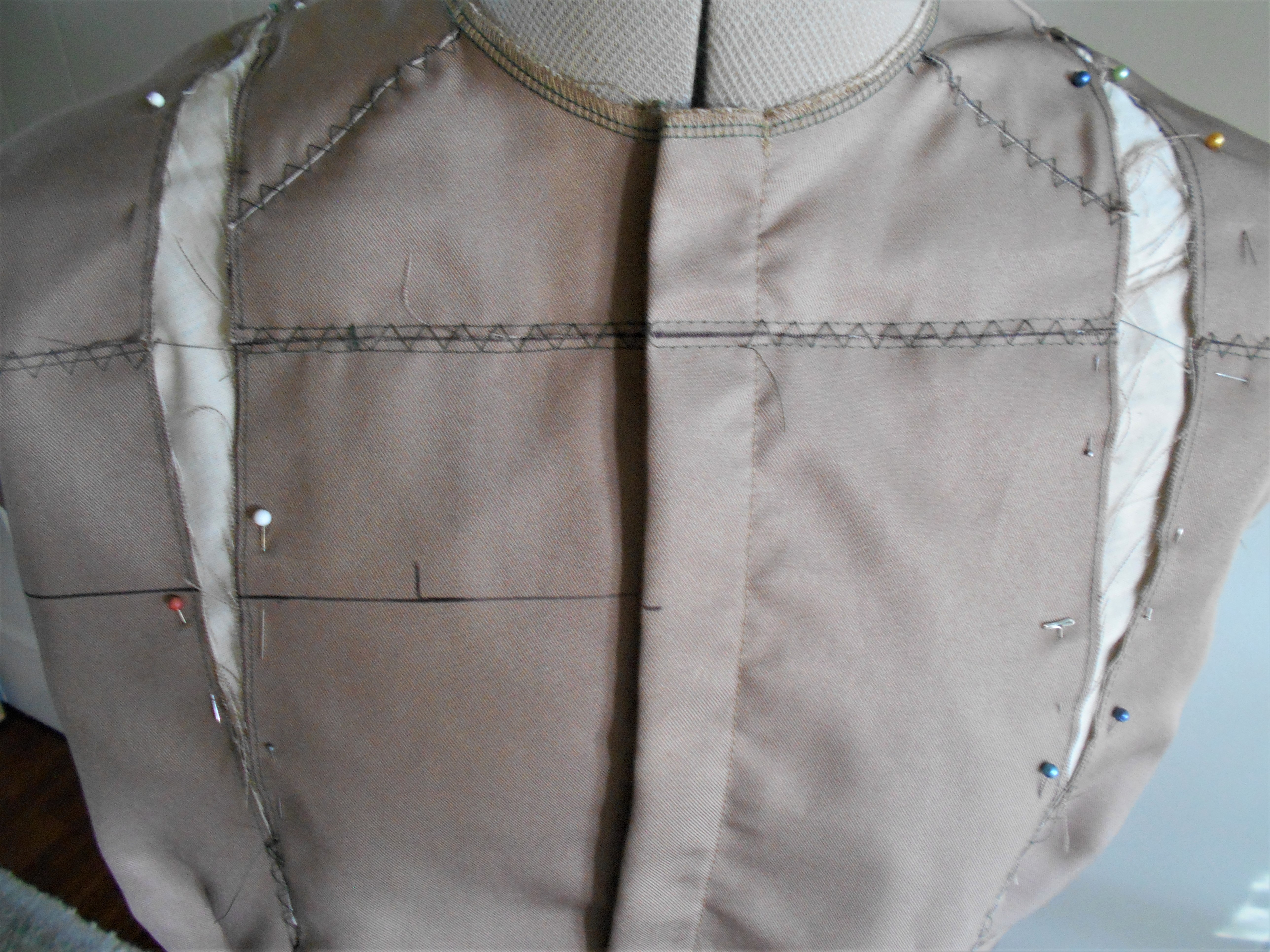
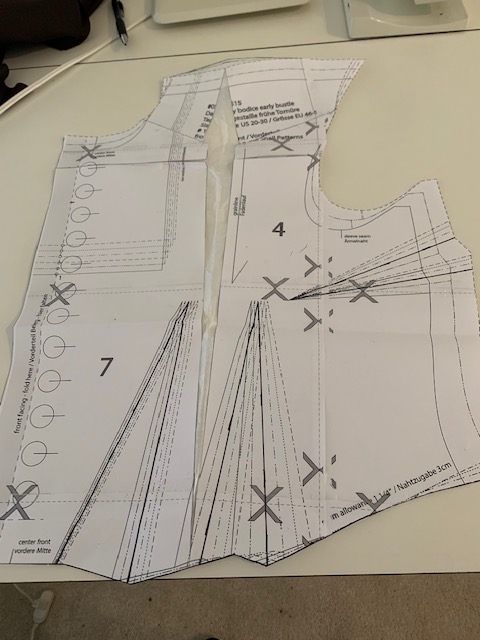
Together, we toyed with ideas of substitutions, but nothing seemed to work. Then I had a “lightbulb” moment: just recently, I had taken a virtual fit and sew blouse class with Katrina Walker and recalled how she demonstrated a sleeve alteration using the “slash and spread” method. Taking what I learned in class, I applied it to the upper front of Lynne’s bodice.

A preliminary fitting showed promise. I then carried over the same adjustments to the paper pattern…

…and almost cried from ecstatics when Lynne tried on the new bodice. It was a perfect fit. Thank you, Katrina !

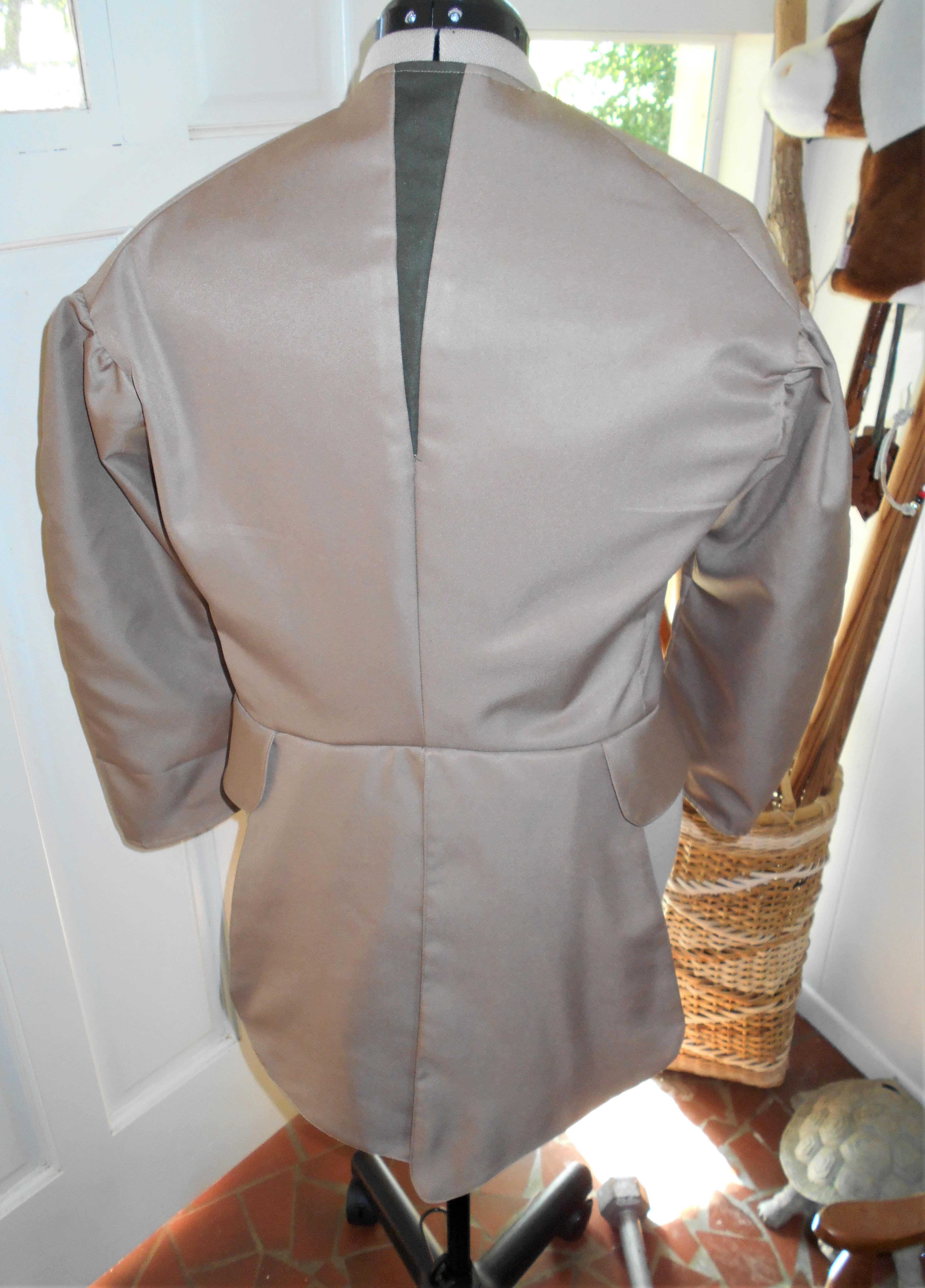
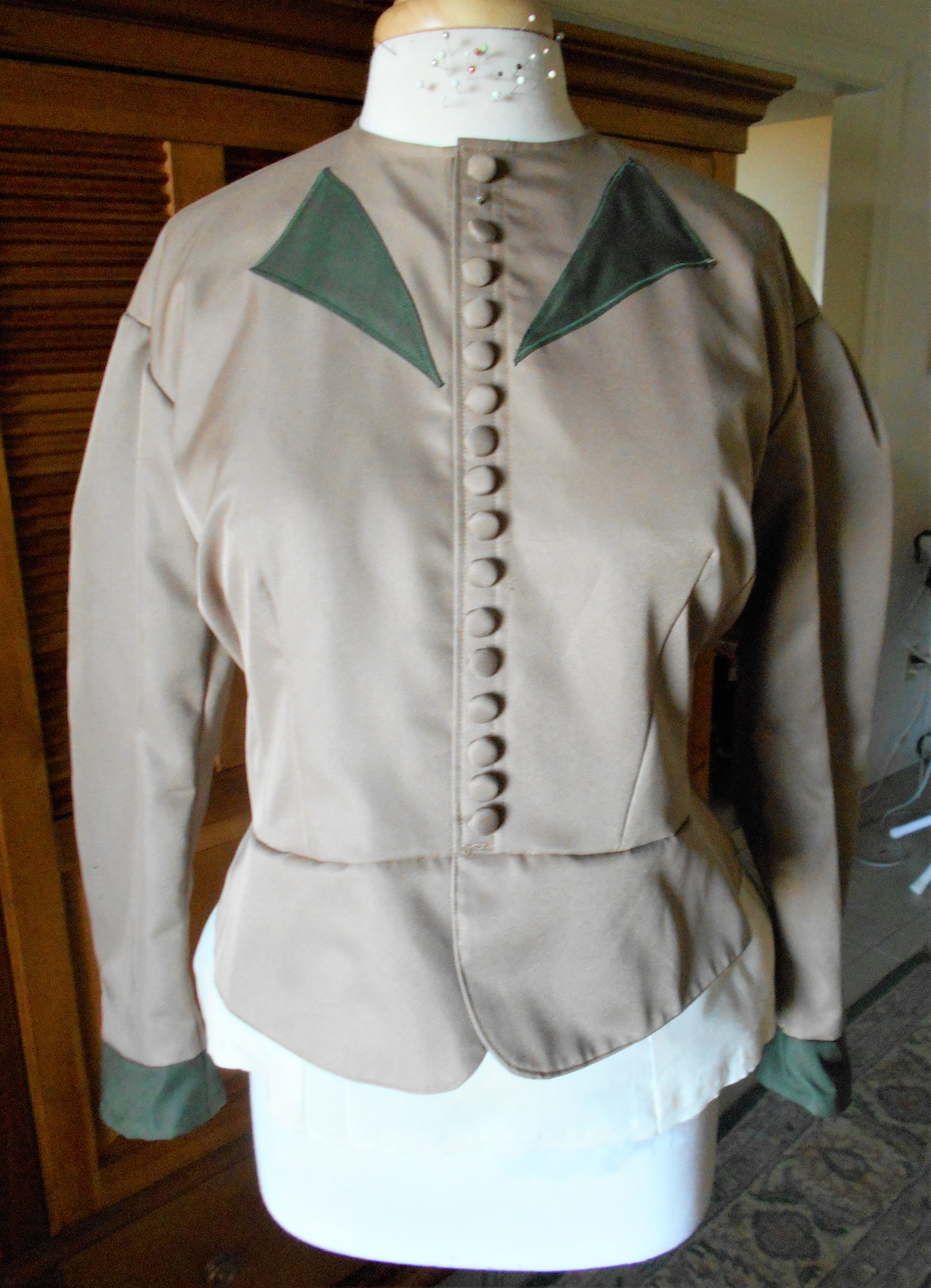
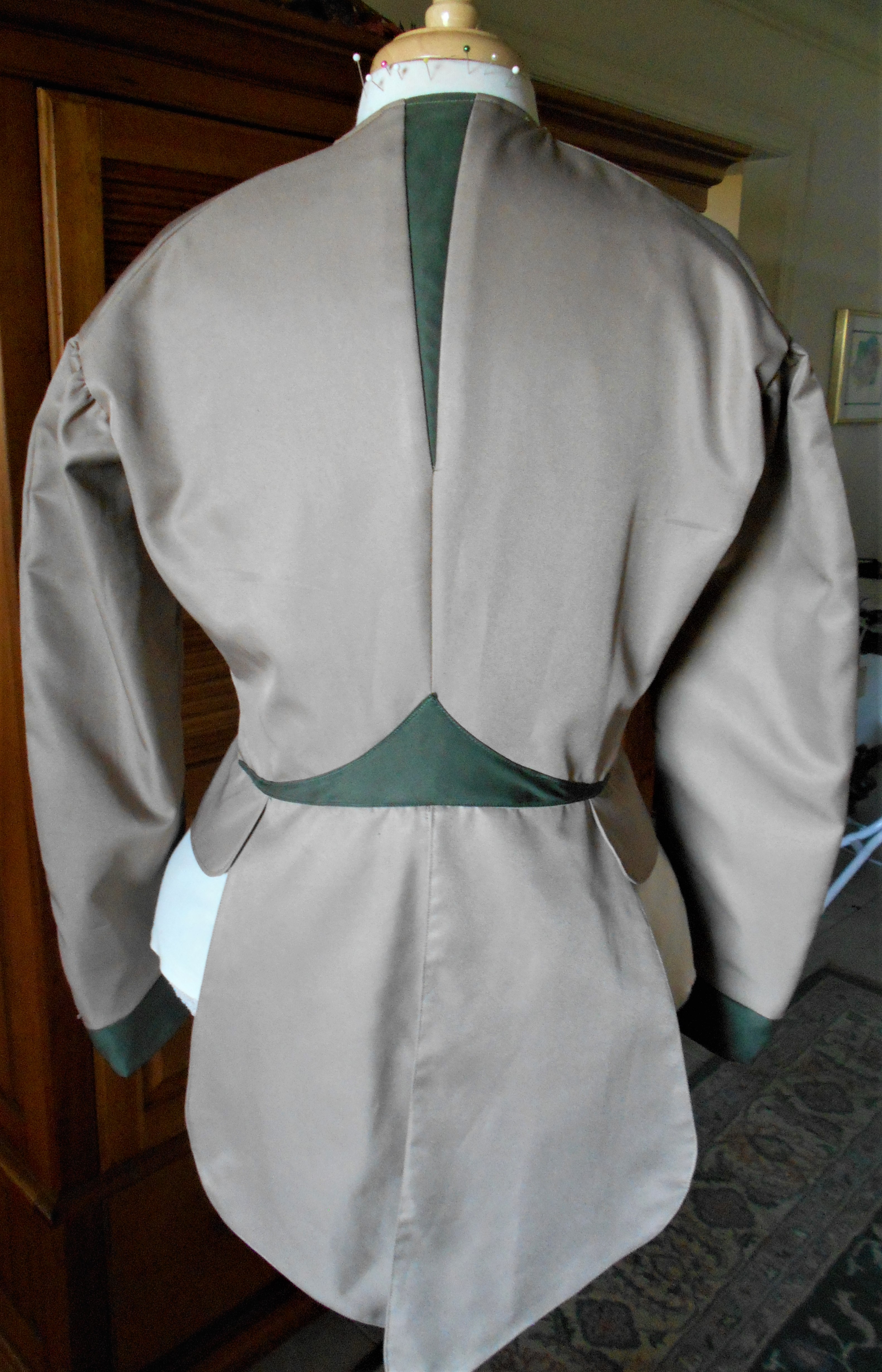
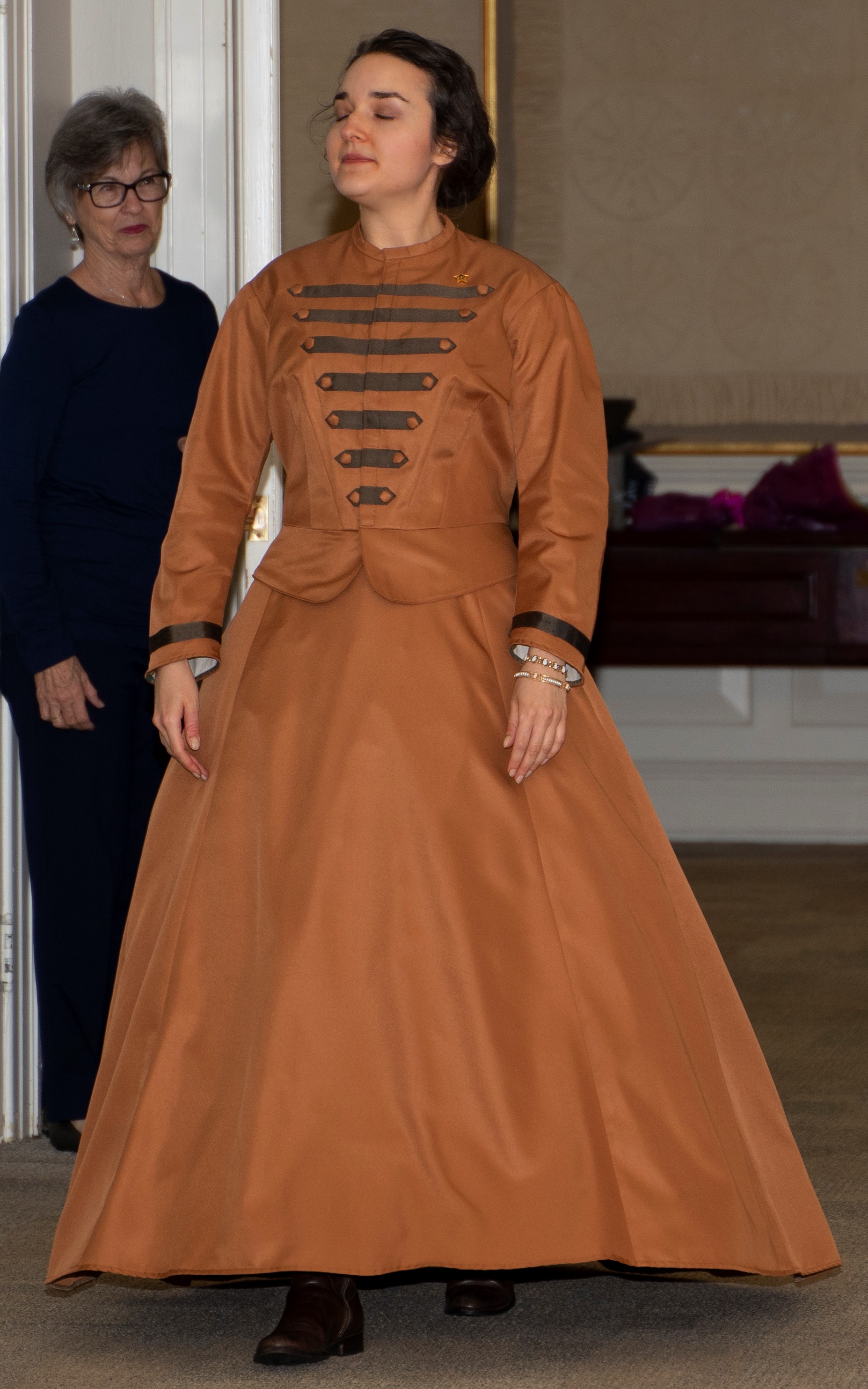
Other embellishments were needed in order for Lynne’s outfit to look spiffy. Since Ella Stewart’s portrait showed contrasting green appliques at the clavicles, Anne and I decided to continue with the color blocking theme and added dark green bands at the skirt and sleeve hems and a decorative yoke piece at the back waist. Lynne’s costume was easily classified as “Most Unique.”

Covid Scare

There was a near catastrophe when my original Suela Pearson came down with Covid just one day before our rehearsal and three days before the actual Founders’ Day event ! With hurried hands, Anne and I went to work to completely alter the costume in order to fit the new model. Miraculously, our skills paid off and the new amended ensemble was completed in time. And the best part ? No one knew a thing !

Showtime !

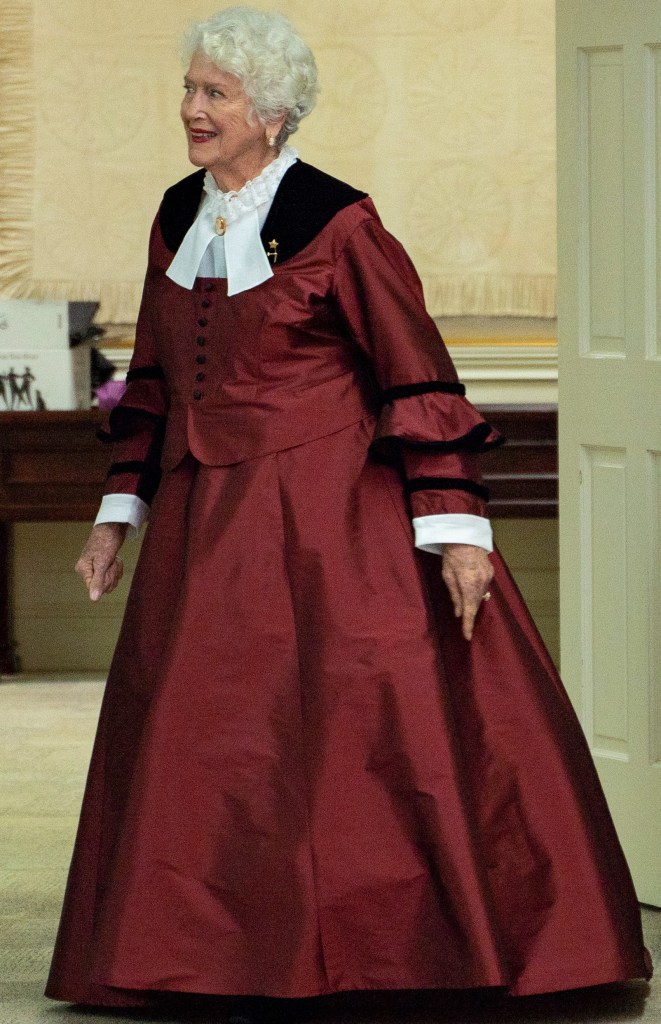
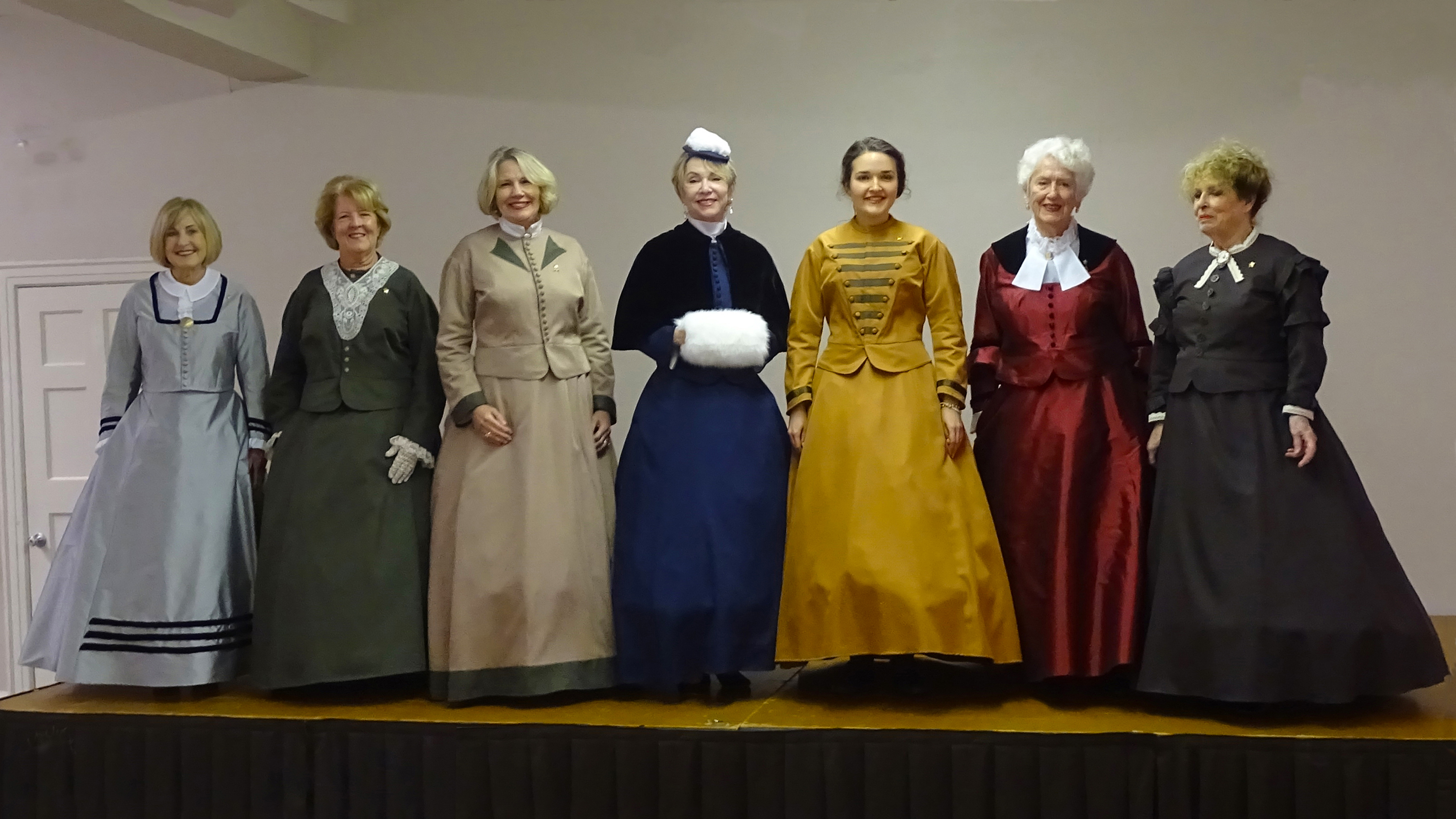
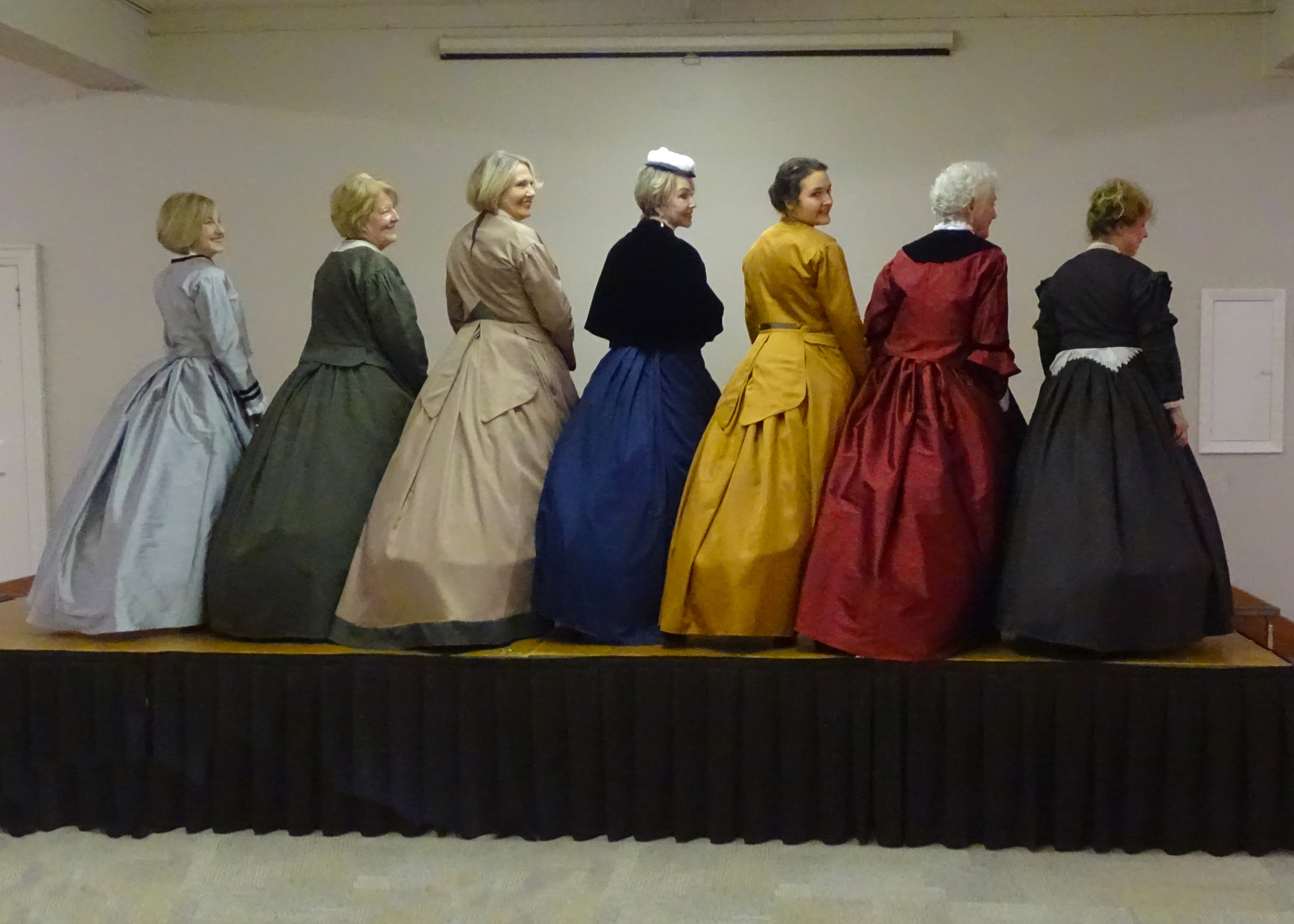
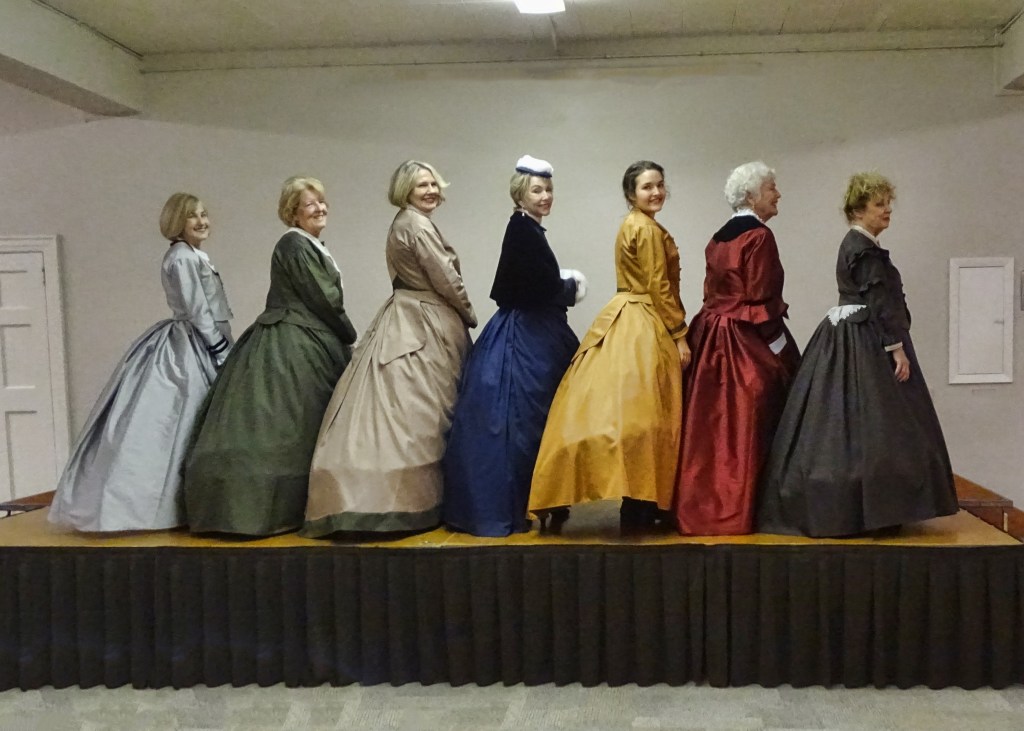
In an ordeal that spanned 10 months and required over 120 yards of fabric, I was able to accomplish the magnanimous feat with the ready help of my chapter sisters. When all the hard work was achieved, our chapter performed its P.E.O. themed fashion show to the local reciprocity group, showcasing each of the seven Founders’ style based on their original portraits.
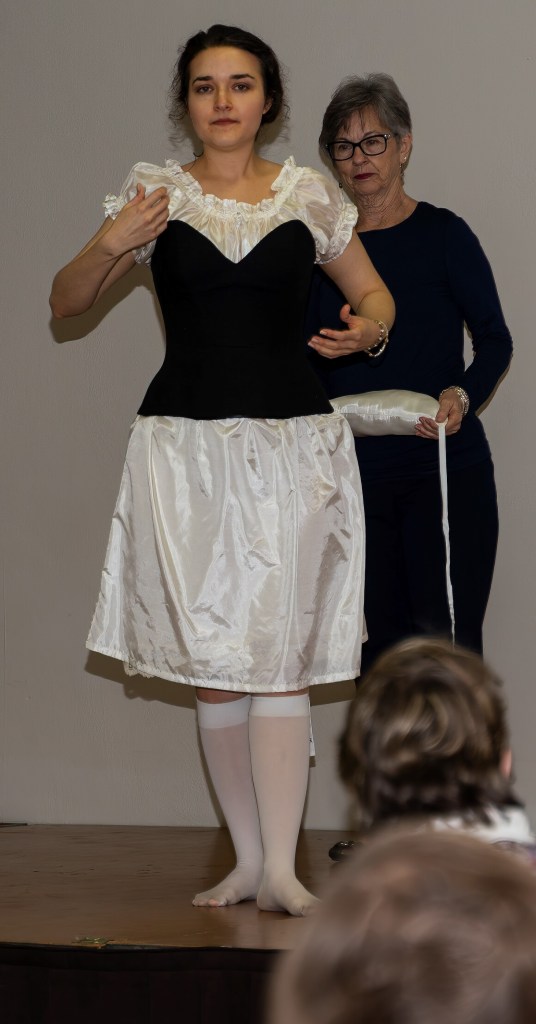
Written into the narrated script was an “underwear demo,” which was designed to allow the audience a glimpse into how a lady would have started her dressing routine during the time period. That task fell to me. Remember what I had promised my models ? NO CORSETS !!

After strolling around the room in my “underwear,” it was now time for the models to make their appearance… Without further explanation, here are our seven Founders !

Hattie Briggs

Alice Coffin

Ella Stewart

Suela Pearson

Franc Roads

Alice Bird

Mary Allen

Each costume was as unique as the model wearing it and we were all so proud to honor our Founders in such a special way.

Thank Yous

“Style From the Stile: A Tribute to 1869 Fashion and the Founding of the P.E.O. Sisterhood” was a monster success, both with the local chapters and beyond. Through social media postings and publications, the show found its way to international acclaim. But the project would never have been possible without the enthusiastic and steadfast support of my chapter sisters. Nearly every member had a part ─ from covering and hand sewing buttons, to help with backstage dressing and stage directing. And a special thanks goes to Anne, who cut out every single piece of fabric !

As sisters, we bonded through the trials and triumphs of the project and left an indelible mark on Founders’ Day history.

The P.E.O. Founders were remarkable women. The ladies of Chapter CD are quite the same.

Toi, Toi, Toi,

Mary Martha