Arguably the most heartbreaking of all operas, Madama Butterfly fully represents one of the key reasons why I love opera so much: it unearths emotions in me that I rarely feel otherwise. One cannot help but be mortally affected by the tragedy of the teenaged geisha as she bestows complete faith in a foreigner she has never laid eyes upon to be her wedded husband. Characteristically of Puccini, the score sweeps with valor and brings forth some of opera’s most emblazoned moments, culminating in the painfully hopeful aria “Un bel dì”, which nearly brings tears to my eyes.
Hui He singing an excerpt from “Un bel dì” / Metropolitan Opera
Although I had seen this same Anthony Minghella production in 2016, I couldn’t resist going back a second time when it returned to theaters. In a dramatic twist, a relatively unknown tenor, Bruce Sledge, jumped into the leading role of Pinkerton with just 2 days notice and stunned ─ at least, vocally. His acting was heinous, but it was to be expected with hardly any rehearsal time. I would love to see him again when he has more time to prepare. His potential was tremendous !
Bruce Sledge as Lieutenant B.F. Pinkerton in Madama Butterfly / Metropolitan Opera
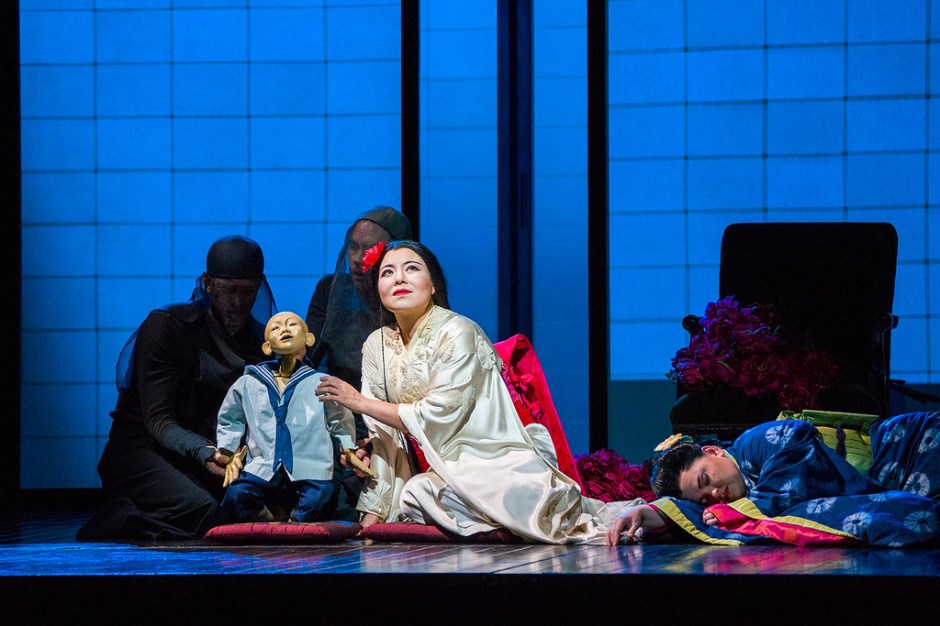
One of the fundamentals of the much-adored Minghella production is the use of traditional Japanese Bunraku puppets, most notably as Butterfly’s 3-year-old son. While it’s mesmerizing to watch three veiled men in the shadows maneuver the head, hands, and feet of the wooden child, I felt that some of the attention to detail in regards to the physicality of the puppet had diminished since seeing the 2016 performance: the child toddled not as often as before and relied more frequently on being held by his mother.
Hui He as Cio-Cio-San in Madama Butterfly / Metropolitan Opera
This was just one detail that aided in the feeling of something being amiss. Although I can’t quite put my finger on it, this particular performance lacked a chemistry and fire that is so needed for a convincing Butterfly. Still, I enjoyed the opera ─ and the visually stunning production ─ nonetheless. It is Puccini, after all.
A scene from Madama Butterfly / Metropolitan Opera
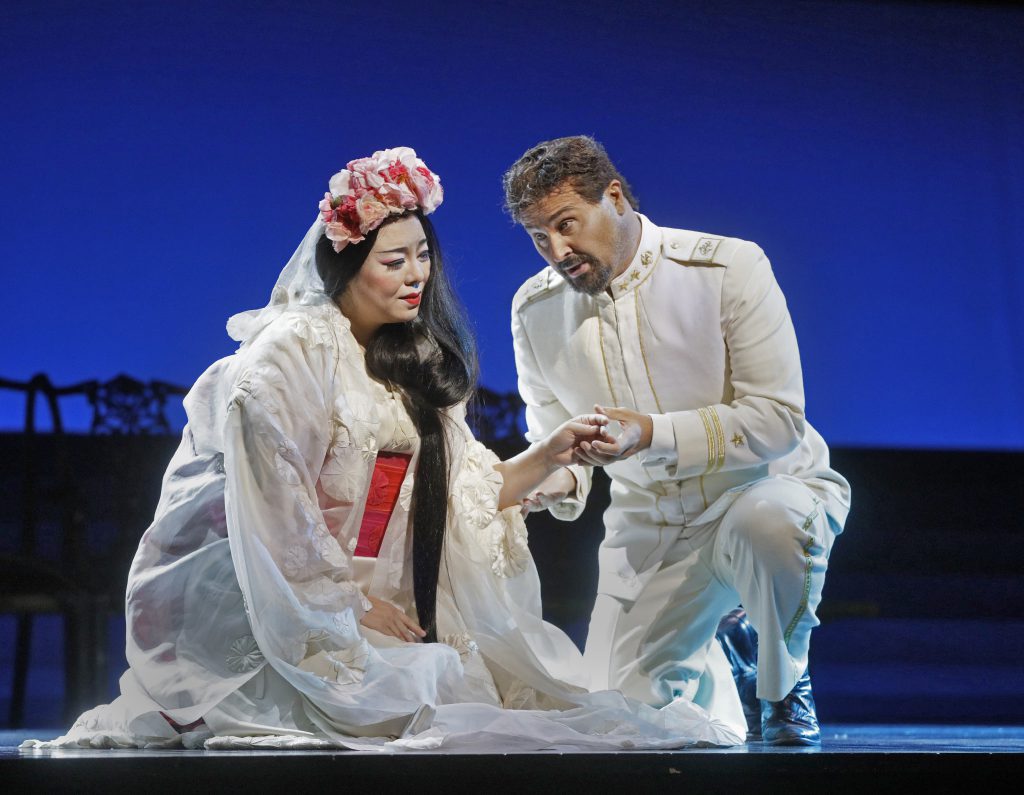
She’s a geisha, yes. But more significantly, Cio-Cio-San is Madame Butterfly─ as in, a married woman. The centrifugal moment of the opera, which triggers all the dominoes to fall, is the marriage ceremony between Butterfly and Pinkerton. Climbing up the glossy stage while accompanied by her wedding party in bright regalia and corrugated fans, the silken white figure of Cio-Cio-San is a breathtaking sight to behold. This was exactly the look I wished to emulate with my costume.
Hui He as Madame Butterfly (seen here with Roberto Armonica) / Metropolitan Opera
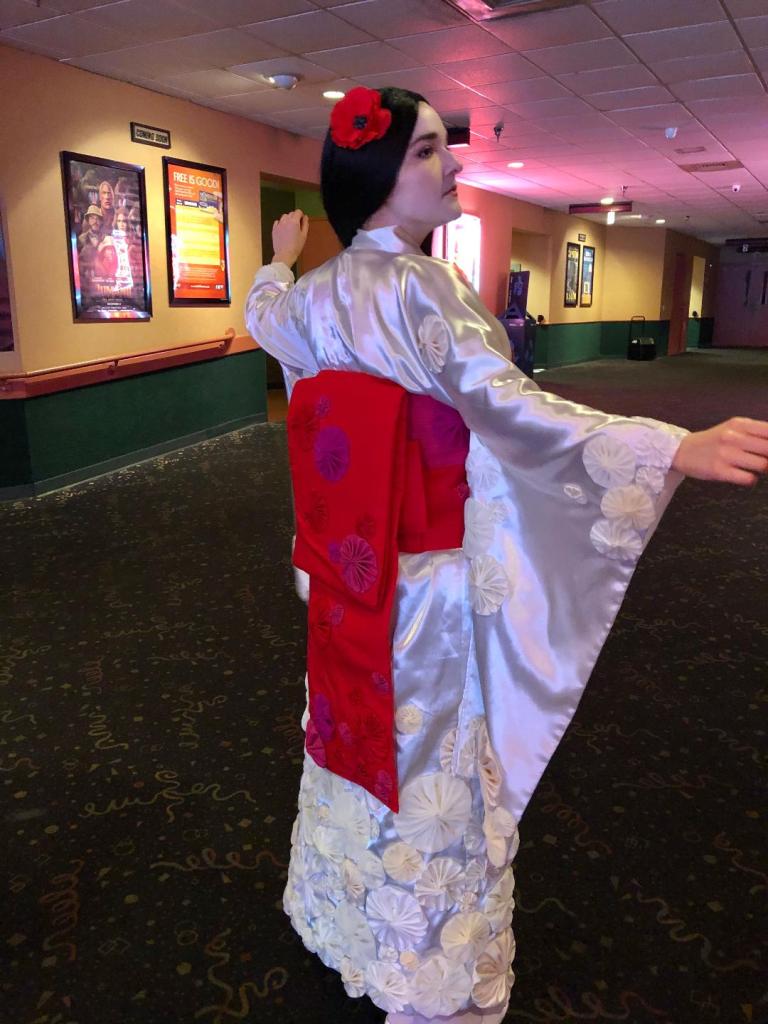
With exactly a month before the opera, I commenced work on a replica kimono that I hoped would give credence to the character. An abounding bevy of varying satin “yo-yos” were cut and hand sewn together as the key ornamentation of the robe, which was quite comfortable since it was lined in a thin cotton voile. The logistical challenge of creating the obi (sash) and faux drum knot was another story, but for now we’ll just say it was adequate for its brief stint at the theater. My lovely friend, Judy, captured a photo of the back of the outfit during intermission.
Raven black wig, red poppy affixed, and yards of silvery white satin summoned to mind the ancestral artistry of the Met’s Minghella Madame…
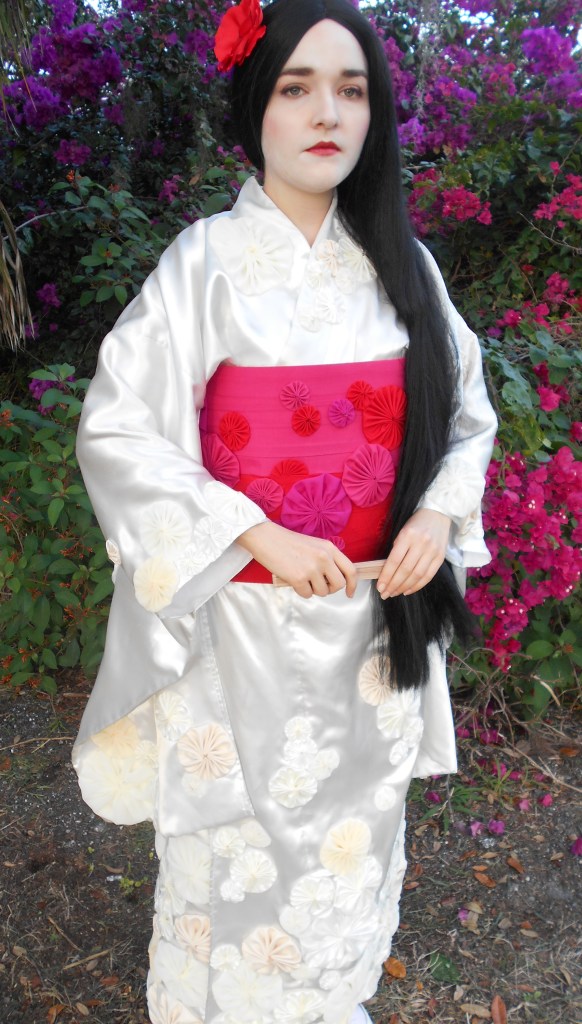
Hui He as Cio-Cio-San in Madama Butterfly / Metropolitan Opera
With properly applied white face, a dab of rouge, and ruby red lipstick, I felt every bit the geisha for Cio-Cio-San’s wedding day. The pantomime was complete !
While the marriage between Butterfly and Pinkerton resulted in undue catastrophe, the afternoon at the opera was a carefree delight. Should you ever be proposed with the choice of attending a heartrending performance of Madama Butterfly, there should be only one reply in return… I do !
Toi, Toi, Toi,
Mary Martha
For more information on how I created Cio-Cio-San’s signature wedding kimono, please check out my tutorial post !
Cast and Credits:
Madama Butterfly ─ Giacomo Puccini (1904) Live in HD air date: November 9, 2019
Cast: Cio-Cio-San ─ Hui He Pinkerton ─ Bruce Sledge* Suzuki ─ Elizabeth DeShong Sharpless ─ Paulo Szot
*Replaced Andrea Carè
Credits: Conductor ─ Pier Giorgio Morandi Production ─ Anthony Minghella Director/Choreographer ─ Carolyn Choa Set Designer ─ Michael Levine Costume Designer ─ Han Feng Lighting Designer ─ Peter Mumford Puppetry ─ Blind Summit Theatre Live in HD Director ─ Habib Azar Host ─ Christine Goerke
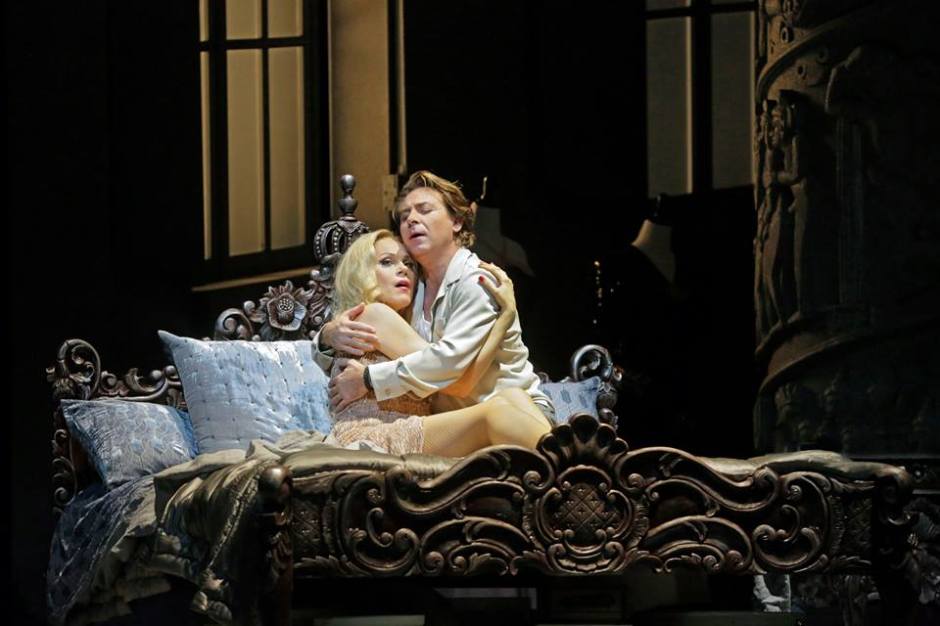
With an updated setting of occupied Paris during WWII, the Met’s volatile new production of Puccini’s Manon Lescaut brought out the glamour, darkness, and moral ambiguity of film noir. And just as with most Hollywood movies of the 1940’s, drama mottled every facet of Abbé Prevost’s salacious story. But the most unforeseen action occurred off stage when Roberto Alagna stepped into the leading role of des Grieux with only 16 days to learn the part by memory. His alacrity paid off; he sounded terrific ! He also paired well with the statuesque Kristine Opolais, who, being of an above average height, exchanged her pumps for flats to better suit the abbreviated height of her fill-in des Grieux. How strange it felt to my eye to see a woman in flats in the 1940’s…
Roberto Alagna as des Grieux and Kristine Opolais as Manon Lescaut / Metropolitan Opera
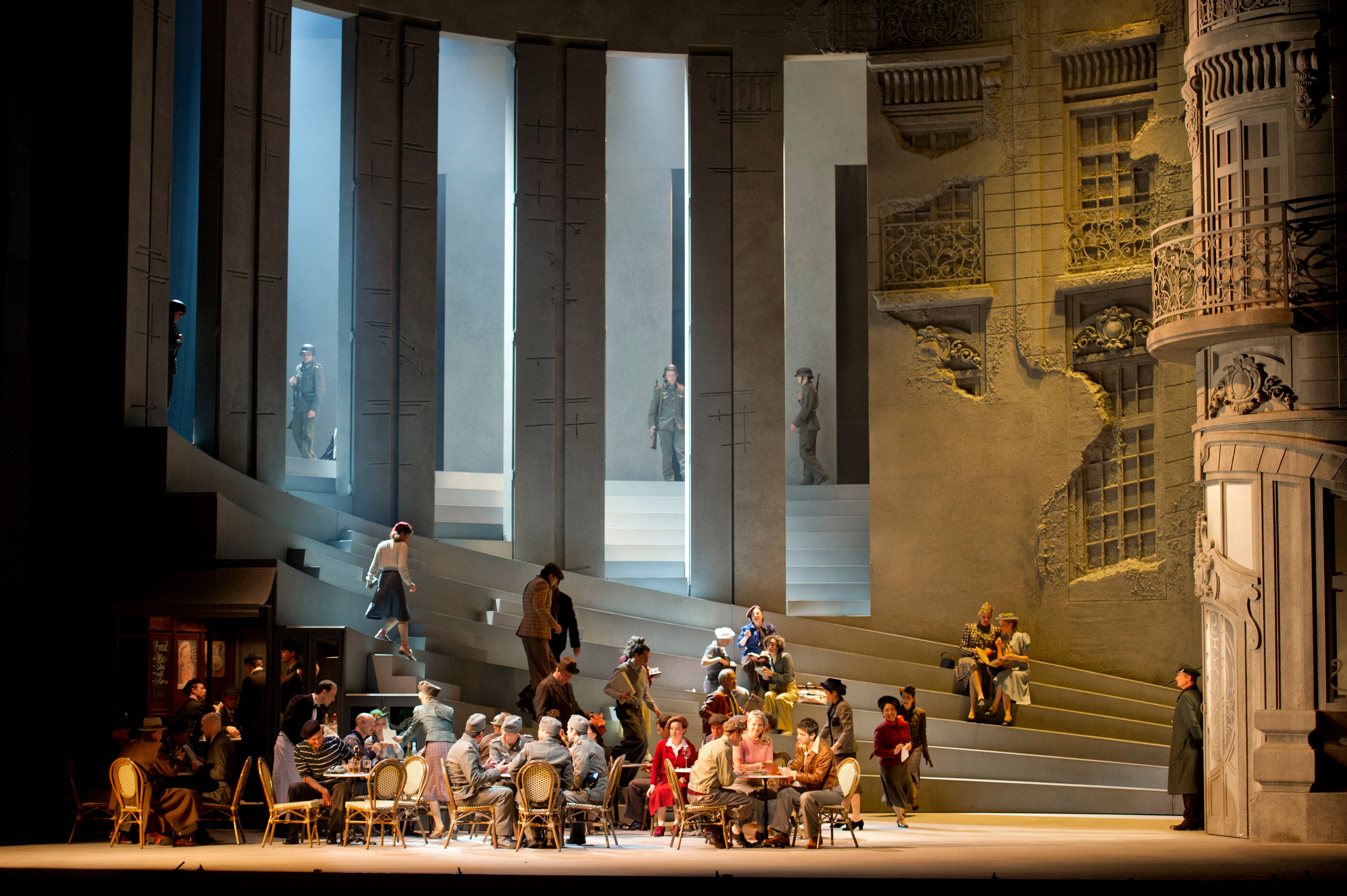
Also confounding my visual perceptions were the distorted sets of Richard Eyre’s production. The swooping stairs that spanned across the stage made me fearful for the chorus members having to maneuver them. However, practice makes perfect and no false steps were made. Whew !
A scene from Sir Richard Eyre’s Manon Lescaut / Metropolitan Opera
While glamour is always a good thing, the overwhelming theme of illicit sex in Manon Lescaut was rather repugnant to me: the throngs of much older men scheming to entrap a young, innocent woman was not my idea of romance. Coupled by the dark overtones of the tumultuous setting, the feeling I had while watching Manon Lescaut was that of bitter cold and dampness ─ I wanted to crawl into a corner and wait for things to pass over ! As such, the opera ended in shambles.
The final scene of Manon Lescaut / Metropolitan Opera
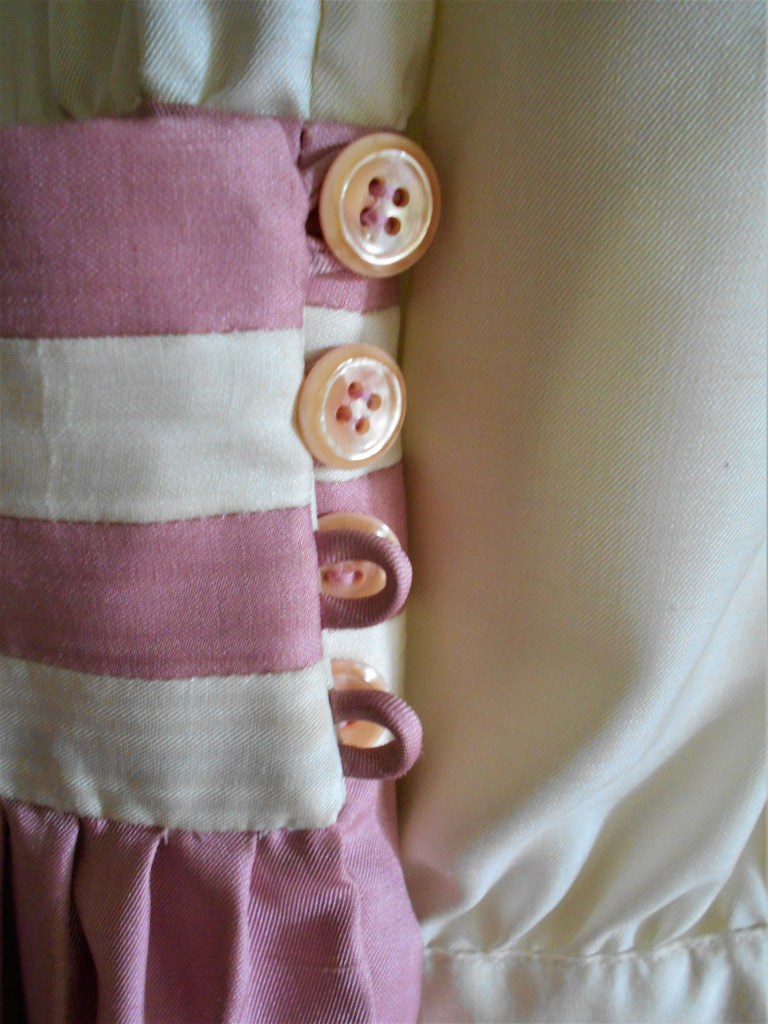
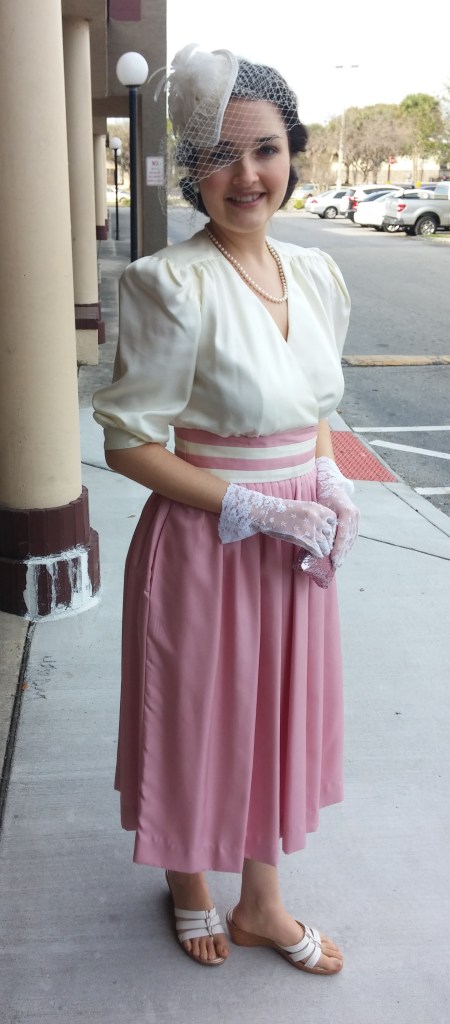
No, I didn’t care for Manon Lescaut. However, there was a silver lining to the new production and that was the swishy skirts and tilted millinery of 1940’s fashion ! If there’s one thing I enjoy more than others, it’s historical fashion and having the chance to experience a different period of clothing and mannerism. Of course, much research goes into my outfits when there’s a specific look I need to emulate, but fortunately I found just the ticket in one of my mother’s old dresses. Since I was a child, I have loved the pink and cream striped dress that has hung in the closet for years and one day when I plucked up the nerve to try it on for size, it fit ! The button loop closures at the waist are my favorite detail.
Pearls were a must as well as an elegant chignon, but I needed something more to aid in the cause… a hat was the likely choice. Thankfully, I was able to borrow a darling fascinator complete with birdcage veil ─ it was perfect for my desired look ! Without it, I wouldn’t have felt near the woman of the 40’s as I did while peeking through its tiny mesh windows. Now if only I had had a decent pair of pumps…
Thank you, Aunt Belinda !
I may not care whether I see Manon Lescaut ever again, but I do wish another occasion would arise for feminine fashion of the Forties !
Toi, Toi, Toi,
Mary Martha
Cast and Credits:
Manon Lescaut ─ Giacomo Puccini (1893) Live in HD air date: March 5, 2016
Credits: Conductor ─ Fabio Luisi Production ─ Sir Richard Eyre Set Designer ─ Rob Howell Costume Designer ─ Fotini Dimou Lighting Designer ─ Peter Mumford Choreographer ─ Sara Erde Live in HD Director ─ Gary Halvorson Host ─ Deborah Voigt
“All women are like that…” so says the cynical Don Alfonso to his naïve friends as he demonstrates the fickleness of the fair sex… But is the assumption ─ that women are bound to stray from their lovers if given the chance ─ an accurate claim ?
While sometimes considered outdated for modern society, Mozart’s piquant comedy about the test of fidelity through trickery was nothing but a delight to me. Lesley Koenig’s picturesque production was understated and elegant and the cast was just as pretty, especially the two lovestruck sisters, Fiordiligi and Dorabella, played by Susanna Phillips and Isabel Leonard. With their dark brown hair and fair complexions, it wasn’t a stretch to believe them to be blood relatives.
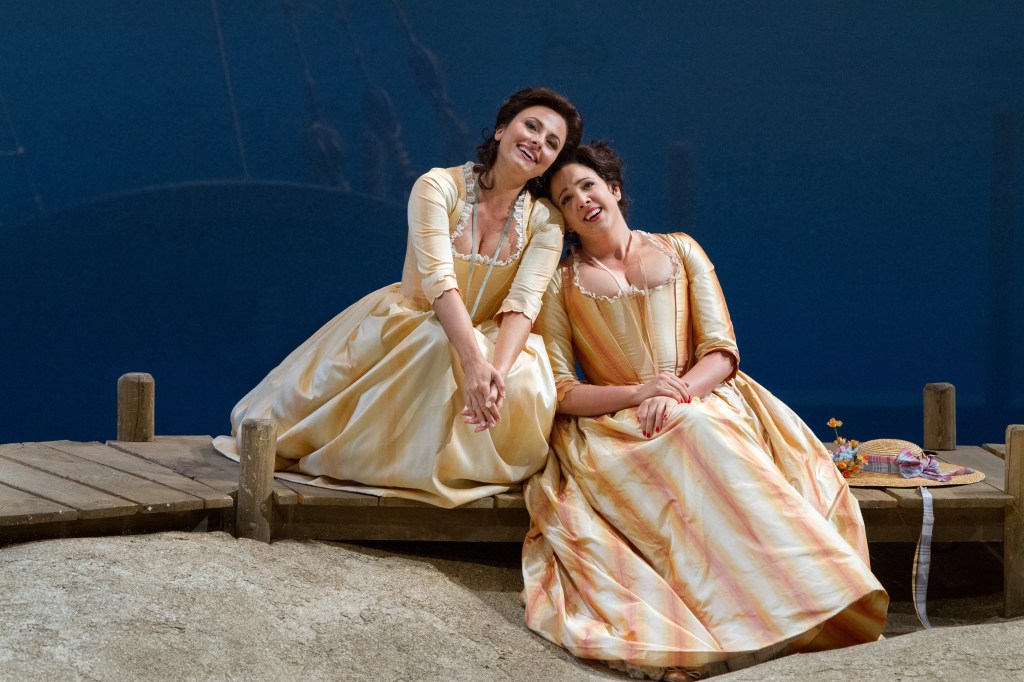
Isabel Leonard as Dorabella and Susanna Phillips as Fiordiligi in Così fan tutte / Metropolitan Opera
Their fiancés were adorable. Ferrando and Guglielmo (such strange names in this opera ─ Fiordiligi, Guglielmo…) were so smitten with the sisters that their giggles and giddiness reminded me of teenage boys with their first crush. Even while disguised as Arab sheikhs their bubbling enthusiasm for their sweethearts couldn’t be stifled.
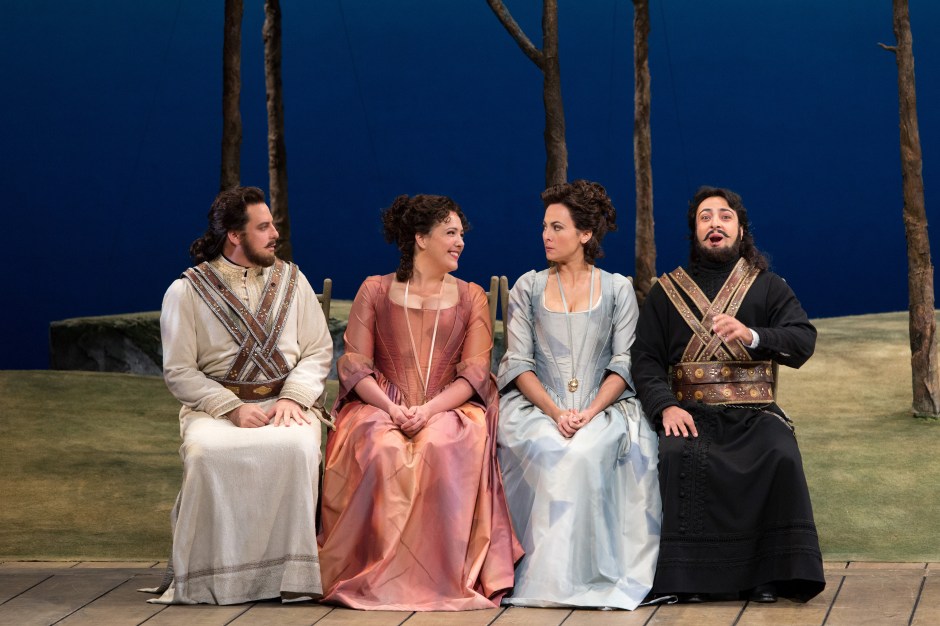
Danielle de Niese as Despina, Matthew Polenzani as Ferrando, Rodion Pogossov as Guglielmo, and Maurizio Muraro as Don Alfonso in Così fan tutte / Metropolitan Opera
The thalassic score accompanied the harmonious singing like a sigh floating on a breeze and the lighthearted moments of comedy were balanced with some introspective seriousness. If I had one complaint about Così, it’s that it’s a tad too long: I walked out of the theater just after 11 p.m. from a 7 p.m. start time. However, the decision to travel over an hour and a half to catch the summer encore of Così fan tutte was well worth the late evening drive.
A scene from Così fan tutte / Metropolitan Opera
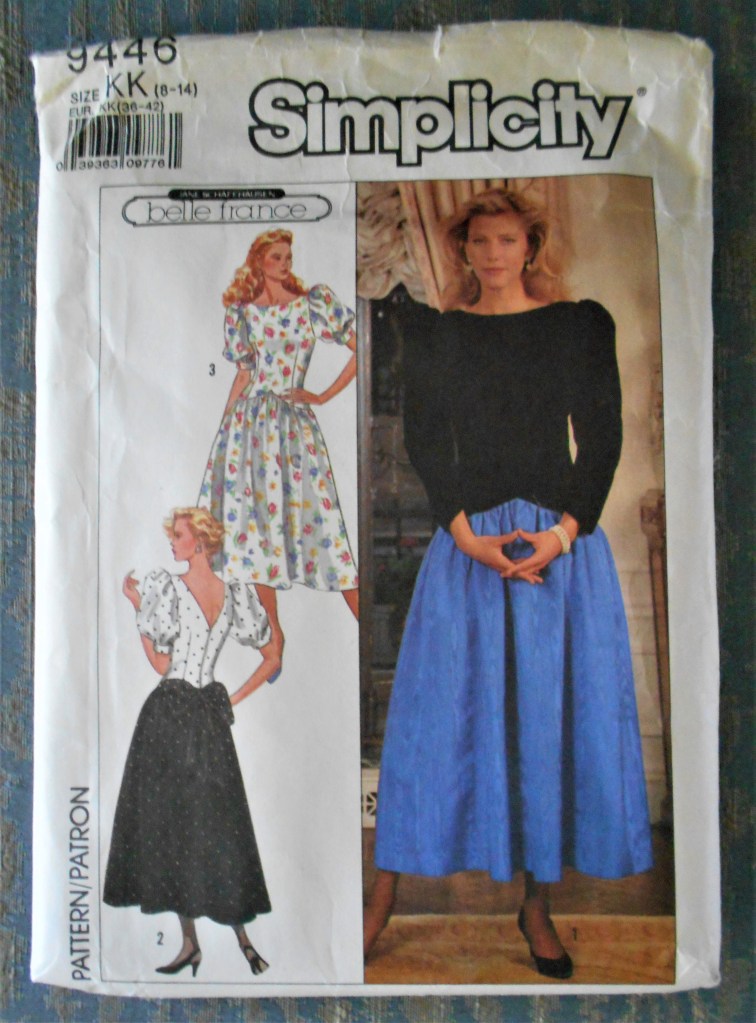
Since Così is a cute, zany opera, I thought a dress of a similar description would be the perfect outfit for the summer encore. Best of all, I didn’t have to look beyond my mother’s closet for the answer. Like me, my mother used to sew many of her clothes and thankfully she has kept nearly all of her dresses and jumpers from the 1970’s and 80’s. One of my favorites is the black and white polka dot dress with dropped waist and puff sleeves that fits me well. I even found the original pattern in the worn, bulging cardboard pattern box… Dress #2 at the bottom of the envelope was obviously the intended look my mother desired…
Simplicity 9446 circa 1989
Keeping it classy with pearls, long gloves, and a ladylike chignon, I was decked out for the escapades of Mozart’s Battle of the Sexes.
The opera’s finale was a happy one and the men married their betrothed. But back to the all important question: were the women faithful to their fiancés ? No. Did I care ? Hardly ! All’s well that ends well ─ the opera was too charming not to forgive and forget.
Toi, Toi, Toi,
Mary Martha
Cast and Credits:
Così fan tutte ─ Wolfgang Amadeus Mozart (1790) Live in HD air date: April 26, 2014 (Encore seen: July 21, 2016)
Cast: Ferrando ─ Matthew Polenzani Guglielmo ─ Rodion Pogossov Fiordiligi ─ Susanna Phillips Dorabella ─ Isabel Leonard Don Alfonso ─ Maurizio Muraro Despina ─ Danielle de Niese
Credits: Conductor ─ James Levine Production ─ Lesley Koenig Set and Costume Designer ─ Michael Yeargan Lighting Designer ─ Duane Schuler Stage Director ─ Robin Guarino Live in HD Director ─ Gary Halvorson Host ─ Renée Fleming
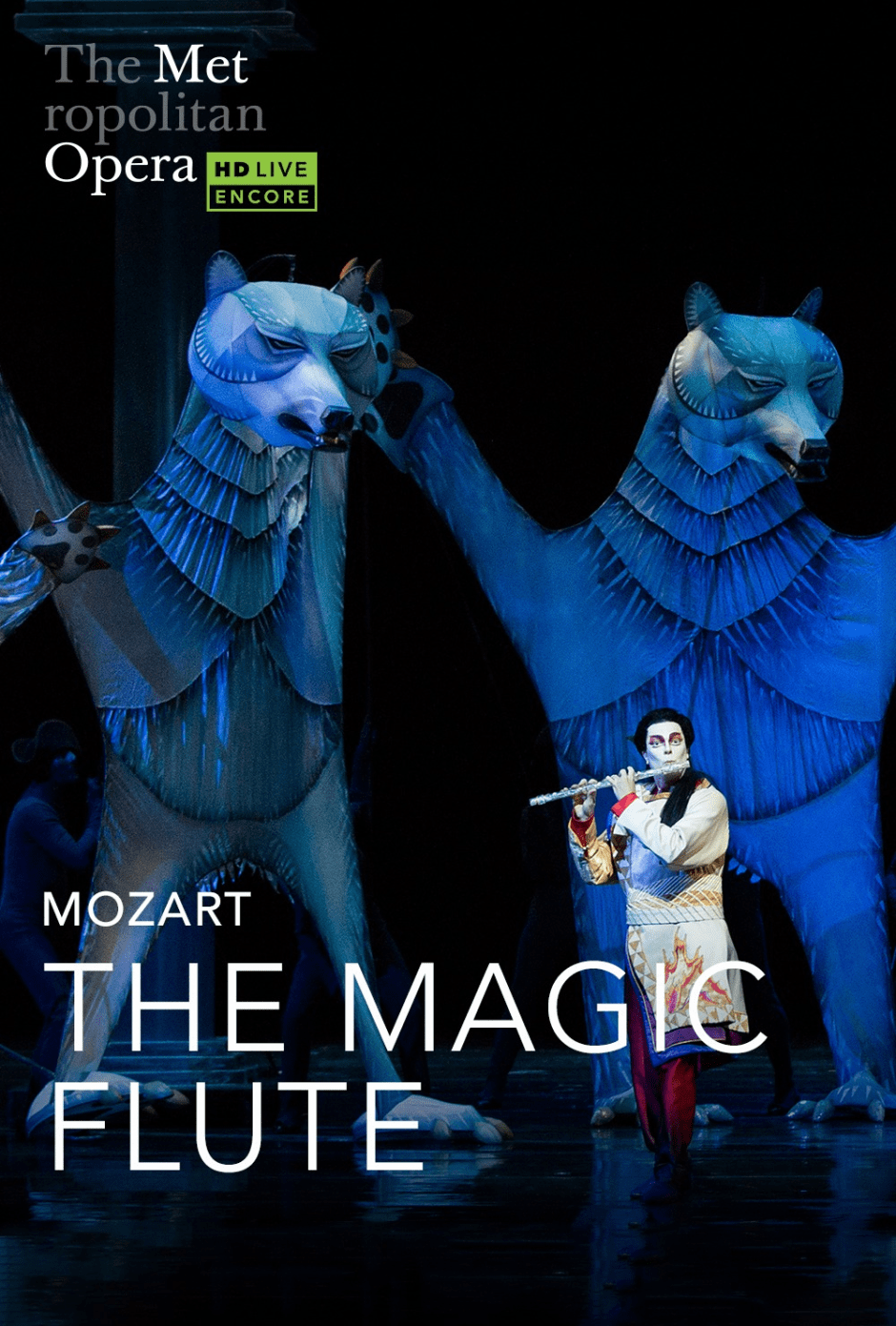
Mozart’s last opera also happens to be my favorite ─ similar to the way Puccini’s posthumous Turandot holds a dear place in my heart. In this abridged English adaptation of Die Zauberflöte, the German originator, the Met’s annual encore of The Magic Flute provides a holiday tradition that has become a classic on its own. Interestingly, The Magic Flute was the opera that spawned the Metropolitan Opera’s Live in HD series in December 2006. Having known this for years, it’s always been on my to-do list to attend one of the yearly December rebroadcasts, not only for the singing and story, but for curiosity’s sake as well… “What was the first Live in HD performance like back then,” I’ve wondered. Because of scheduling conflicts or the inevitable “Christmas burnout”, my intended trip to The Magic Flute has never occurred… until now !
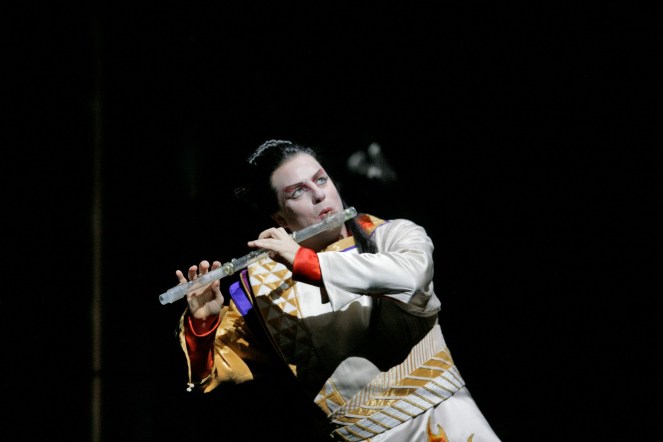
Ying Huang as Pamina and René Pape as Sarastro in The Magic Flute / Metropolitan Opera
Was the experience worth the hype ? Absolutely ! Not only did I feel like I was witnessing history, but it was also notable to see how young singers, like Matthew Polenzani, have improved in their vocal skills since 2006. Even the video production format has evolved: no welcoming host to preview the opera behind the curtain, no intermission interviews with the singers (The Magic Flute has been shortened to exclude intermissions), and limited backstage peeks in the inaugural telecast. Goodness, how the movie theater audiences are spoiled nowadays…!
Matthew Polenzani as Tamino in The Magic Flute / Metropolitan Opera
One element that felt familiar was Julie Taymor’s extant production, filled with imaginative sets and costumes. Whether a fan of opera or not, the visual and textural stimulation of the mystical world manufactured by the same creator as The Lion King on Broadway is scintillating enough to hold the interest of the least enthused.
Nathan Gunn as Papageno in a scene from Julie Taymor’s production of The Magic Flute / Metropolitan Opera
Just as The Magic Flute is a seasonal tradition at the Met, so I wished for my attire to grasp that same nostalgic feel, but with some updated tweaks. With only a few days notice, I wanted to theme a “modern retro” look that would scream “Holiday !”
And so, I hurried to my closets…
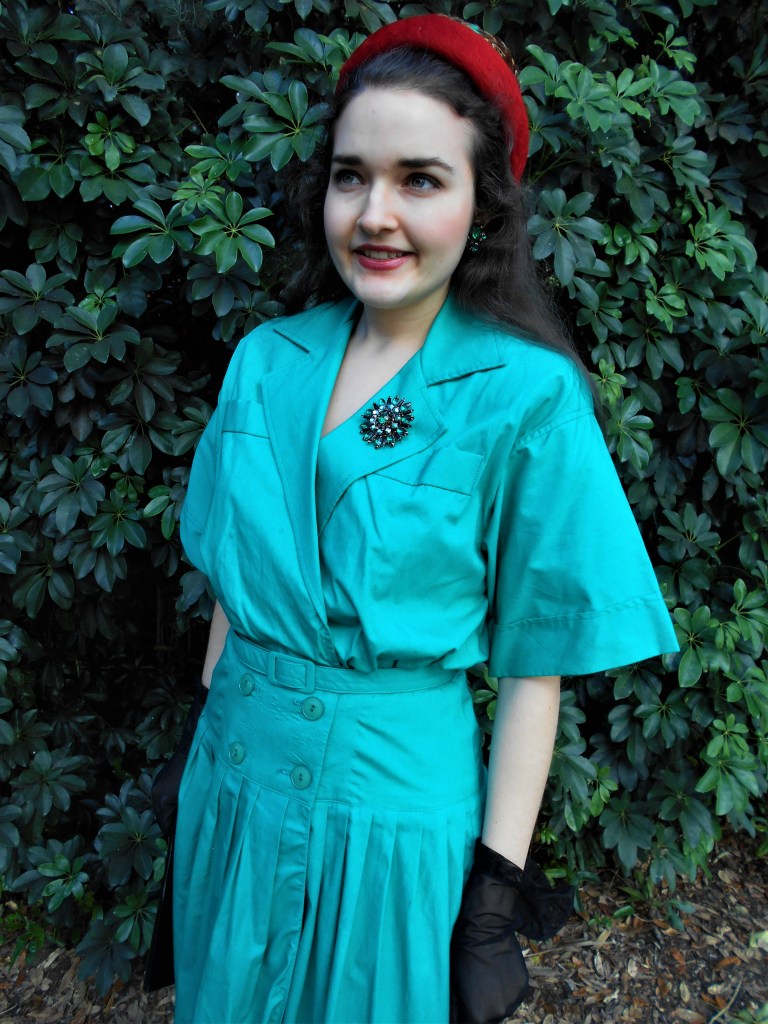
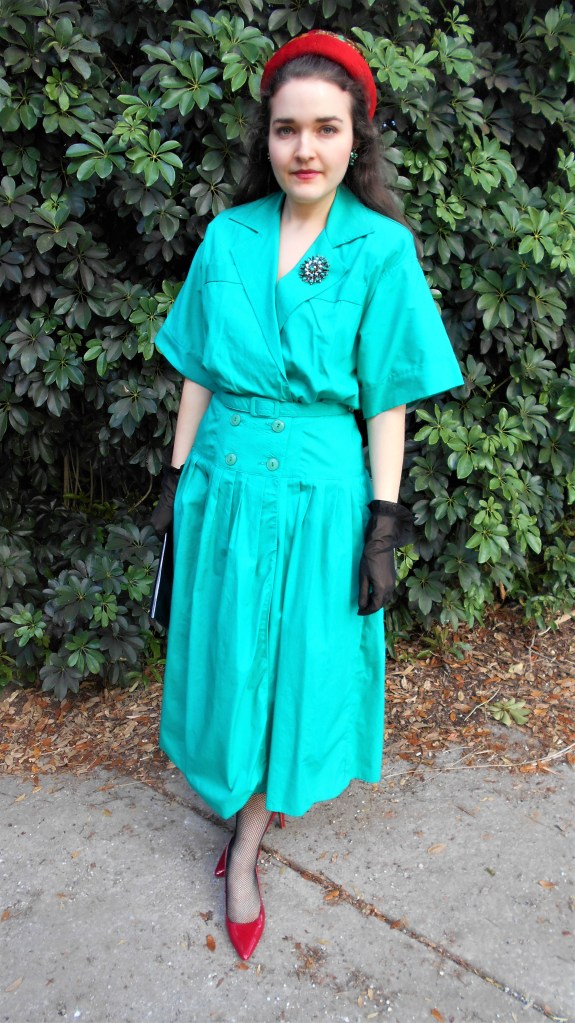
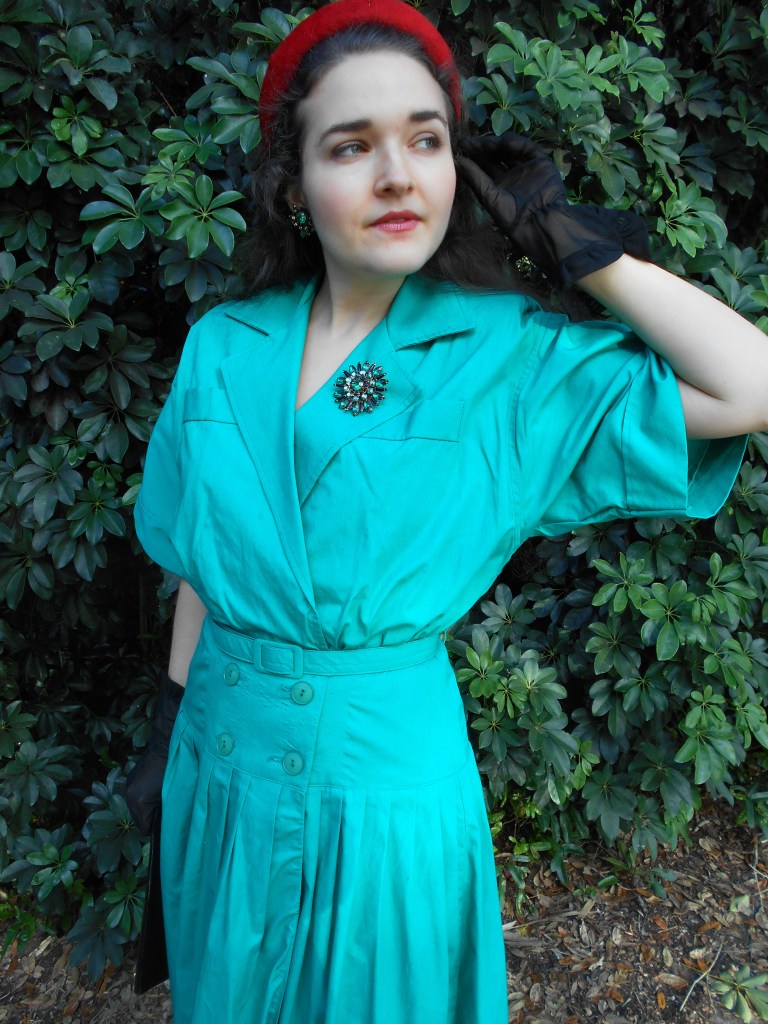
The button waist yoke dress, an original 1980’s garment from my mother’s closet, was the perfect teal green color to set off the beautiful brooch and earring set that I bought at an estate sale recently. Also coincidentally coordinating was the red felt hat, bedecked with green, red, and brown speckled feathers. Because my dear “adopted” Grandma could no longer make use of the pillbox, she passed it on to me. My gratitude knows no bounds.
The black gloves are some of my favorites with the sheer ruffle alongside the wrist and side seams. And those red stilettos ? I adore them ! They’ve traipsed the floors of many operas: Traviata, Rosenkavalier, Traviata again, etc.
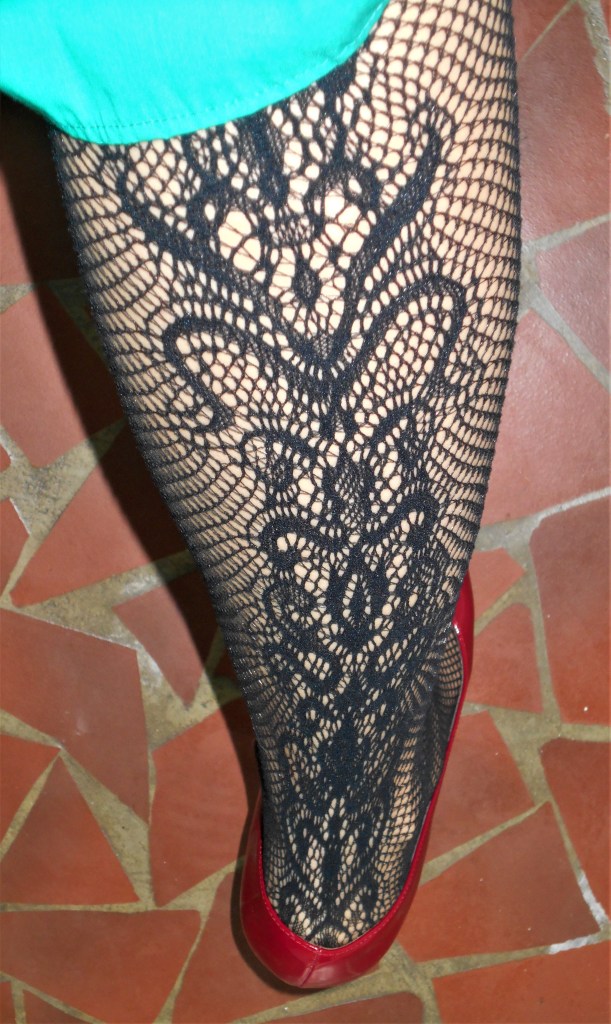
Most likely, you’re probably thinking that I look like I stepped straight out of the 1940’s, right ? “So what’s modern about this ‘modern retro’ outfit ?” you might ask… Frankly, the fishnets ! From the front they seem tame, but the backs are are another story with racy lace climbing up my calves and hamstrings. I doubt the women of yesteryear would have worn something so daring… unless your name happened to be Ava Gardner or Rita Hayworth.
Red and green were never lovelier together… Almost as lovely as Mozart and the Met at Christmastime.
Toi, Toi, Toi,
Mary Martha
Cast and Credits:
The Magic Flute ─ Wolfgang Amadeus Mozart (1791) Original Live in HD air date: December 30, 2006 (Encore seen December 7, 2019)
Cast: Tamino ─ Matthew Polenzani Pamina ─ Ying Huang Papageno ─ Nathan Gunn Sarastro ─ René Pape Queen of the Night ─ Erika Miklósa Speaker ─ David Pittsinger
Credits: Conductor ─ James Levine Production ─ Julie Taymor Set Designer ─ George Tsypin Costume Designer ─ Julie Taymor Lighting Designer ─ Donald Holder Puppet Designers ─ Julie Taymor, Michael Curry Choreographer ─ Mark Dendy English Adaption ─ J.D. McClatchy Live in HD Director ─ Gary Halvorson
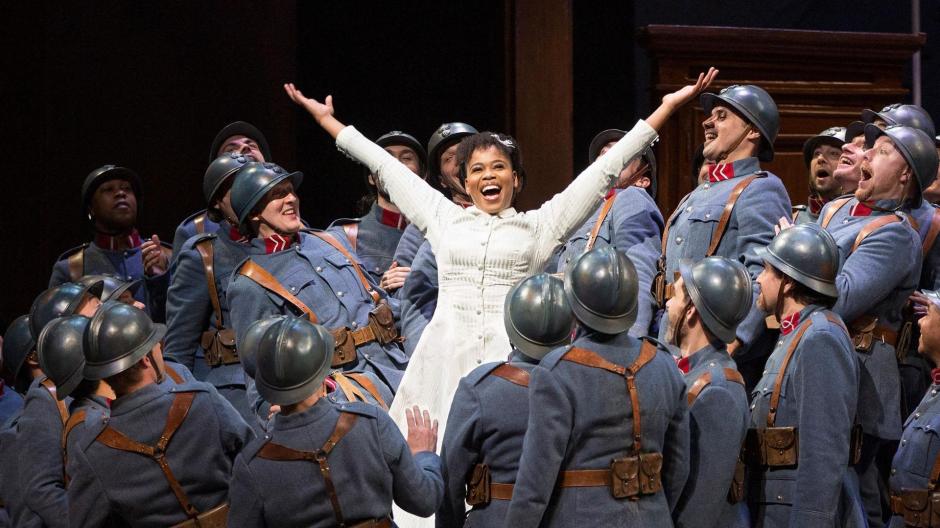
Growing up as an Army brat can be tough. Smelly socks, hardtack rations, itchy wool uniforms─ the works. There’s never a moment’s rest and danger lurks around every corner. But for Marie, nothing compares to being the adopted daughter of France’s 21st Regiment. With a voice of sparkling cut crystal, Pretty Yende charmed as Donizetti’s “Belle of Bel Canto” along with a stratospherically high Javier Camerena as her Tyrolean suitor.
Pretty Yende as Marie and Javier Camarena as Tonio in La Fille du Régiment / Metropolitan Opera
The bel canto style is characterized by dizzying vocal runs at breakneck speeds, which results in a dazzling display of featherweight finesse and outstanding ornamentation. All the singers gave it their all and won raving applause. However, the most notable ─ the most invigorating ─ moment came when Javier Camarena gave an encore of the standout aria, “Ah! Mes amis… Pour mon âme” ─ the first encore ever attempted during a Live in HD broadcast. Eighteen treacherous high C’s were hit with mastered accuracy. The target practice certainly payed off… my ears were delighted !
Javier Camarena sings the encore of “Ah! Mes amis… Pour mon âme” / Metropolitan Opera
As with nearly every opera comedy, the plot lacked any dire conflict. Whatever strife that might have arisen was quickly remedied by a scene of reunion and almost always accompanied by stint of physical comedy. A good belly laugh is standard operating procedure for one of Donizetti’s romps.
Pretty Yende and Javier Camarena with Alessandro Corbelli in Donizetti’s La Fille du Régiment / Metropolitan Opera
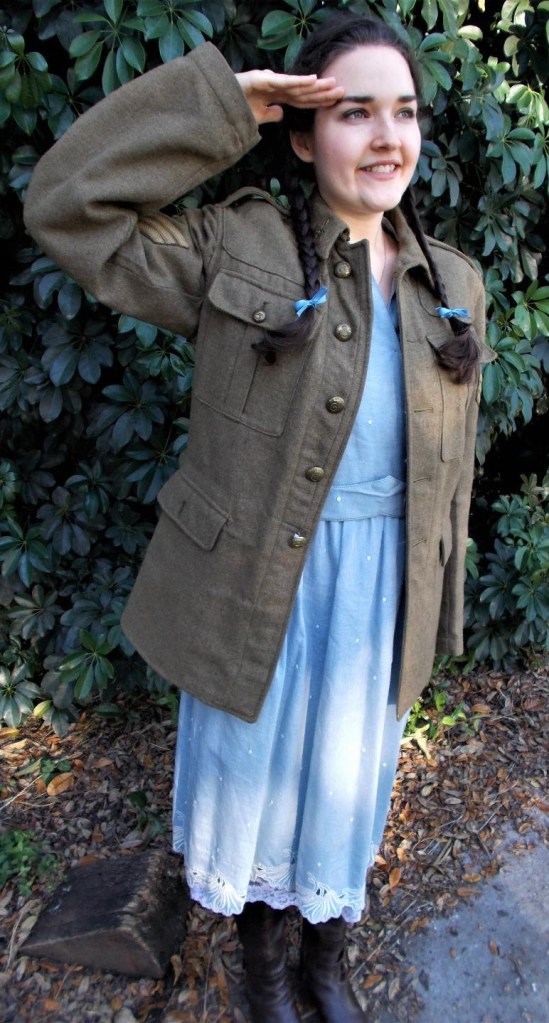
When I saw this particular opera on the Live in HD schedule more than a year in advance, I knew right off the bat that my outfit would be classified as a ‘Closet’ ensemble where I borrow clothes and accessories from my mother’s closet as well as those of close friends. My intention for Laurent Pelly’s updated World War I setting of The Daughter of the Regiment (as the opera is known in English) was to mix the “daughter” with the “regiment” in my look, blending supple girlish charm with rough militaristic machismo.
For my hairstyle, I envisioned something that was utilitarian for the wartime era, like this:
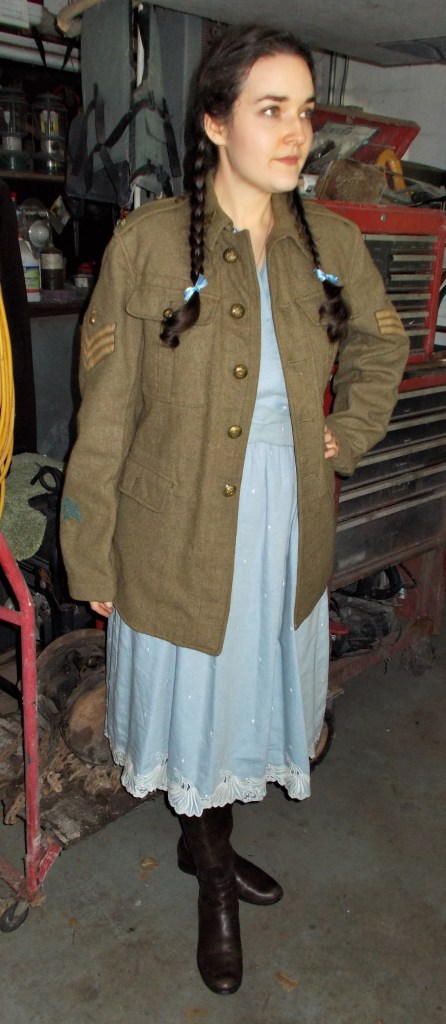
Thankfully, it didn’t work out. What a dreadful look ! My mother had the idea of braiding my hair in pigtails to convey the girlish character. There’s one for the “daughter/fille” !
The pale blue dotted chambray dress (“fille”) made its second appearance at the theater after taking a turn as part of Mimì’s blue ensemble for La Bohéme in 2018. The buckle boots, perfect for marching off to war (“régiment”), were bought at a bargain at one of my favorite resale stores. As you can tell, I was already putting together my outfit with relative success. But this opera was set in the not-too-far-off World War I era… I needed something really “regimental”…
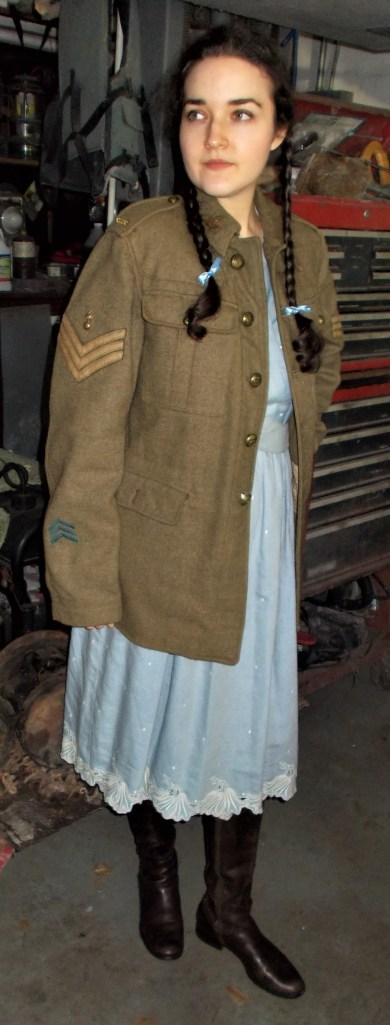
And so, I reached out to my own military “papa” in Uncle Kim. Boy, did he have a great plan… Topping my mother’s chambray dress is the original tunic of Signaler Donald B. Smith from when he served in the Canadian Reserve Engineer Regiment in WWI. Yes, it’s over 100 years old and in tiptop shape with only a missing pocket button and a few small moth-eaten holes. The fit wasn’t too bad for my frame either… Thank you, Uncle Kim, for lending me the absolute best garment for this opera, scratchy wool and all !
Replica tunics like this one retail at around $125 online. But Signaler Smith’s is genuine. It’s also priceless.
While a soldier’s profession is as precarious as a floating soap bubble rising in the air, the bel canto brilliance of Donizetti’s charmer (and the dynamic duo of Pretty and Javier) remains a grounded favorite for audiences across the globe. As I left the theater that day, I caught myself humming, “Rataplan, rataplan, rataplan !“
Toi, Toi, Toi,
Mary Martha
Cast and Credits:
La Fille du Régiment ─ Gaetano Donizetti (1840) Live in HD air date: March 2, 2019
Cast: Marie ─ Pretty Yende Tonio ─ Javier Camarena Suplice ─ Maurizio Muraro Marquise of Berkenfield ─ Stephanie Blythe Duchess of Krakenthorp ─ Kathleen Turner
Credits: Conductor ─ Enrique Mazzola Production ─ Laurent Pelly Set Designer ─ Chantal Thomas Costume Designer ─ Laurent Pelly Lighting Designer ─ Joël Adam Choreographer ─ Laura Scozzi Asscoiate Director and Dialogue ─ Agathe Mélinand Live in HD Director ─ Gary Halvorson Host ─ Nadine Sierra
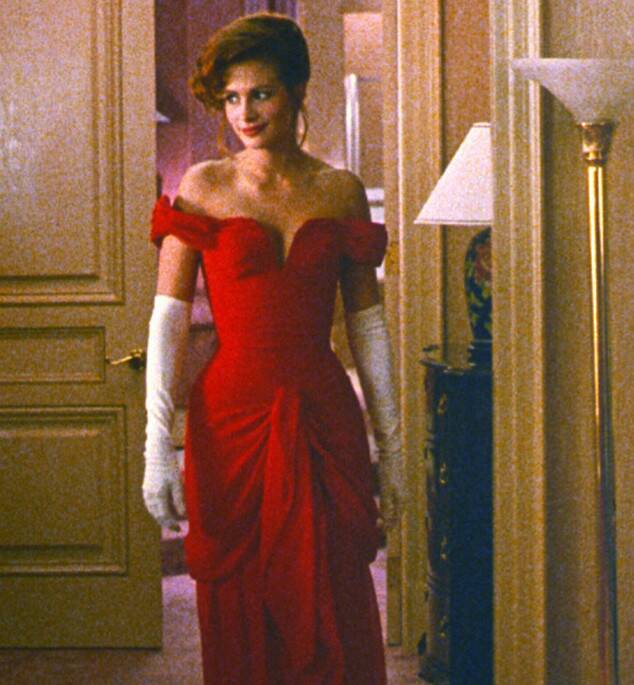
Everyone knows La Traviata. Whether you’re an exuberant opera fan or not, the tuneful music that sets the story of the consumptive courtesan, Violetta, is as recognizable as the Ten Commandments are to a man without Faith. From countless television commercials, to the iconic chick flick, “Pretty Woman”, it’s hardly a secret that Verdi’s 1853 hit left an indelible stamp on the opera world as well as in pop culture.
Going to the opera ─ a scene from “Pretty Woman”
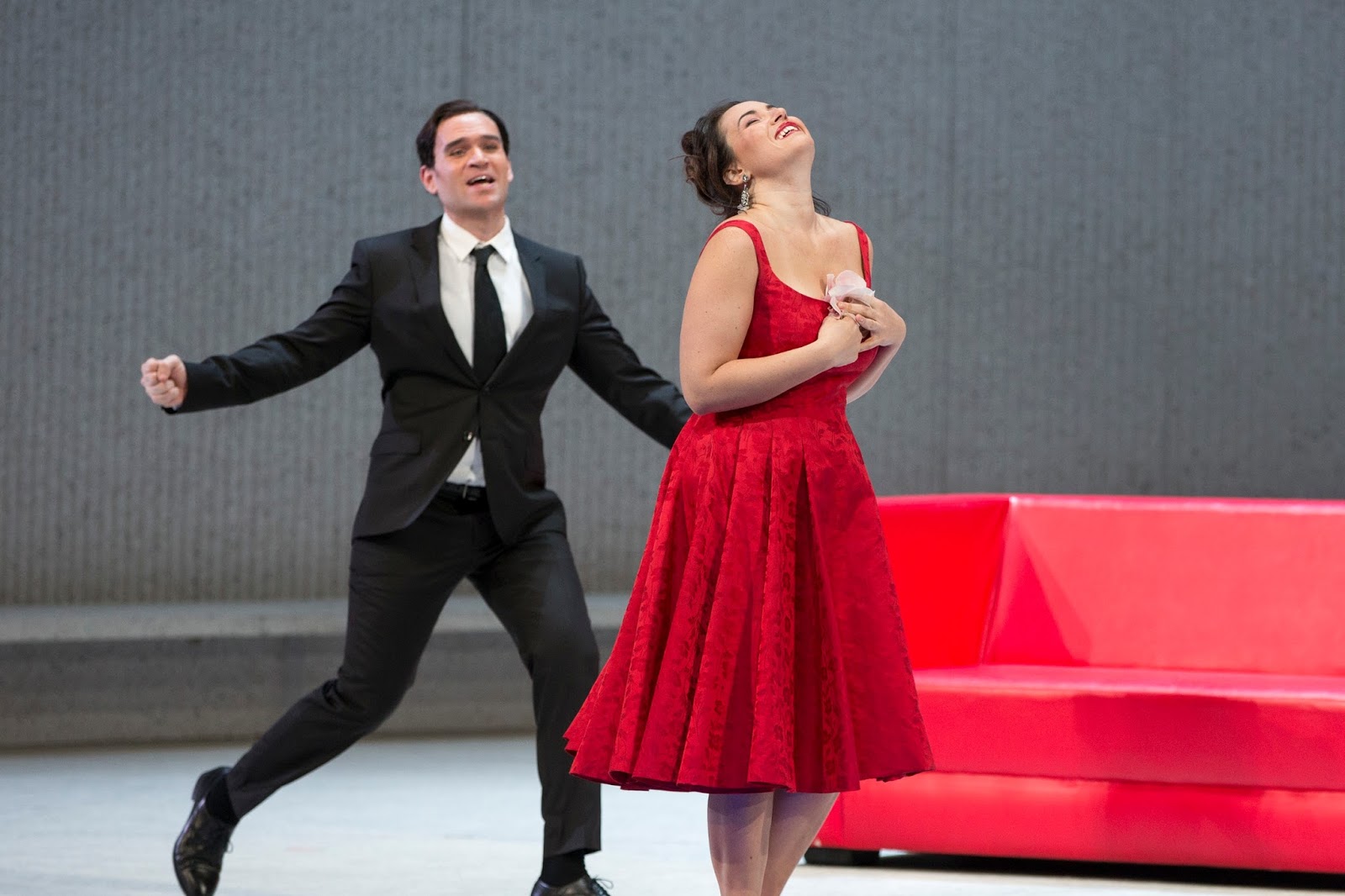
Typically, I strongly prefer to experience an opera set traditionally before ever dipping my toe into the pool of a modern interpretation. But although an abstract production, I still wanted to see La Traviata when it came to theaters. Willy Decker’s stark sets and tuxedoed chorus members stripped the scenes to minimalist proportions. Languoring in a curve of the corrugated circular stage sat an enormous face clock with a latent theme. Was the intent ─ to allegorize Violetta’s time running out ─ effective ? That’s debatable. Unless previously enlightened, the concept was rather abstruse to grasp ─ at least it was for me. However, there was one upside to the bare bones production and that was the adorable little red dress worn by Violetta during the vibrancy of the opera.
Sonya Yoncheva as Violetta in Willy Decker’s La Traviata / Metropolitan Opera
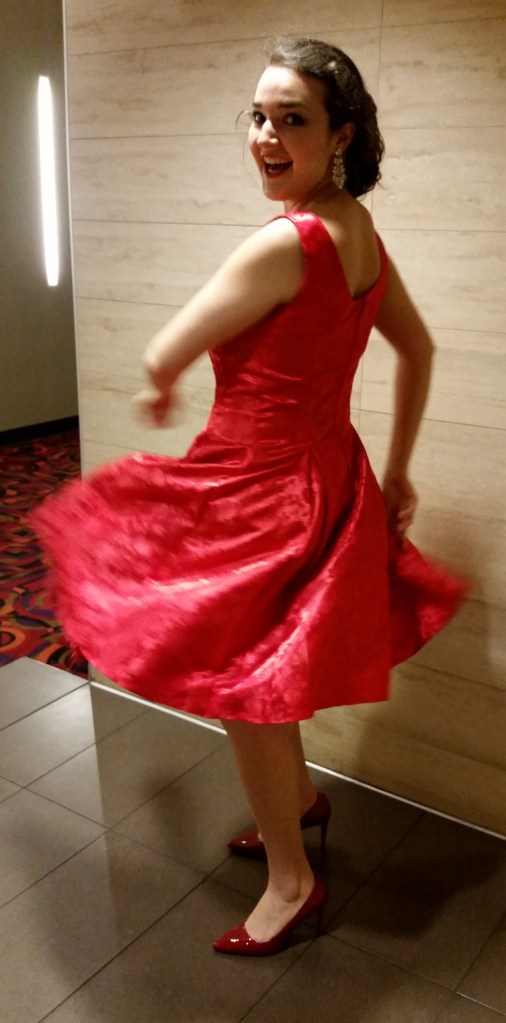
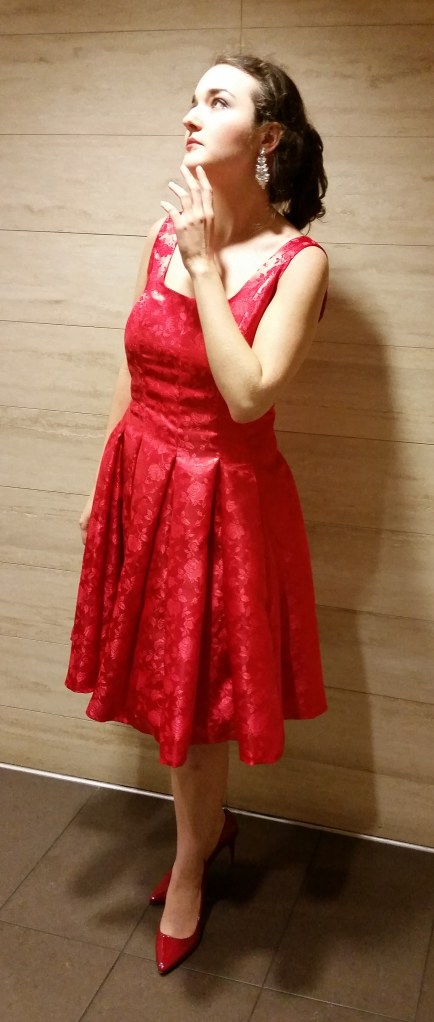
Since debuting at the prestigious Salzburg Music Festival in 2005, the production’s scarlet flouncy floral brocade dress has been worn by leading sopranos around the world. From Anna Netrebko to Natalie Dessay, the pictorial research was readily available. Hitherto, my only sewing projects amounted to a yukata sewn for Madama Butterfly and a mop cap for my Hebrew slave costume for Nabucco. To take on a complex dress, I needed a real pattern. And after months of scouring and rumination, I found it !
It’s even red ! McCall’s 6834
With a full pleated skirt and the promise of Palmer and Pletsch fitting, I was elated to begin sewing McCall’s 6834 as my Traviata pattern. But obviously, some alterations needed to be made to elevate the style to the Violetta Valéry standard.
Michael Fabiano as Alfredo and Sonya Yoncheva as Violetta in La Traviata / Metropolitan Opera
First adjustment ─ the front and back neckline. My goal was a “rounded square scoop” neckline for the front and so I fiddled with whittling down the existing pattern to how I intended it to look. But I needed help, especially with the curve of the back, so I pulled out an old sleeveless dress pattern from my mother’s bulging pattern box and used its pieces for the design of the straps and necklines. So far, so good !
See & Sew by Butterick 6398 / Circa 1988
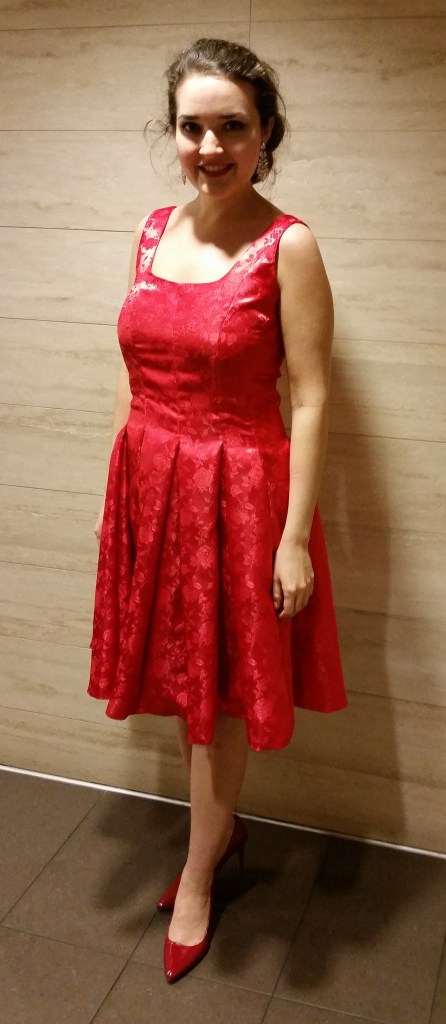
The dress was a near replica of the one worn in the opera. So uncanny was the resemblance that a nearsighted lady, slowly forging her way towards the concession stand during intermission, came close to bumping into me where she halted and gasped, “You look just like Violetta !” The greatest of all compliments was received.
Because this was my first commercial sewing pattern project, I made many mistakes. My sizing was off and goodness, the rosy polyester satin frayed terribly ! The fibers continued to shed and tickled my bare legs with every step. Carefully, I toddled around the theater in my shiny crimson pumps, allowing a twirl every now and then.
Pondering life’s toughest questions: which party to attend next and with whom ?
The evening encore outing was a moderate success, however I look forward to seeing a more traditional Traviata in the not-too-distant future. Whether in a flouncy red cocktail dress or a grand antebellum ball gown, one thing remains constant: the emotional power and beloved recognition of Verdi’s timeless opera, La Traviata.
Toi, Toi, Toi,
Mary Martha
Cast and Credits:
La Traviata ─ Giuseppe Verdi (1853) Live in HD air date: March 11, 2017 (Encore seen: March 15, 2017)
Cast: Violetta Valéry ─ Sonya Yoncheva Alfredo Germont ─ Michael Fabiano Giorgio Germont ─ Thomas Hampson
Credits: Conductor ─ Nicola Luisotti Production ─ Willy Decker Set and Costume Designer ─ Wolfgang Gussmann Associate Costume Designer ─ Susana Mendoza Lighting Director ─ Hans Toelstede Choreographer ─ Athol Farmer Live in HD Director ─ Matthew Diamond Host ─ Isabel Leonard
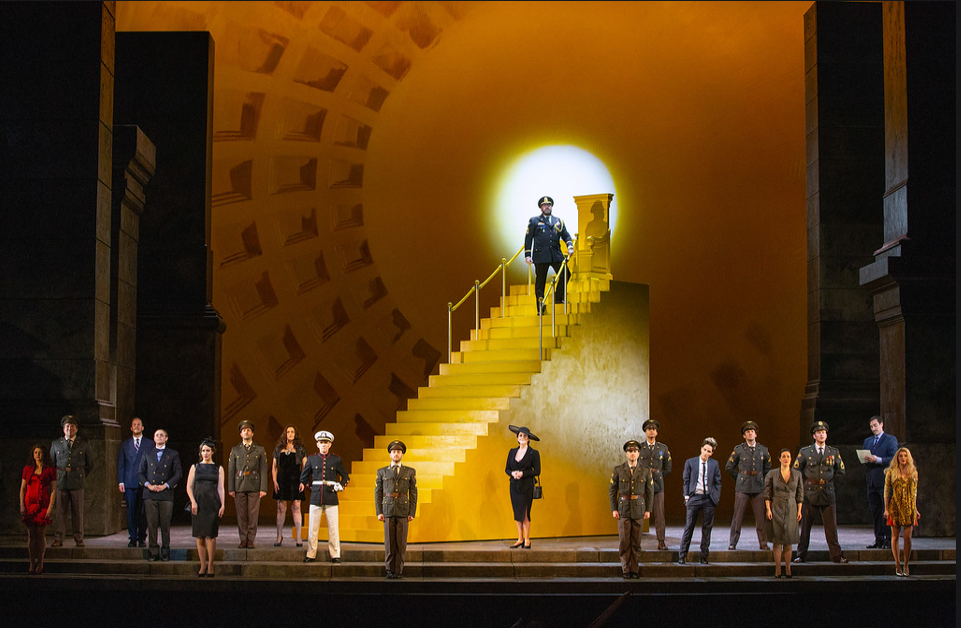
The opera that catapulted Handel to stardom in 1709 certainly didn’t appear to possess any of the typical semblances of its Ancient Rome setting. TV news reporters, business suits, smartphones, and rather raunchy physical comedy could all be taken in during the Live in HD performance of Sir David McVicar’s staging of Agrippina.
So why did I decide to attend ? After all, I don’t like modern productions… or do I ?
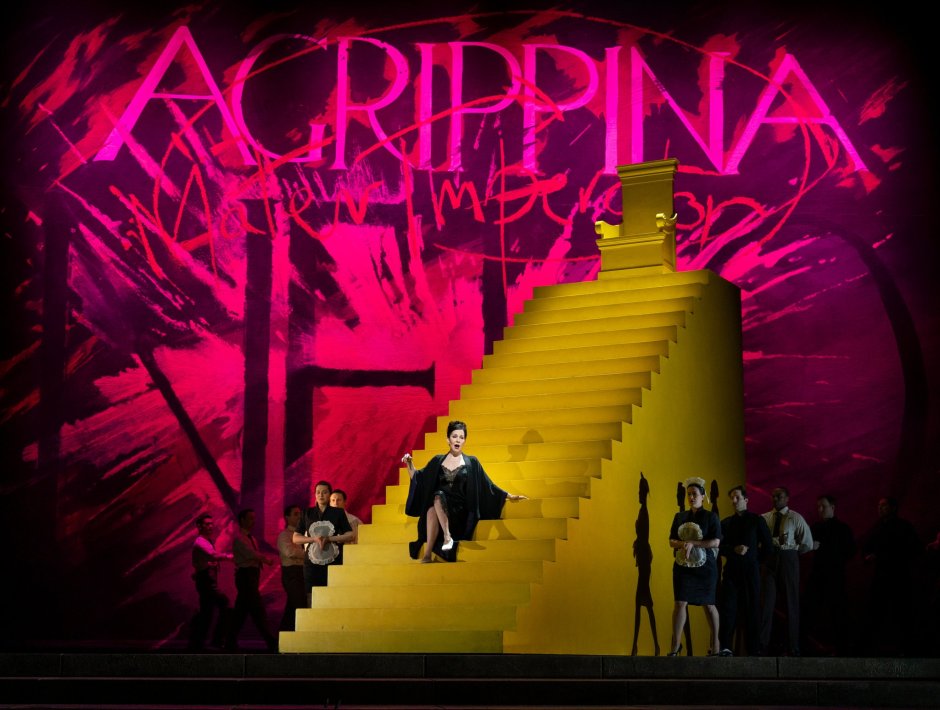
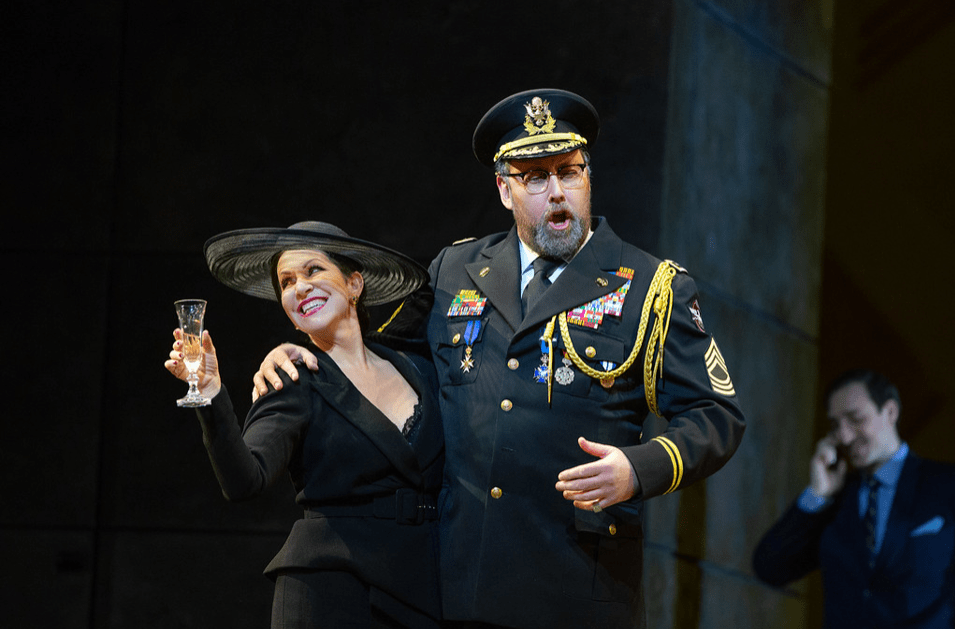
A scene from Agrippina / Metropolitan Opera
A course taken on 18th-Century Opera from edX the previous summer softened my ossified resolve on the idea of attending a Baroque opera in a Y2K setting. It was worth a shot… and that shot was fired with poignant accuracy─ I laughed harder than I have ever laughed at any opera, nearly falling out of my seat on innumerable occasions ! The antics were well-timed, especially from Joyce DiDonato’s saucy Agrippina and her hellion son, Nerone, played to utmost perfection by a tattooed, skinny jean wearing, cocaine snorting Kate Lindsey in a trouser role.
Kate Lindsey as Nerone and Joyce DiDonato as Agrippina / Metropolitan Opera
As a scintillating counterpart to the opera’s R-rated comedy, the singing was sublime. With many scenes being accompanied only by the deft strings of maestro Harry Bicket’s harpsichord, the singers were exploited for their talent and technique alone, which was all the more appreciated after the insightful edX course.
The question remains to be asked: was the radical redux of the Met’s oldest opera in the repertoire worthy of my stalwart traditionalism ? Resoundingly, yes ! Call it sacrilege if you please, but if Agrippina had been staged in its original setting of the infancy of A.D. history, I think it would have been an absolute snoozefest ! Sorry, Handel.
Joyce DiDonato and Matthew Rose in Agrippina / Metropolitan Opera
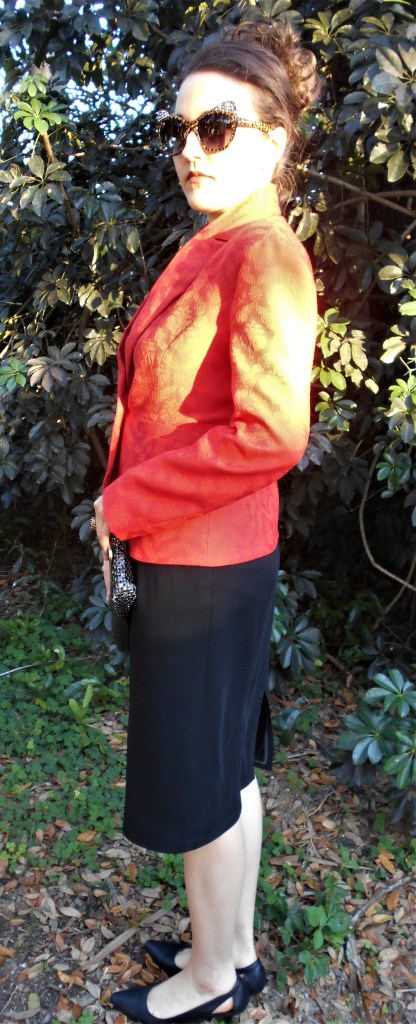
Realizing the modern-dress style of the opera could very well lead into a fashionable sewing project, I envisioned a specific mode ─ an overall perceived attitude ─ for the styling of my outfit: Italian couture. Fittingly, Agrippina is centralized in Rome and while Ancient Rome is a completely different entity from the country of Italy in existence today, I still couldn’t resist aligning the two nations in my quest for haute couture. Perusing pictures and watching video clips from previous renditions of the same McVicar production (extant since 2000), I chose to model my outfit after the Agrippina standing on the stairs in the picture below.
Sarah Connolly as Agrippina, circa 2009 / Gran Teatre del Liceu in Barcelona
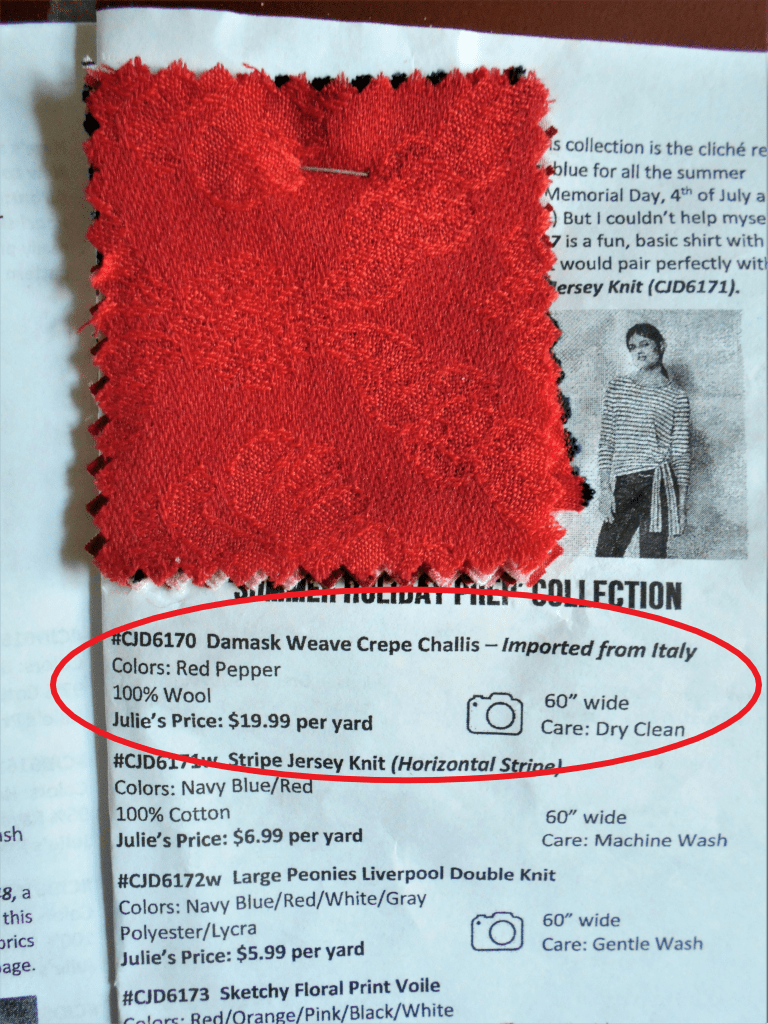
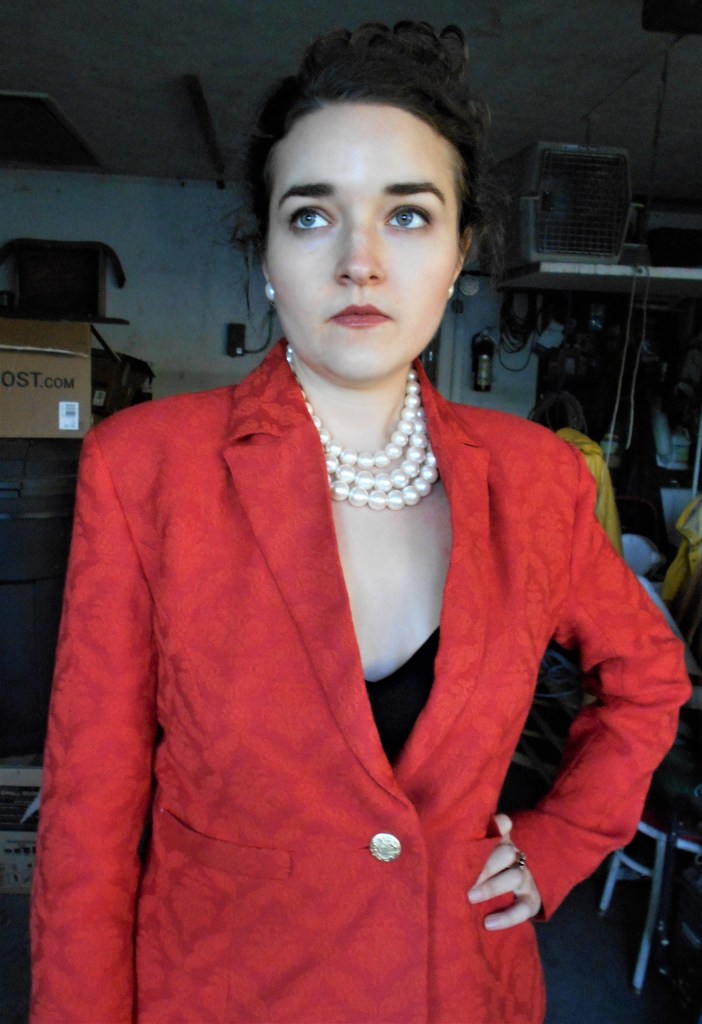
Up close, the blazer was not just one solid color; it was subtlety patterned in a diamond motif. Satin first popped into my mind until I spotted the perfect fabric, which arrived in one of my monthly swatch club mailers from Fabric Mart Fabrics.
Taking the plunge: Wool, Dry Clean Only, $20/yard… Agrippina pushed my boundaries in more ways than one !
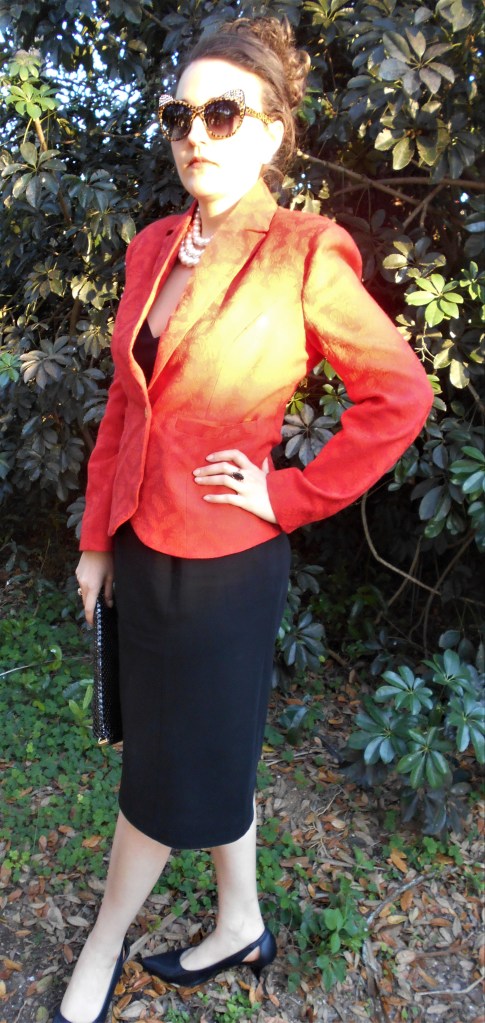
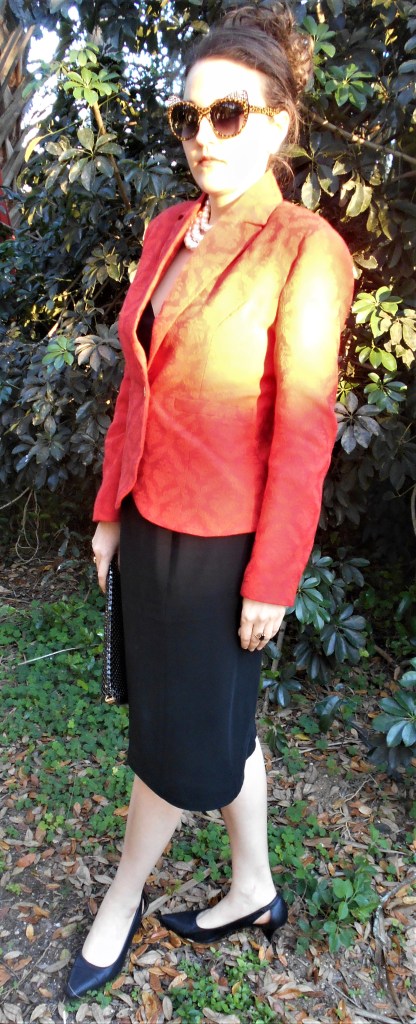
To sew my very first blazer, I used a PDF pattern from Lekala. Although not without flaws, I learned in strides how coat construction comes together. Styled with a “business bun”, Whiting and Davis purse (my mother’s), cat eye sunglasses, and gobstopper pearls (thank you, Aunt Countess !), I was poised to take on the world in sleek, corporate couture fashion.
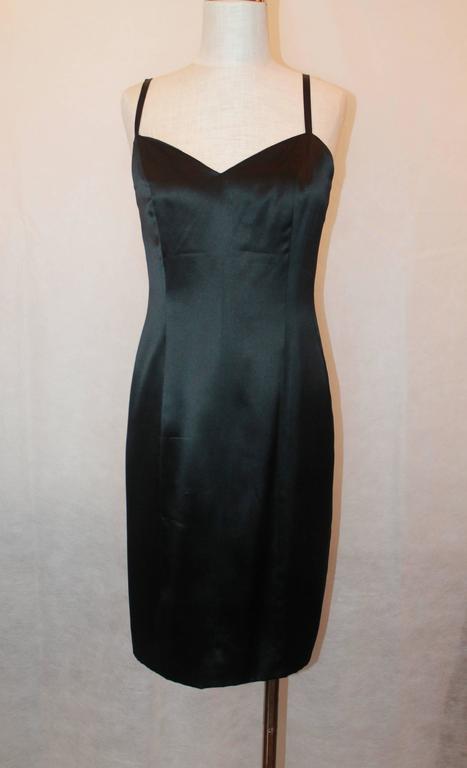
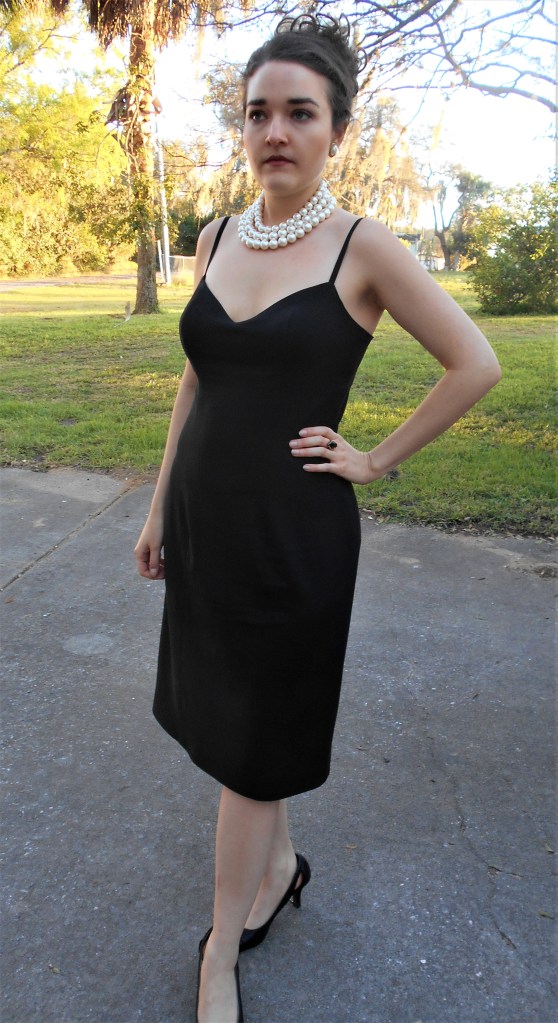
The classic, Chanel-esque cocktail dress, which employed pattern and alteration techniques from the Corset Academy, was the perfect base garment for my “cutthroat corporate” ideal. Here was my inspiration dress:
Circa 1995 Chanel silk slip dress / via 1stdibs.com
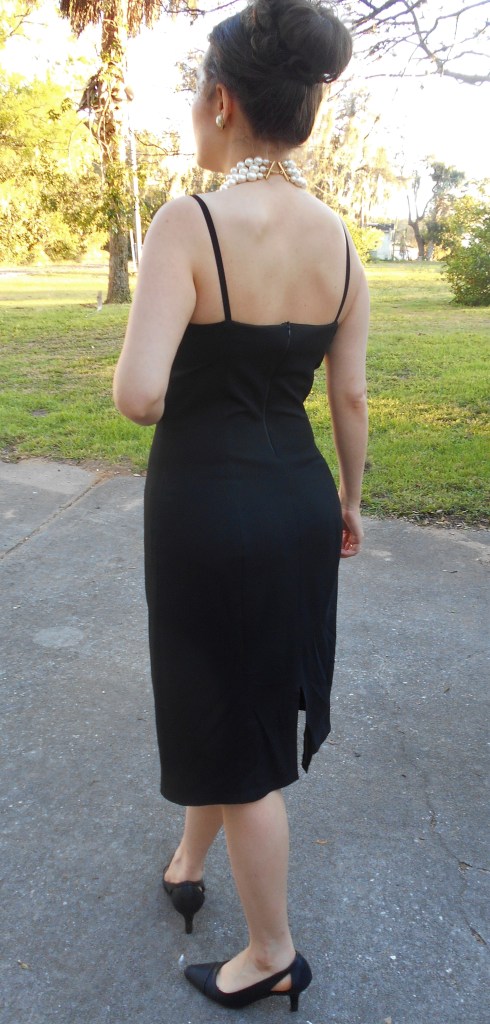
The ponte knit dress was customized with a mesh upper lining and built-in underwire bra…
Did I mention this was an Italian couture outfit ? Everything, from the damask weave crepe challis wool of the blazer to the black ponte knit of the cocktail dress, was sourced from Italy.
Even the gold shank button was from The Boot !
Italian couture and a ruthless Roman matriarch… a match made in heaven ? You be the judge ! The taste for high-end fashion and the delicious vocalities of Handel’s breakout opera left me as hungry as the titular Empress herself, salivating over her next scheme.
Toi, Toi, Toi,
Mary Martha
Cast and Credits:
Agrippina ─ George Frideric Handel (1709) Live in HD air date: February 29, 2020
Cast: Agrippina ─ Joyce DiDonato Nerone ─ Kate Lindsey Poppea ─ Brenda Rae Ottone ─ Iestyn Davies Pallante ─ Ducan Rock Claudio ─ Matthew Rose
Credits: Conductor ─ Harry Bicket Production ─ Sir David McVicar Set and Costume Designer ─ John Macfarlane Lighting Designer ─ Paule Constable Choreographer ─ Andrew George Live in HD Director ─ Gary Halvorson Host ─ Deborah Voigt
Oftentimes it is the lead female character of an opera which I try to portray in my costumes. Front and center, they usually have all the great arias while dressed in the most beautiful clothes. Although not necessarily a soprano, the prima donna is a personal delight to play. But sometimes it is the supporting actress, the seconda donna, who intrigues me more. Such was the case with Verdi’s Aida.
Anna Netrebko as Aida and Anita Rachvelishvili as Amneris in Aida / Metropolitan Opera
Egyptian princess. Heir to the throne. Most eligible woman in all the land. Seemingly, Amneris has it all. Yet her one desire ─ the love of the Egyptian warrior, Radamès ─ is denied. Jealousy flames and anger rages towards her slave, Aida, who has ensnared the heart of the princess’s beloved. Because of the meaty musical and acting material given to the mezzo-soprano singing the role, I knew playing Amneris would prove to be lots of fun. Now to plan my costume… but first, a note ─
Typically, I don’t feel comfortable creating a complex opera costume unless my deadline is at least two months in advance. But because of a serious fitting flaw with my gown for Samson et Dalila, my start time for Aida was enormously delayed. So with just a little over three weeks before the October 6th broadcast, I commenced work on my Egyptian ensemble.
Now back to the clothes…
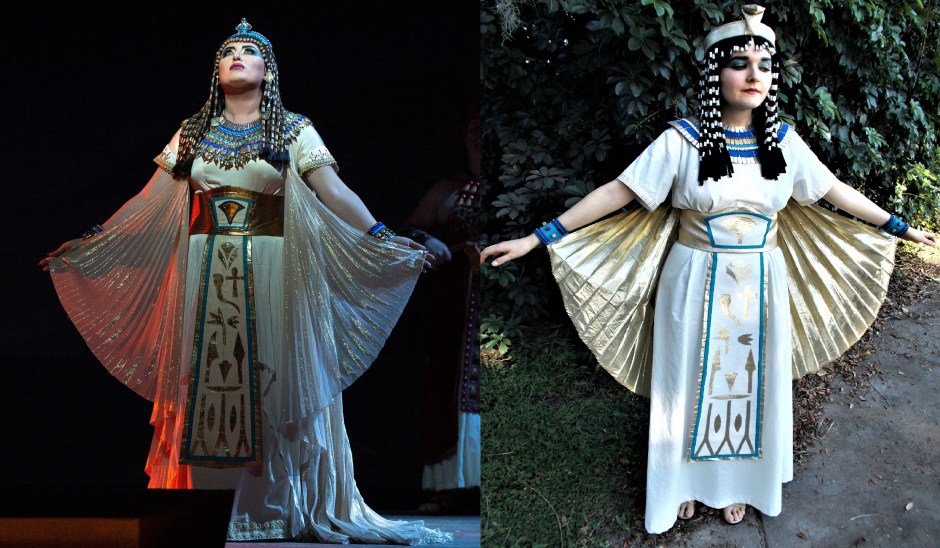
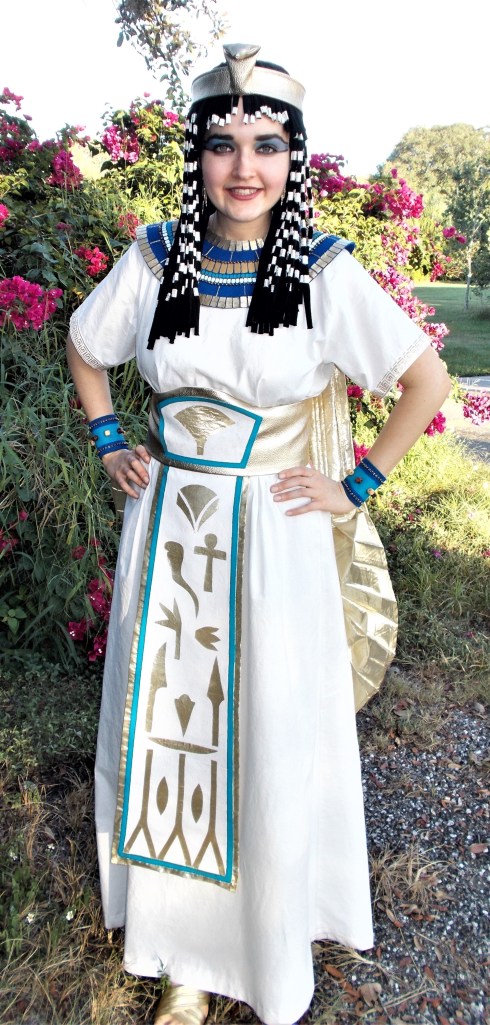
It was a no-brainer. Now was not the occasion for interpretive gowns or my own conjuring of the character. With the Met’s current production spanning in existence for well over 30 years, there was little question as to what I would wear since the production’s costumes are as well-known as the opera itself. A doppelgänger I must be, more specifically, Anita Rachvelishvili’s twin.
Anita Rachvelishvili as Amneris / Metropolitan Opera
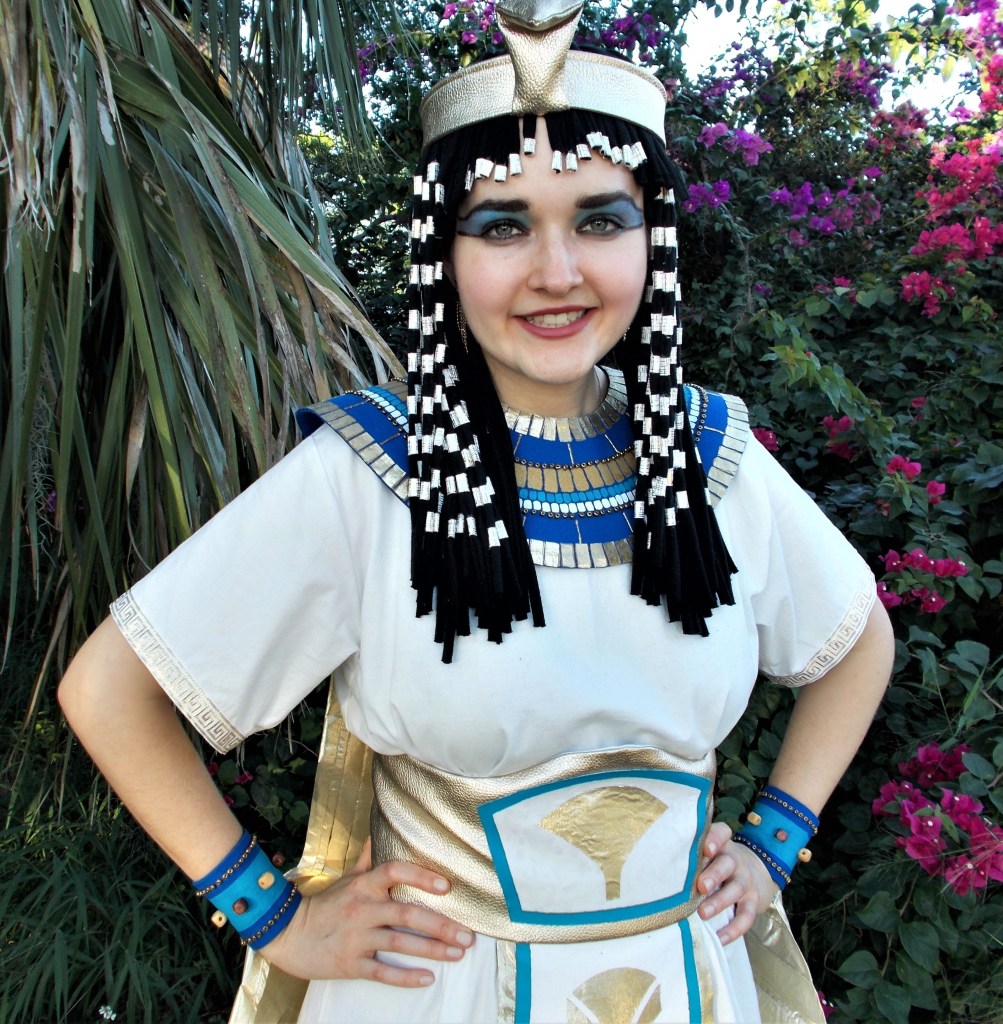
Opting to recreate the second of the character’s two outfits, an assessment needed to be made of each component of the costume:
Dress
Cape
Belt and Sash
Collar and Wrist Cuffs
Headband
Wig
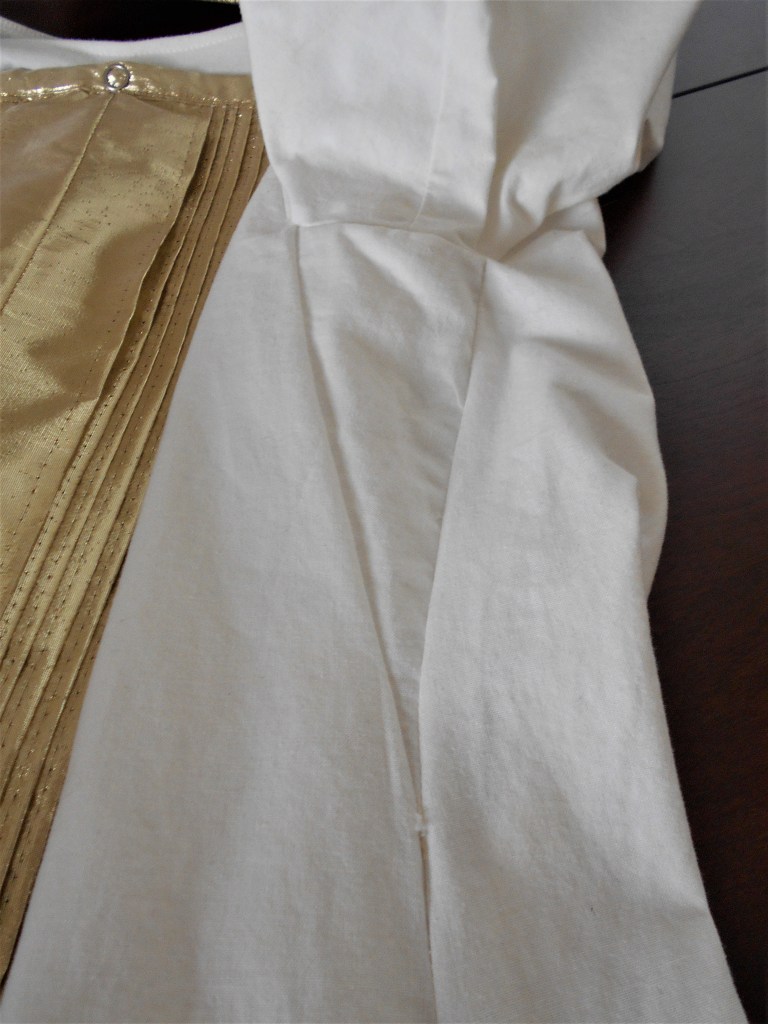
The plain white cotton shift I could handle. The wonderful historical clothing and costuming website, Fashion-Era, provided helpful diagrams on how to map out my gown pattern, which was nothing more than a large length of broadcloth (double my height) folded in half at the shoulder level (crosswise) and then cut downward at a slant from each side of the shoulder to the corresponding selvedges, like a trapezoid, making sure to allow enough room at the bust and hip levels. Of course, I had a slight miscalculation and had to add gussets to widen the bust area after the first fitting.
Triangular gusset added to the side seams of the dress under the sleeve
The dress was hemmed at the bottom and a decorative Greek Key ribbon, leftover from my gown for Tosca, was sewn onto the sleeve openings to finish the garment.
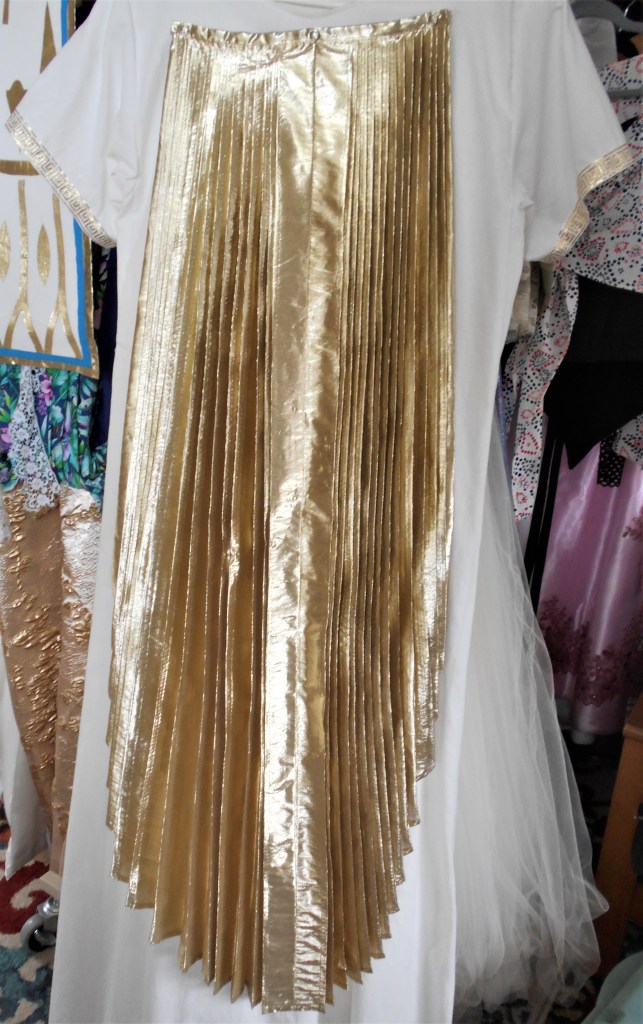
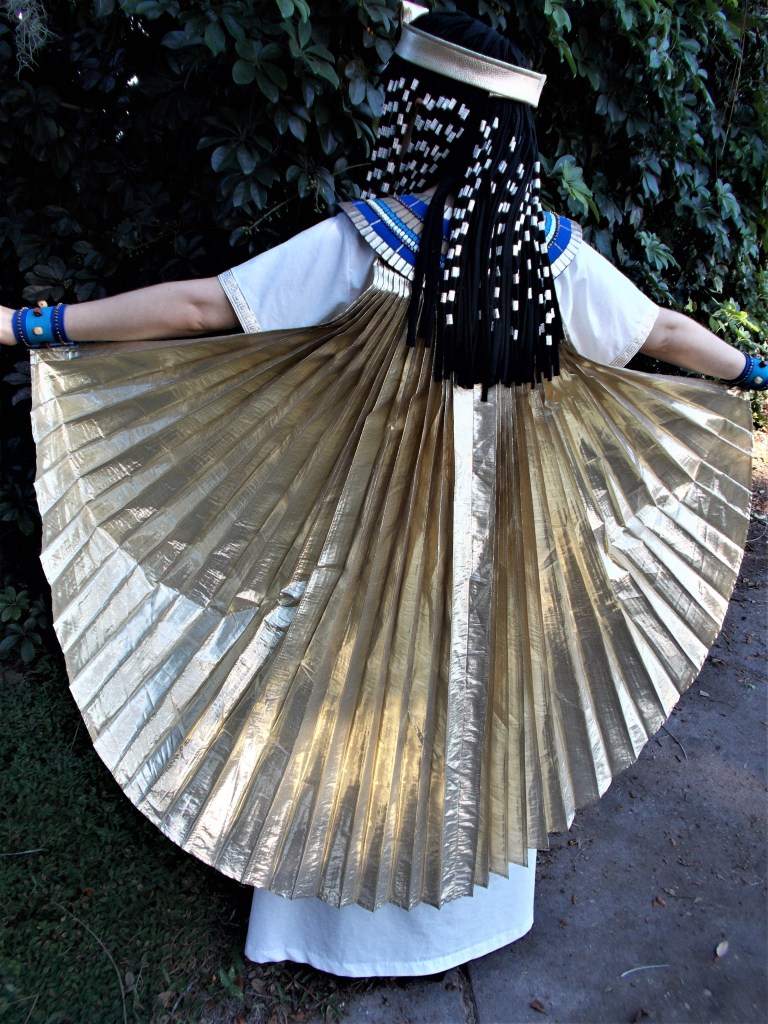
Next came the piece that would turn the most heads and lower the most jaws: the accordion pleated cape, which was essential to Amneris’s second costume in the opera. Glimmering gold and fragile like paper, I knew tissue lamé would be the perfect material to use for the cape. But how to make a pattern for a pleated cape ? It sounded complicated. I was at a loss… until I stumbled across a children’s sewing pattern for Egyptian costumes on the web…
Simplicity 2329
I know, I know ! It sounds far-fetched and ridiculous to think that a kid’s pattern would be of any personal benefit to a grown adult. Although not the size of a child, I believed this pattern would afford me an excellent advantage in gaining a head start on my cape. No serious math equations for calculating width or number of pleats ─ all that was needed was to extend and enlarge the outlines that were already in place. An ingenious plan had been born. Acting upon the flicker of the figurative mental light bulb, I bought the pattern (in the smaller size set, no less !).
I confess, the steps I took to alter this pattern are blurred in my memory. There were some frustrations during the process, such as the bobbin repeatedly running out of thread during the endless basting, but the finished result was far more potent than expected as I attached the steam-pressed lamé cape with snaps onto the back of the white frock.
The baste stitching left small pinprick holes along the edges of each pleat.
Look how the cape falls in a shimmery waterfall down the back ! The sheen is as lustrous as the sun-flecked Nile.
Psst ! How many opera costumes can you spot and name in this picture ? Hint: there are 8 costumes in total.
With the cape and the shift under my belt, it was time to move onto the real belt and the standout symbolic sash.
Anita Rachvelishvili as Amneris in Aida / Metropolitan Opera
The Belt and Sash
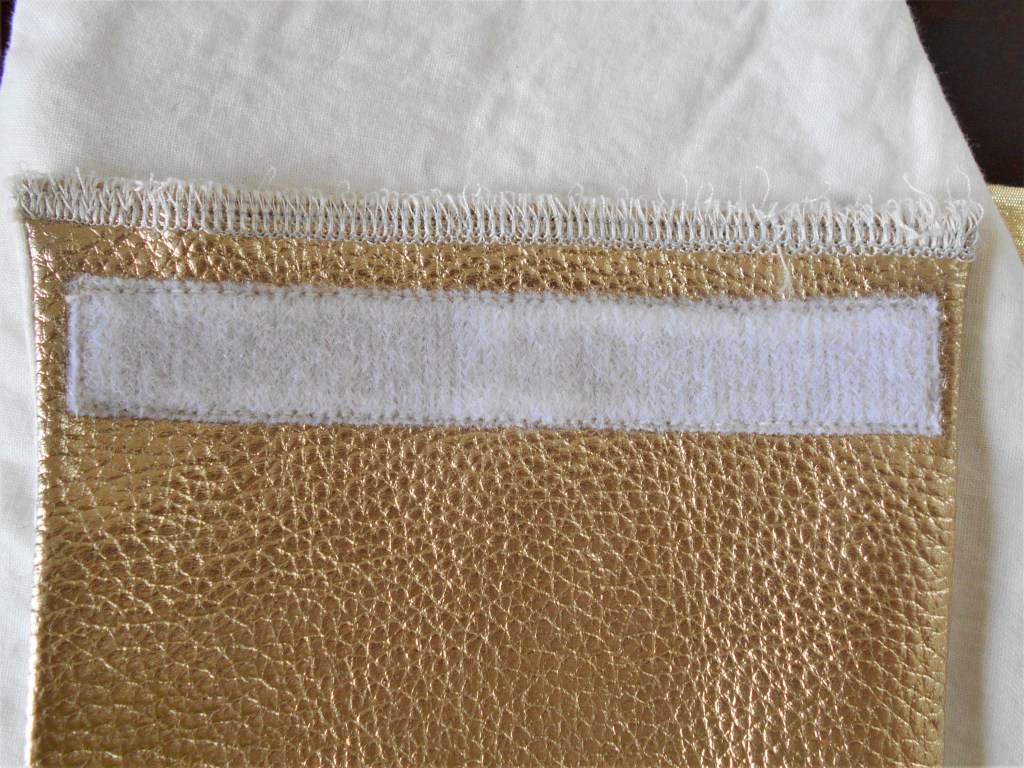
Scrutinizing images like the one above, faux leather seemed to be the obvious choice to create the belt. However, finding it reasonably priced online was a bit difficult due to minimums per order, shipping costs, and negative reviews about the color tinges for some of my favorite options. But while perusing the aisles of Hobby Lobby, I spotted a bolt of bright gold upholstery faux leather, which was perfect for the project. I bought 12 inches and drafted a relatively straight band that arched slightly at the center front. Velcro was used to secure the belt in place. Easy on, easy off !
Some say that I’m “overkill” ─ the costume belt was lined and serged like a semi-couture garment.
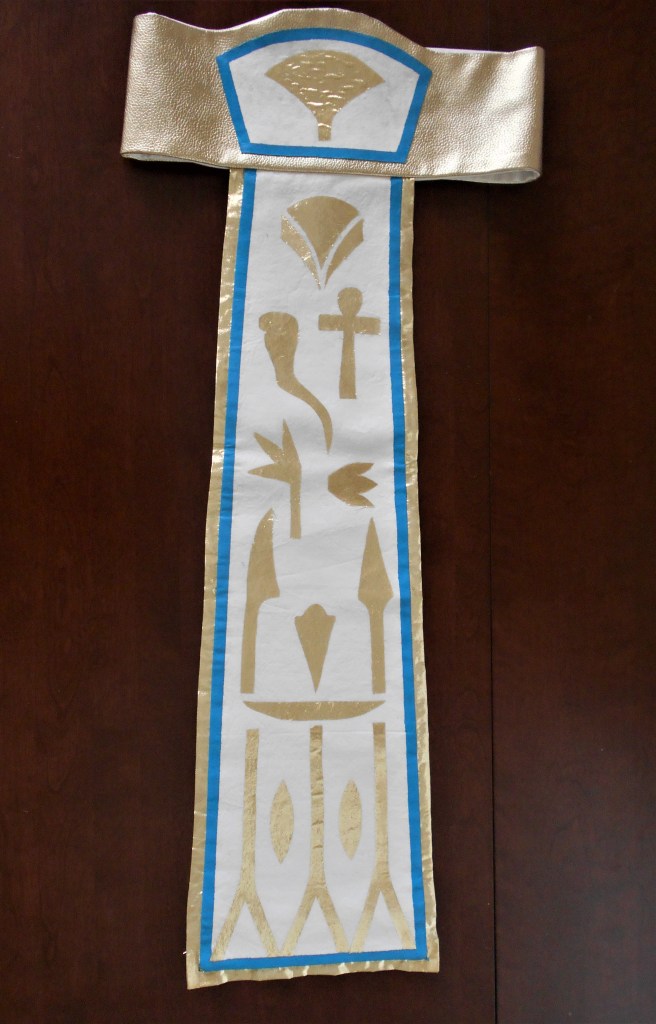
The sash required more attention.
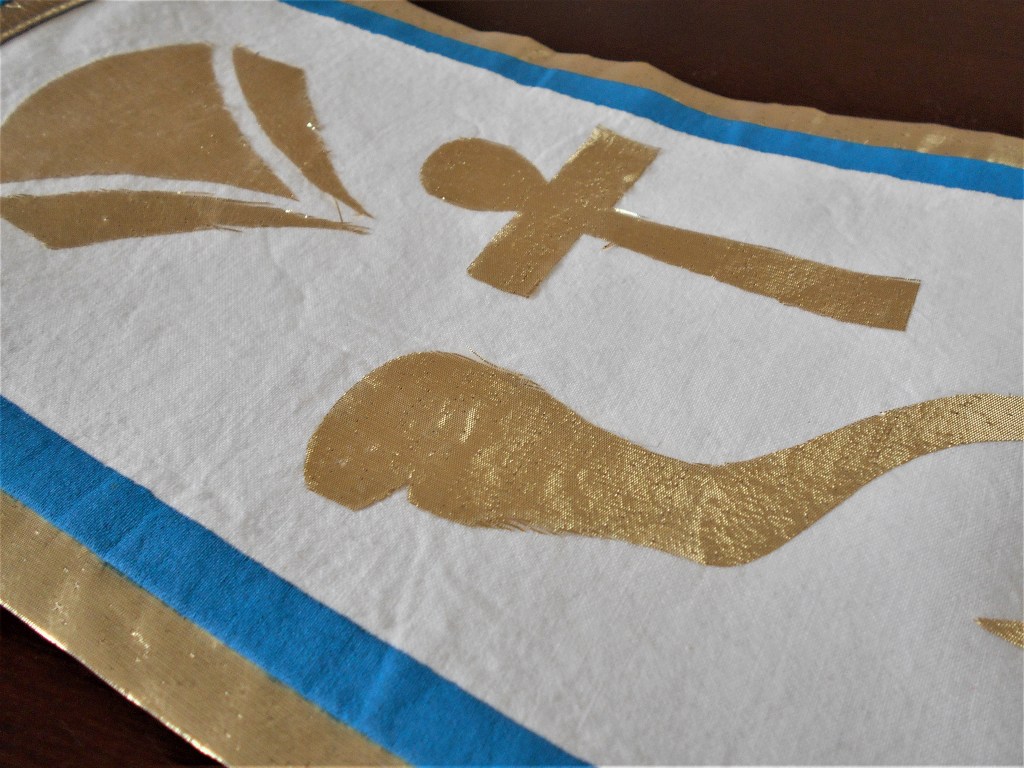
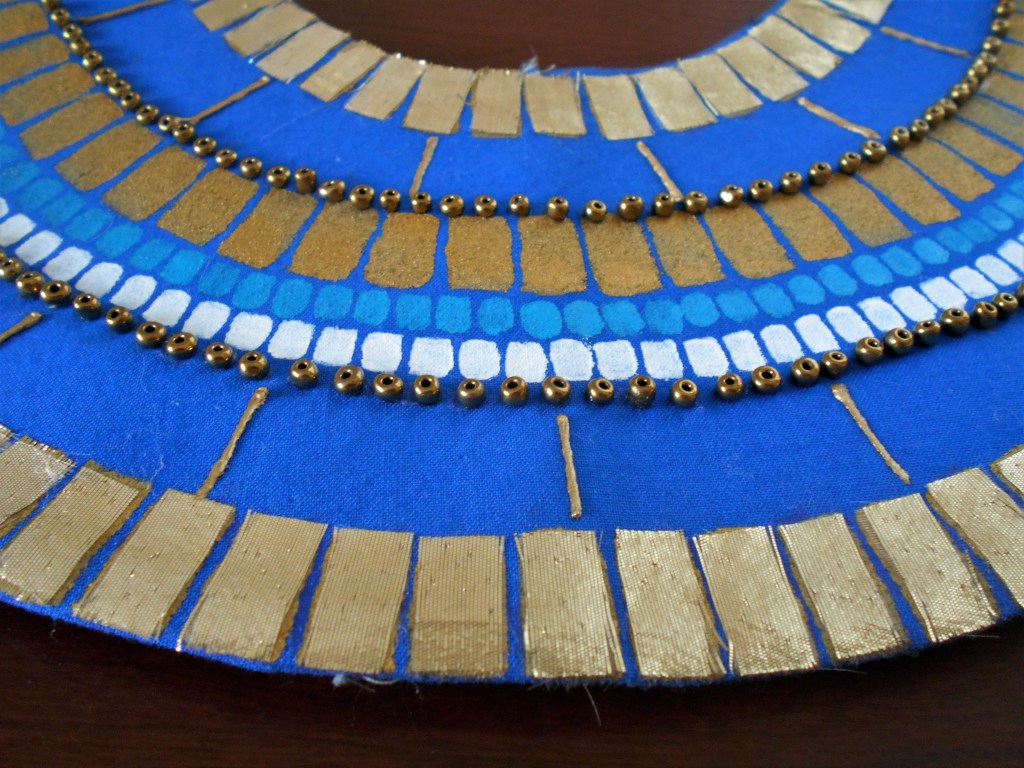
Hieroglyphic in their composure, the characters on the sash and belt present a story in their design. Thinking at first that I would paint these figures onto more of the broadcloth, I decided against that approach after realizing the appendage’s outcome would be much more effective if I snipped the characters out of scraps of the gold lamé used for the cape. Muted paint is no match for glaring metallic foil fabric ! Carefully studying the symbols, I sketched onto paper each figure and used them as a stencil. Then, after cutting the lamé, the pieces were glued onto the broadcloth sash in replica fashion.
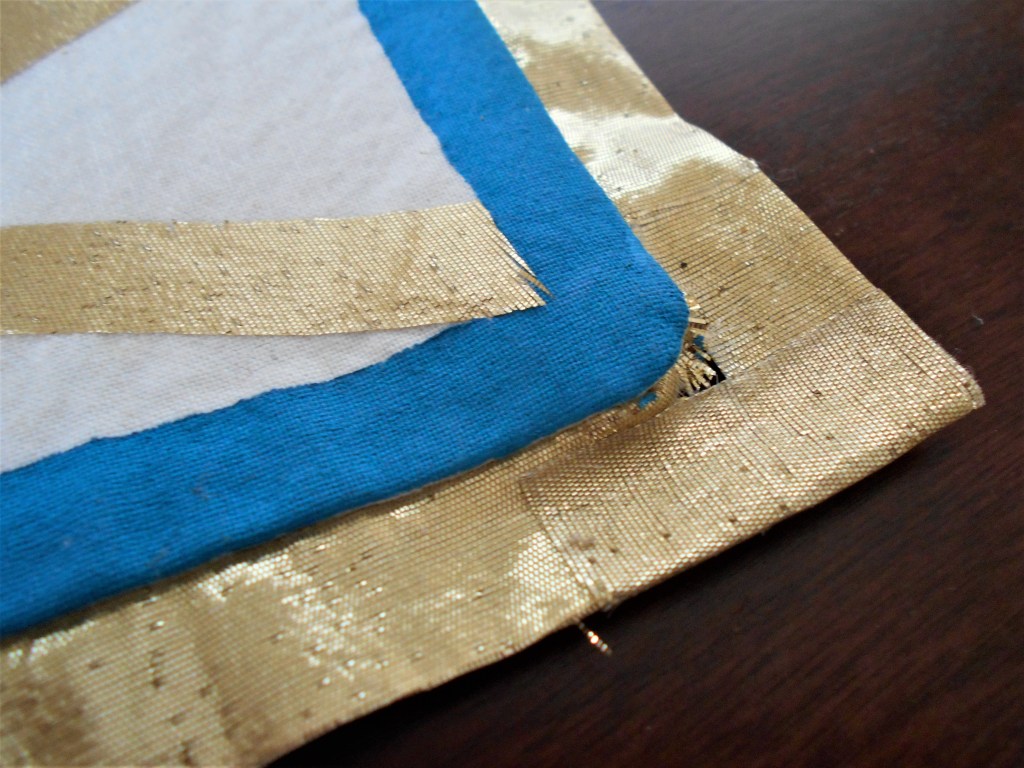
Lamé frays ─ badly ! You can see below how the edges of the cut caricatures are splintering.
But I shouldn’t gripe too much; it is just a costume, after all. I bordered the sash with a long, folded strip of lamé sewn between the face and the lining of the sash. Teal paint added a pop of color to the cotton fabric and then, I was done !
Now that all the accompanying accessories for the base dress were completed, I was ready to take on the more elaborate portions of the costume, mainly the tedious tasks of decoration.
The Collar and the Cuffs
I knew that there would be numerous little trinkets and accouterments to this costume as it needed to resemble the full regalia of ancient Egyptian royalty. But I dreaded the teensy-weensy elaborations to follow. It’s true ─ when much time is spent on one or two dizzying details, I never feel like I’m making progress towards my goals. However, particulars matter, especially when recreating Amneris’s attire and signature style.
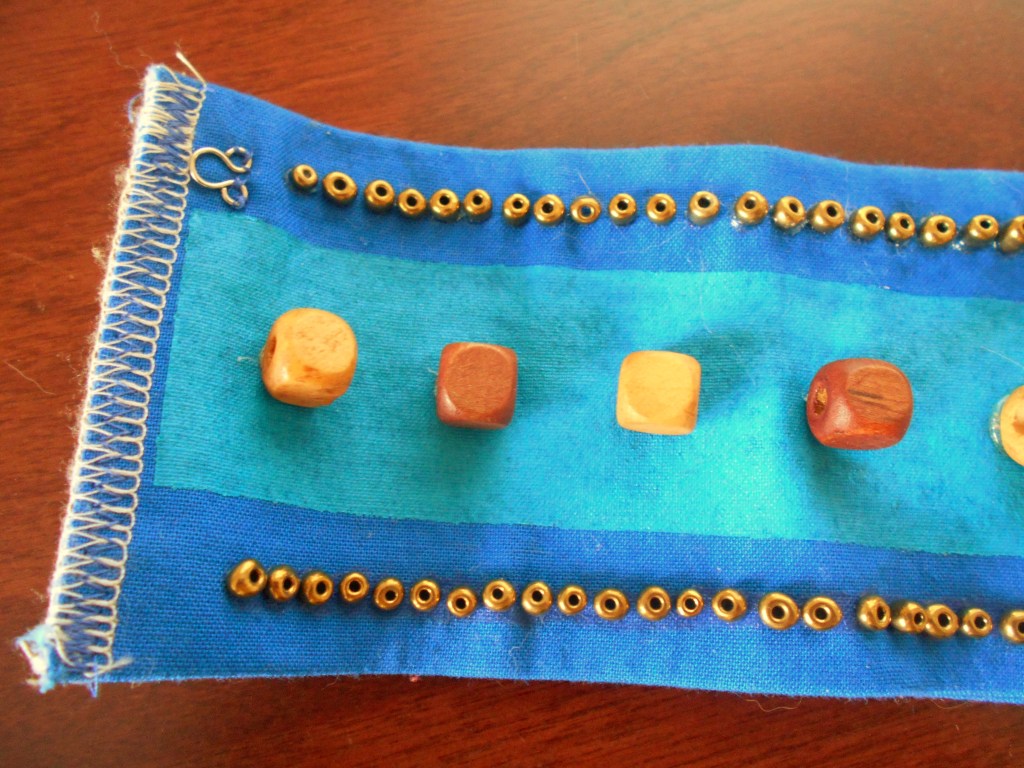
While it’s apparent that the gaudy, ostentatious collar worn by the mezzo-soprano in the opera largely consists of strung beads in all shapes and sizes, I did not have the time, resources, or budget to take on such a mammoth job. And so, I did my best to mimic the model piece using more broadcloth, paint, seed beads, and yes ─ lamé !
The front of the collarUp close detailing of the collar
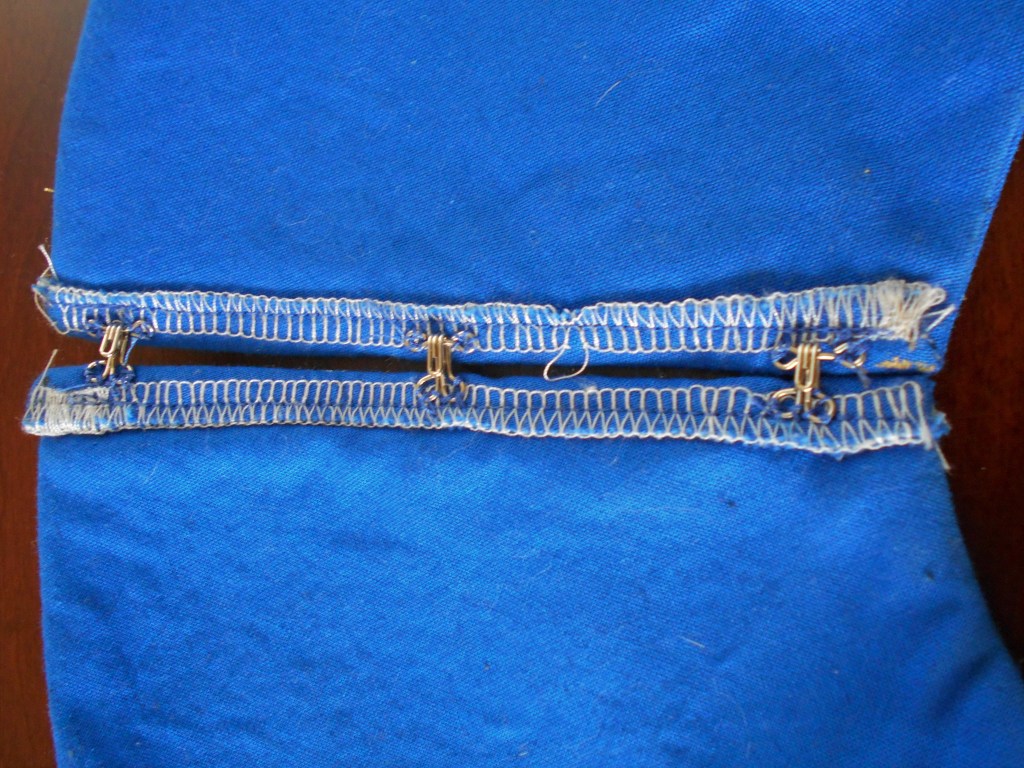
While Velcro was used on the belt, I preferred hooks and eyes for the collar closure.
Whoops ! One of the hooks snagged my serging !The back of the collar. The lamé reflects the light brilliantly !
Similarly matching were the wrist cuffs, sans lamé. Please notice the eye sewn near the serged edge. Its importance will play a part later…
The Wig and Headband
Initially, my plan to create the hair for the wig was to knit a plethora of black yarn i-cords to attach to some sort of beanie cap. I knitted, and knitted, and knitted ─ both day and night almost ceaselessly. But with time running out faster than Arctic daylight in the winter, I began to seriously rethink my method. Troubled, I grasped for ideas. Then, coming to the rescue once again was the Simplicity child’s costume pattern.
Again ! Simplicity 2329
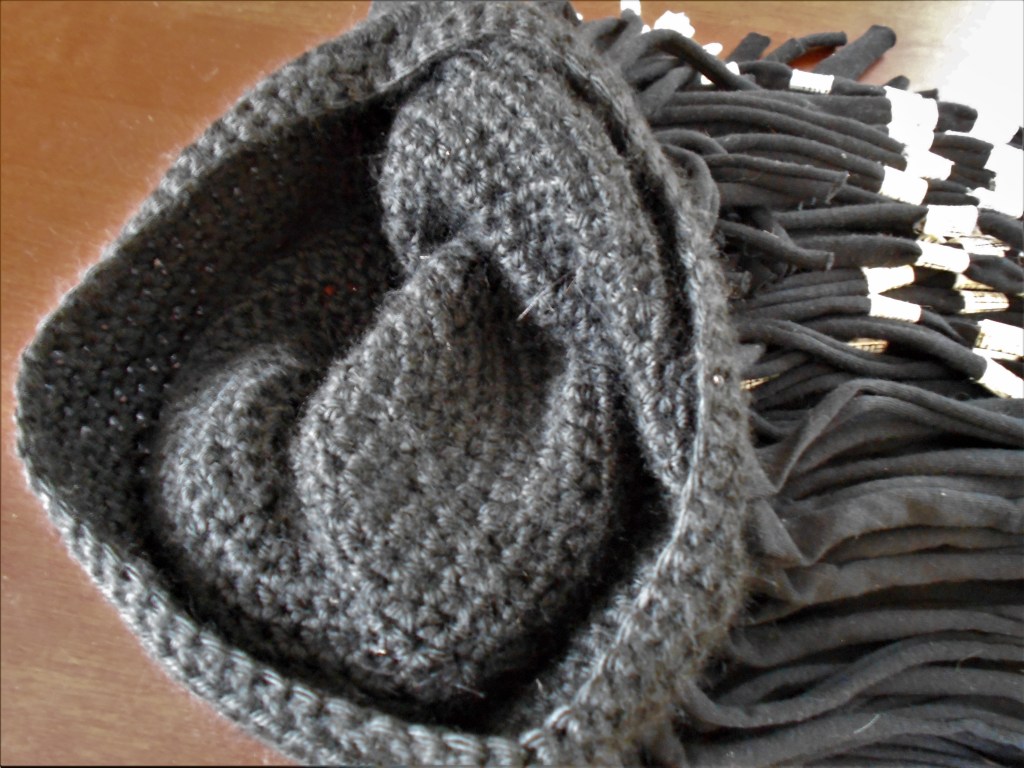
See those wigs ? They were included in the pattern envelope as well. Simply explained, the strands of “hair” were large rectangles of cotton jersey knit fabric, cut into measured strips from both lengthwise sides of the rectangle (but not all the way to the middle !). And then with a tug of each strip… voilà! Deftly furled locks of hair. It was the Monday before the opera and with only 5 days left to complete my heretofore unfinished outfit, I jettisoned the i-cords in favor of the expedient children’s pattern. While the pattern had particular blocks for constructing the wig, I bypassed these since I knew they would be too short for my desired hair length. Haphazardly, I stitched segments of the pulled cotton jersey onto a crocheted cap I had formed earlier.
Yarn stretches. I learned this during the opera when I found the wig sliding off my head ! A band of elastic needed to be sewn around the inside of the bottom edge of the cap.
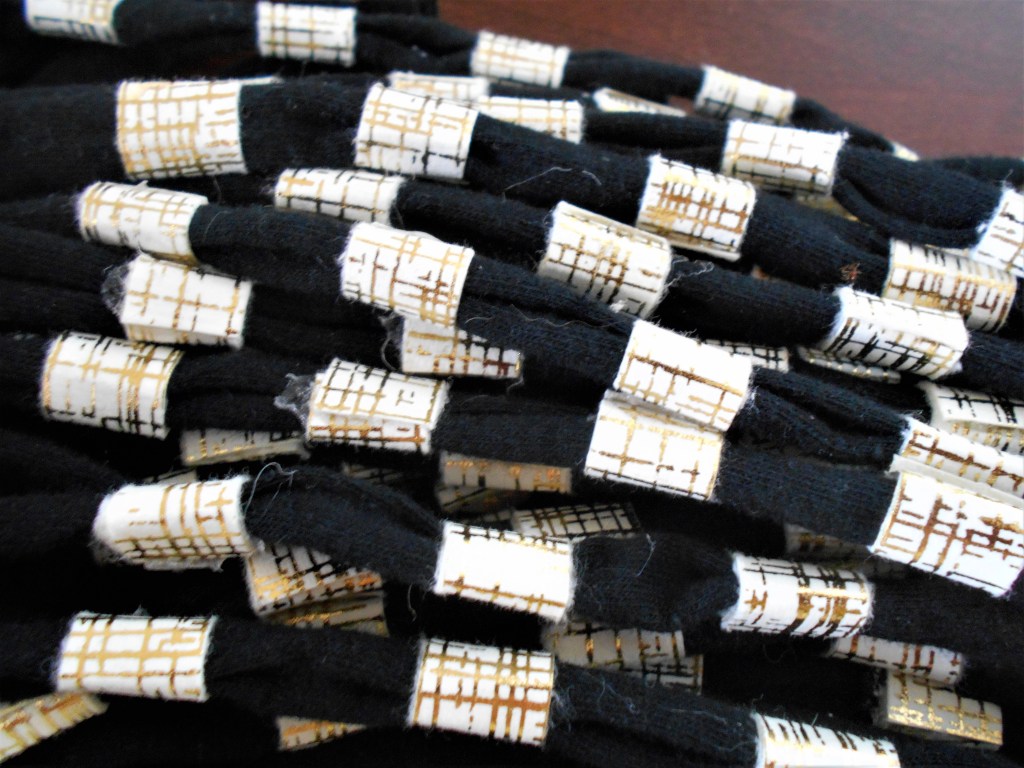
The gold “beads”, which were dynamic in their effect, were fashioned out of… scrapbook paper ! Who would have guessed ? Thinking logistically of the potential weight of the wig, I reasoned that nearly anything heavier than a feather would be too excessive when multiplied by the number of “beads” needed for the strands of hair. Real beads ─ wooden or plastic ─ were out of the question. Paper seemed the likely solution. So when I chanced upon a gilted crosshatch patterned paper at Hobby Lobby, I said, “Bingo !”
Paper beads ? Check ! Hot glue strings ? Check !
My only regret about the scrapbook paper is that I didn’t buy enough ! Two 12″ x 12″ sheets sliced into ½” strips were not sufficient to wrap the entire mass of coiled knit locks. But alas, it had to suffice.
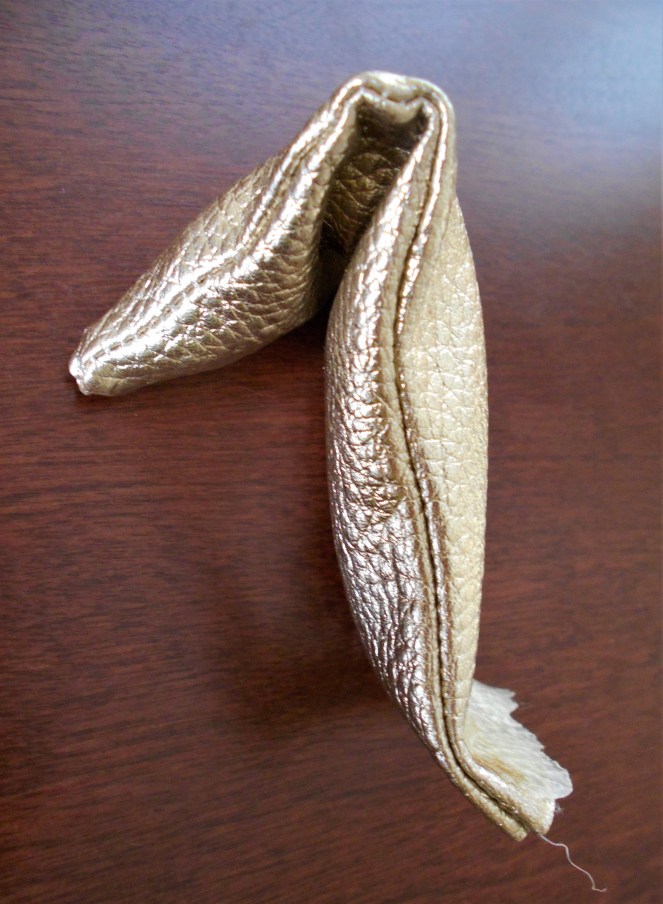
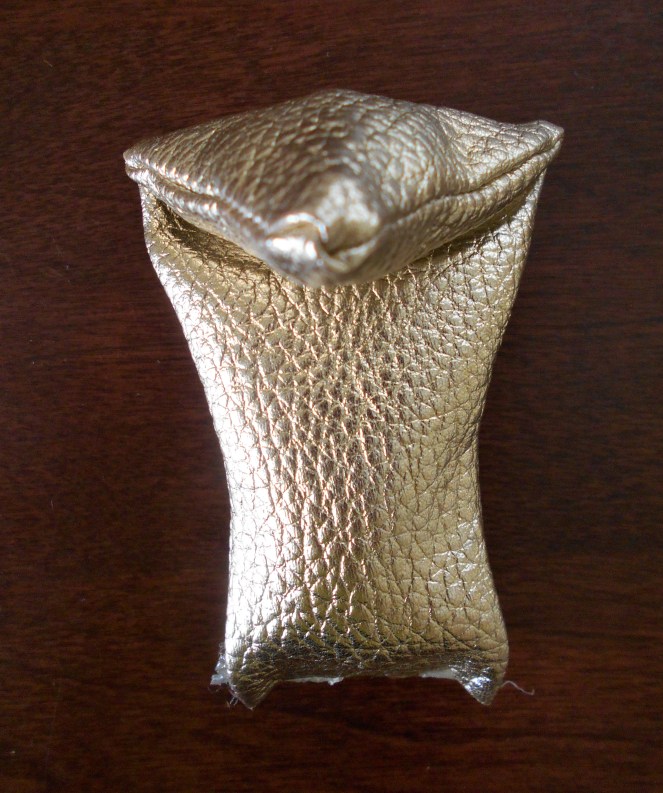
A latent cobra, poised and ready to strike, was the concluding element to an ensemble crammed full of indispensable details. Would you like to guess where I found its pattern ? Why, yes ! The same children’s pattern that already served me so gallantly on more than one occasion. This time, I only used the head portion of the pattern and slid a wire into its pleather skull along with a small wad muslin for added dimension. With the cobra head completed, it was hot glued to a band of the same faux leather where it sat looking down as ruler and judge.
While most might believe that I finished my costume with plenty of time to spare, such sentiment was untrue. It was late Friday afternoon, the day before the opera, when I unplugged the hot glue gun once and for all, resigning myself to a completed job. A close call, indeed ! All that was needed was exotic make-up and gold sandals whereupon I became Amneris, ancient Egyptian princess, for a cinematic Saturday afternoon.
Remember the eyes on the wrist cuffs ? They were used in conjunction with the hook counterparts attached to the edges of the cape to lift its shiny crimped folds into the sun. Marvelous was its impression.
Although the costume was completed in time for the opera, I have no desire to ever be so pressed to meet a deadline as I was for this project. Talk about stressful ! But there is great moral to this story and that is to never count out a pattern that doesn’t fit the bill at first glance. Deeper inspection and a dose of imagination were all that were needed to turn a child’s costume into an adult’s deliverance.
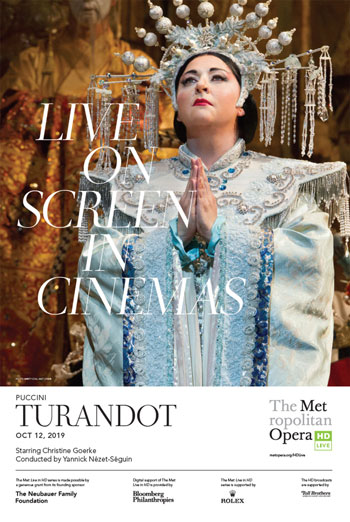
Hope. Blood. Turandot ! If my first brush with opera in 2015 hadn’t of been so life-altering, Puccini’s grandest spectacle (and final opera) would be the undisputed favorite of my heart. I remember when I first saw the opera in theaters in early 2016: it was the encore showing the following Wednesday evening since I was out of town for the live Saturday matinee broadcast. So monumental was the feeling I had while witnessing the story unfold on stage that when the Met announced that Turandot would be returning to theaters in 2019, I jumped on the affirmative decision faster than a Ferrari at top speed.
Turandot has everything. There’s drama, romance, passion, mystery, sacrifice, joy, and best of all, some of the most heart-pounding, resplendent music your ears will ever hear. The emotional power behind the fearless and triumphant aria, “Nessun dorma”, sends me to the brink of tears while elevating me from my terrestrial state. There are many renditions on the web, but I am especially moved by the English/Italian translation of the Pavarotti performance below. Divine !
As much as I adore the greatest tenor aria ever written (and that is not an exaggeration), my favorite moment in the opera comes during the high-stakes Riddle Scene showdown. Regardless of how many times I’ve seen the opera and know its plot inside and out, I can’t help but think I’ve missed something and fear a fatal slip-up by Calàf. Thankfully, my trepidation is always unfounded.
Christine Goerke and Yusif Eyvazov in Turandot / Metropolitan Opera
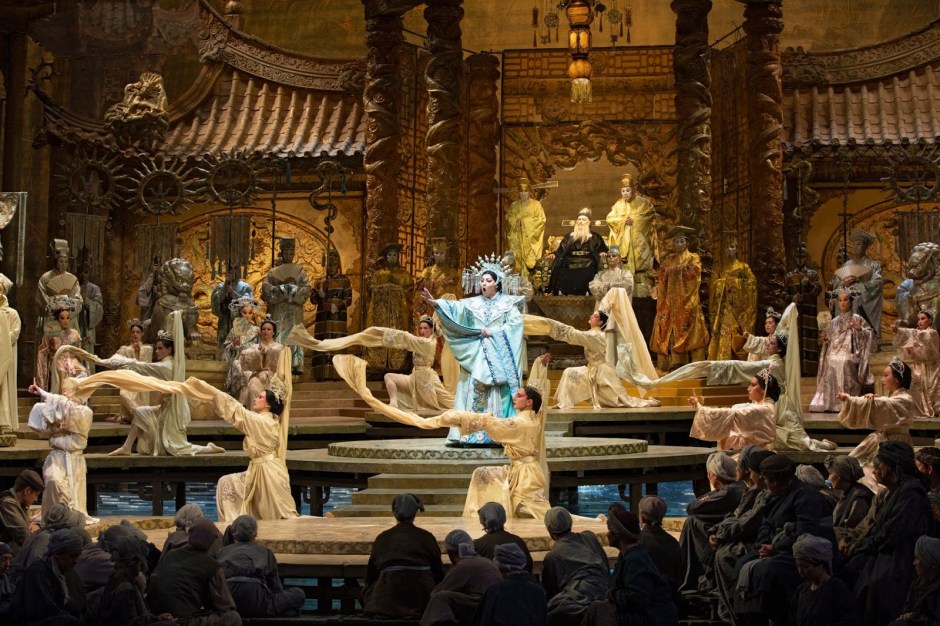
While this performance of Turandot had its plusses (Eleonora Buratto’s Liù) and minuses (an overly sensitive Calàf), the reigning winner is still Franco Zeffirelli’s magnificent production. Everything from the sets and costumes to the choreography of the chorus is perfectly enacted for an otherworldly experience. The feeling is magical. Your breath is taken away.
Yusif Eyvazov and Christine Goerke in Turandot / Metropolitan Opera
Heavily influenced by traditional Beijing Opera, the characters in Zeffirelli’s extant 1987 staging of Turandot are loaded with symbolic make-up, ornate robes, symmetrical cloud collars, and other brightly colored embellishments. As I contemplated the design of my costume for the 2019 Turandot, I had one prerequisite: whatever I wished to make HAD to coordinate with the headpiece I created for my 2016 outing since I was pressed for time (ahem, Manon) and didn’t want to fiddle with the engineering logistics of building a new headpiece from scratch.
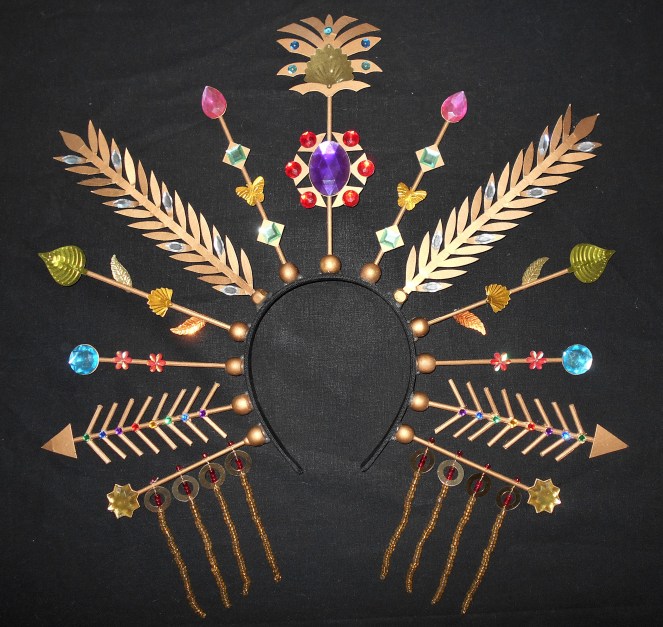
The headpiece worn to Turandot in 2016
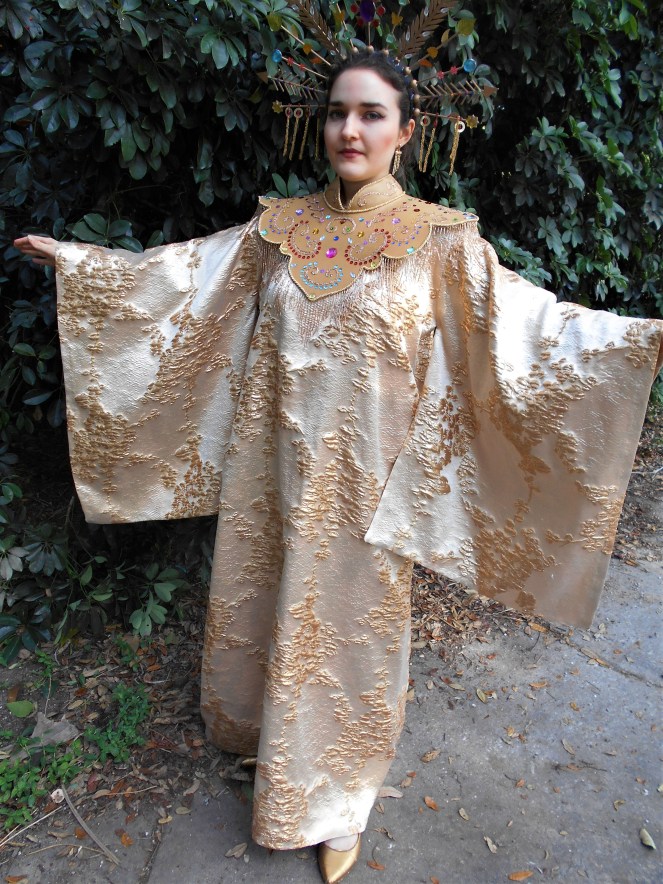
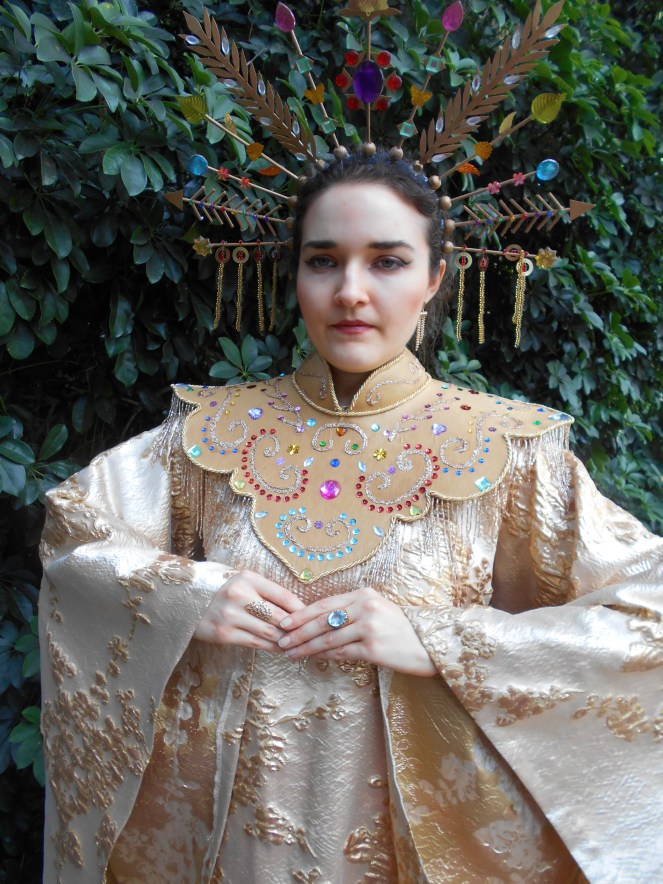
With guidelines established, I fashioned my outfit entirely around the color scheme of the headpiece: predominantly gold with LOTS of colorful jewels ! My friend, Judy, snapped this picture during the intermission at the theater:
The Turandot “death stare”… Thank you, Judy !
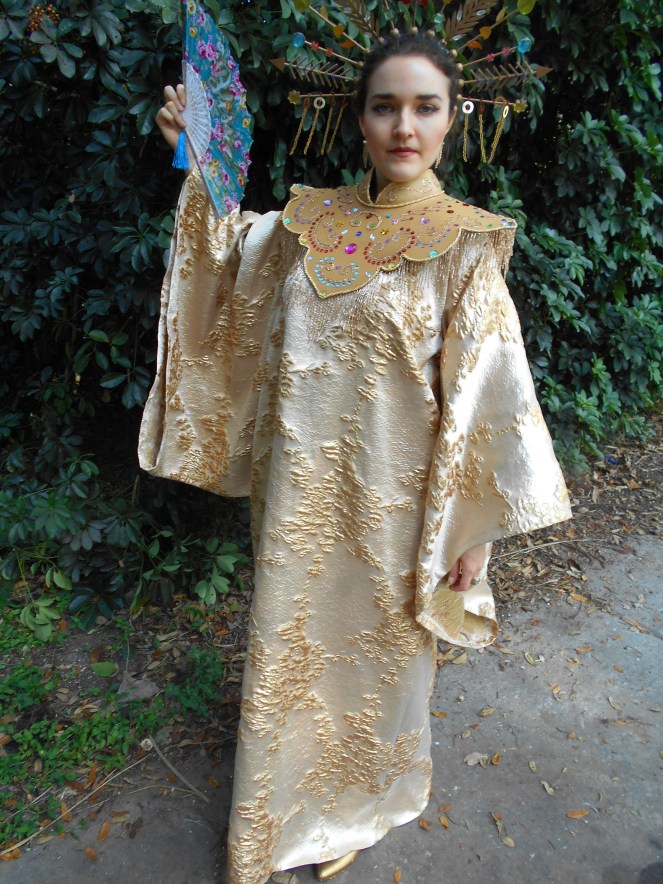
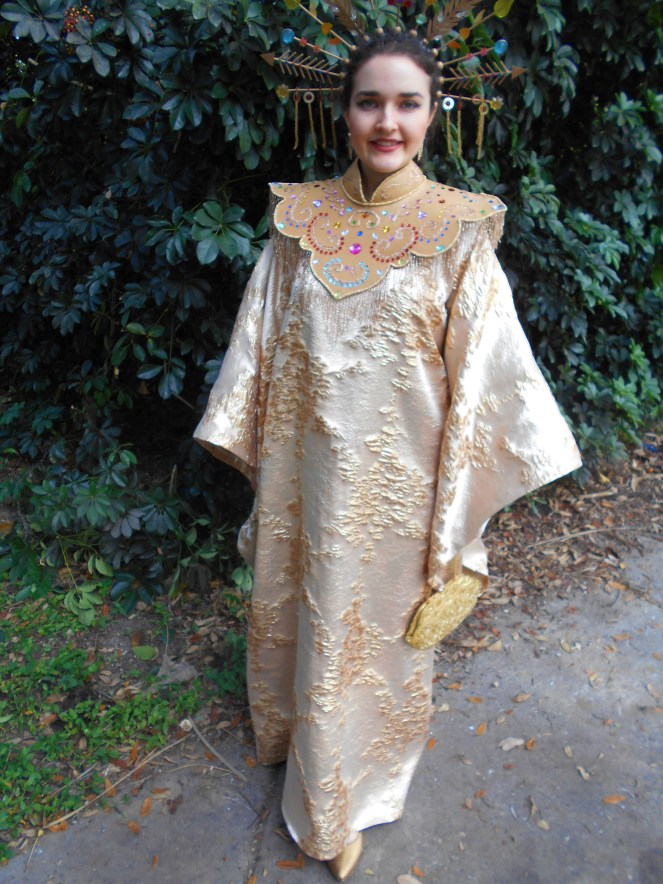
The brocade robe was self-drafted using only the measurements of the shoulder width and hem diameter. The sleeves were long rectangles folded in half out of the pillowy metallic material and sewn together at the bottom edge.
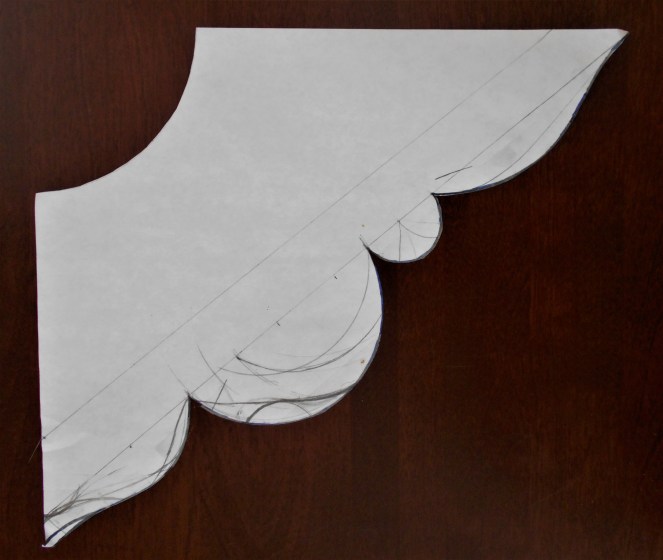
Creating the cloud collar was not as straightforward. Studying the specimen from the opera, I fiddled with drawing a quartered pattern using a compass as well as freehand curves.
Drafting the cloud collar
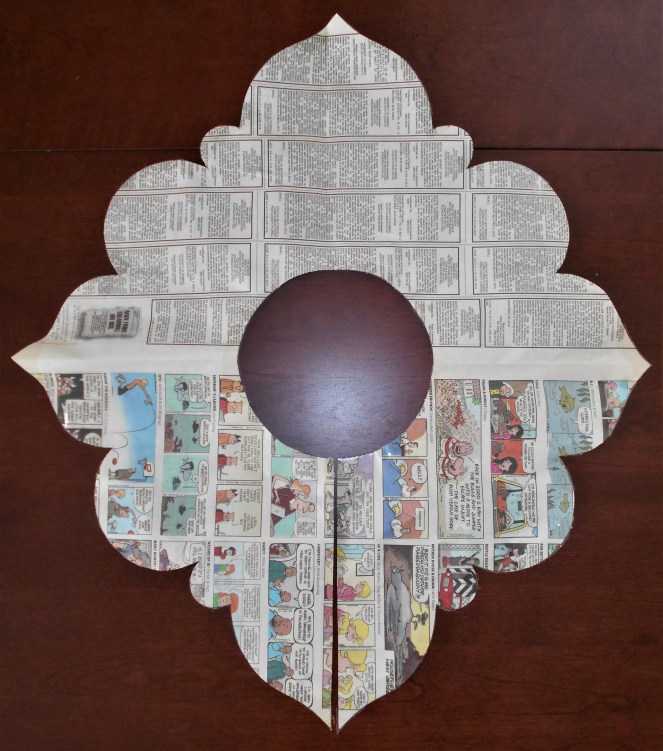
With just a few tweaks, the finalized pattern, which I copied onto newspaper, turned out great ! The full 4 quadrant newspaper replica was then taped to a sheet of thin foam, leftover from my Valkyrie days, and cut from its pliable surface as well as two layers of mustard colored stretch taffeta.
Pattern cut from newspaper
Through trial and error, the separate pattern for the pop-up mandarin collar was finally completed to my satisfaction and applied the foam and taffeta in the same manner.
Finalized Mandarin collar pattern
All that was left was the decoration ! The hot glue gun and I have an on again/off again relationship, but for Turandot, we were most definitely on !
Thank you for the fan, Faith !
My Chinese robe on the cheap made mefeel like a citizen of Peking attending the riddle ceremony ! Careful, Calàf !
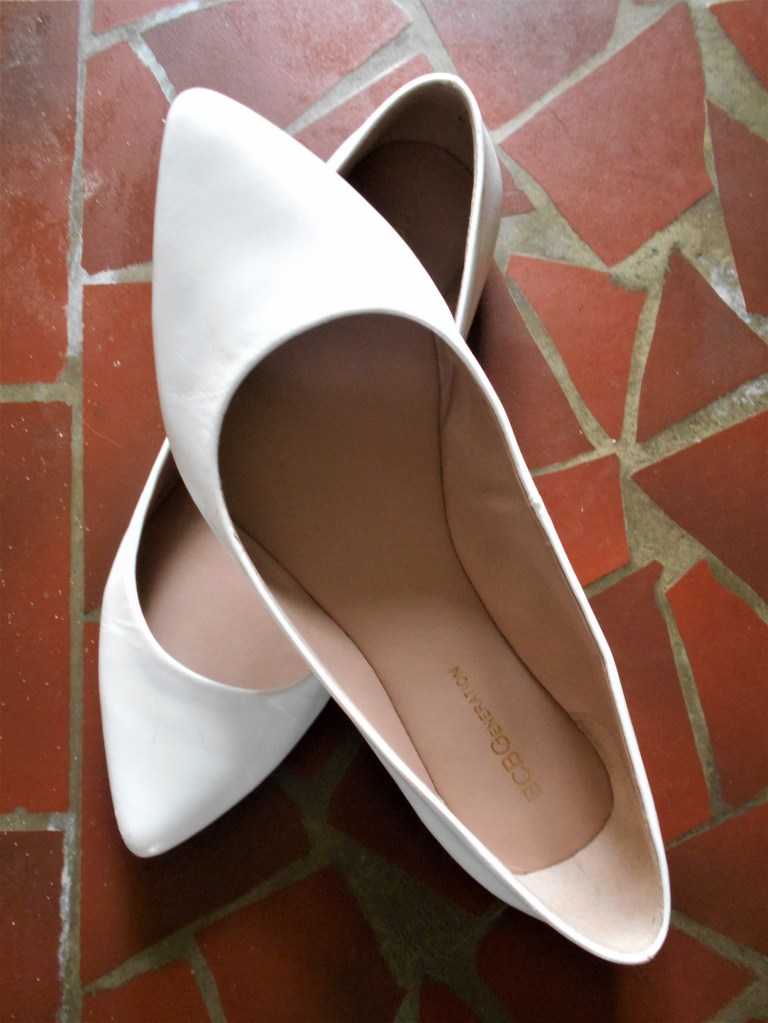
One mention of my shoes… those ballet flats ? Well, they’re not really gold. They’re white. And I bought them specifically to wear with my Empire gown to Tosca in 2018… certainly not Chinese ! But dousing dollars on new shoes for a one-time occasion is not really my style. The level of the flat was right ─ the hem of my robe wouldn’t allow for any height of heel ─ and so I changed their appearance temporarily with gold colored duct tape.
Without question, Zeffirelli’s majestic Turandot is my favorite opera in which to introduce a complete newcomer. Maybe the next time Turandot returns to the Live in HD schedule, you’ll be my first-timer and the spell of Puccini’s score will bewitch you with its undeniable magic.
Toi, Toi, Toi,
Mary Martha
Cast and Credits:
Turandot ─ Giacomo Puccini (1926) Live in HD air date: October 12, 2019
Cast: Turandot ─ Christine Goerke Calàf ─ Yusif Eyvazov Liù ─ Eleonora Buratto Timur ─ James Morris
Credits: Conductor ─ Yannick Nézet-Séguin Production ─ Franco Zeffirelli Set Designer ─ Franco Zeffirelli Costume Designers ─ Anna Anni, Dada Saligeri Lighting Designer ─ Gil Wechsler Choreographer ─ Chiang Ching Live in HD ─ Gary Halvorson Host ─ Angel Blue
The brainchild of a 24-year-old Mozart in the spring of his career, Idomeneo embodies drama and torment on an intense scale. A Trojan captive bemoans her plight of wartime displacement. A runaway Grecian princess seethes with humiliation and jealousy from unrequited feelings. A father and king, crossed between the angry seas ─ and even angrier gods ─ suffers from the anguish of the cruel task that besets him.
A scene from Mozart’s Idomeneo / Metropolitan Opera
While the basis of the plot was heavy ─ the title king, after being saved by the gods during a disastrous storm at sea, must kill his own son as recompense ─ the music was quite the opposite. Comprised of a windswept coterie of strings and woodwinds, the score was typically Mozartian and showed the beginnings of his lauded career. Singing the trills of early Mozart was made to look easy as Matthew Polenzani gave a stirring performance as the king. His voice was unhampered, but his soul was not.
Matthew Polenzani singing an excerpt from “Fuor del mar” from Idomeneo / Metropolitan Opera
The women provided for some much needed romantic rivalry to break up the repetitious monotony of the staid opera seria format. It’s true─ the opera was far too longwinded and soporific for my withering patience as I reached my home well after 6 that evening. At least the textured costumes and the spastic mad scene provided ample attraction and distraction from my jadedness.
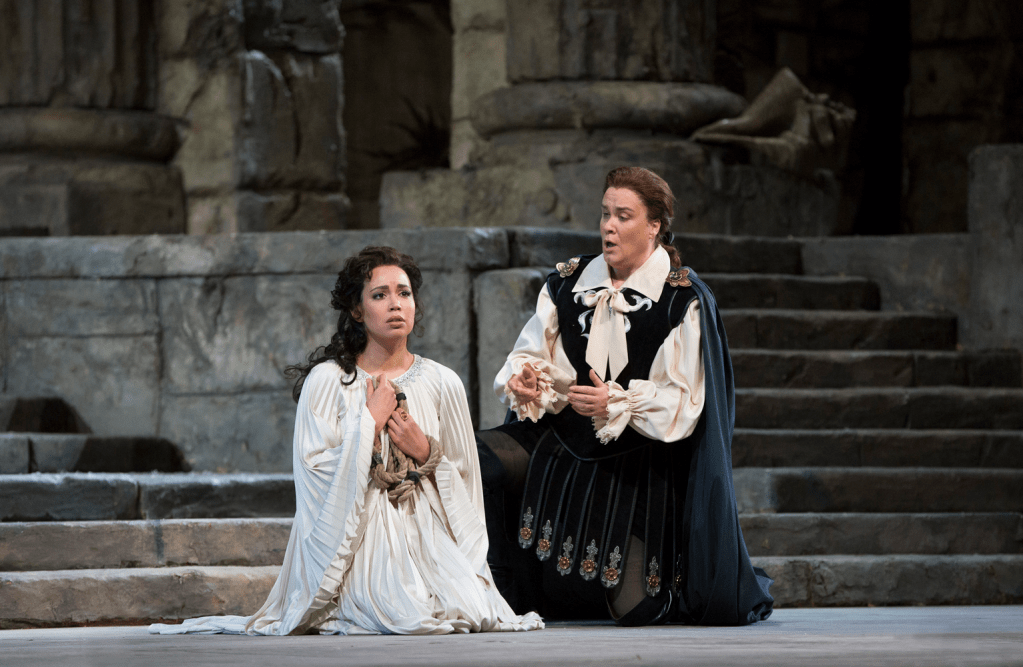
Nadine Sierra as Ilia and Alice Coote as Idamante in Idomeneo / Metropolitan Opera
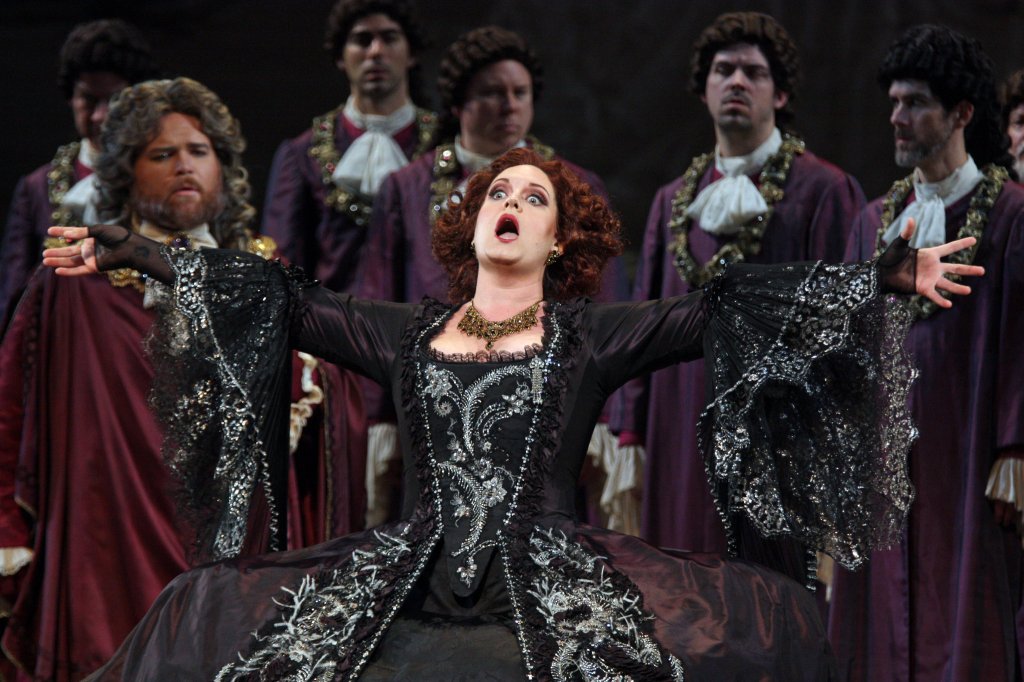
Elza van den Heever as Elettra in Idomeneo / Metropolitan Opera
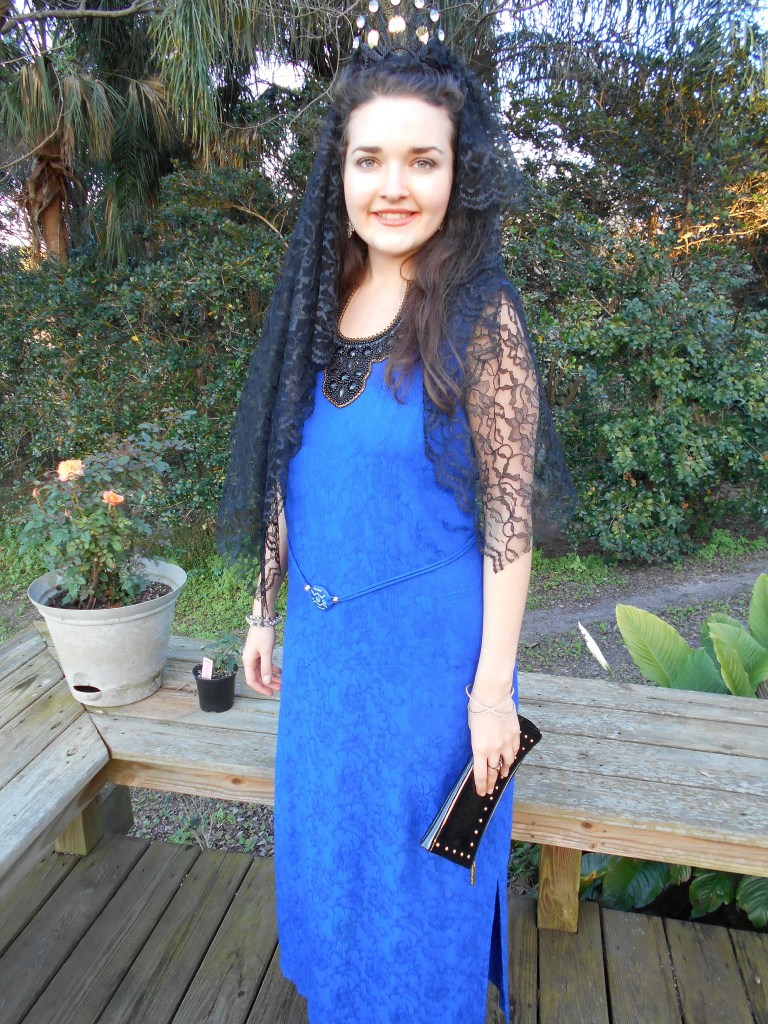
Loosely based on the lace and jewels of Elettra’s gown, I snagged a favorite from my mother’s closet and made a simple alteration. The bright blue dress, being 8 sizes too big for me, would have swamped my figure more than the devouring seas of Idomeneo. A simple fix, I ran a line of baste stitches up the back of the dress and, voilà ! The dress fit. My mother was horrified with my action, let me tell you, but I assured her the stitching could easily be removed as I promptly pulled out the threads after the opera was over and the pictures captured.
My headpiece was a borrowed transformation. Previously, the black glittered tiara sported red rhinestones along the top points and an attached piece of black lace.
Thank you, Aunt Countess !
First popping out the red rhinestones, I replaced them with standard white ones and added gold fan sequins for seaside flare. They coordinated with my dress and the mantilla was beautiful enough for a princess. In case you were wondering, I removed all the sequins and replaced the original red jewels before I returned the accessory to its rightful owner.
Isn’t that necklace fabulous ? It’s a Metropolitan Museum of Art (also affectionately nicknamed “the Met”) replica given to me as a present from Aunt Countess. I cherish gifts from travels afar, much like the shell necklace and pashmina shawl that I wore to The Pearl Fishers the previous year. While New York City isn’t as far-flung as ancient Crete, the necklace made a statement worthy of Elettra’s tempered fury and Mozart’s fledgling opera.
Toi, Toi, Toi,
Mary Martha
Cast and Credits:
Idomeneo ─ Wolfgang Amadeus Mozart (1781) Live in HD air date: March 25, 2017
Cast: Idomeneo ─ Matthew Polenzani Idamante ─ Alice Coote Ilia ─ Nadine Sierra Elettra ─ Elza van den Heever Arbace ─ Alan Opie
Credits: Conductor ─ James Levine Production ─ Jean-Pierre Ponnelle Set and Costume Designer ─ Jean-Pierre Ponnelle Lighting Designer ─ Gil Wechsler Live in HD Director ─ Barbara Willis Sweete Host ─ Eric Owens





































 Costume Closet Couture