Rusalka

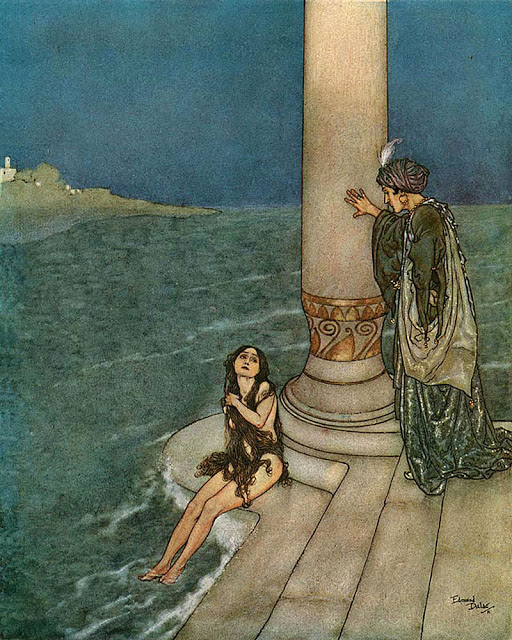
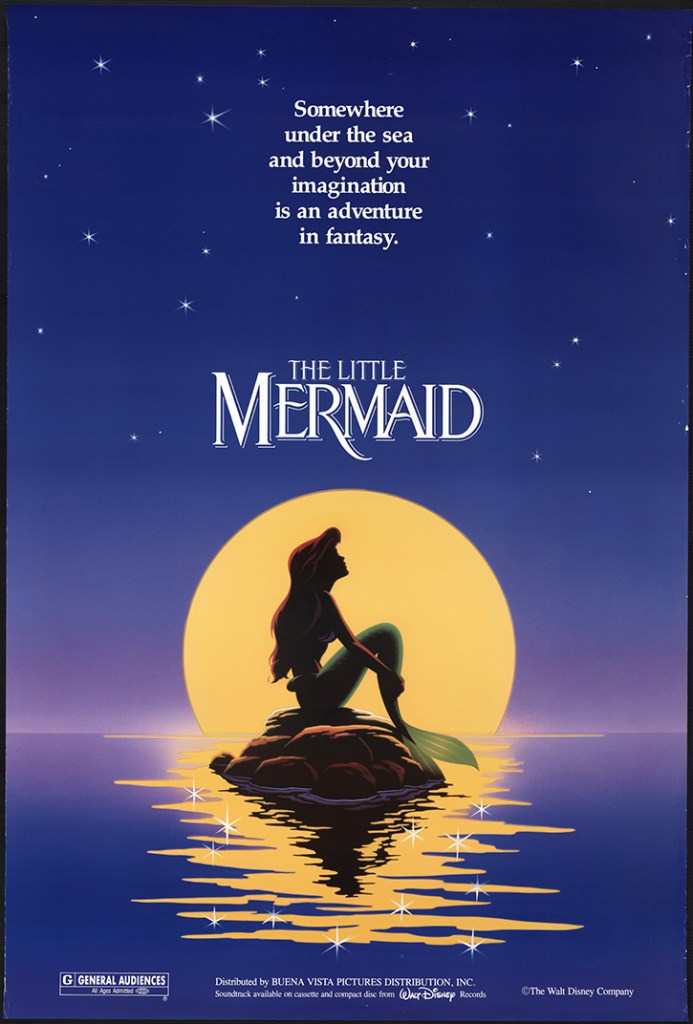
Dvořák’s opera of a water nymph who desires to be human should be familiar territory to anyone who has read or seen “The Little Mermaid” in any of its contexts. Whether it be the Hans Christian Andersen tale or Disney’s beloved movie, “The Little Mermaid” has had an endearing effect on the public. As someone who grew up watching the Disney film and reading Andersen, Rusalka was a must-see for me during the 2016-2017 Live in HD season. It was now time for the Czech composer to shine in the thalassic classic.
This was a new production for the Met and Mary Zimmerman’s designs were brought to life with forest fauna and frothing watering holes…
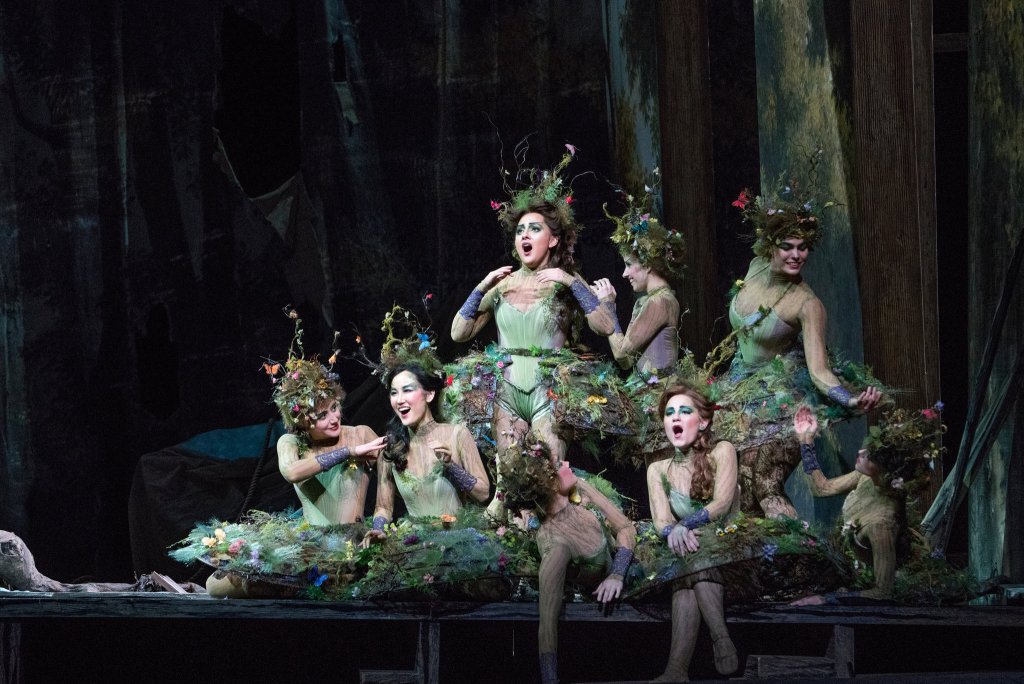
The forest sprites in Rusalka / Metropolitan Opera

This was fitting, but the glaring garishness of the palace where the prince lived was (intentionally) off-putting. Even Rusalka was ready to hightail it back to her pond !
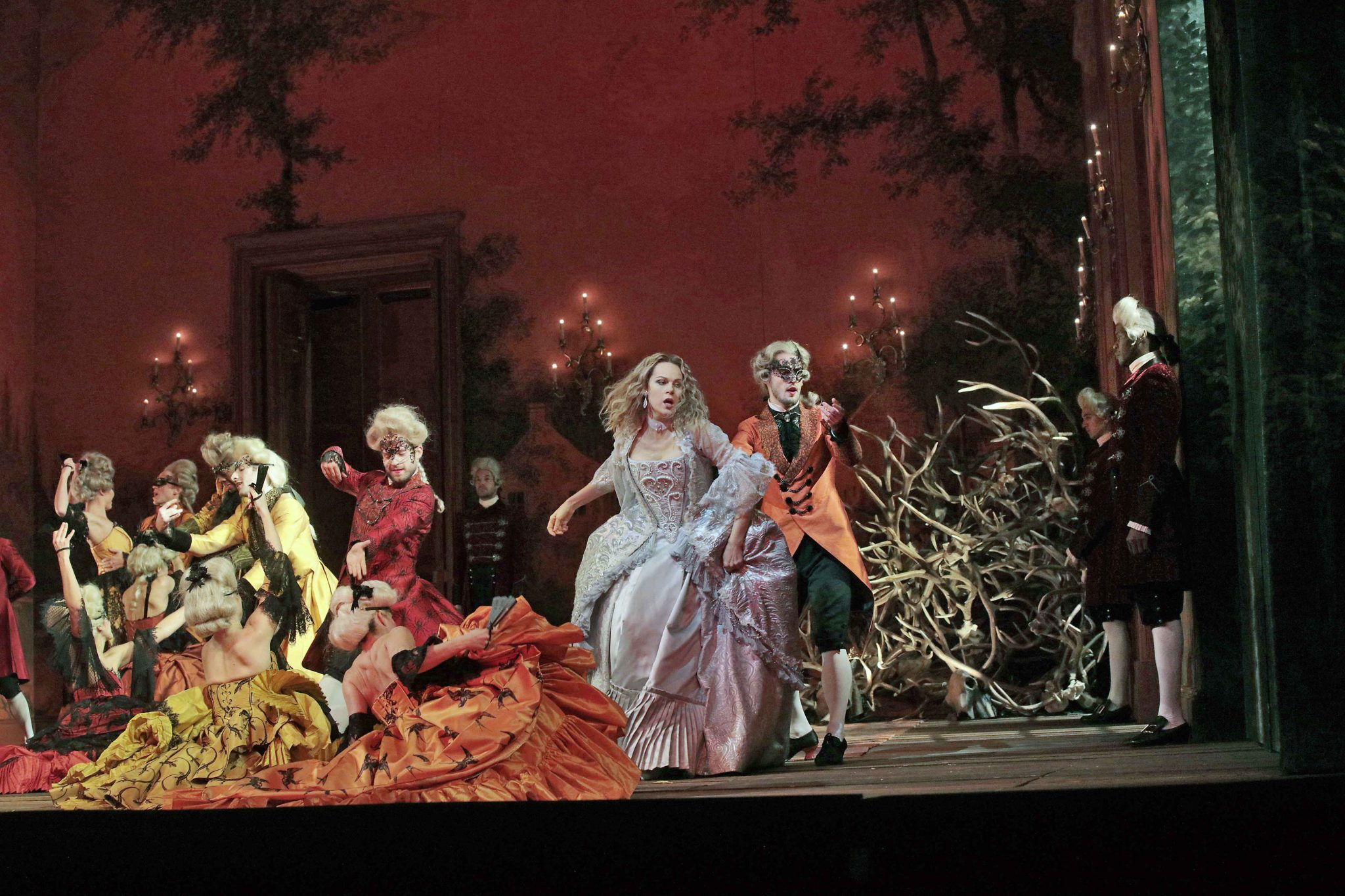
Kristine Opolais (center) in a scene from Act II of Rusalka / Metropolitan Opera

An attractive draw to this performance was the casting of Kristine Opolais as the title character. As an actress, she’s evocative and affecting, yet her voice doesn’t tend to coat my ears in richness. However, my auditory senses were deliciously rewarded when Jamie Barton took the stage as Ježibaba, the cackling, steampunk-esque witch. She stole the show !
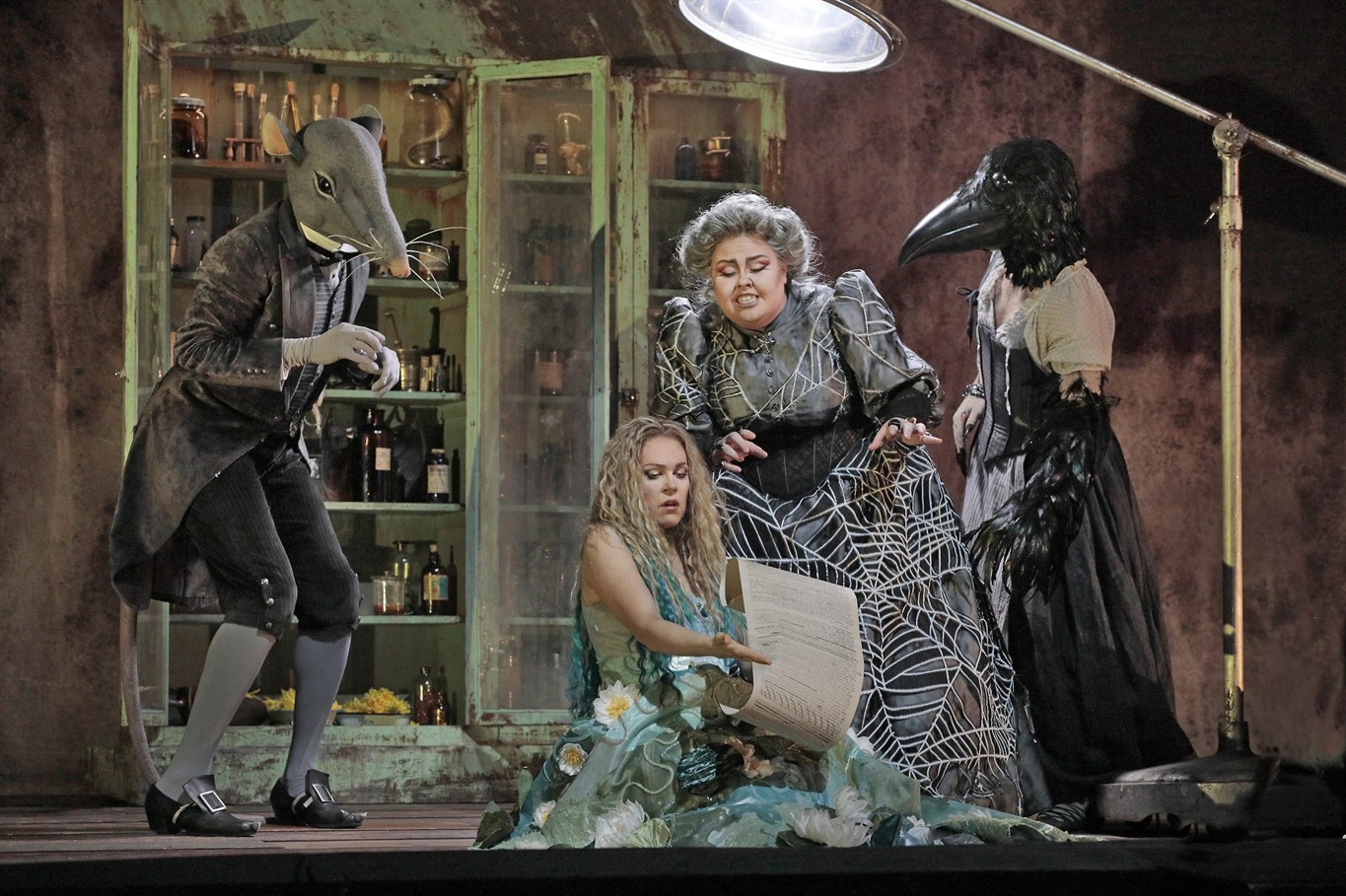
Kristine Opolais as Rusalka and Jamie Barton as Ježibaba / Metropolitan Opera

Yes, I was eager to attend Rusalka. Even more, I was excited to create a costume for the opera. With the scene set as the rivers and lakes amidst a cool forest, I played around with the thought of building a transitional outfit that started as “water” and gradually turned into a “land” ─ like an ecological ombré effect. Skirts and scarves in blues and greens would resemble the water and an Easter bonnet made of paper plates would have been a crafty representation of the flora above. Here’s my Easter bonnet from years ago:

Remember this, Aunt Countess ?

But no ─ I couldn’t wear my flamboyant fascinator to the theater and cause the folks behind me to become utterly enraged. Farewell to the forest ! Returning to the water theme, a backstage video from the Met threw me a helpful costuming clue…

Rusalka costume discussion / Metropolitan Opera

Just as in the Met costume shop, I fashioned my own lilies for my skirts of “water”… except my lilies were not silk… they were coffee filters !
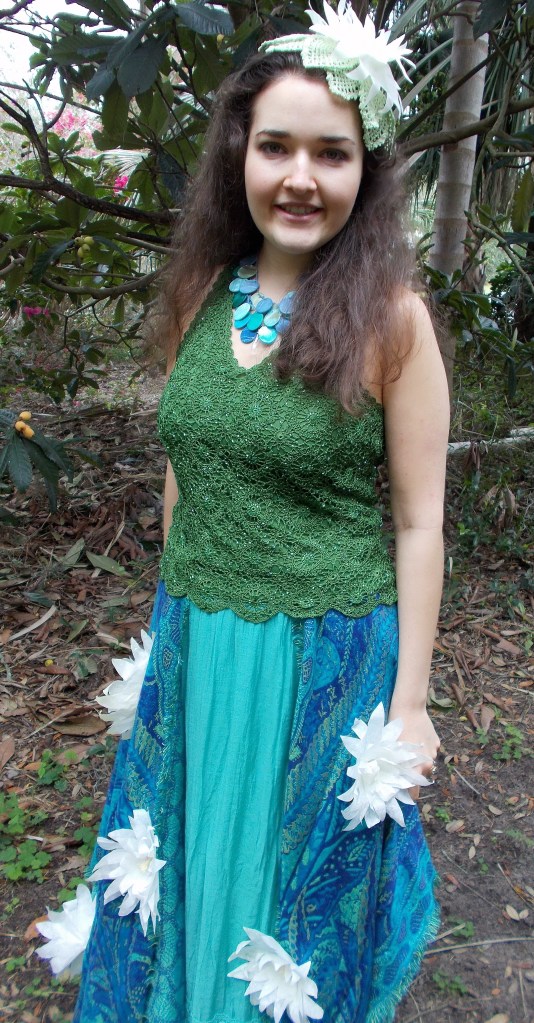
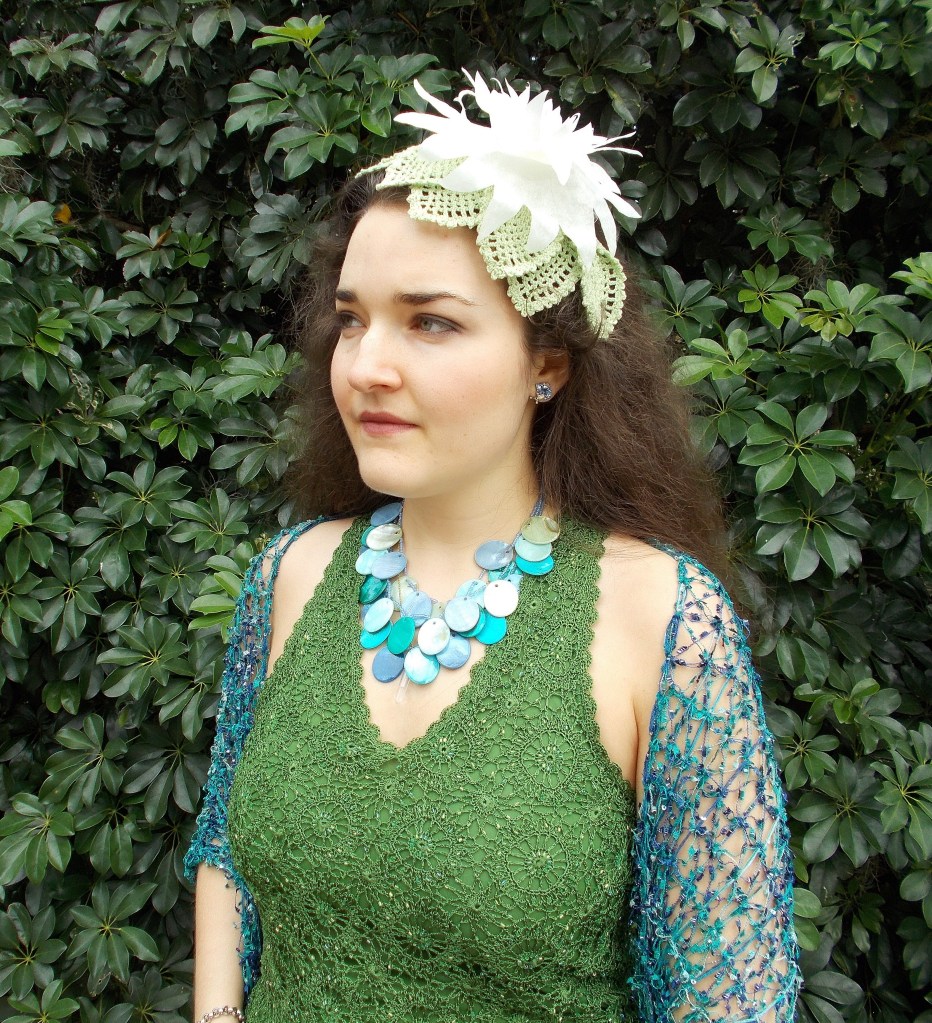
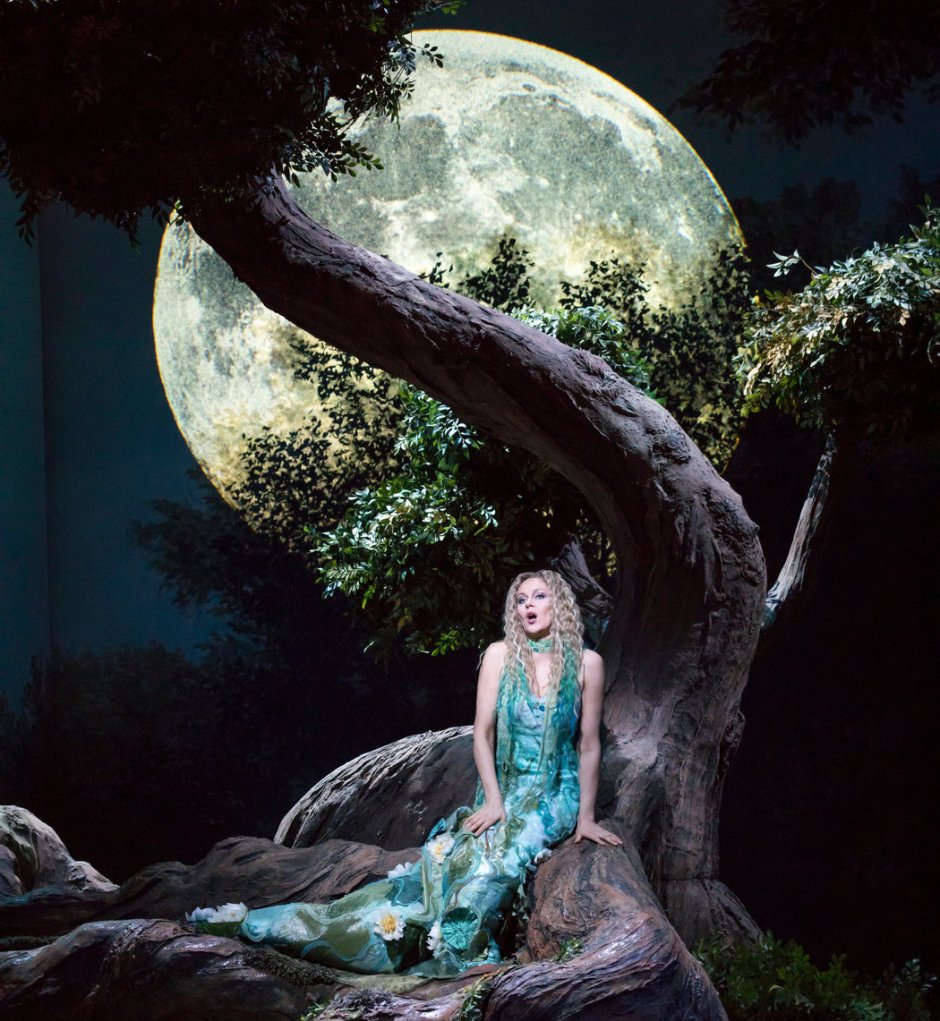
A stack of basic white coffee filters were snipped and twisted to create fanned water lilies with pale yellow stamens reaching forth. Atop my head was a lily pad, which was a crocheted doily I made for my mother years ago. And the crochet lace halter top ? I bought it at a consignment store. My outfit cost me next to nothing and was a worthy copycat of Kristine Opolais’s Act I gown.

Kristine Opolais in Act I of Rusalka / Metropolitan Opera

In “The Little Mermaid” as well as Rusalka, the price for becoming a human being is the seeker’s own voice and immortality. And while the ending in the opera was not a “happily ever after” scenario, I couldn’t have been more pleased with the result of my costume ─ all the fun of a water nymph for the day with no remote danger of losing my voice or life.

Toi, Toi, Toi,

Mary Martha

Cast and Credits:

Rusalka ─ Antonín Dvořák (1901)
Live in HD air date: February 25, 2017

Cast:
Rusalka ─ Kristine Opolais
The Prince ─ Brandon Jovanovich
Ježibaba ─ Jamie Barton
The Foreign Princess ─ Katarina Dalayman
Vodník, the Water Gnome ─ Eric Owens

Credits:
Conductor ─ Sir Mark Elder
Production ─ Mary Zimmerman
Set Designer ─ Daniel Ostling
Costume Designer ─ Mara Blumenfeld
Lighting Designer ─ T.J. Gerckens
Choreographer ─ Austin McCormick
Live in HD Director ─ Gary Halvorson
Host ─ Matthew Polenzani
Nabucco

Verdi’s breakout hit in 1842, with its themes of captivity and the longing for freedom, was a poignant piece during its debut as Italy battled for its independence amid wars and political reshuffling. Allegorical as it may have been to the Italians of the mid 19th century, I viewed Nabucco at its face value: an early Verdi work of biblical proportions.

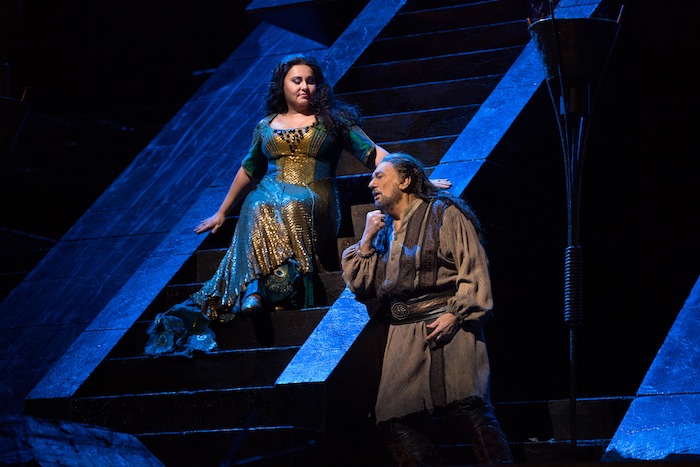
A scene from Nabucco / Metropolitan Opera

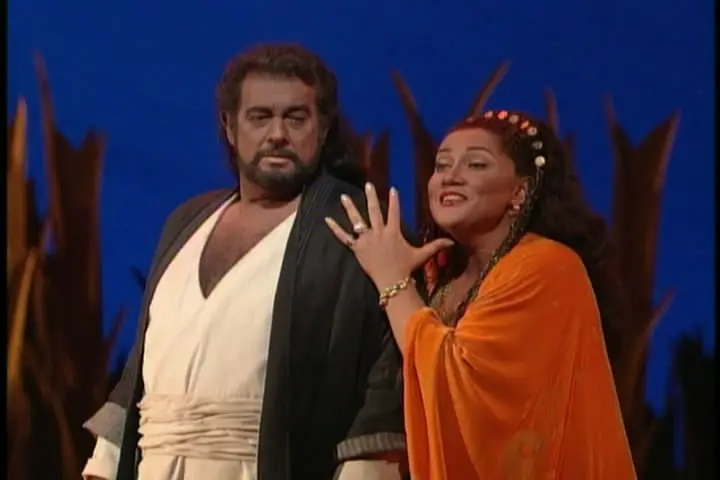
Nabucco (Italian for “Nebuchadnezzar”) is loosely based on King Nebuchadnezzar’s conquest of the Israelites. However, it should be plain to anyone who has ever seen only part of Nabucco that the opera is misnamed. The real title should have been Abigaille after Nabucco’s power-hungry, domineering daughter. She had the most scenes, the heftiest arias, and the central “villainess” role. Plácido Domingo, the world-renowned veteran taking on the title baritone role, appeared to be a hapless pushover when shouldered next to Liudmila Monstyrska’s broody Abigaille.

Liudmila Monstyrska as Abigaille and Plácido Domingo as Nabucco / Metropolitan Opera

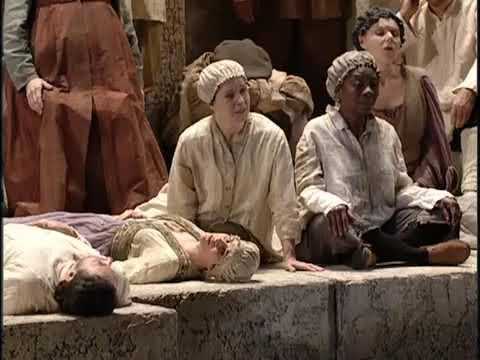
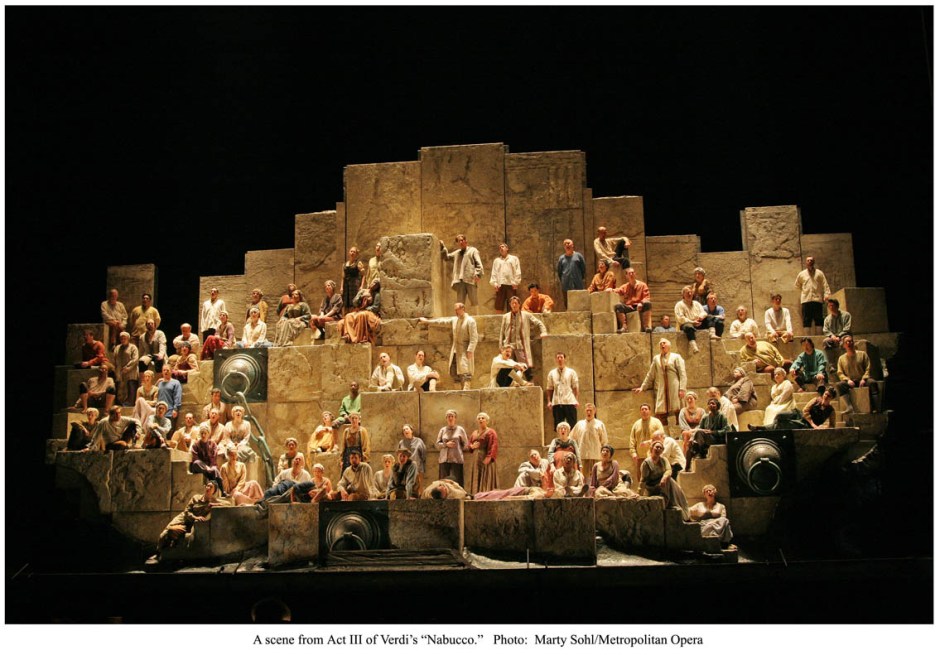
A lackluster love triangle storyline was almost enough to derail the entire the opera if it hadn’t of been for the true stars of the performance: the Metropolitan Opera Chorus. The one and only scene that rejuvenated the tepid opera was the Hebrew Slaves Chorus in Act III. So breathtaking and enlightening was the rendition that it was encored to great pleasure.

A clip from the Hebrew Slaves Chorus / Metropolitan Opera

Designing costumes for ancient-set operas is something that rarely sends my heart into ecstatics. Whether it be the hot desert dust or the use of ordinary sandals and figure-swallowing robes, I have to take extra measures to become motivated to sew for such settings. Fortunately, the Met’s classic staging of Nabucco offered me a generous hint for my costume. As mentioned above, the Hebrew Slaves Chorus was THE “wait for it” moment of the opera. Why not dress down for a change and become a slave for a day ? This I did.

Some of the Hebrew Slaves from Nabucco / Metropolitan Opera

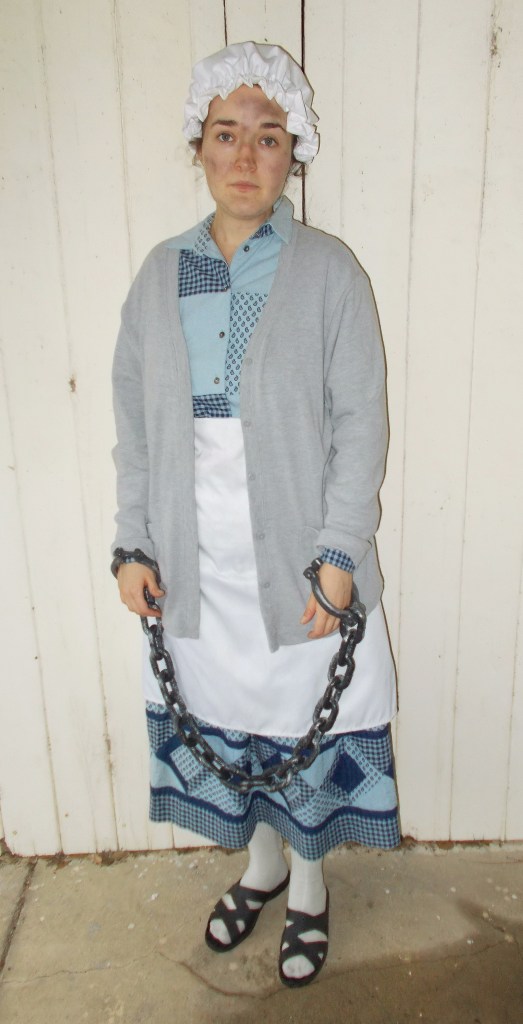
My mother had a patchwork chambray dress in her closet that I used for my base. Although not darkened with dirt, the patches symbolized simplicity and frugality to me, which I thought fitting for a slave. Looking over photos from past performances of Nabucco, however, the Hebrew Slaves donned on their heads what seemed like Betsy Ross mop(b) caps from the Colonial times.

Betsy Ross and women sewing the American flag

Okay, I could do that… Actually, it was easier than I thought. All that was needed were two large circles of fabric, elastic, and a sewing machine. There are numerous tutorials online for making a mop/mob cap, but I found this one to be the most helpful, especially since this was to be my second sewing project ever. Just remember to cut larger circles if making one for an adult ! http://pattisoriginals-pattisplace.blogspot.com/2010/12/tutorial-mop-cap.html?m=1

Mop cap from pattisoriginals-pattisplace.blogspot.com

What’s slavery without bondage ? Some lightweight plastic Halloween chains added an obvious denotation to my outfit while a slouchy gray cardigan, grease-stained apron, and socked sandals helped me fit right in with the Metropolitan Opera Chorus.

And yes, dirt was part of the job. Or rather, brown and black eyeshadow brushed onto my face… While I may have looked the part of servitude, I didn’t desire to smell of it !

Toi, Toi, Toi,

Mary Martha

Cast and Credits:

Nabucco ─ Giuseppe Verdi (1842)
Live in HD air date: January 7, 2017

Cast:
Nabucco ─ Plácido Domingo
Abigaille ─ Liudmila Monstyrska
Fenena ─ Jamie Barton
Ismaele ─ Russell Thomas
Zaccaria ─ Dmitry Belosselskiy

Credits:
Conductor ─ James Levine
Production ─ Elijah Moshinsky
Set Designer ─ John Napier
Costume Designer ─ Andreane Neofitou
Lighting Designer ─ Howard Harrison
Revival Stage Director ─ J. Knighten Smit
Live In HD Director ─ Barbara Sweete
Host ─ Eric Owens

From Dirndl to Bunad: How a German sewing pattern became Norway’s traditional dress

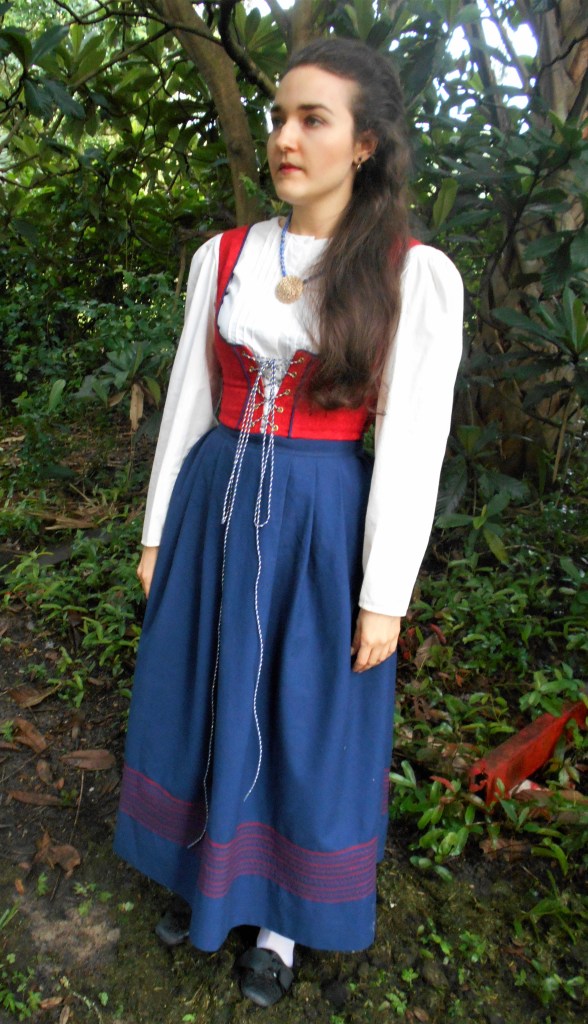
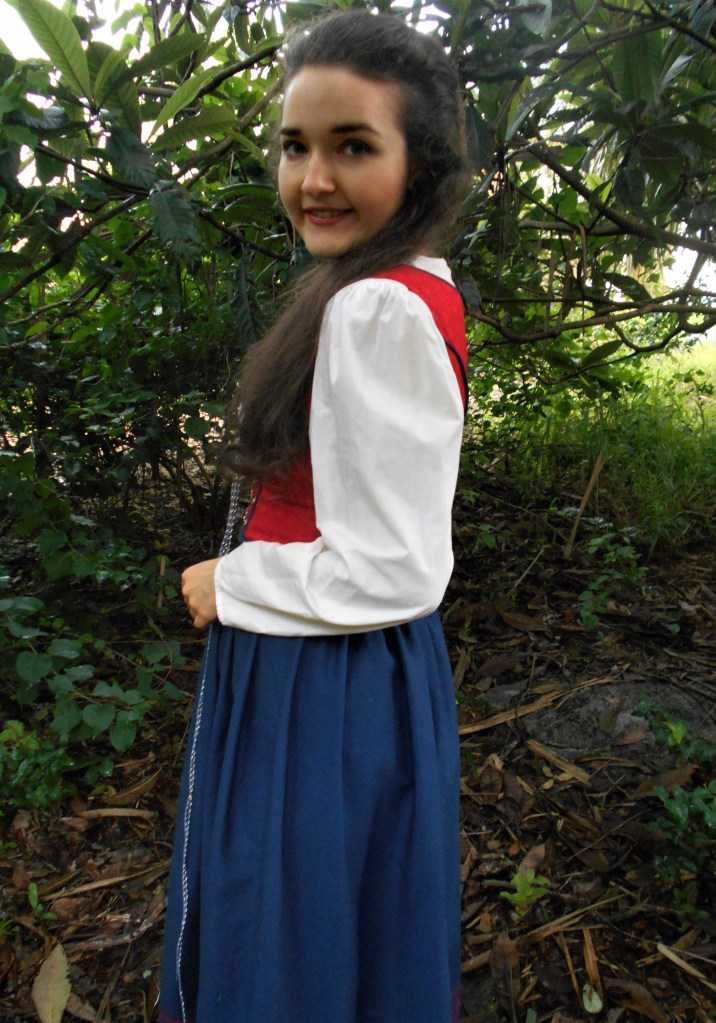
Similar in shape and style, the German dirndl and the Norwegian bunad could be long lost cousins ! Vests with front closures, long skirts with embellishments and embroidery, and bright national colors teem with patriotic esprit de corps. With a new, modern production of Wagner’s Die Fliegende Holländer scheduled for the 2019-2020 Live in HD season, I cast off the thought of trying to guess the heretofore unseen (and most likely abstruse) costumes for François Girard’s reimagining and veered toward the more traditional: a Norwegian bunad for the opera’s Scandinavian setting.

However, when Die Fliegende Holländer was cancelled the day before its cinematic broadcast in March, the nearly finished bunad was left thrown over the back of a chair where it sat in silence for months. That is, until the concert for Lise Davidsen popped up and suddenly the bunad became relevant again. Here’s how I made it…

The Pattern

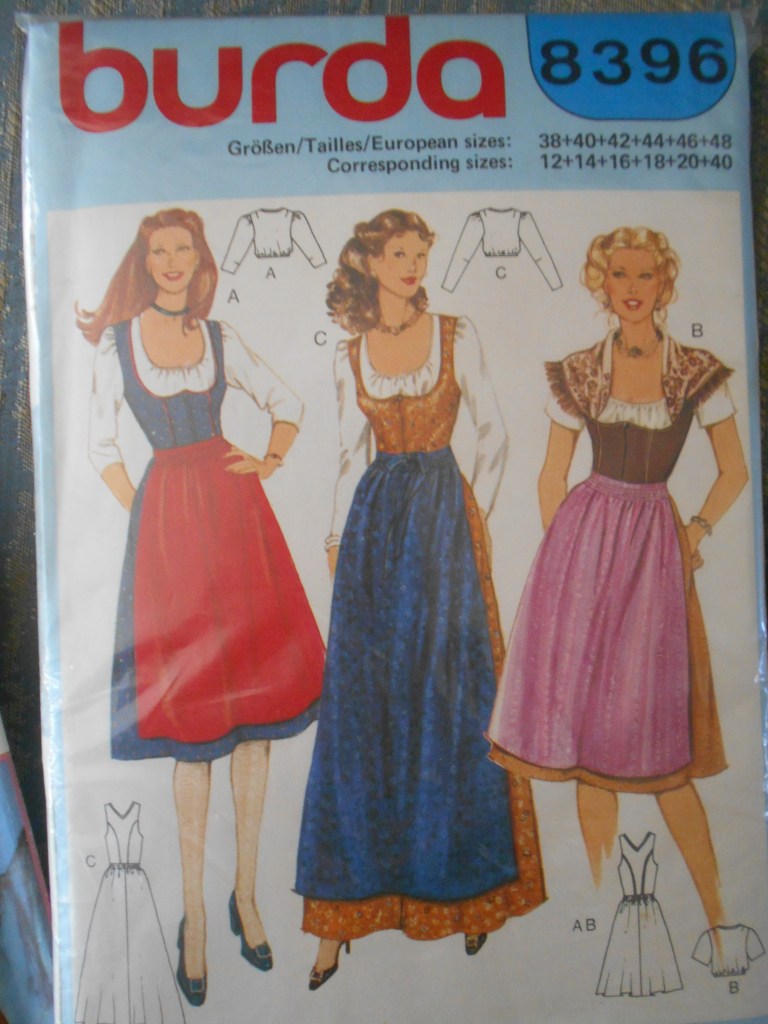
I started by using a German dirndl pattern, which was given to me by a friend several months prior. When Gisele offered me any of the patterns in her garage sale stash, I looked over the Burda pattern thinking it was fashionable, but not something I could use for the foreseeable future. How clueless I was…

Burda 8396

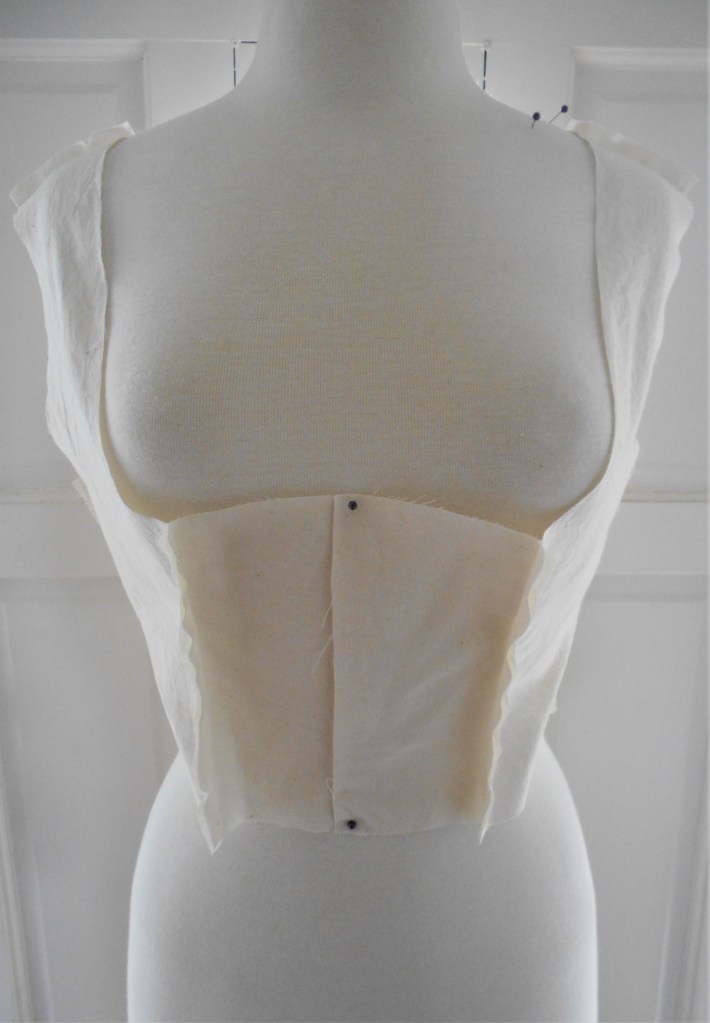
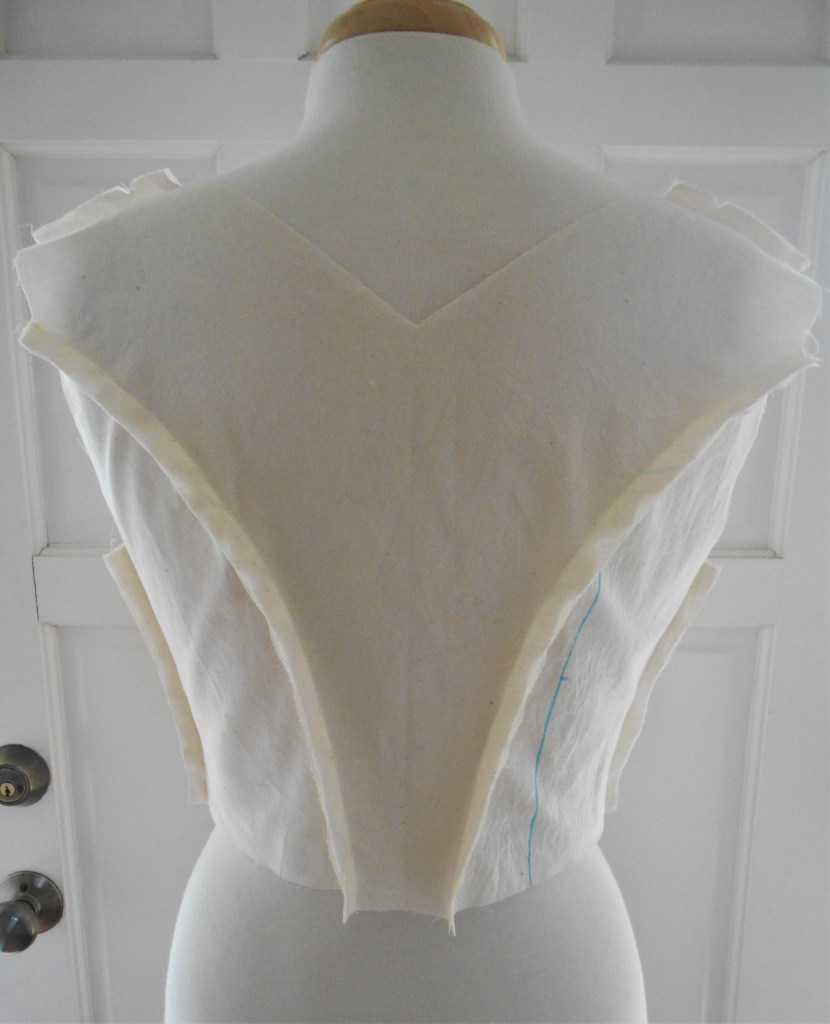
Noticing how similar the bunad and dirndl were, I began plotting how I was going to alter the original pattern; namely, removing the front zipper and transforming the front into a corset of sorts. A mock-up was made.

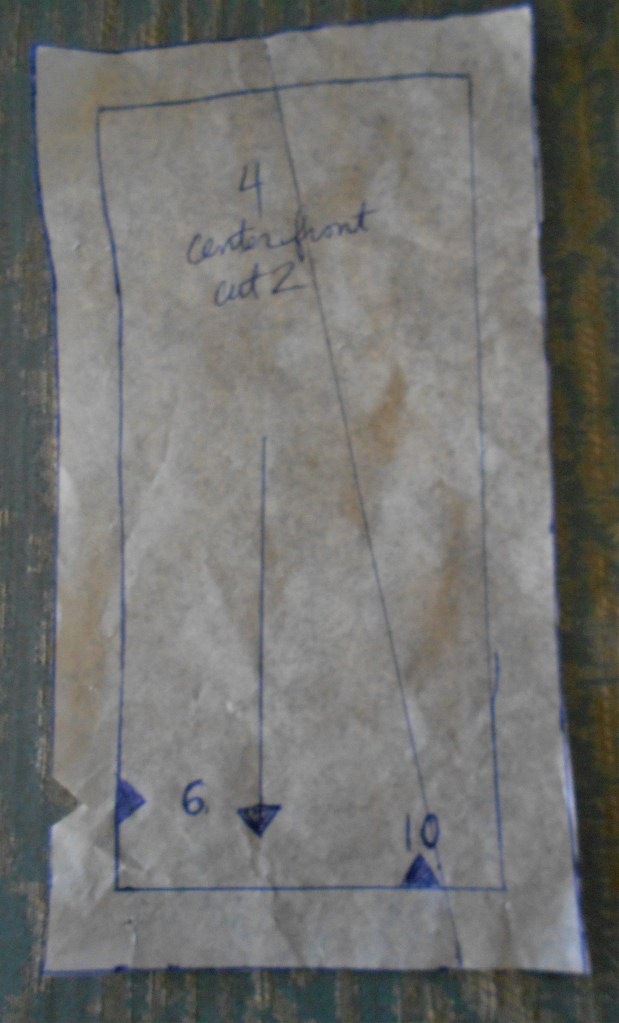
After determining the new design of the front, the muslin markings were transferred onto the tissue paper pattern piece.

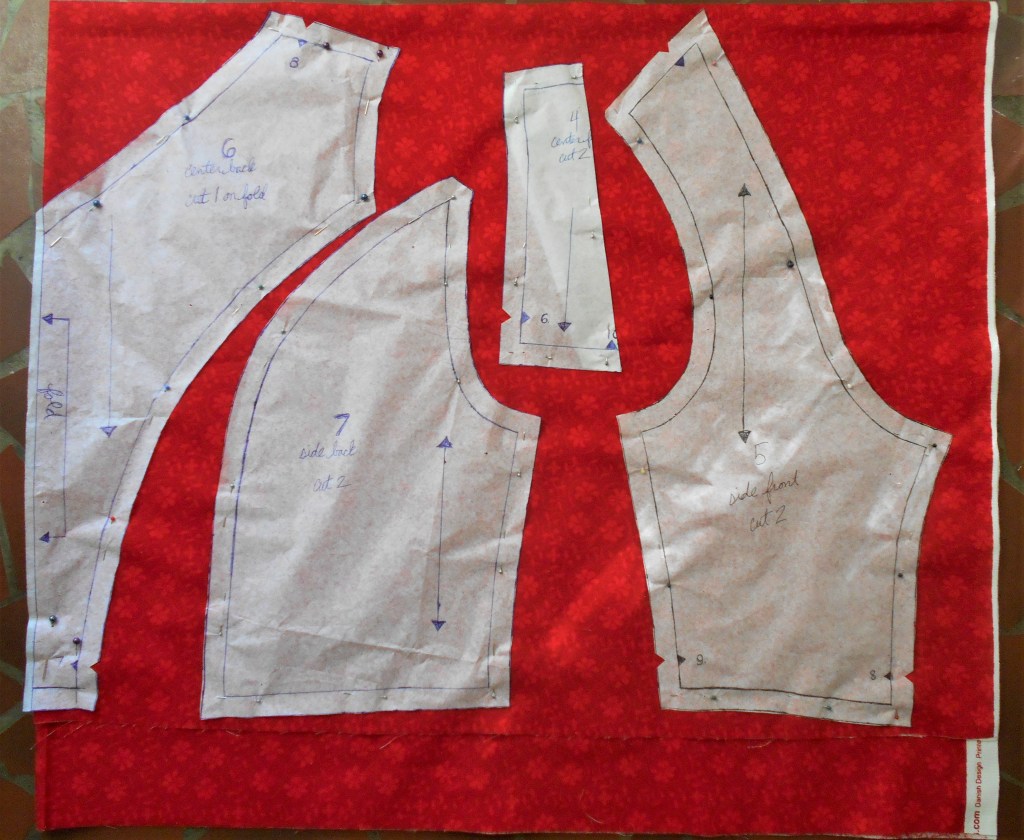
According to the mock-up, the rest of the pattern appeared to be in good shape and now it was time to cut the real fabric.

The Fabric

I knew I wanted a bright red vest with a deep blue skirt and white blouse like many of the photos I found online…

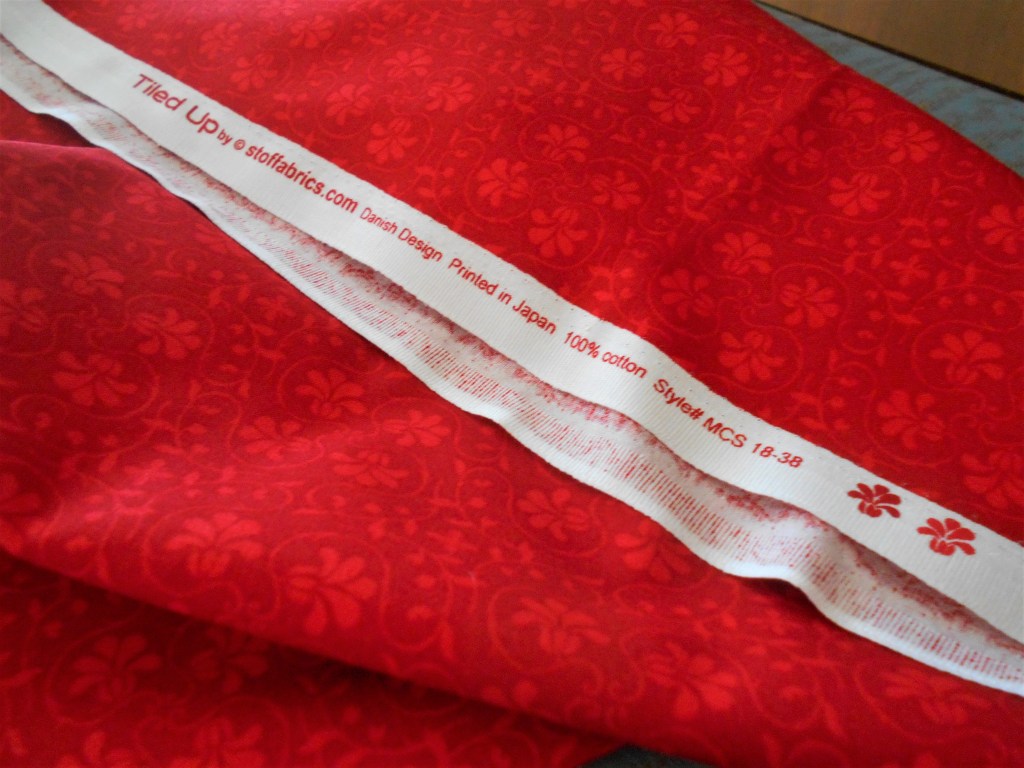
Finding the perfect fabric was simple: a sample ordered online proved to be a brilliant scarlet with a subtle tonal floral pattern. Even better, the cotton fabric was Scandinavian in its origin. I do love to match my materials with their geographical creative counterparts !

The pieces were pinned onto the twice folded fabric (for the face AND lining) and cut out.

Sewing

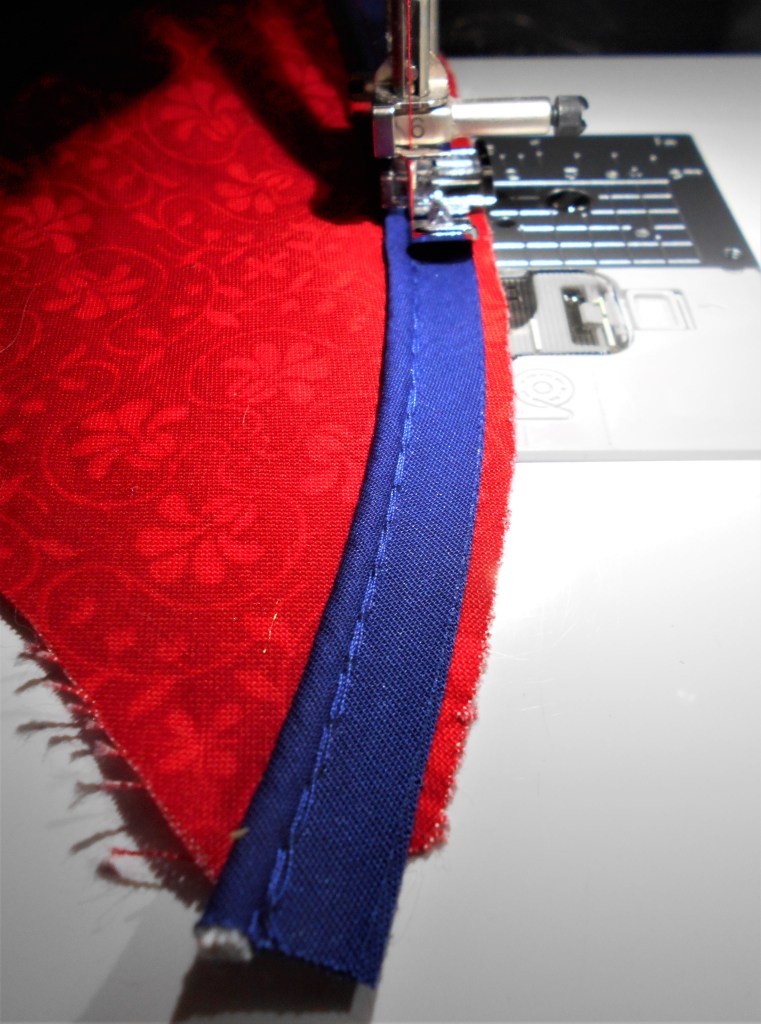
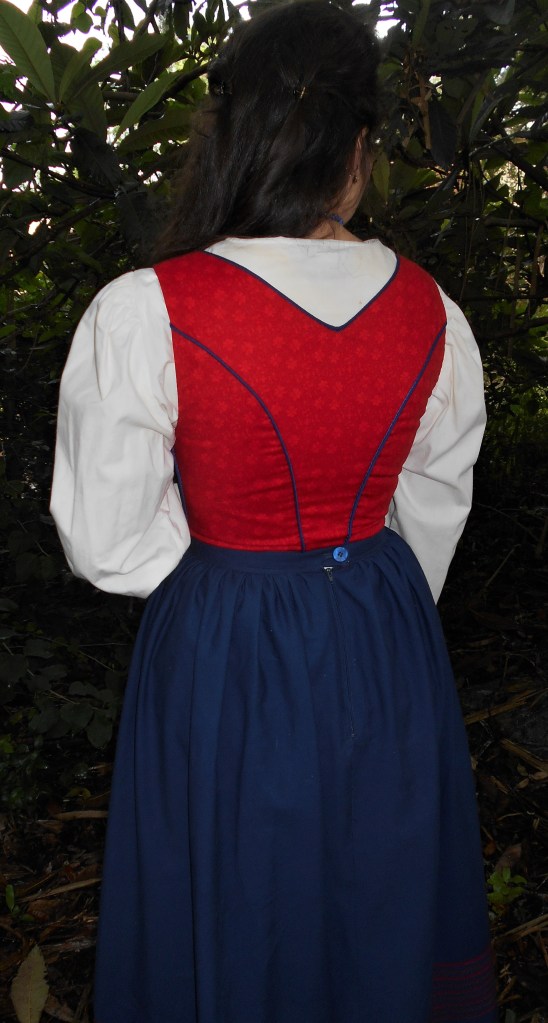
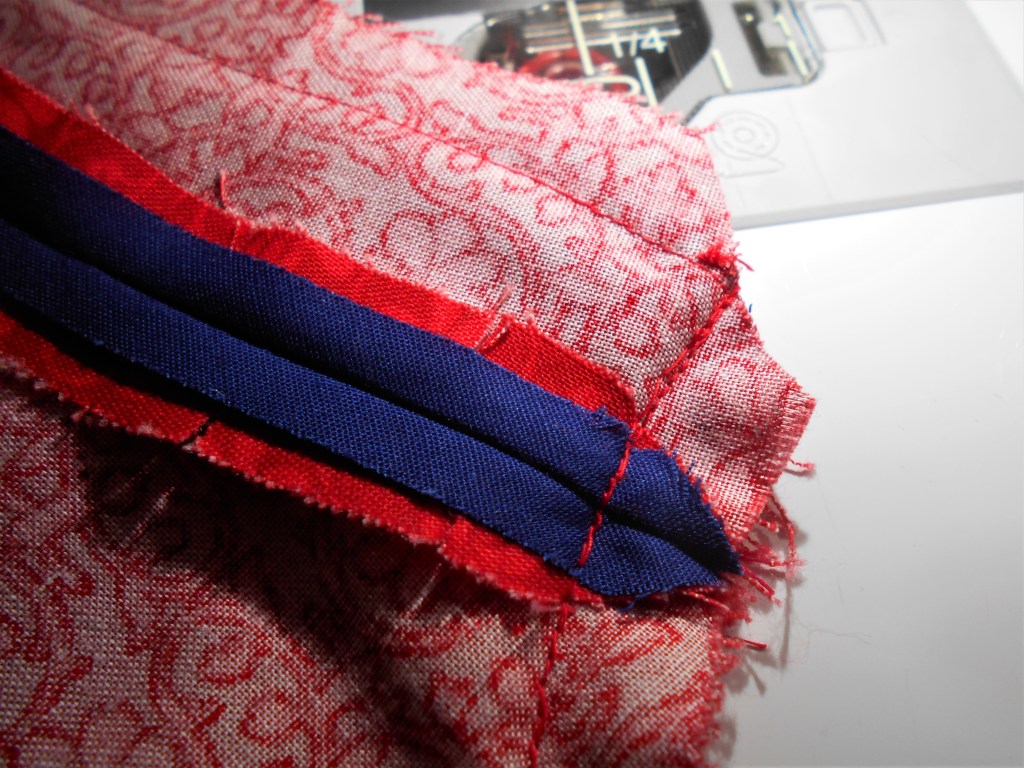
Because adding decoration and details were important, I decided to pipe the seams of the bodice to set off the shaping of the vest. A regular zipper foot works just as well as any fancy piping foot…

Sewing the piping

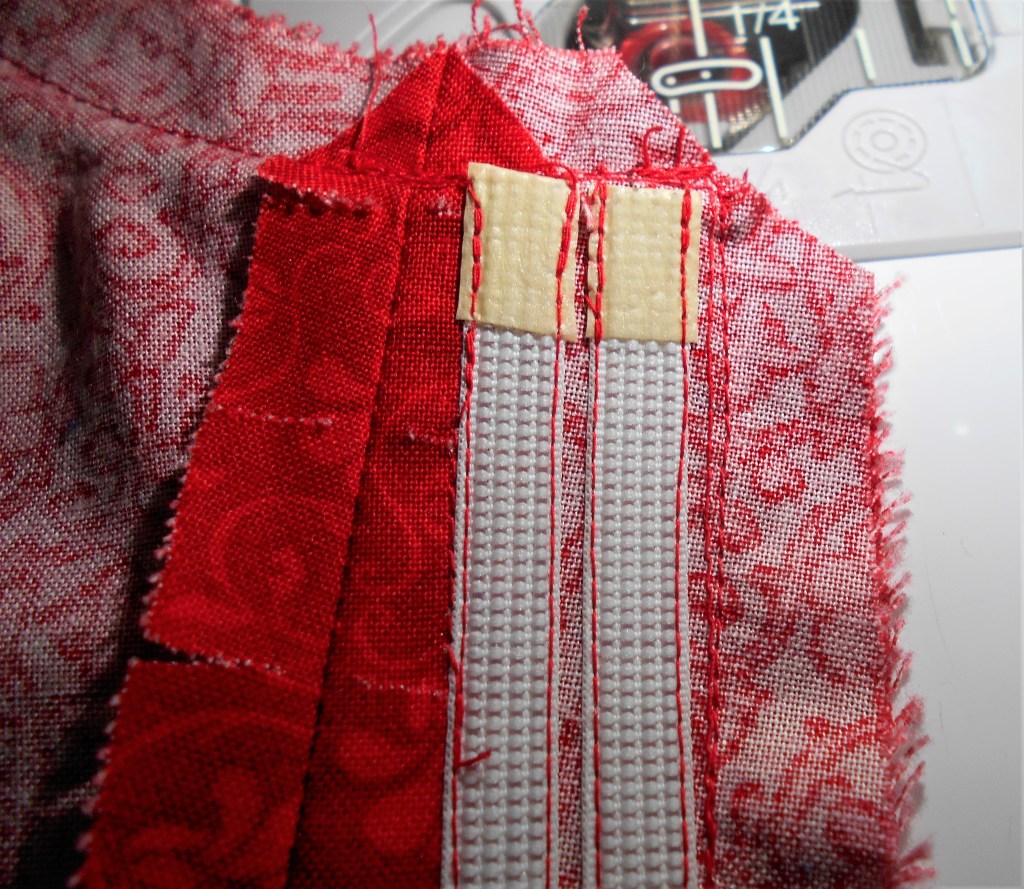
Two rows of Rigilene boning were sewn onto the front vertical edges of the lining to support the lacing area. On the face side, the seams and piping allowances were pressed opened. All the corners were snipped to prevent bulk.

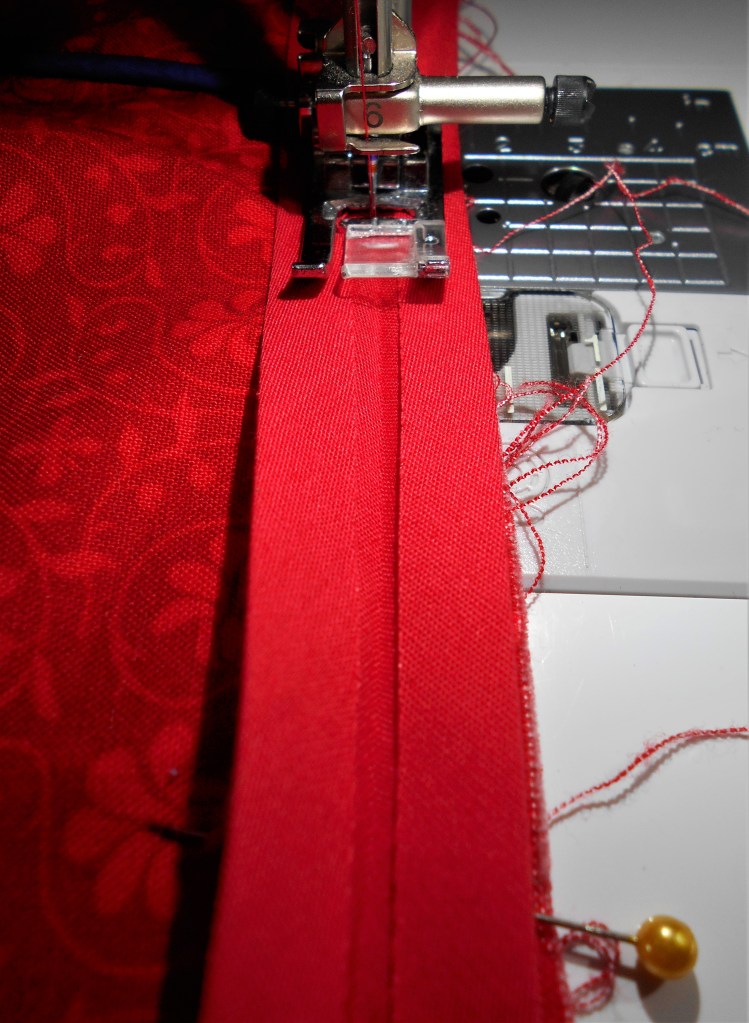
Now that both the face and the lining were complete, it was time to sew them together along the neckline edge. Bias binding was used to finish the armholes and the bottom of the vest.

Sewing the bias binding

Voilà ! The vest was almost finished. Holes were punched, grommets were installed, and then the garment was set aside.

The Skirt

The master Burda pattern came with a skirt design, but this, too, had to be adapted. There was a front zipper to be joined in connection with the bodice and this I removed by placing the pattern on the fold of the fabric. Speaking of, I bought the skirt fabric, a navy canvas-type material, from Walmart ! The pattern was laid out on the canvas…

…and a waistband was cut.

Waistband marked on folded fabric

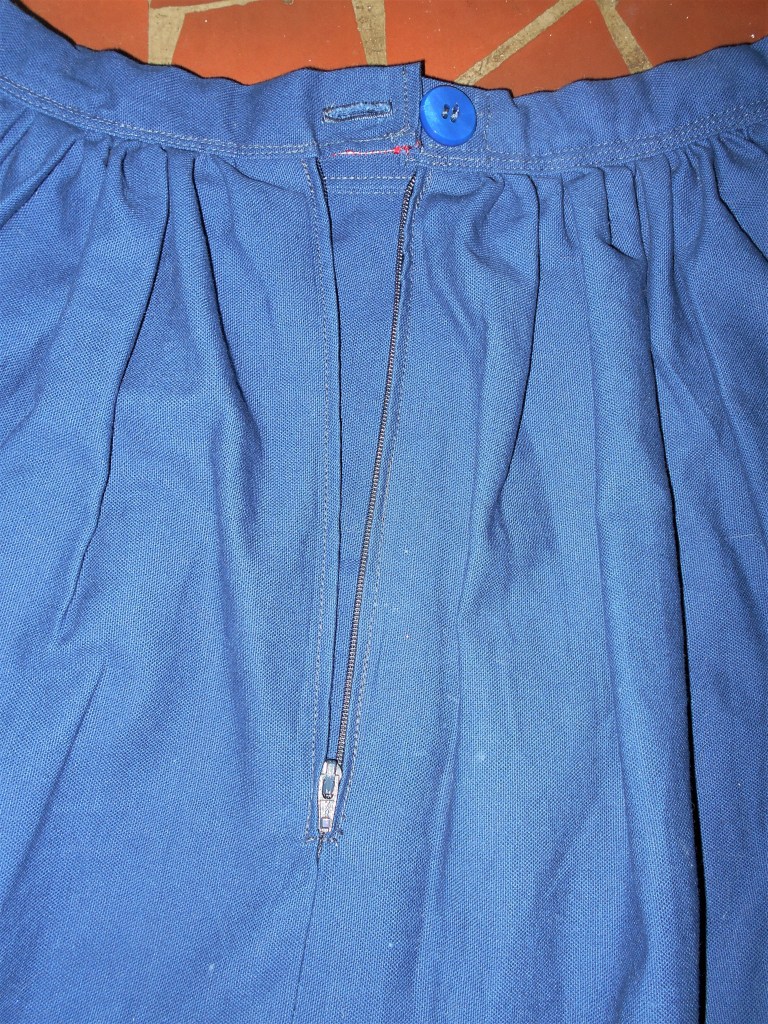
I sewed the skirt based on the instructions, which included front pleats and a gathered back. The single side pocket (why only one ?) was omitted. A regular zipper was installed. Folding the waistband in half, it was attached to the top edge of the skirt over the pleats and gathers. A buttonhole was made at the back and a bright blue button was sewn onto the other side of the back band.

Back zipper closure and button

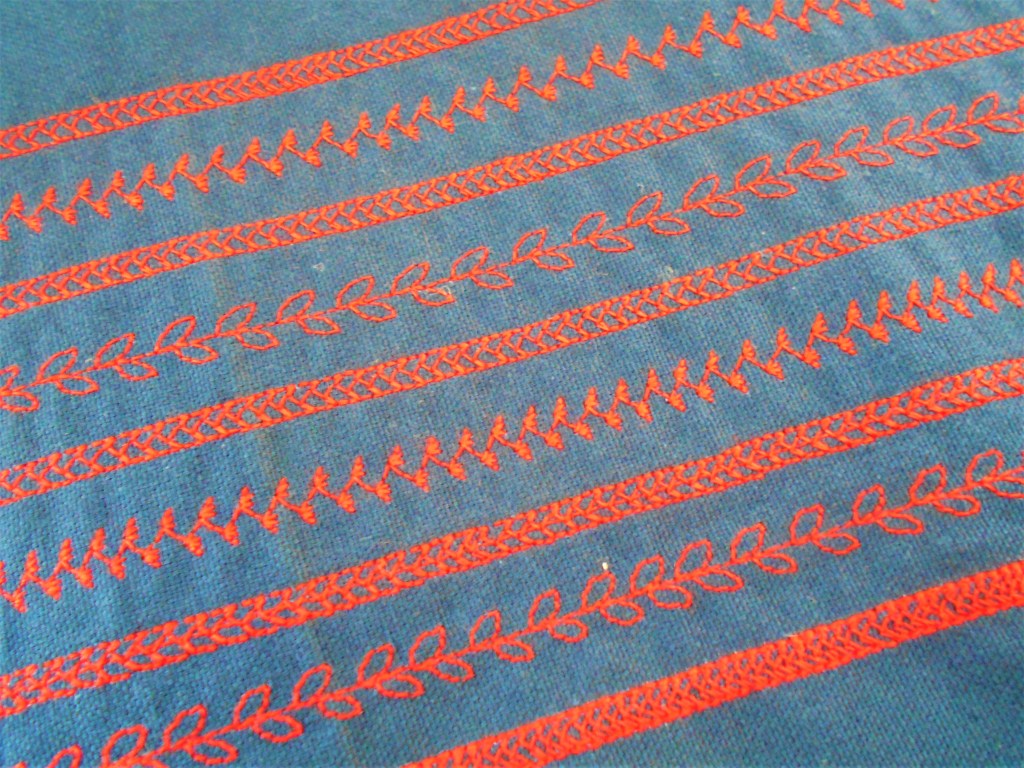
Something that I found skewed about the pattern was the overall hem length. It was looooooooong ! Too long. Fortunately, the folded hem provided an excellent starting place for the decorative stitching I wanted to implement along the bottom edge. Did I ever think I was going to use more than 3 of the 100 stitches on my BabyLock sewing machine ? Heavens, no ! But I have ─ look how pretty the motifs look when sewn in bright scarlet !

That’s it ! The vest and skirt were finished and now it was time to put it all together. There was one thing missing and that was the classic white blouse that is worn beneath the vest.

Hmmm…

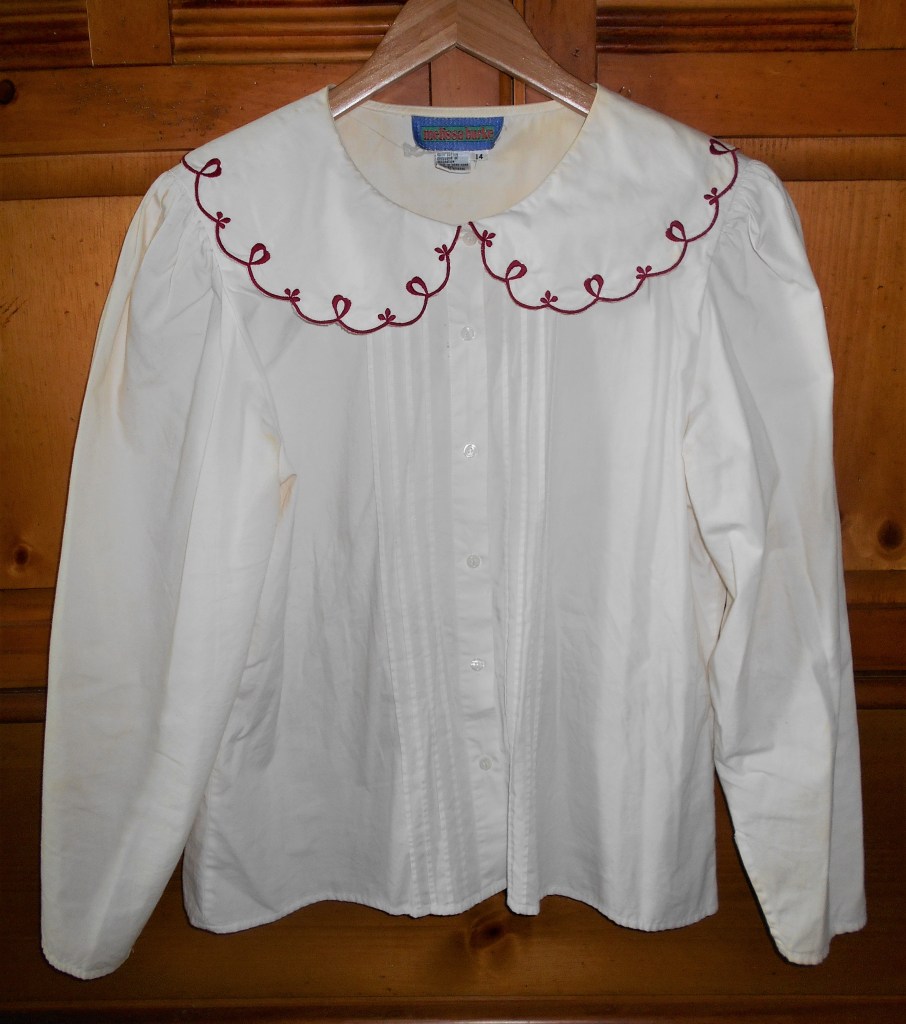
Searching through my mother’s closet, I found a suitable blouse in sleeve length… but it had an expansive scalloped collar satin stitched in crimson. No need to worry─ I just turned the collar right side in and the blouse was just perfect !

Together with a gold brooch and lapis jewelry, the outfit was a close resemblance to the traditional Norwegian bunad.

Toi, Toi, Toi,

Mary Martha

To read about my virtual escape to Norway wearing my bunad, check out my post on the concert for Lise Davidsen !

https://costumeclosetcouture.com/2020/09/07/met-stars-live-in-concert-lise-davidsen/

Roberto Devereux

From the sextet of wives belonging the brutishly fickle Henry VIII to the bloody tug-of-war between Catholicism and Protestantism, the Tudor period in history is a meaty bone of tumult and fascination. The drama of the time must have captured Donizetti’s mind as well: his trilogy of Tudor operas is a tour-de-force for singers and a favorite haunt for acting potential. And so, here I was, at the finale of my first opera season, with the opportunity to see a spectacle of costumes and make-up prowess.

Sondra Radvanovsky in a promotional photo for Roberto Devereux / Metropolitan Opera

The buzz around this performance of Roberto Devereux was Sondra Radvanovsky’s daring run at the Tudor Triple Crown ─ she performed all three of the Donizetti Tudor queens in one season to riotous acclaim. However, I found more appeal in the light Italian strings of the overture than the flapping voice of Radvanovsky. Furthermore, the duets and trios were the hallmark in this opera, especially with the creamy-toned Elīna Garanča and the drama surrounding her character (caught between her husband and her forbidden love for the Queen’s favorite suitor).

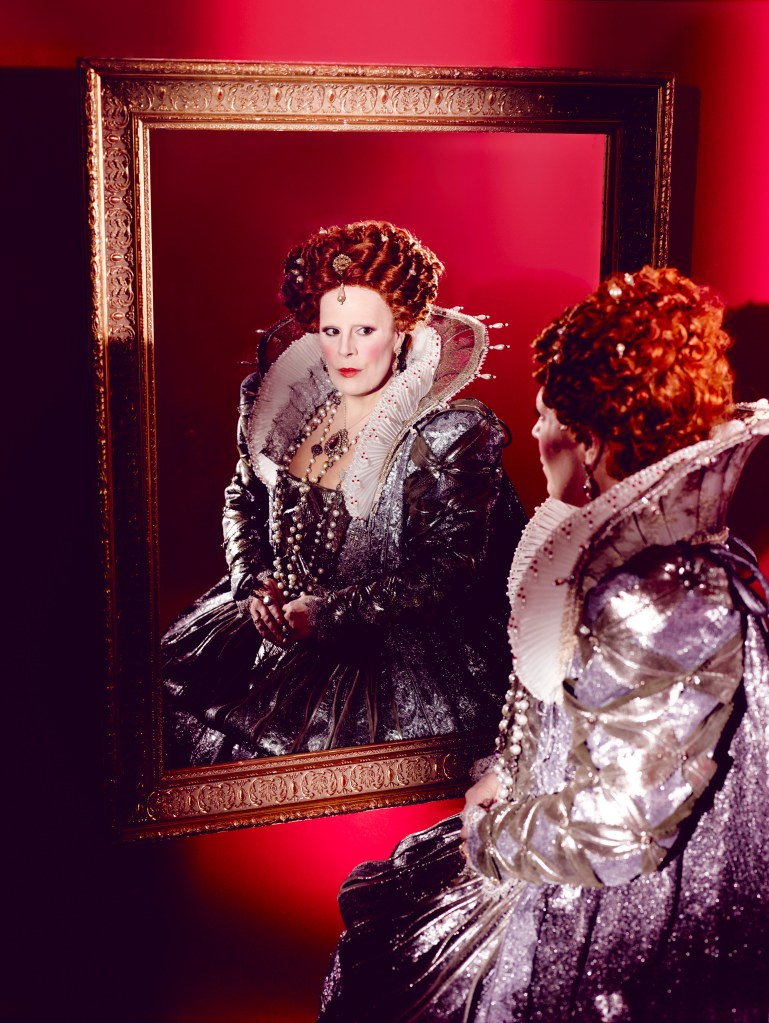
More than anticipated, the make-up was sensational, undoubtedly its very best on Sondra Radvanovsky’s aged Elizabeth. The perfectly coiffed paprika peruke was doffed at the opera’s end to reveal a withering white fray of “natural” hair that was a remarkable feat of theatrical trickery.

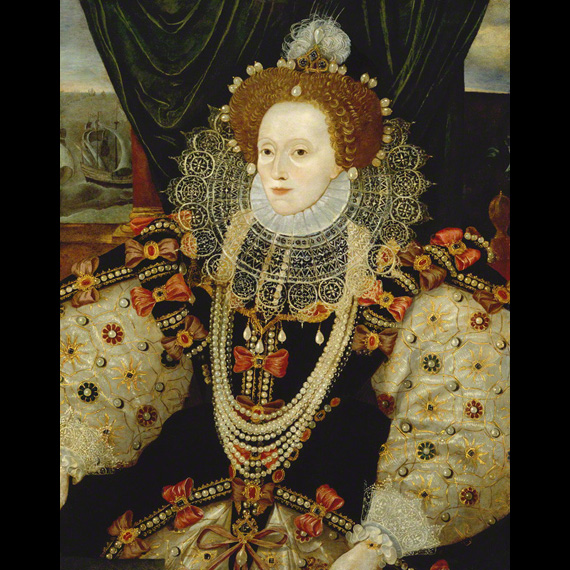
Sondra Radvanovsky as Queen Elizabeth in Roberto Devereux / Metropolitan Opera

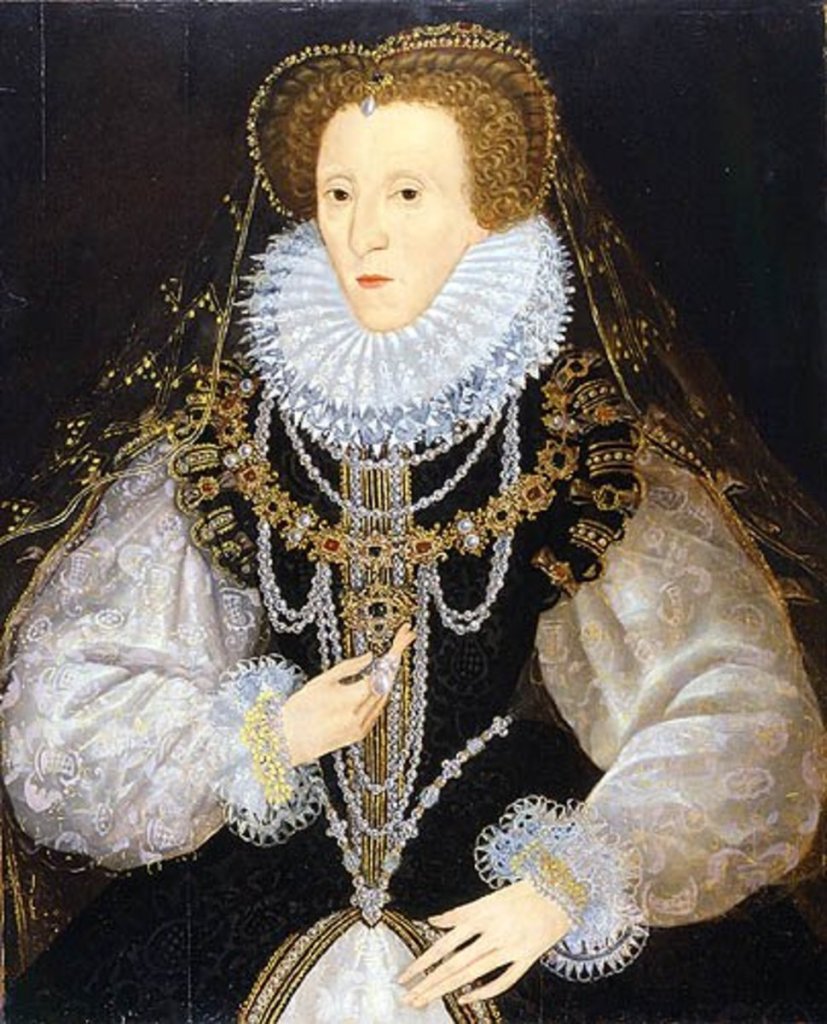
Moving onto the costumes, I knew this opera would feature extremely intricate pieces that were beyond my scope of sewing skills. I did, after all, just teach myself to sew almost 6 weeks earlier for when I needed an outfit for Madame Butterfly. What was I to do ? An offhanded observation of Tudor portraits easily pointed out the garment of ubiquity, the ruff. Oh, yes, I MUST have a ruff, but a different kind of ruff… “Tudor Couture on the Cheap !”

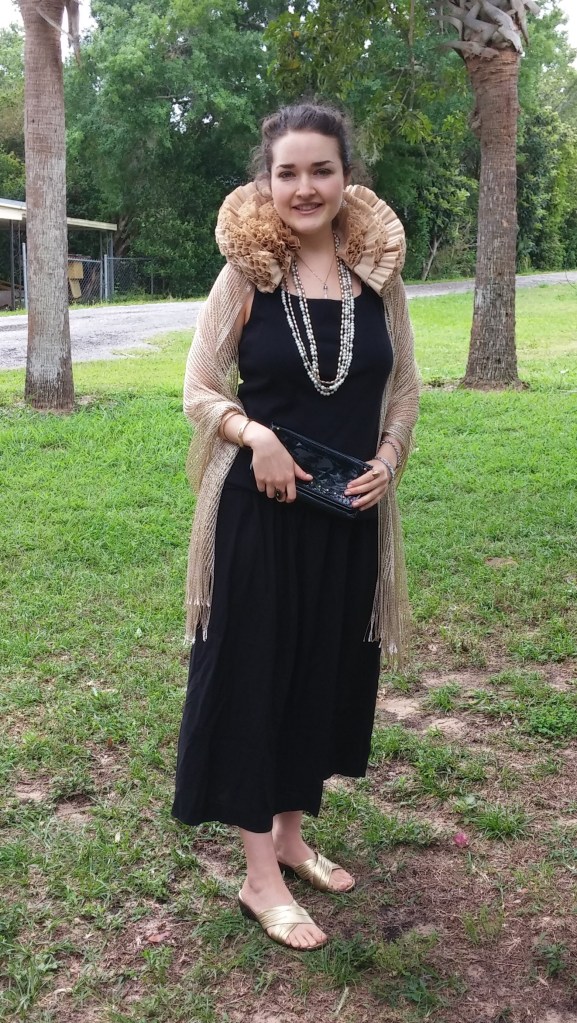
Something that was crafty and unique was in order and the first thing I wanted to tweak was the color of the ruff. Instead of a glaring white starched collar, I imagined a more earthy accessory to compliment the neutral colors of the outfit I had planned to wear. Configuring the ruff was crucial: who would want to wear an all encompassing collar, especially when sitting in one of the high backed chairs of the theater ? No, that wouldn’t do. Rather, I opted for an open ruff, one that swooped around the back neckline and left the chest exposed.

Much better.

Now for the construction… Since sewing was out of the question, I devised a plan to use a large cardboard pizza round and cut away part of the front for the neck and chest opening, which worked well. But the most extraordinary feature of the ruff was the actual “ruffle” material: unbleached coffee filters ! With their curly edges and cost effective efficiency, the coffee filters were perfect when artfully folded and glued onto the pizza round. Both the top and bottom of the cardboard round were layered with the filters and attached using hot glue. All that was left was to glue two inward facing clothespins to the undersides of the ruff near the front points and I now had an accessory worthy of the Tudors.

Alas, I misjudged the back protrusion ─ throughout the day in the theater, I was forced to sit with my head bent downward and forward because of the ruff’s extended back edge. By the curtain call, I had a crick in my neck.

With my first opera season in the books, I unclipped the paper ruff and admired its beauty and ingenuity… but not its discomfort.

Toi, Toi, Toi,

Mary Martha

Cast and Credits:

Roberto Devereux ─ Gaetano Donizetti (1837)
Live in HD air date: April 16, 2016

Cast:
Queen Elizabeth ─ Sondra Radvonovsky
Roberto Devereux ─ Matthew Polenzani
Sara, Duchess of Nottingham ─ Elīna Garanča
Duke of Nottingham ─ Mariusz Kwiecien

Credits:
Conductor ─ Maurizio Benini
Production ─ Sir David McVicar
Set Designer ─ Sir David McVicar
Costume Designer ─ Moritz Junge
Lighting Designer ─ Paule Constable
Choreographer ─ Leah Hausman
Live in HD Director ─ Gary Halvorson
Host ─ Deborah Voigt

Otello

It was an easy decision. After my spellbinding first opera experience with Il Trovatore, I couldn’t wait to shell out another $24 at the ticket booth for a following Verdi tragedy 2 weeks later, Otello. Intriguingly, it was Otello that jumped out at me the most when viewing the Live in HD schedule in the summer of 2015: the drama based on Shakespeare’s play could have easily been my first opera. Thankfully, it wasn’t.

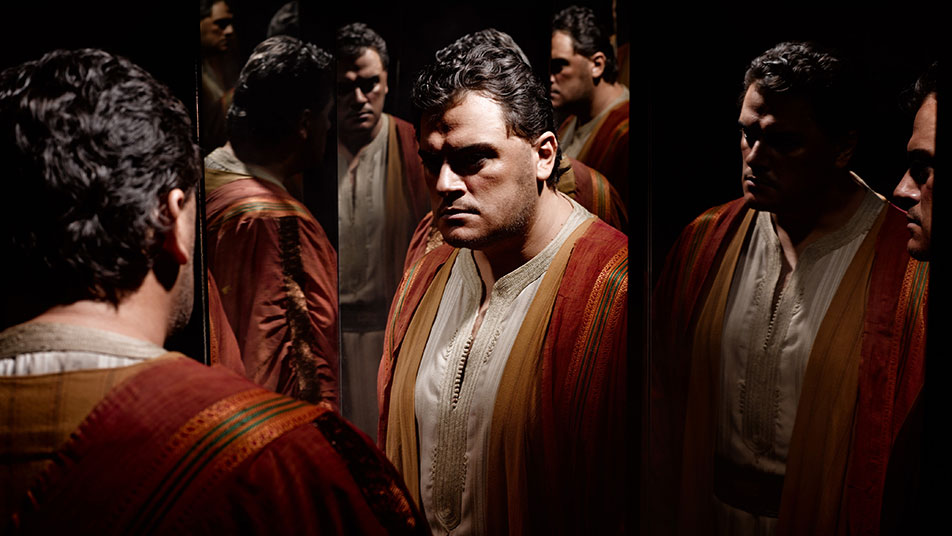
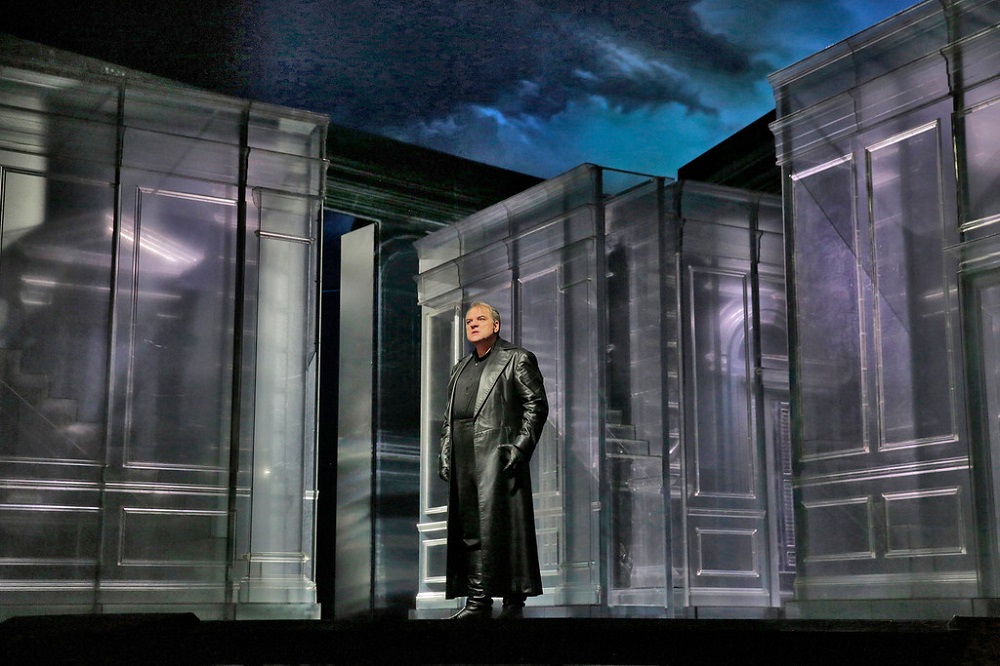
Aleksandrs Antonenko in a promotional photo for Verdi’s Otello / Metropolitan Opera

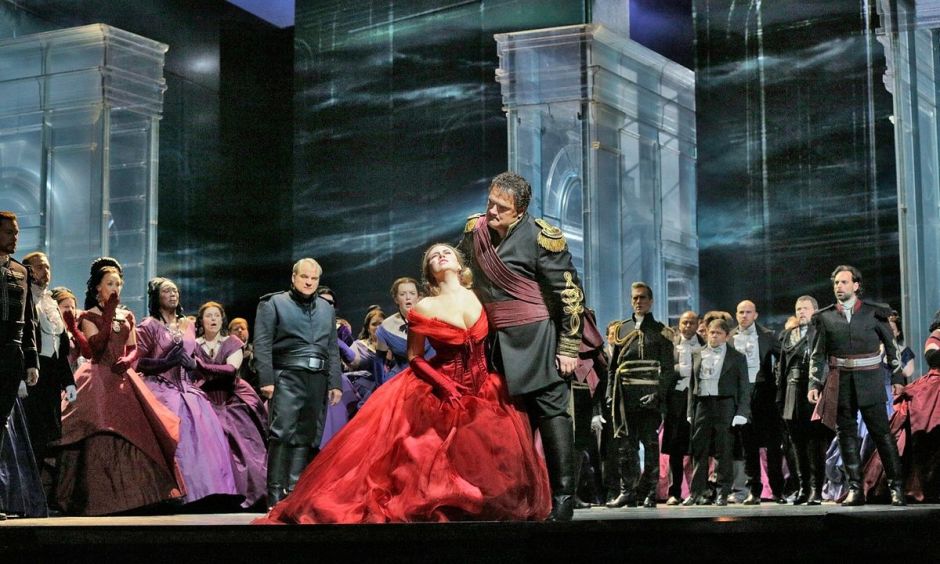
Bartlett Sher’s production, with frosted Lucite walls that were supposed to be a spoof from a quote by Verdi’s librettist about enclosing Otello in a glass house, mimicked frozen blocks of ice rather than the intended domicile of transparency. They were cold, lifeless, and ineffective from my point of view.

Željko Lučić as Iago in Otello / Metropolitan Opera

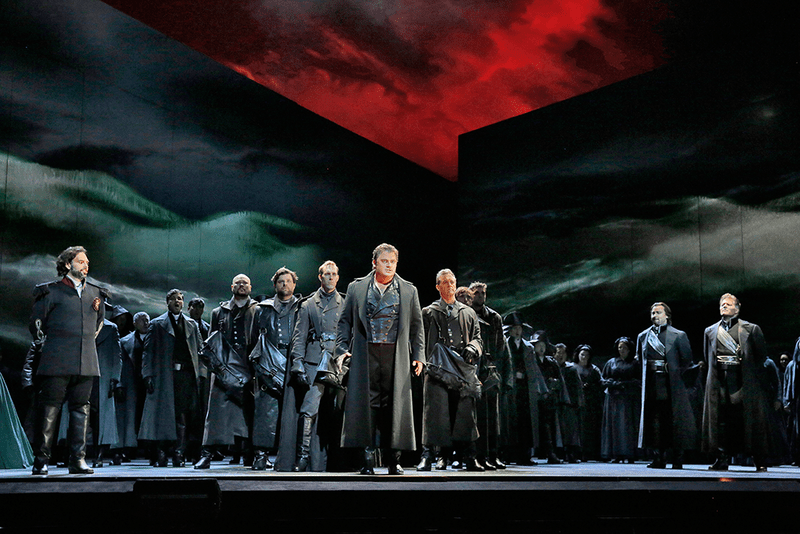
The cast was decent with a liquid Željko Lučić and a piercingly chill Sonya Yoncheva (fitting for the icy production), but I felt Otello suffered from an identity crisis: with his clothing and styling (not to mention his lack of blackface) just as drab as all the secondary characters and chorus, there was nothing to distinguish him among the throngs of people on stage. Shouldn’t he have looked more… Moorish ?

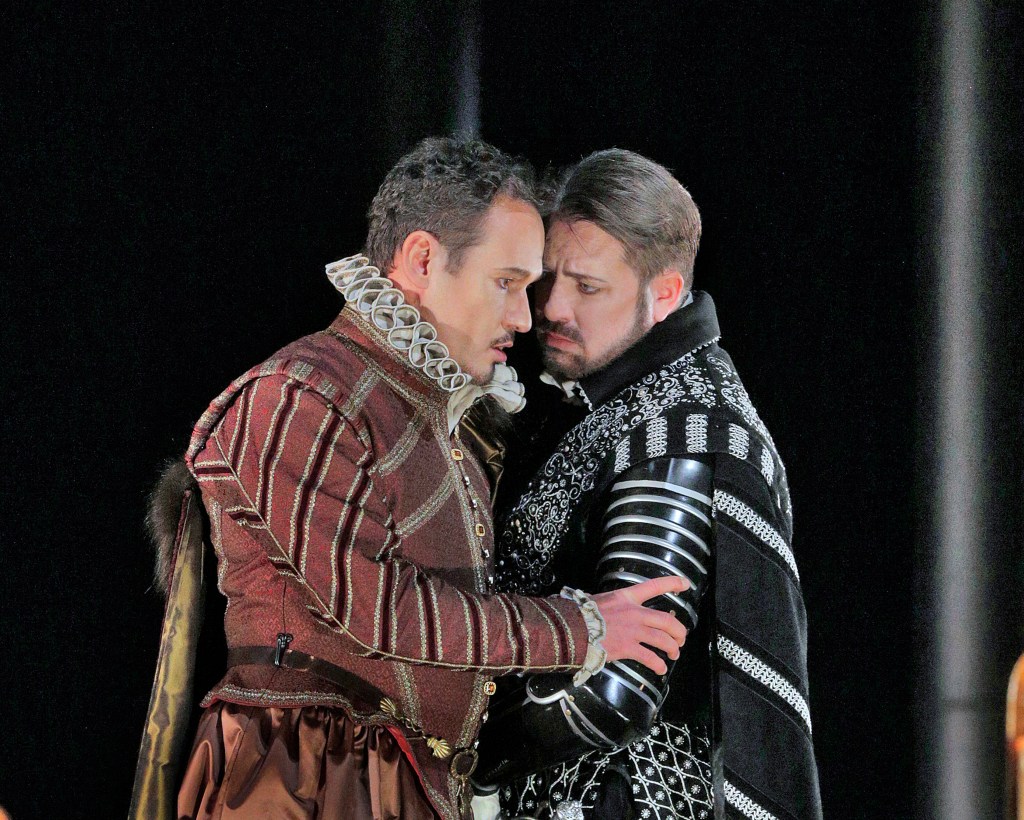
Dmitri Pittas (far right) as Cassio and Aleksandrs Antonenko (center) as Otello / Metropolitan Opera

While Desdemona’s final “Muoio innocente” was moving, I was left underwhelmed by the overall performance. Still, my exuberant, newfound interest in opera was undeterred by this small nick in the grand scheme of things.

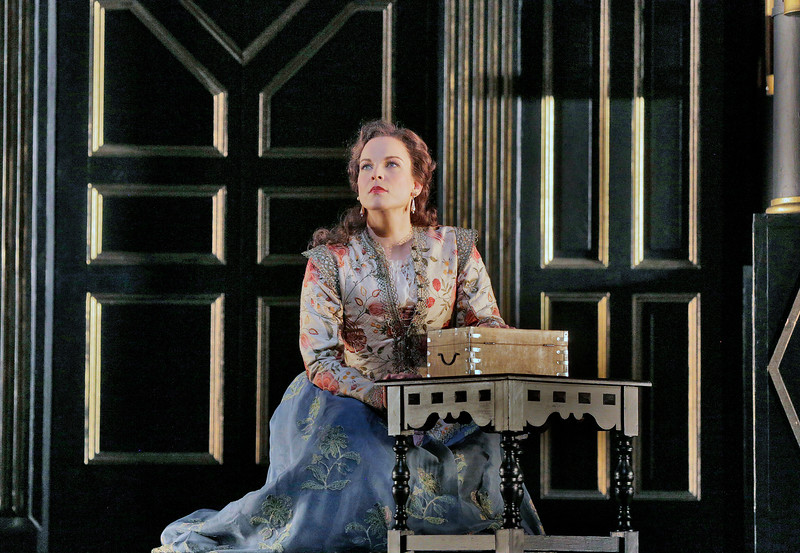
Sonya Yoncheva as Desdemona in Otello / Metropolitan Opera

Dressing up for my first opera was almost as much fun as seeing the performance itself. There’s something vicarious and invigorating about feeling fancy as if you, yourself, are a part of the opera by the clothes you choose to wear. To my second opera, however, I wanted to “theme” my outfit for the sunny Venetian locale of Otello and Desdemona’s spotless disposition. “Something golden, something demure…” I mused.

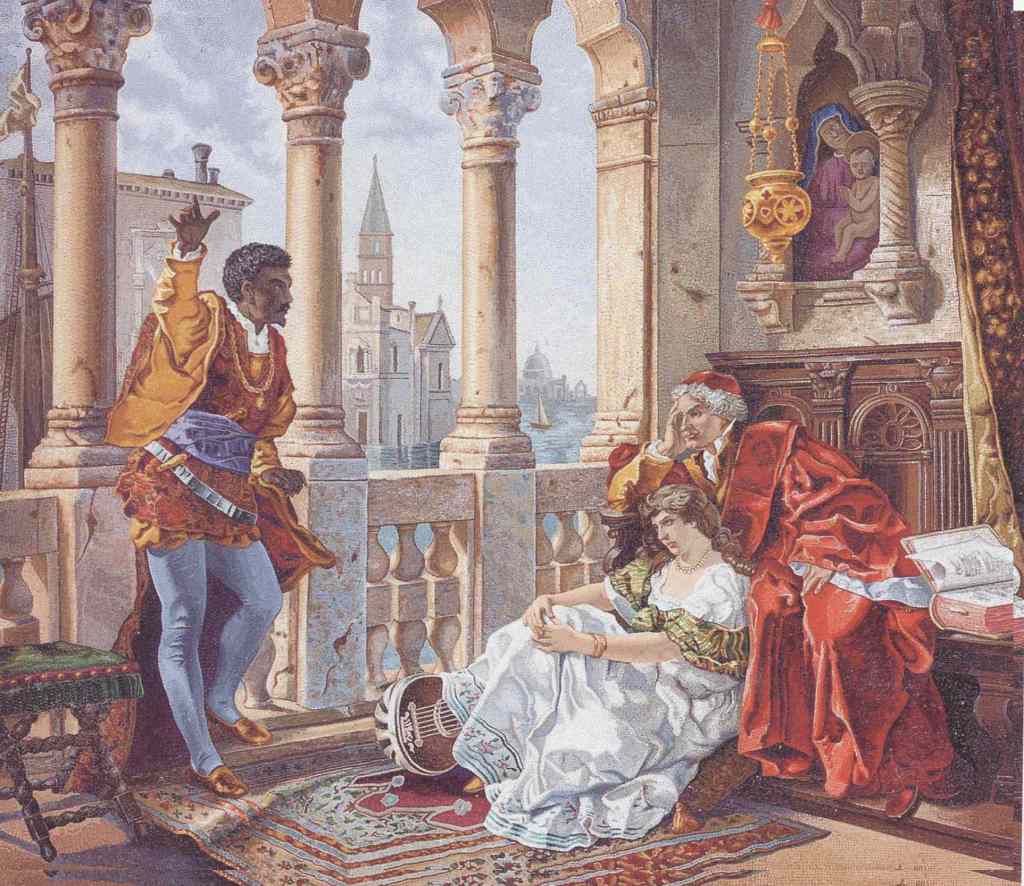
Othello Relating His Adventures to Desdemona

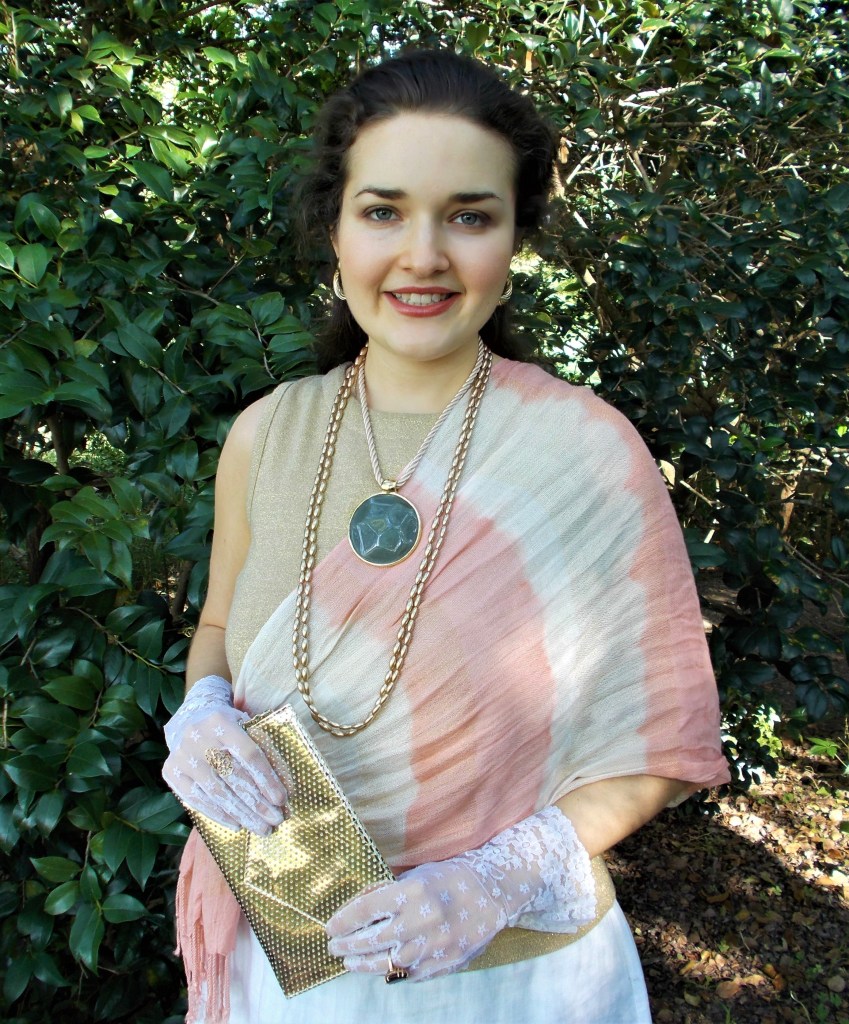
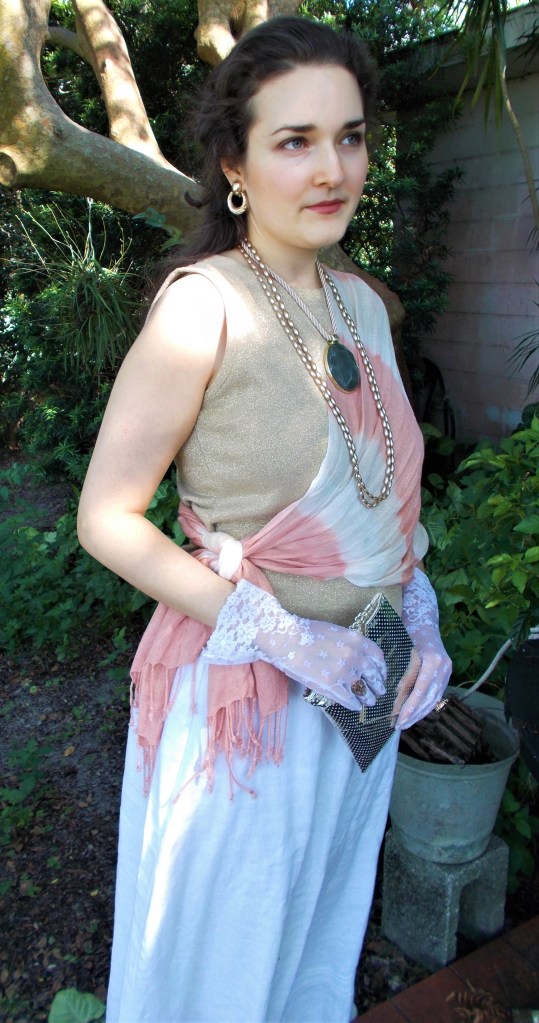
The scarves and skirts of my closet were paraded in breezy seaside style as I toyed with layering and softly blending color schemes. I used my standby gold tank top, which I wore to Il Trovatore, and slipped on a long white linen skirt. Then the fun began. A metallic gold thread woven through the pinky-peach and cream striped scarf gave glints of gentility and coastal charm. When I tied its fringed ends together into a loose side knot, the effect was just right… at least for an outfit made from scarves and skirts !

A pair of lace gloves (thank you, Aunt Countess !), antique gold rings (such a faux pas when worn with gloves ─ fie, me !), and just the right assortment of necklaces and earrings helped me feel right at home as Desdemona. Do I look as if I’m about to be strangled ?

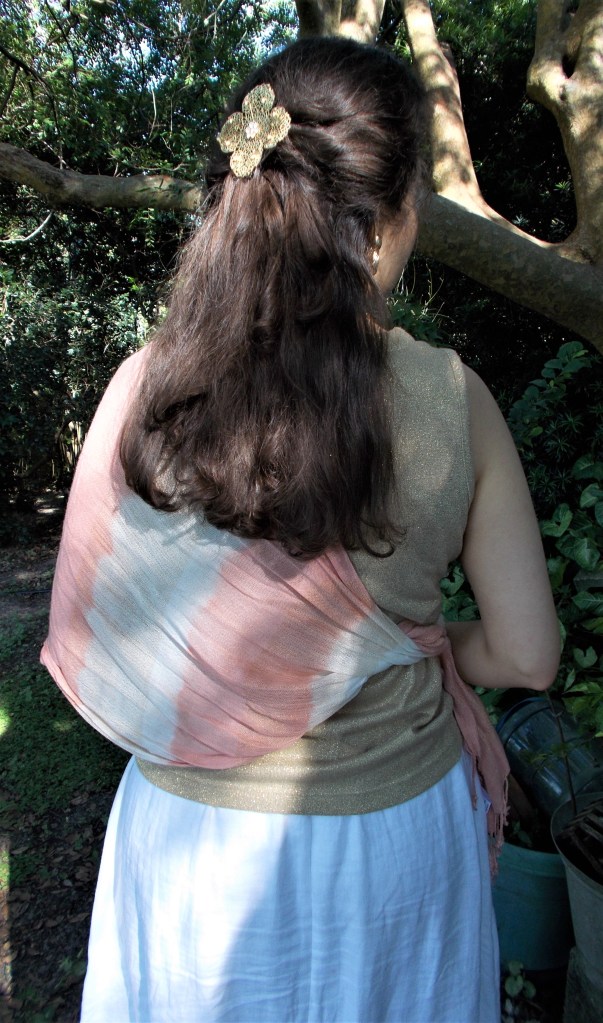
I styled my hair in a “twisted sections pinned up and back” sort of style. Nothing fancy, but very elegant when clipped together with a gold flower hair accessory.

An outfit for free, a better-than-front-row-seat ticket for $24… Enjoying the thrills of opera and the emulation of one of Shakespeare’s most virtuous heroines doesn’t have to be a ship-sinking occasion. If only the production of Otello had fared better…

Toi, Toi, Toi,

Mary Martha

Cast and Credits:

Otello ─ Giuseppe Verdi (1887)
Live in HD air date: October 17, 2015

Cast:
Otello ─ Aleksandrs Antonenko
Desdemona ─ Sonya Yoncheva
Iago ─ Željko Lučić
Emilia ─ Jennifer Johnson Cano
Cassio ─ Dmitri Pittas
Roderigo ─ Chad Shelton
Lodovico ─ Günther Groissböck
Montano ─ Jeff Mattsey
A herald ─ Tyler Duncan

Credits:
Conductor ─ Yannick Nézet-Séguin
Production ─ Bartlett Sher
Set Designer ─ Es Devlin
Costume Designer ─ Catherine Zuber
Lighting Designer ─ Donald Holder
Projection Designer ─ Luke Halls
Live in HD Director ─ Gary Halvorson
Host ─ Eric Owens

Cendrillon ─ Project MASSenet

How could I resist ?! When Cinderella slips her fair foot into the shoe of Massenet, it’s bound to be a ball ! My bubbling excitement aside, I was highly enthused when I espied Laurent Pelly’s whimsical production perched on the latter portion of the Met’s Live in HD 2017-2018 schedule. Would the slipper fit ?

A scene from Cendrillon / Metropolitan Opera

My motives for seeing the opera did not begin and end with the story of Cinderella, but rather Massenet─ Several years prior, I had been deeply moved by a recording of the “Meditation” piece from Thaïs as I was struggling with a health issue. The soothing sounds of the strings were beautiful as well as edifying to my body and spirit. Since then, I had long desired to attend a Massenet performance of any title.

A performance of the Meditation piece from Massenet’s Thaïs (video: TheClassicalmusicfan)

So how did I Cendrillon suit me ? Well, not as much as I had imagined. Thinking of a fairy tale, I expected the music to be joyous and buoyant. While there were moments of bombastic humor during scenes with Stephanie Blythe’s Madame de la Haltière and her two balloon-bottomed daughters, I wouldn’t describe the score as a perfect fit. However, the overall appeal of the story was enough for me to overlook the damp flaws in the music.

Maya Lahyani as Dorothée, Stephanie Blythe as Madame de la Halitère, and Ying Fang as Noémie in Cendrillon / Metropolitan Opera (photo via The New York Times)

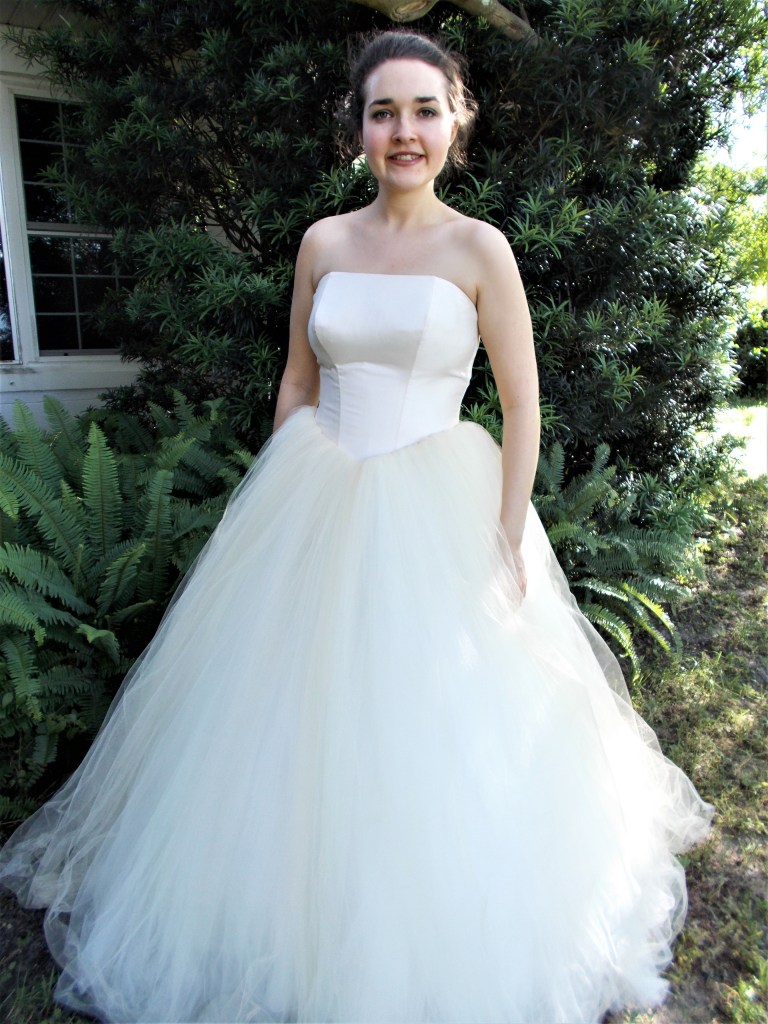
Back to my bubbling excitement… The occasion of Cendrillon screamed out loud for me to wear a ball gown─ a BIG, b-r-o-a-d, beautiful ball gown ! A girl could only dream… Since teaching myself to sew in 2016, my projects had been kept to conservative accessories and commercial pattern dresses. But for such a grand occasion, I wanted to branch out and make something that was truly elegant and couture. Looking over the production photos, the creamy eggshell gown in the opera appeared to have been sewn from satin with its hem ombré dyed in charcoal.

Joyce DiDonato as Cendrillon and Alice Coote as Prince Charmant

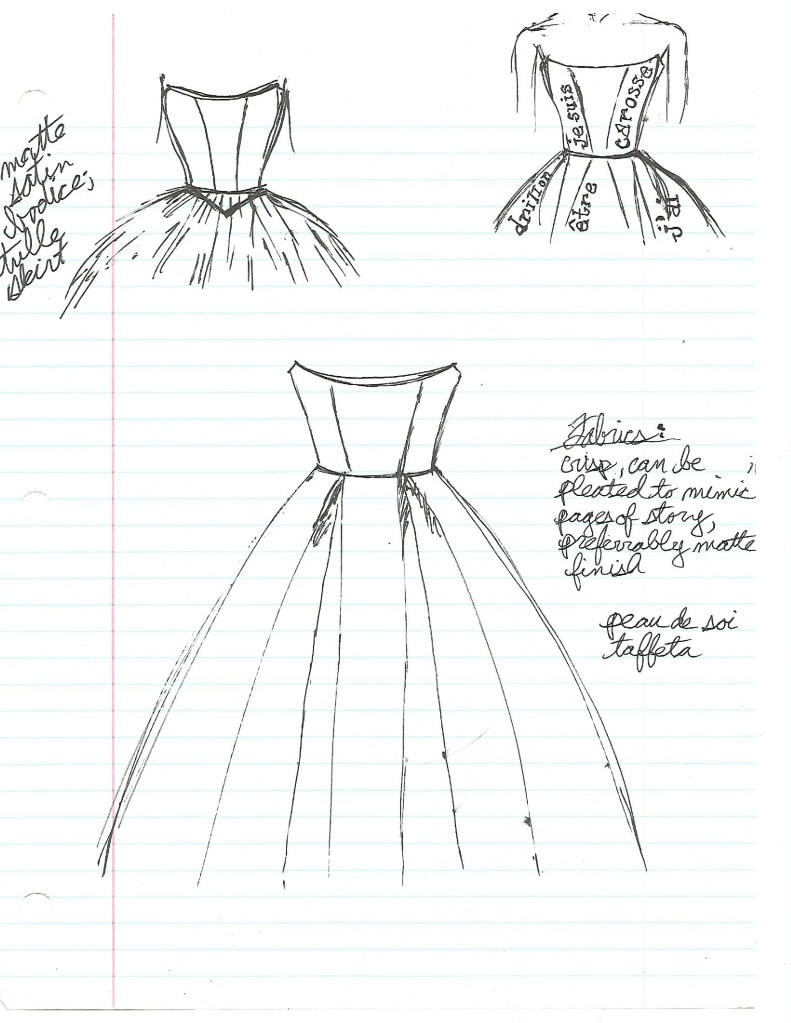
Admittedly, I thought it looked odd and very unusable ─ would I ever be able to wear a gown with a blackened bottom out in public ? Emphatically, not ! No, the gown in the opera was not for me, at least not all of it. Since the price of a full satin skirt would have sent my pocketbook to the gallows, I opted instead for a thrifty gathered tulle skirt. Here are a few of my preliminary sketches:

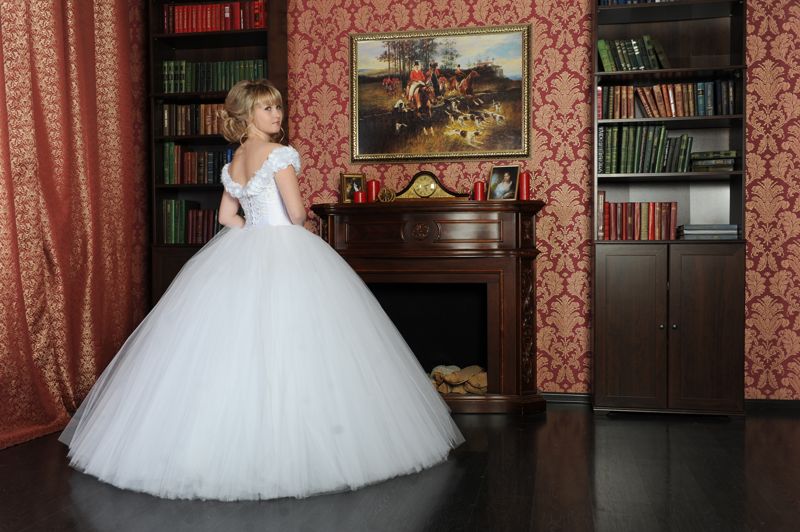
Searching for guidance, I stumbled upon a site called the Corset Academy and knew I had found my answer: I spotted the most beautiful tulle ball gown skirt I had ever seen and video recorded in easy to follow tutorials so I (and others) could emulate its cloud-like glory. I signed up for the free trial and eventually bought an annual membership.

Tulle ball gown skirt from the Corset Academy

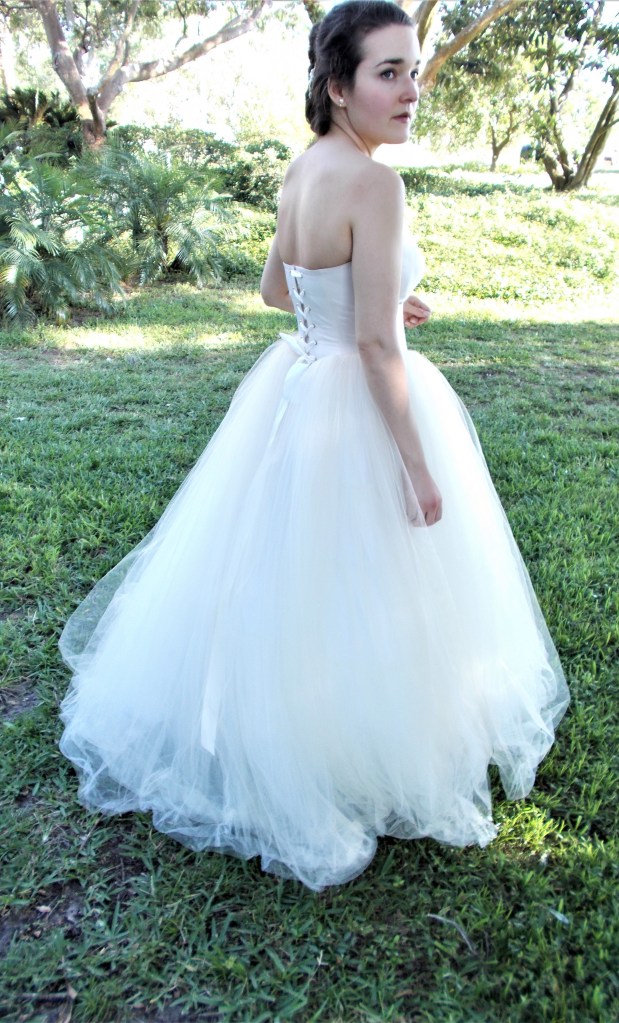
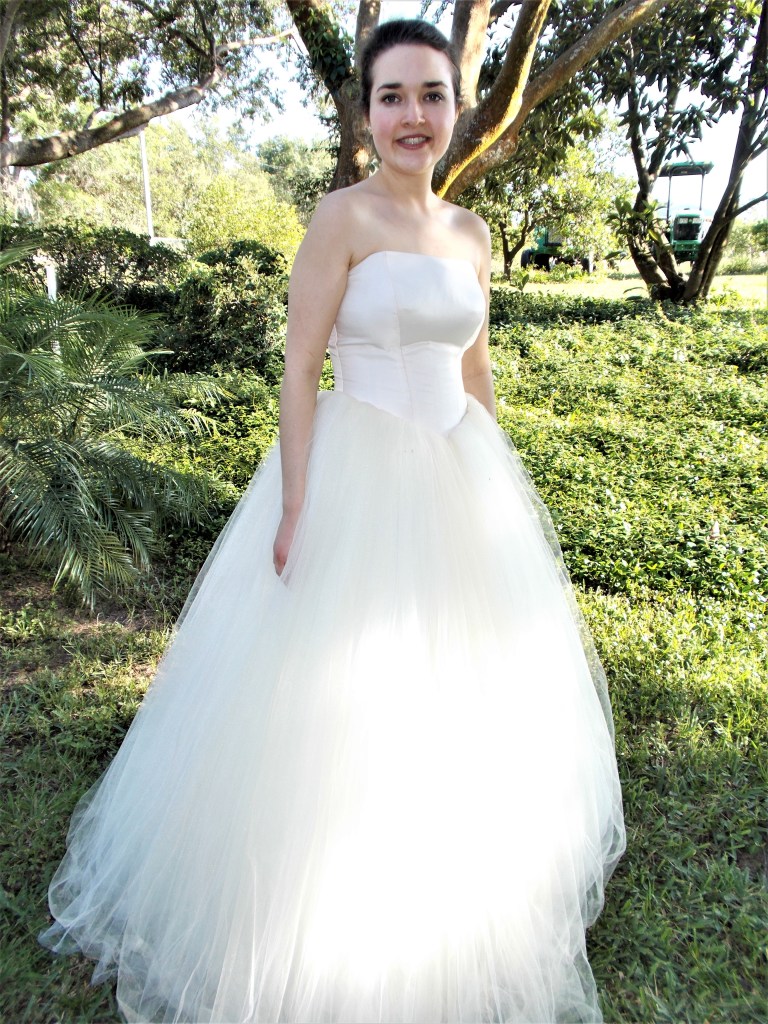
While I did not wear a hoop skirt underneath the gown, a full crinoline suited the style better, especially since 50 yards of tulle wasn’t enough to disguise the appearance of a peeking steel bone from beneath the skirt’s lining. Even without the hoops, the gown was voluminous. I dubbed the creation of this gown as “Project MASSenet” for a reason…

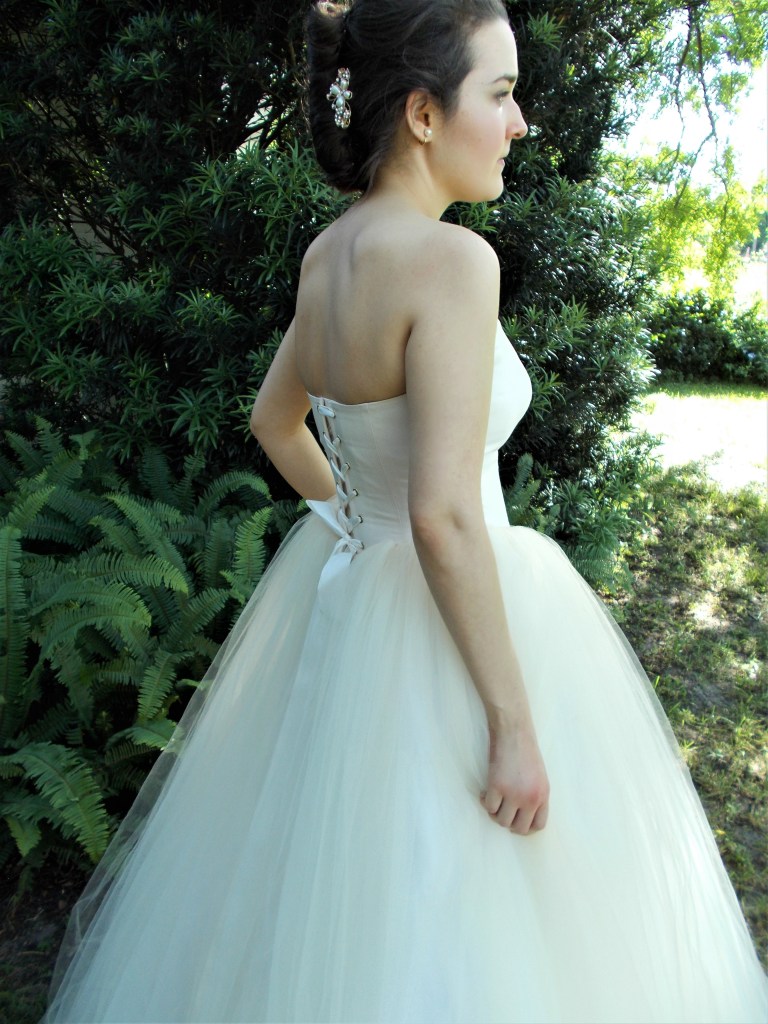
The gown was complemented with a corset back closure on the creamy matte satin bodice.

A cloud of soft tulle… dreamy !

My mother fashioned my hair into a stylish French twist. I just love the elegance of the pearly barrette in its rolled knot !

The process of sewing the ball gown was eye-opening: not only did I learn couture techniques for sewing formal garments, but I also discovered that my mother’s Singer sewing machine, which had been hibernating under her bed since the early 2000’s, was unbeknownst to me, broken. During the gathering of endless strips of tulle ruffles, the bobbin threads continued to snap and brought about a maelstrom of frustration. After the opera, I made an appointment with a local sewing shop to have the machine cleaned whereupon I learned its malady: cracked gears and irreplaceable damaged parts. The diagnosis was fatal and I had to part with my machine. But just as in the story of Cinderella, there is always a silver lining: I purchased a superior Baby Lock machine and serger and it has made all the difference in my sewing.

The slipper of Cendrillon may have been a misfit, but the quality and ease of my Baby Lock machines couldn’t be a more perfect fit.

Toi, Toi, Toi,

Mary Martha

Cast and Credits:

Cendrillon ─ Jules Massenet (1899)
Live in HD air date: April 28, 2018

Cast:
Cendrillon ─ Joyce DiDonato
Prince Charmant ─ Alice Coote
La Fée ─ Kathleen Kim
Madame de la Haltière ─ Stephanie Blythe
Pandolfe ─ Laurent Naouri

Credits:
Conductor ─ Bertrand de Billy
Production ─ Laurent Pelly
Set Designer ─ Barbara de Limburg
Costume Designer ─ Laurent Pelly
Lighting Designer ─ Duane Schuler
Choreographer ─ Laura Scozzi
Live in HD Director ─ Gary Halvorson
Host ─ Ailyn Pérez

Die Zauberflöte ─ The Queen of the Night

If you have a penchant for fairy tales like I do, you’ll find genuine delight in Mozart’s final opera, Die Zauberflöte. Centered around a quest for truth and knowledge (and a damsel in distress), the opera is as noble as its hero, Tamino. Between stipulated testing and bravery of self-determination, I willingly succumbed to the dashing chivalry of the prince on a mission to rescue the princess, Pamina.

Charles Castronovo as Tamino and Golda Schultz as Pamina in Die Zauberflöte / Metropolitan Opera

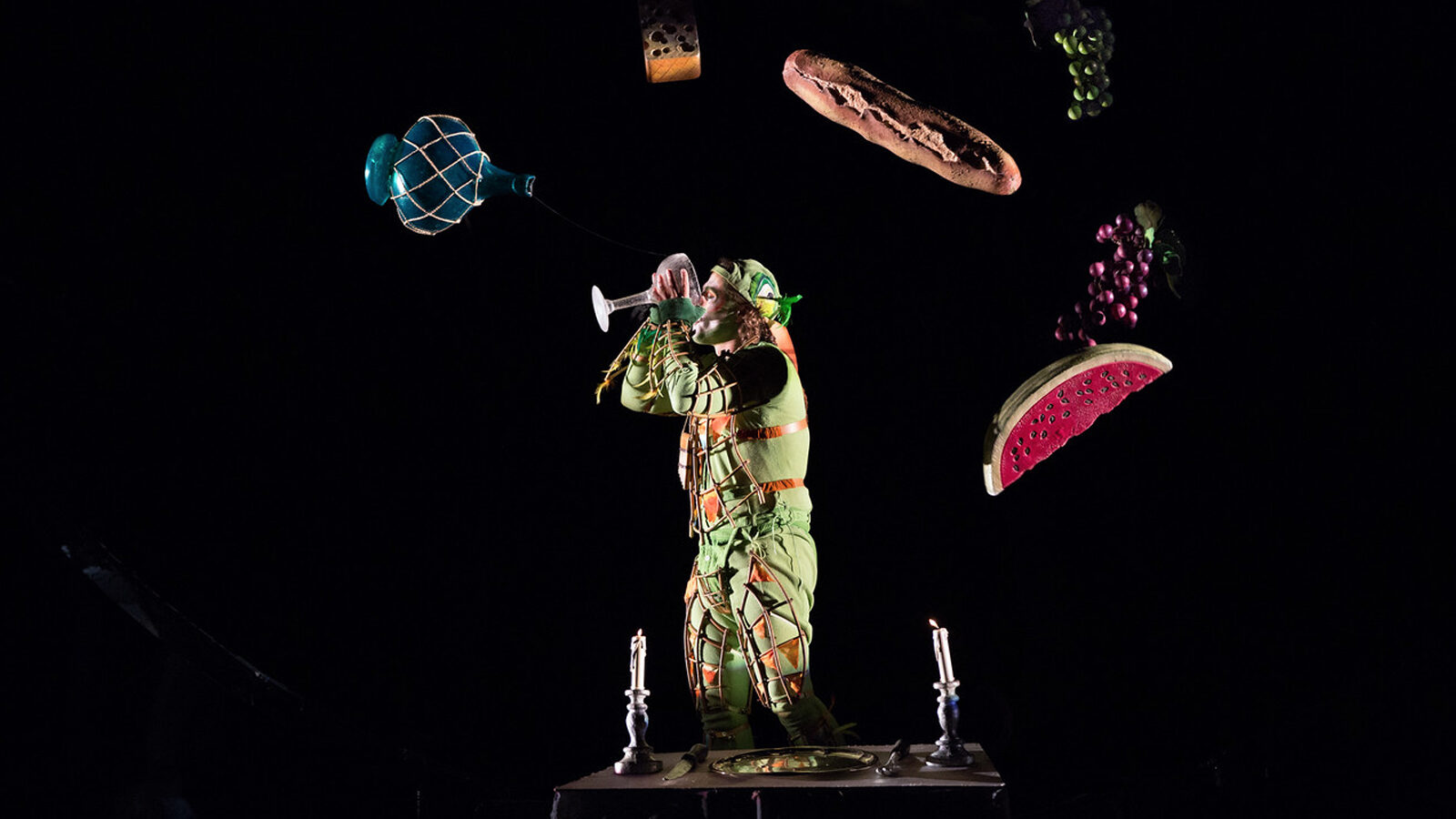
If the pursuit of true love doesn’t tickle your fancy, the spectacular production by Julie Taymor (of “The Lion King” on Broadway fame) will surely elicit at least one or two gasps of wonder and amazement. The uniqueness of the costumes and puppetry fits seamlessly with the whimsical roots of the opera. There’s even creative comedy for those still unpersuaded.

Marcus Werba as Papageno in Die Zauberflöte / Metropolitan Opera

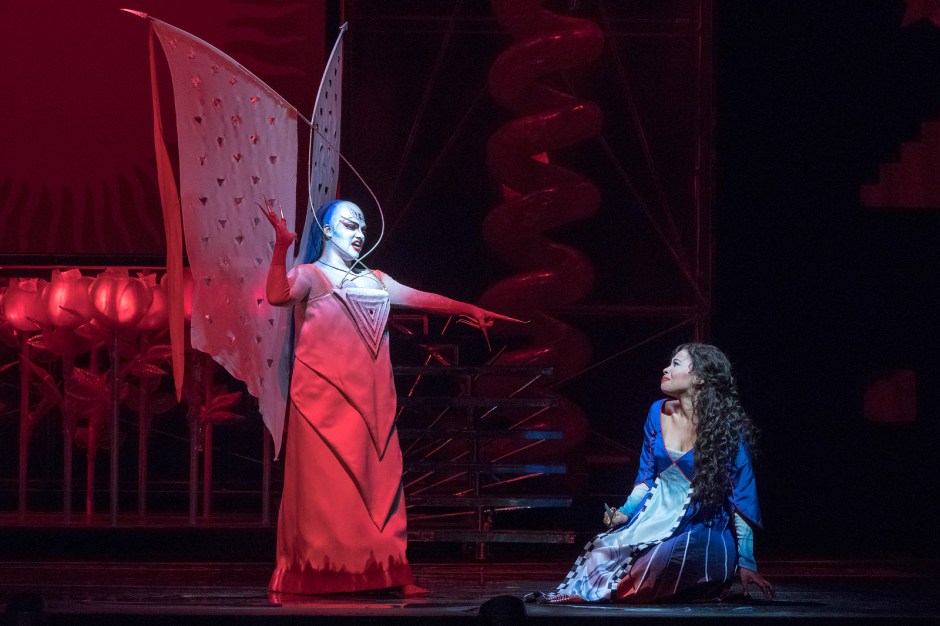
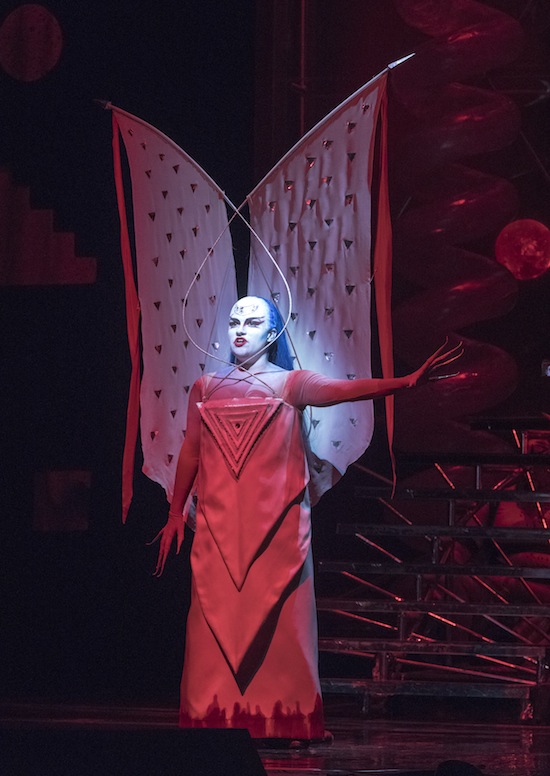
Still not convinced ? Perhaps a fearsome villain is more appealing to you and luckily Die Zauberflöte showcases one of the most despised in the bewitching Queen of the Night. While the name sounds like a beacon among the stars and moon, the wicked queen is far from harmonious and caused me a slight shiver, partially due to the most unattractive styling of the character’s costume and make-up. If there was any doubt as to whether the Queen could make a face turn later in the opera, her appearance alone body slammed those speculations onto the floor.

Kathryn Lewek as the Queen of the Night in Die Zauberflöte / Metropolitan Opera

With the Queen of the Night singing the most famous aria in the opera (and I’m sure you’ve heard it, too), it was without question that I would disguise myself as this otherworldly being for my outing to the opera. While the Julie Taymor costumes are original and ostentatious, I didn’t necessarily feel they best embodied the title of “Queen of the Night” so I imagined my own vision of the character.

Kathryn Lewek as the Queen of the Night in Die Zauberflöte / Metropolitan Opera

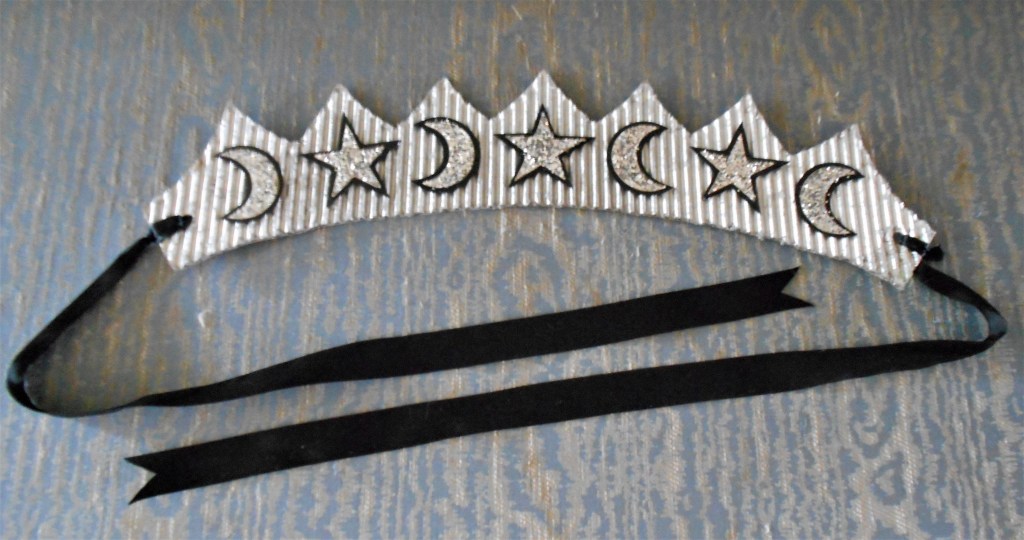
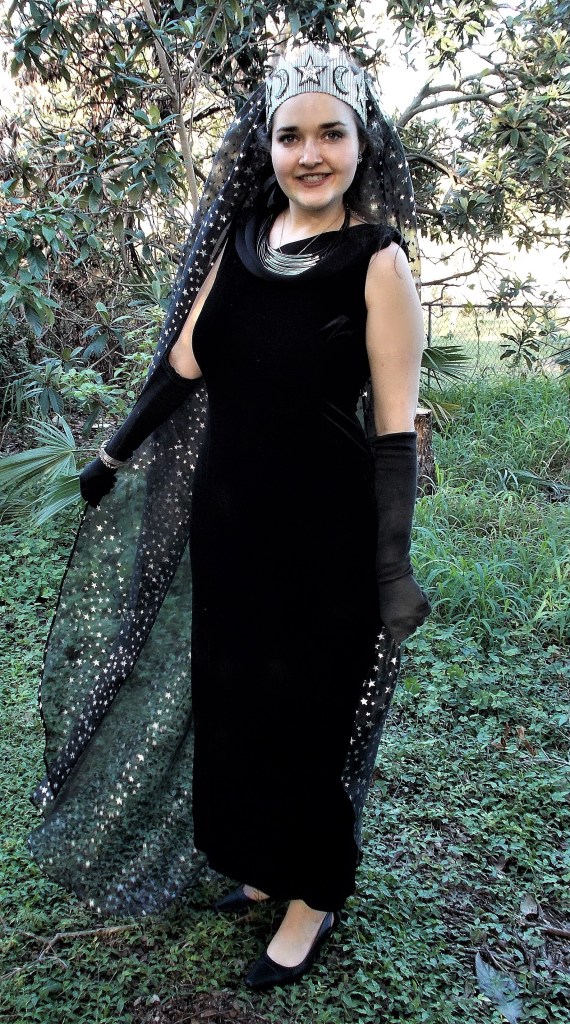
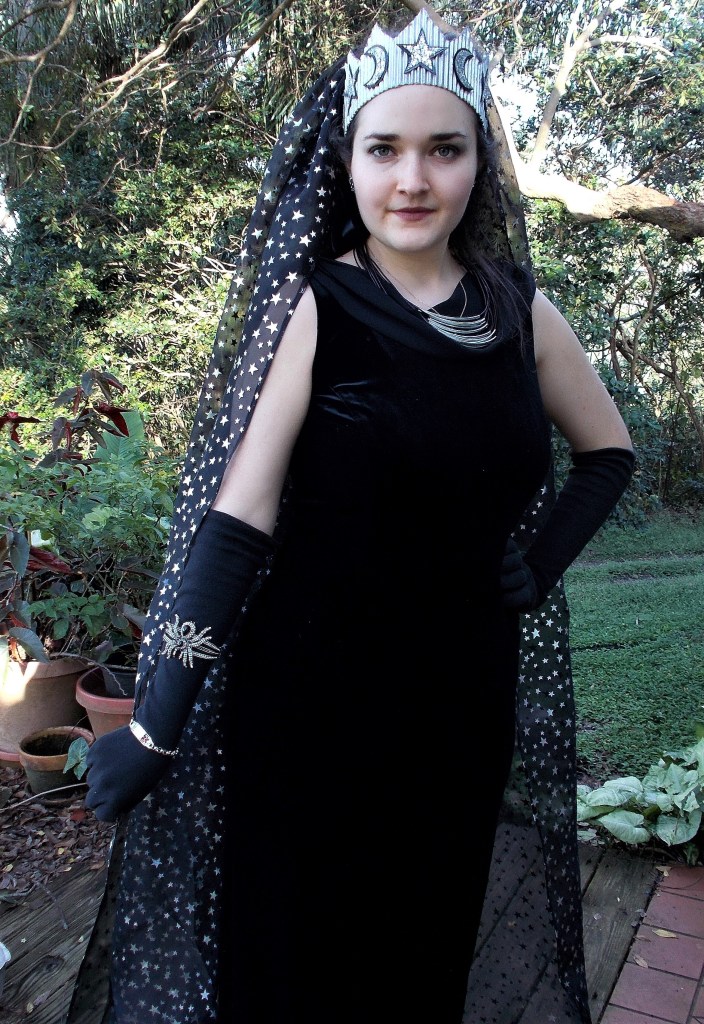
I had a long black velvet dress in my closet ─ that was a running start ─ and now I needed to accessorize the pitch black gown to fully realize its nocturnally regal potential. A queen needs a crown, right ? I thought so, too, and cut a pattern out of a corrugated cardboard box, spray painted it silver, and glued on separately cut star and moon shapes (spray painted and glittered) to the tiara. Silky black ribbons were used as the fastener. The Queen had her crown !

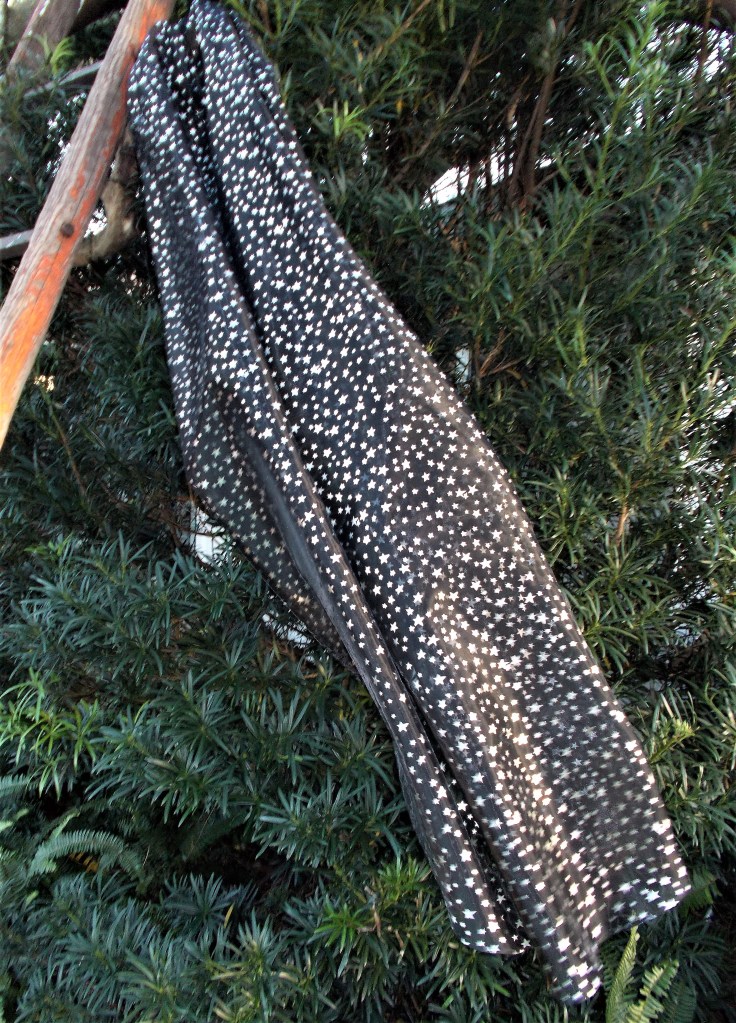
“But what else ?” I pondered. The idea of wearing various accessories whisked through my mind, but when I spotted a shimmery black organza printed with silver stars online, I knew I had found my answer. What could be more stunning than a floating veil of the night sky ? Using 2 yards of fabric, I gathered one widthwise edge and sewed it onto a hair comb. To the opposite widthwise edge, I drew arced lines creating a circular perimeter around what became the bottom of the veil. All raw edges and selvedges were finished and voilà ─ a veil ! Just look at how it sparkles in the evening breeze…

With all the articles combined together (including my long black gloves and jewelry), the outfit’s celestial beauty belied the cruelty of the Queen.

Psst ! This outfit also became my Halloween costume for the year. My bedazzled spider bracelet simply begged to be taken trick-or-treating…

As charming as the starry night, Die Zauberflöte goes down as my favorite Mozart opera. The music dazzles and the story is uplifting. But I’m a sucker for fairy tales, after all…

Toi, Toi, Toi,

Mary Martha

Cast and Credits:

Die Zauberflöte ─ Wolfgang Amadeus Mozart (1791)
Live in HD air date: October 14, 2017

Cast:
Pamina ─ Golda Schultz
Tamino ─ Charles Castronovo
Papageno ─ Marcus Werba
Queen of the Night ─ Kathryn Lewek
Sarastro ─ René Pape
Speaker ─ Christian Van Horn

Credits:
Conductor ─ James Levine
Production ─ Julie Taymor
Set Designer ─ George Tsypin
Costume Designer ─ Julie Taymor
Lighting Designer ─ Donald Holder
Puppet Designers ─ Julie Taymor, Michael Curry
Choreographer ─ Mark Dendy
Live in HD Director ─ Gary Halvorson
Host ─ Nadine Sierra

La Bohème ─ Mimì

My pastor once referred to the plot of La Bohème as “the hippies in Paris.” And after catching a past Met performance of La Bohème on TV one evening, I had to agree. Rebellion against authority, communal living, and starving artists flood the stage with the modes of their free-spirit culture. While one of the most popular operatic works, which has influenced a host of artistic projects outside of opera houses (i.e Rent), I was not initially won over by the loose morals of “The Bohemians”. However, my indifferent attitude did not prevent me from taking the trip to the theater when a fresh cast mounted the open garret of Franco Zeffirelli’s iconic 1981 production. “I’ll give it another chance…” I reasoned.

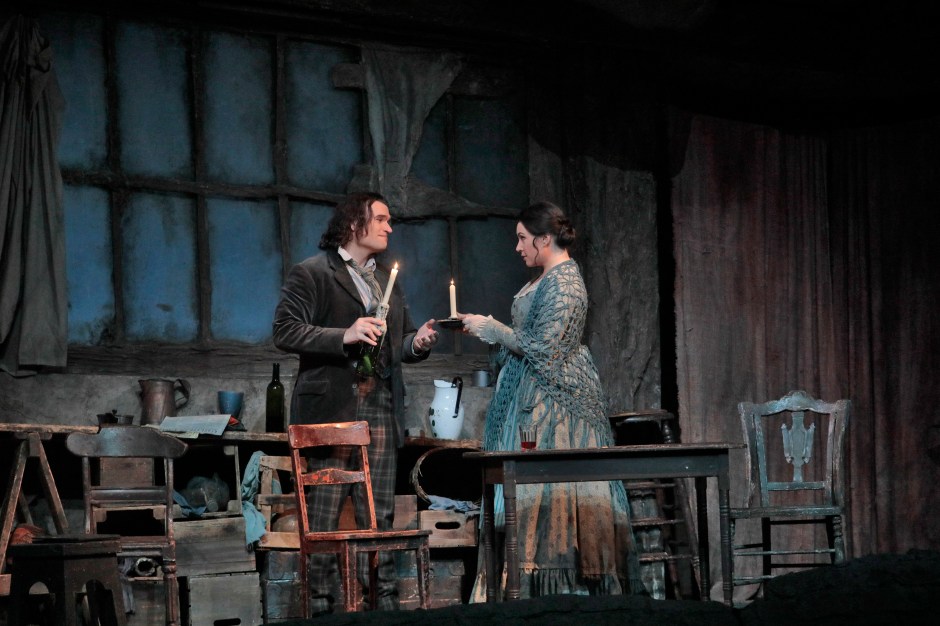
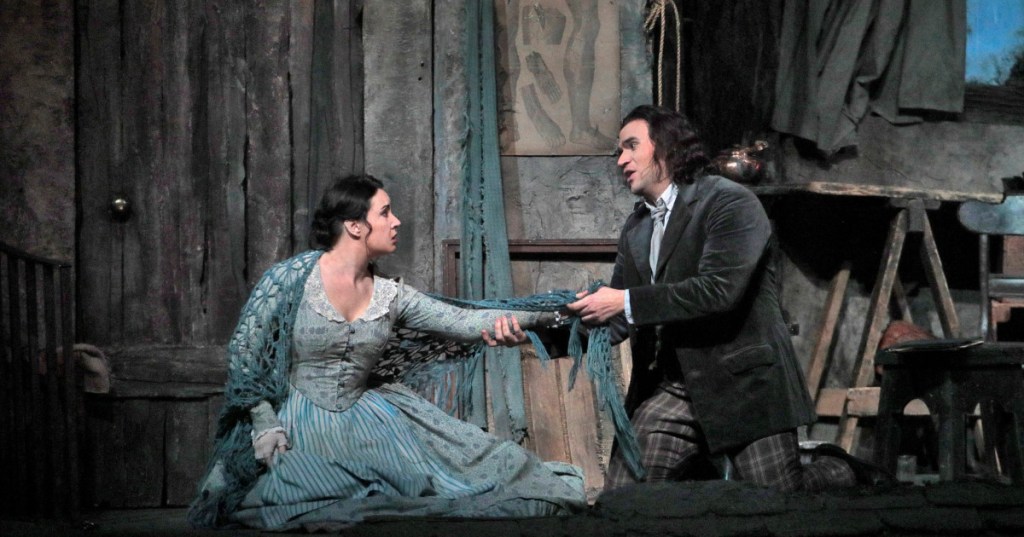
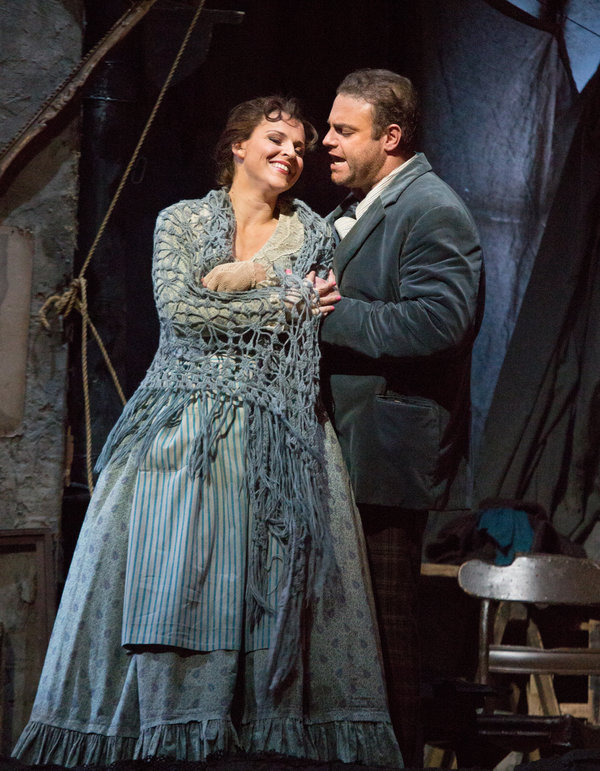
Matthew Rose as Colline, Michael Fabiano as Rodolfo, Alexey Lavrov as Schaunard, and Lucas Meacham as Marcello in La Bohème / Metropolitan Opera

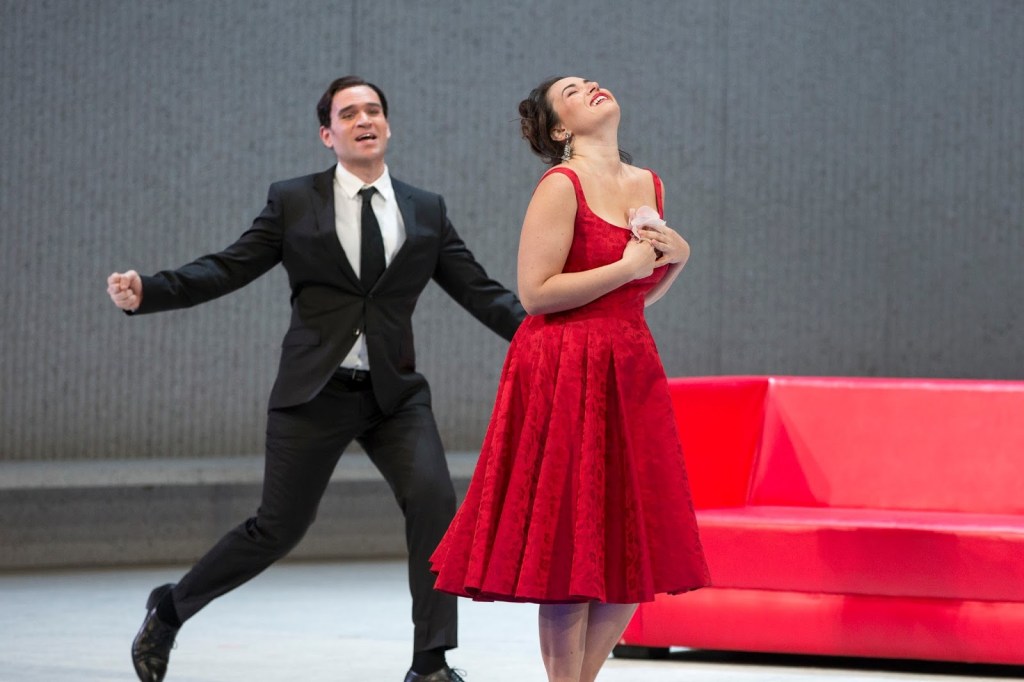
The pairing of Sonya Yoncheva and Michael Fabiano felt like an old photograph stuffed into an album presently displaced. They looked familiar, but where had I seen them…? Oh, yes─ in La Traviata just a year earlier. However, their wigs and wardrobes had changed drastically from the days of suits and satin sundresses.

Did my second viewing of La Bohème transform my opinion of Puccini’s lovable opera ? Not particularly. While anticipating my favorite melodies (I judge a soprano by the number of goosebumps on my body when listening to “Sì. Mi chiamano Mimì”) was an entertaining highlight, I still wasn’t as emotionally moved by the plot as I had hoped. Perhaps the third time will be the charm…

A scene from La Bohème / Metropolitan Opera

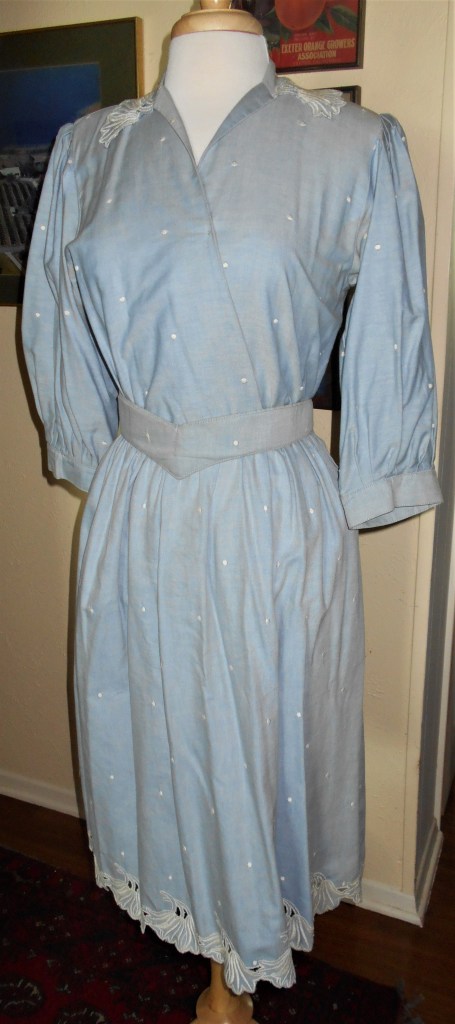
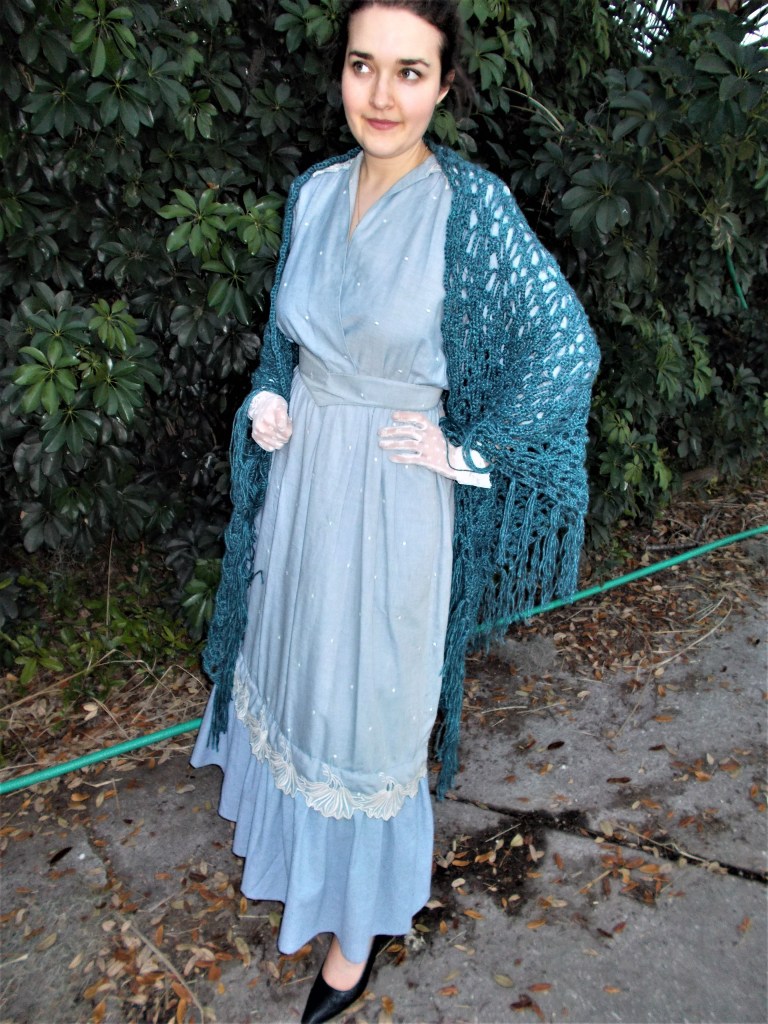
There are times when an opera costume should be interpretive. This was not one of those occasions. No, I knew from the instant I decided to make plans for attending La Bohème that I would dress head to toe as either Mimì or Musetta. Since the more recognizable of the two is the former, and since masquerading as the latter would throw me into a mid-season panic of having to sew something from scratch, I threw in my chips for Mimì. The dishwater blue frock ─ so iconic to Zeffirelli’s sickly sweet Mimì ─ could easily be mimicked with the blue chambray dress in my mother’s closet.

A staple from my mother’s closet ─ her blue dotted chambray dress with lace

But it needed more…

The original dress, which is from the 1970’s or 80’s, hit at the mid-calf level, but this was too short for the floor length skirts of the 1830’s. I remedied my malady with a matching chambray ruffle, which I attached to the bottom hem of the dress.

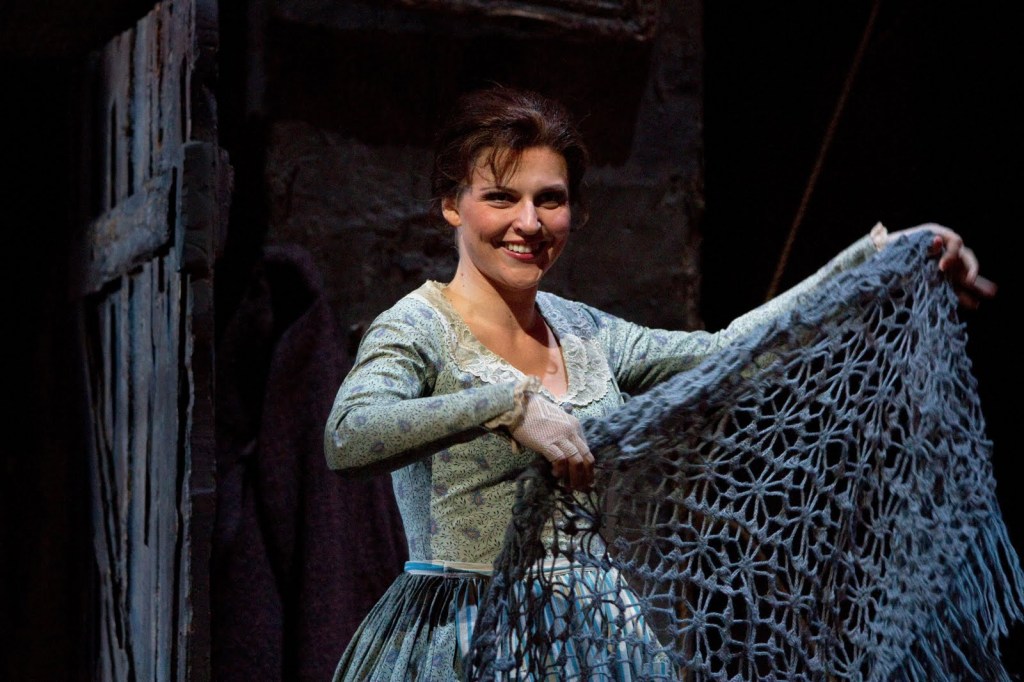
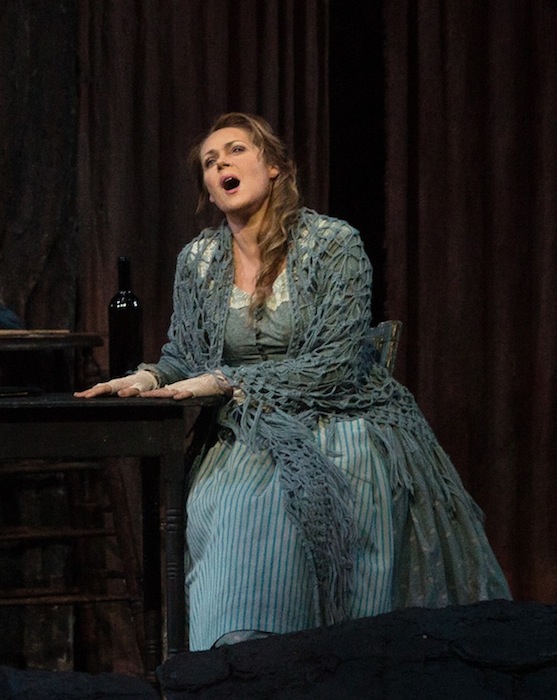
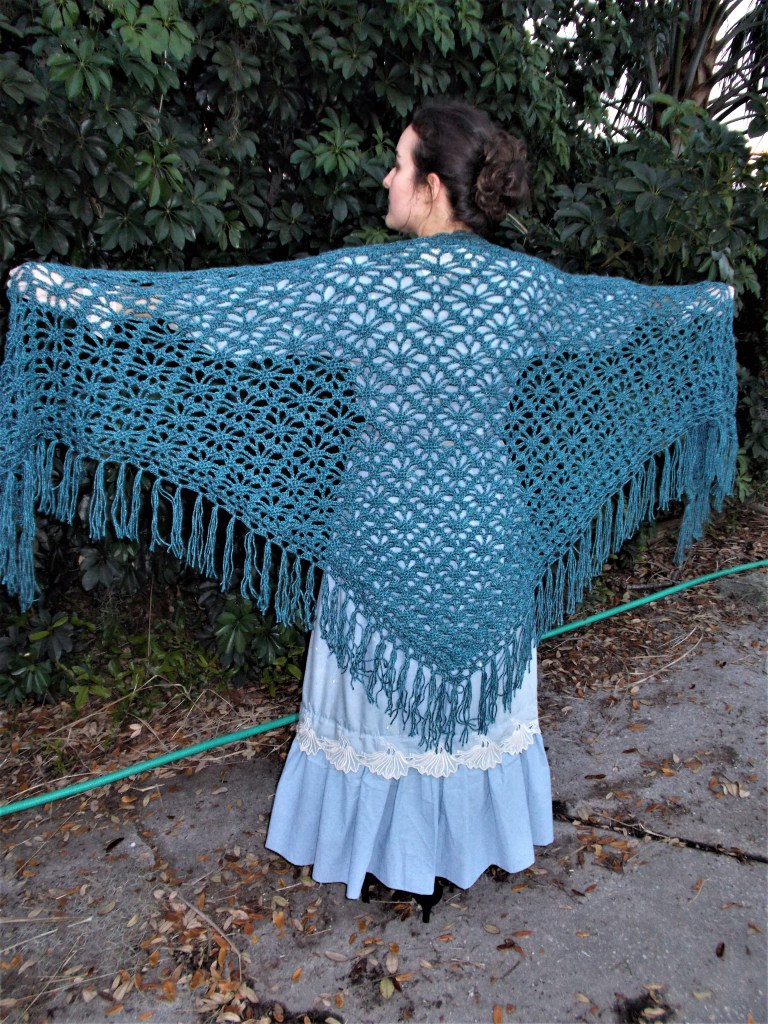
Now I needed the shawl… Mimì is nothing without her crocheted shawl ! A plethora of images from past Met performances guided me when choosing a pattern…

Here’s the pattern I used: https://shyamanivas.blogspot.com/2017/06/latticed-spider-shawl-1.html

I devised my own border scheme based on the production pictures and with a pair of lace gloves and upswept hairstyle… voilà─ Mimì !

“Yes, they call me Mimì”… at least they did at the theater that day ! It’s always fun to replicate the style of a character to the nth degree and Mimì was a relative breeze. Although I’m not counted among the lovers of La Bohème, I’m certain that Puccini’s tunes will draw me back again someday. But next time, I plan to chart a new course for my costume… look out, Musetta, I’m coming for you !

Susanna Phillips as Musetta / Metropolitan Opera

Toi, Toi, Toi,

Mary Martha

Cast and Credits:

La Bohème ─ Giacomo Puccini (1896)
Live in HD air date: February 24, 2018

Cast:
Mimì ─ Sonya Yoncheva
Rodolfo ─ Michael Fabiano
Musetta ─ Susanna Phillips
Marcello ─ Lucas Meachem
Schaunard ─ Alexey Lavrov
Colline ─ Matthew Rose
Benoit/Alicindoro ─ Paul Plishka

Credits:
Conductor ─ Marco Armiliato
Production ─ Franco Zeffirelli
Set Designer ─ Franco Zeffirelli
Costume Designer ─ Peter J. Hall
Lighting Designer ─ Gil Wechsler
Revival Stage Director ─Gregory Keller
Live in HD Director ─ Matthew Diamond
Host ─ Kelli O’Hara

Samson et Dalila

It’s a well-known fact that opera is a breeding ground for steamy passages of heart-searing love and passion. Whether through a gripping duet of vocal intensity or timely choreography, an attendee of the opera ─ especially a shy one ─ should be prepared for some “seat squirming”. And so, I braced myself for an assumptive afternoon of red hot heat in a retelling of one of the most notorious couples of biblical proportions: Samson and Delilah.

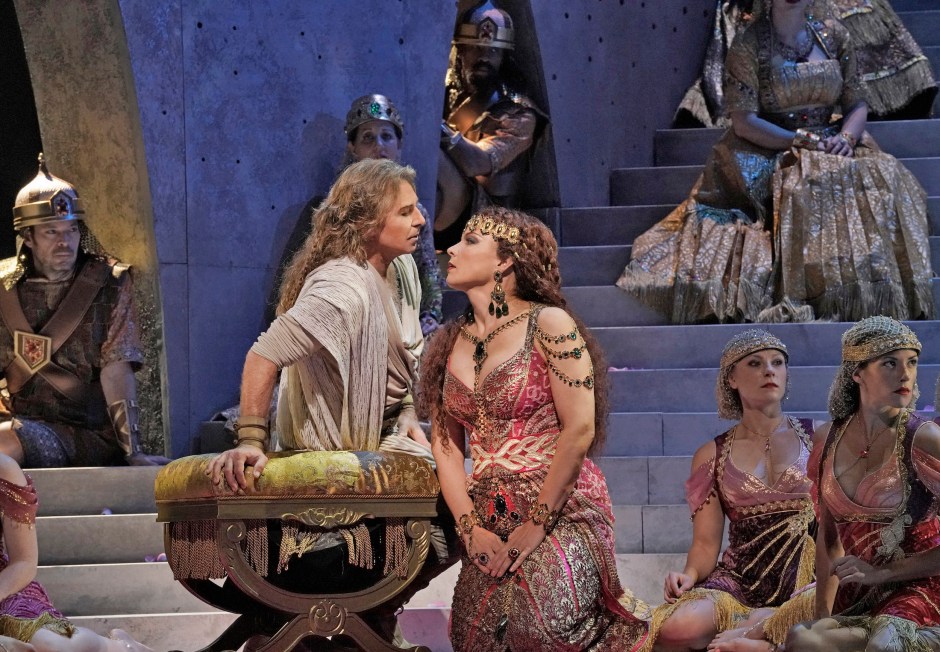
Elīna Garanča and Roberto Alagna in Samson et Dalila / Metropolitan Opera

This new production was hyped because of its starring cast. When Elīna Garanča and Roberto Alagna were teamed together for Carmen in 2009, the fireworks were undeniable, so it has been said by many. Now, almost 10 years later, the two rejoined the stage in hopes of rekindling their chemistry.

Roberto Alagna and Elīna Garanča in Carmen / Metropolitan Opera

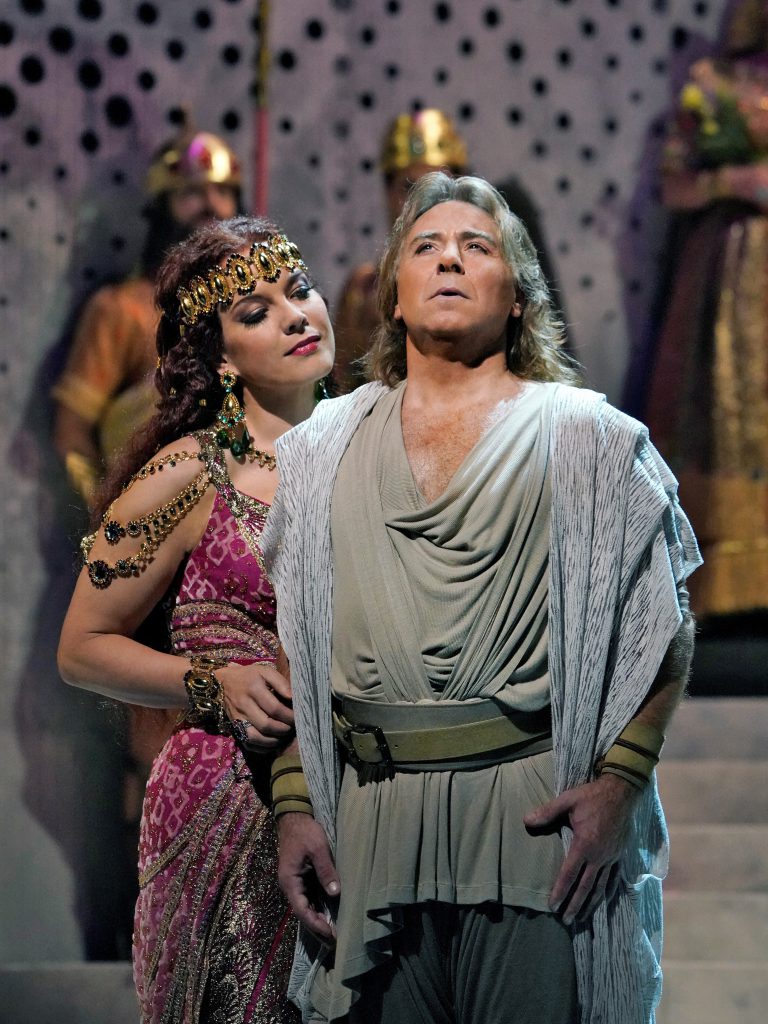
Although I had not seen the performance of Carmen with Elīna and Roberto, I wasn’t overwhelmed by what I saw in Saint-Saën’s Samson et Dalila. Both performers did well on their own, but I wasn’t moved by their “passion”. Perhaps my expectations were too high, or maybe those same anticipations were more deflated by the cartoonish sets and costumes. Samson’s hair, which was not nearly as long as I had hoped, dangled over a swath of heathered jersey knit and the neon lamé and garish design features on Dalila’s gowns were almost an insult to the rich potential for styling this opera. Pooh !

Elīna Garanča as Dalila and Roberto Alagna as Samson in Samson et Dalila / Metropolitan Opera

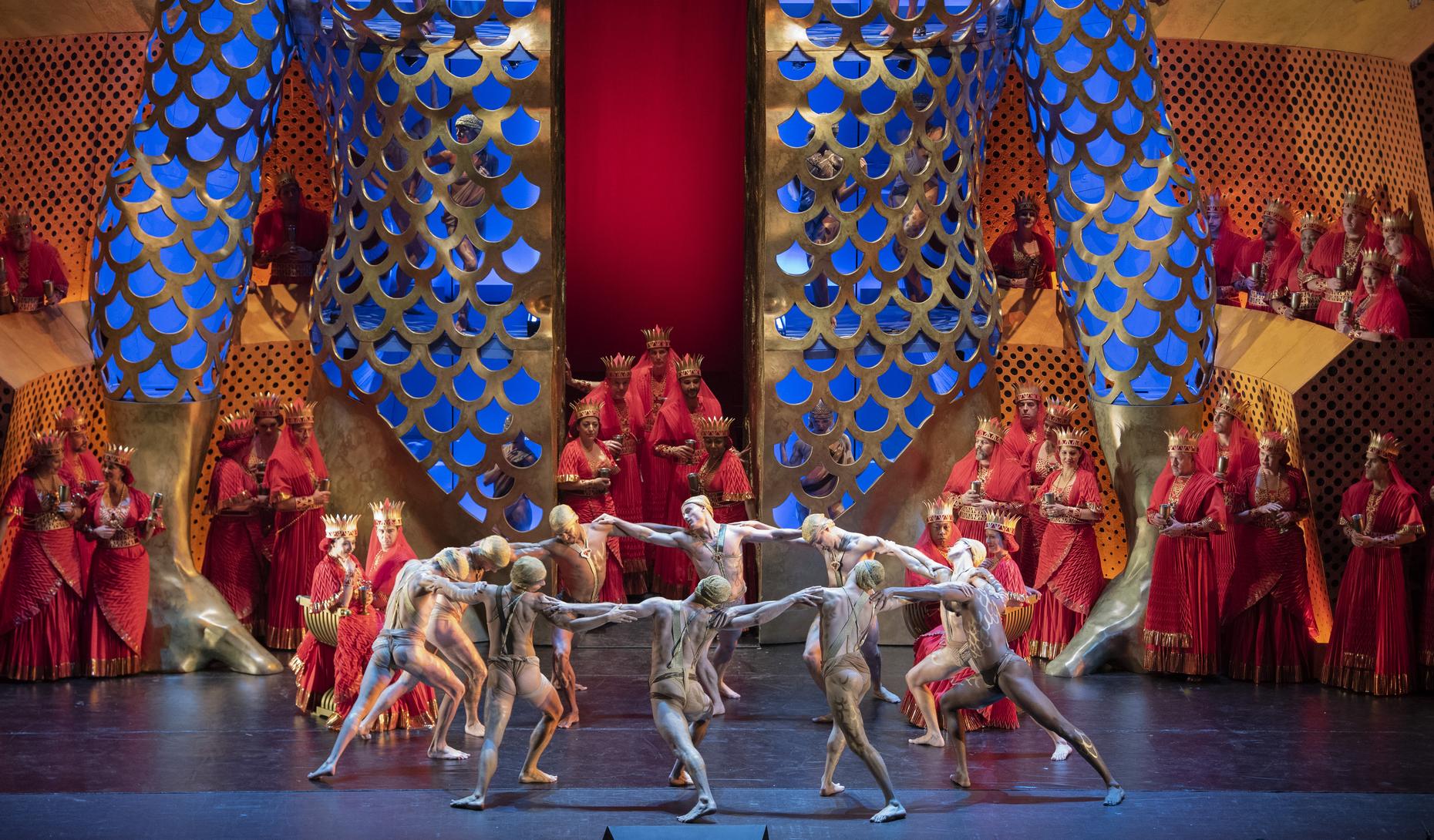
Musically, my favorite moment came during the Bacchanale, which sizzled with Middle Eastern flair and energy. The corresponding ballet, however, was far more revealing than what my unprepared eyes had estimated. Remember what I said about seat squirming ? Well, it happened here.

The Bacchanale from Samson et Dalila / Metropolitan Opera

Reputed as a Philistine femme fatale, the excitement to dress as Dalila bubbled within me like a hot spring in an arid desert. However, with a new production, costuming can be a peculiar challenge since the non-existence of past performance photos brings about a crap shoot risk: will the costumes in the opera mimic those worn in the released promotional still shots ? It’s a gamble, but one of an intense ruminating kind. For Samson et Dalila, the promotional media looked to be geared toward a 1970’s disco glam/modern vibe with Elīna Garanča appearing to look like a sultry screen siren.

With that approach, I was thunderstruck by an idea after seeing a model dress on the Corset Academy website:

Courtesy of the Corset Academy

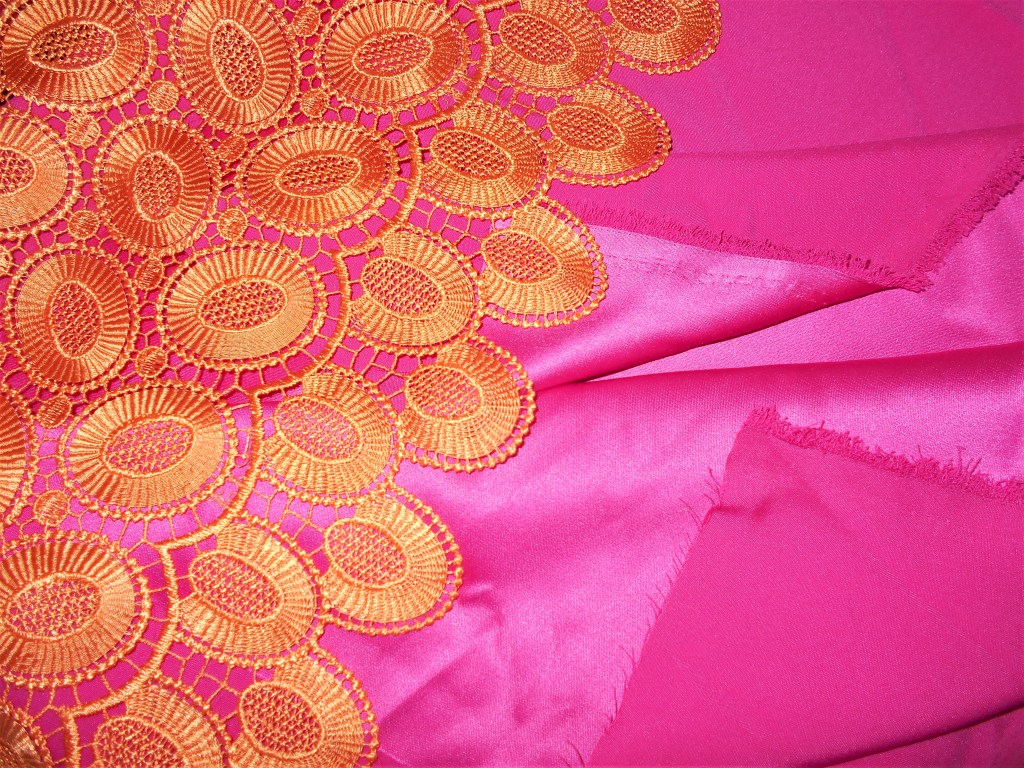
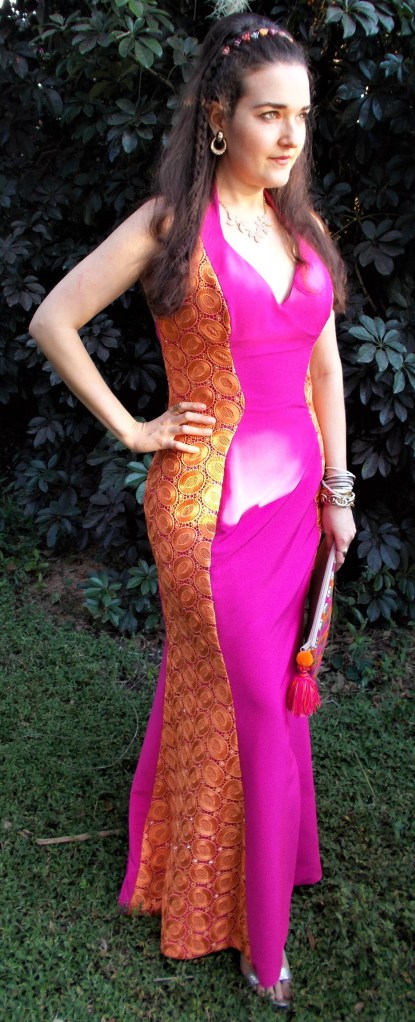
The dress reminded me of the raspberry pink halter neck gown worn in the promos and I had a dynamic plan for the design of my own: bright fuchsia satin and funky orange lace for the side panels.

Several mock-ups were created to manually model the curved lines of the side panels; the finalized muslin pieces were then cut and placed on the satin and lace for sewing. But during the fitting of the lining, I learned something had seriously gone awry: the dress was skin tight and I could barely move ! The next 10 days were spent letting out the seam allowances with mediocre results. Finally, it dawned on me that the only way the dress was going to fit was if I cut “expander” panels and sewed them to the back vertical edges of the dress. Crisis averted !

“Expander” panels sewn to back edges of dress

Although the cleverly concealed error wasn’t my ideal method of creating a dress, a hindsight look into the process taught me that I shouldn’t stuff my mock-ups too tightly ─ the cotton muslin became stretched and therefore rendered a faulty reading on the measurements. Lessons learned during sewing are invaluable for future creations.
In the end, I was elated with the design of the dress and how it hugged my body like a slippery satin snake. My mother styled my hair in “Desert Goddess” fashion, which was inspired by Olga Borodina’s Dalila from the Met in 1998.

Plácido Domingo and Olga Borodina in Samson et Dalila, circa 1998 / Metropolitan Opera

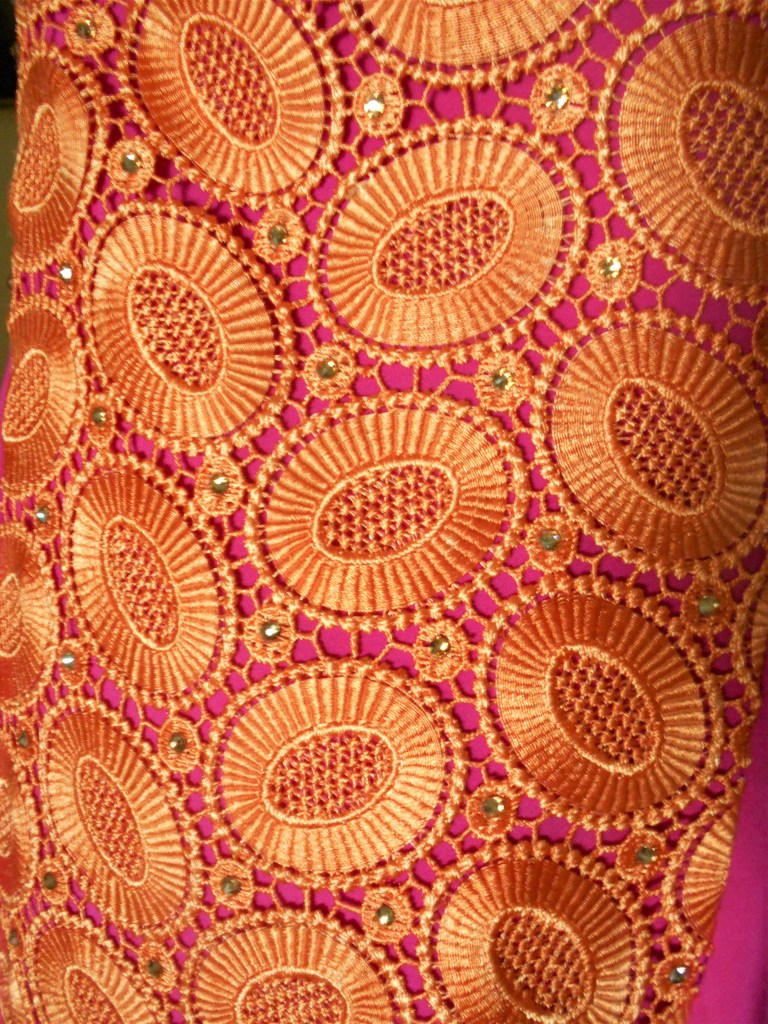
While my wrist was weighted in gold and leather bracelets and my shoes sparkled with the glints of Arabian sands, the real showstopper to this ensemble was the presence of glittering Swarovski crystals (over 500 of them !) that adorned the circular insets on the lace. Pictures cannot prove their luminescence, but the crowd at the theater noticed…

Up close detail of the lace and crystals

Dalila: a sense of worldly glamour with the seduction of a lioness. Samson et Dalila: a lion cub outfitted in plastic rhinestones.

Toi, Toi, Toi,

Mary Martha

Cast and Credits:

Samson et Dalila ─ Camille Saint-Saëns (1877)
Live in HD air date: October 20, 2018

Cast:
Dalila ─ Elīna Garanča
Samson ─ Roberto Alagna
High Priest of Dagon ─ Laurent Naouri
Abimélech ─ Elchin Azizov
An Old Hebrew ─ Dmitry Belosselskiy

Credits:
Conductor ─ Sir Mark Elder
Production ─ Darko Tresnjak
Set Designer ─ Alexander Dodge
Costume Designer ─ Linda Cho
Lighting Designer ─ Donald Holder
Choreographer ─ Austin McCormick
Live in HD Director ─ Gary Halvorson
Host ─ Susan Graham

L'Elisir d'Amore

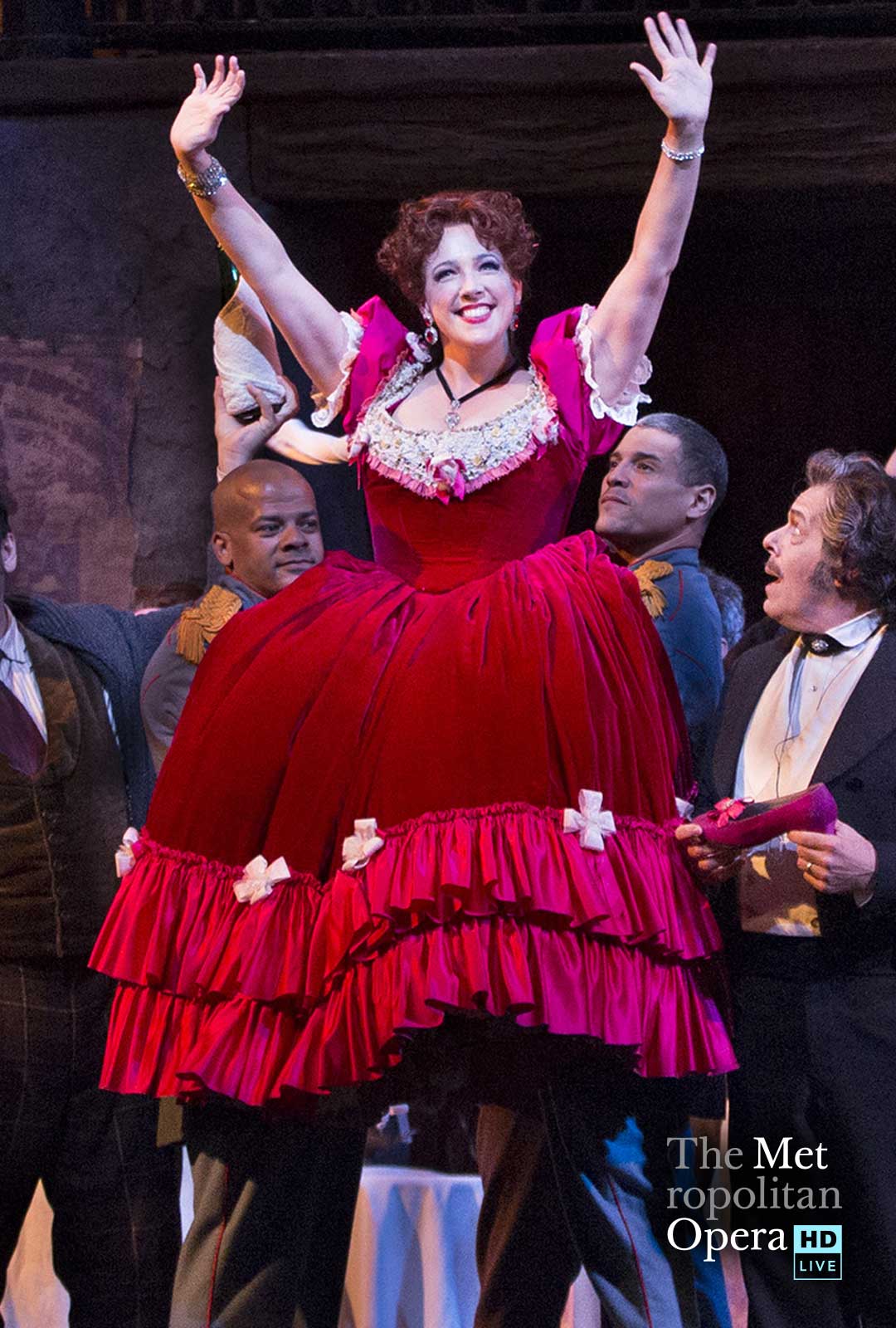
Love potions and promises of love. A snookered bumpkin, a wealthy proprietress, and… a bottle of Bordeaux ? Rife with hijinks and hilarity, it’s hard not to love Donizetti’s bubbly comedy. As a part of the Met’s “Summer Encores” series, the biggest draw to this past performance of L’Elisir d’Amore was its stellar cast. And therefore, the decision to make the long trip to a distant theater to see Anna Netrebko and Matthew Polenzani perform was an easy one.

Anna Netrebko and Matthew Polenzani in L’Elisir d’Amore / Metropolitan Opera

Did I mention that L’Elisir was funny ? So hilarious was Matthew Polenzani’s “drunk” scene that I was half bent out of my seat, cackling with laughter. The sweat that poured from Nemorino’s brow as he danced around the town square with his magic “elixir of love” was enough to fill a bucket ! Surreptitiously, Matthew Polenzani dropped to the floor in an act of pleading desperation while furtively taking the moment to wipe his perspiring hands (and nearly his drenched head !) on the stationary skirt of Anna Netrebko’s lingering Adina ─ a clever improvisation. Too bad the snooty people in the theater could not see the comedy of the ruse… they barely chuckled ! Stiff crowd, but nothing could spoil my amusement.

Anna Netrebko as Adina and Matthew Polenzani as Nemorino in L’Elisir d’Amore / Metropolitan Opera

I should say that amid all the chicanery and cavorting, the opera ended in the manner in which all comedies must wrap: with a wedding and a happy outcome ! No one ever weeps by the end of a Donizetti bel canto romp.

Anna Netrebko as Adina, Mariusz Kwiecien as Belcore, and Ambrogio Maestri as Dulcamara in L’Elisir d’Amore / Metropolitan Opera

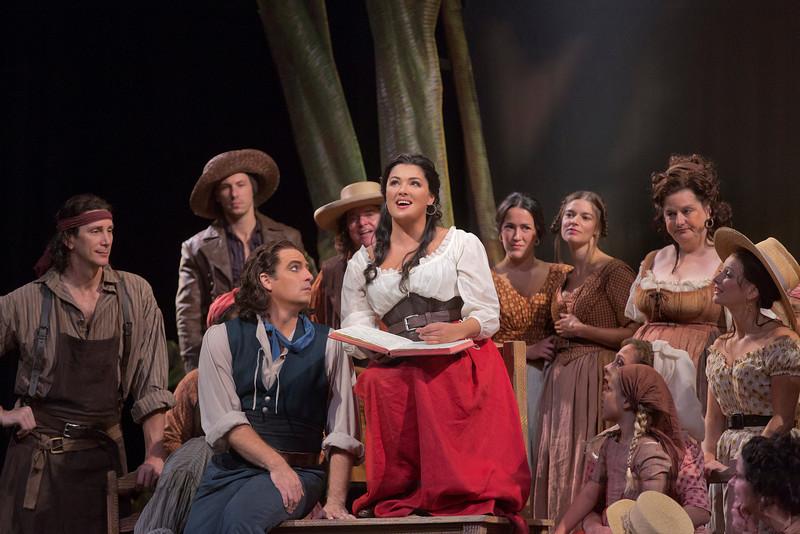
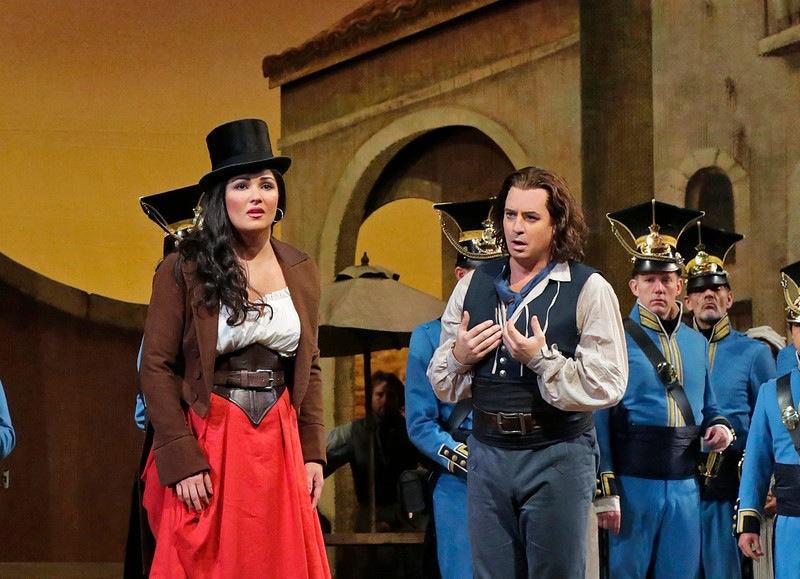
Adina, the opera’s heroine, is a wealthy landowner in the Basque region of France. In Bartlett Sher’s entertaining (and characteristically quirky) production, her attire consists of a peasant blouse, underbust corset, skirt, crop jacket with tails, and occasional top hat.

Mariusz Kwiecien as Belcore and Anna Netrebko as Adina in L’Elisir d’Amore / Metropolitan Opera

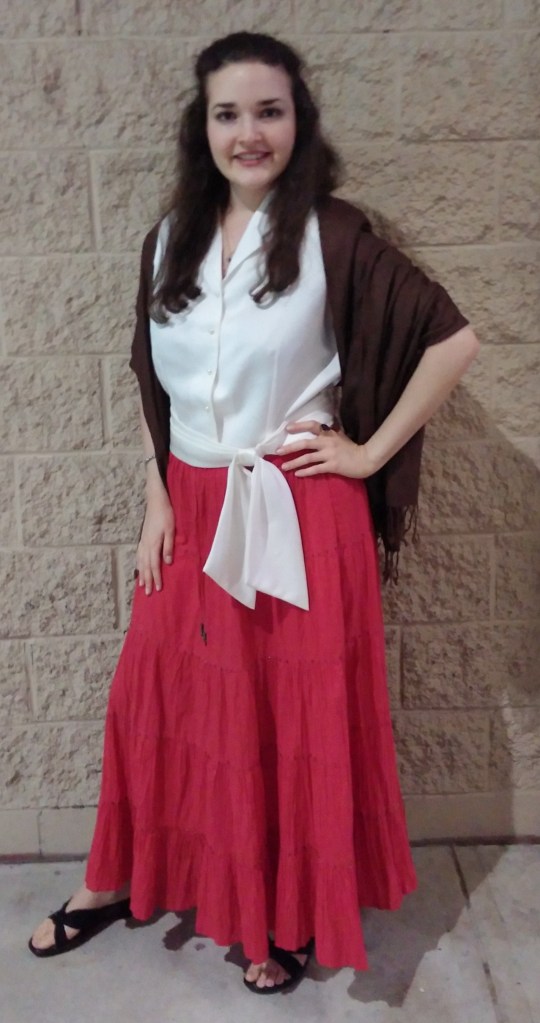
While the underbust corset and top hat were out of the question with such short notice, I felt I could pull together a knock-off look with garments I already had in my closets… and so I did ! The coral crinkle skirt has been in my mother’s closet for ages… who would have thought that it would be perfectly suitable for Adina ? And although my brown shawl can’t claim to be a crop jacket with tails, it certainly added to the coordinating color scheme of the model outfit worn in the opera.

But the real story belongs to the sashed blouse…

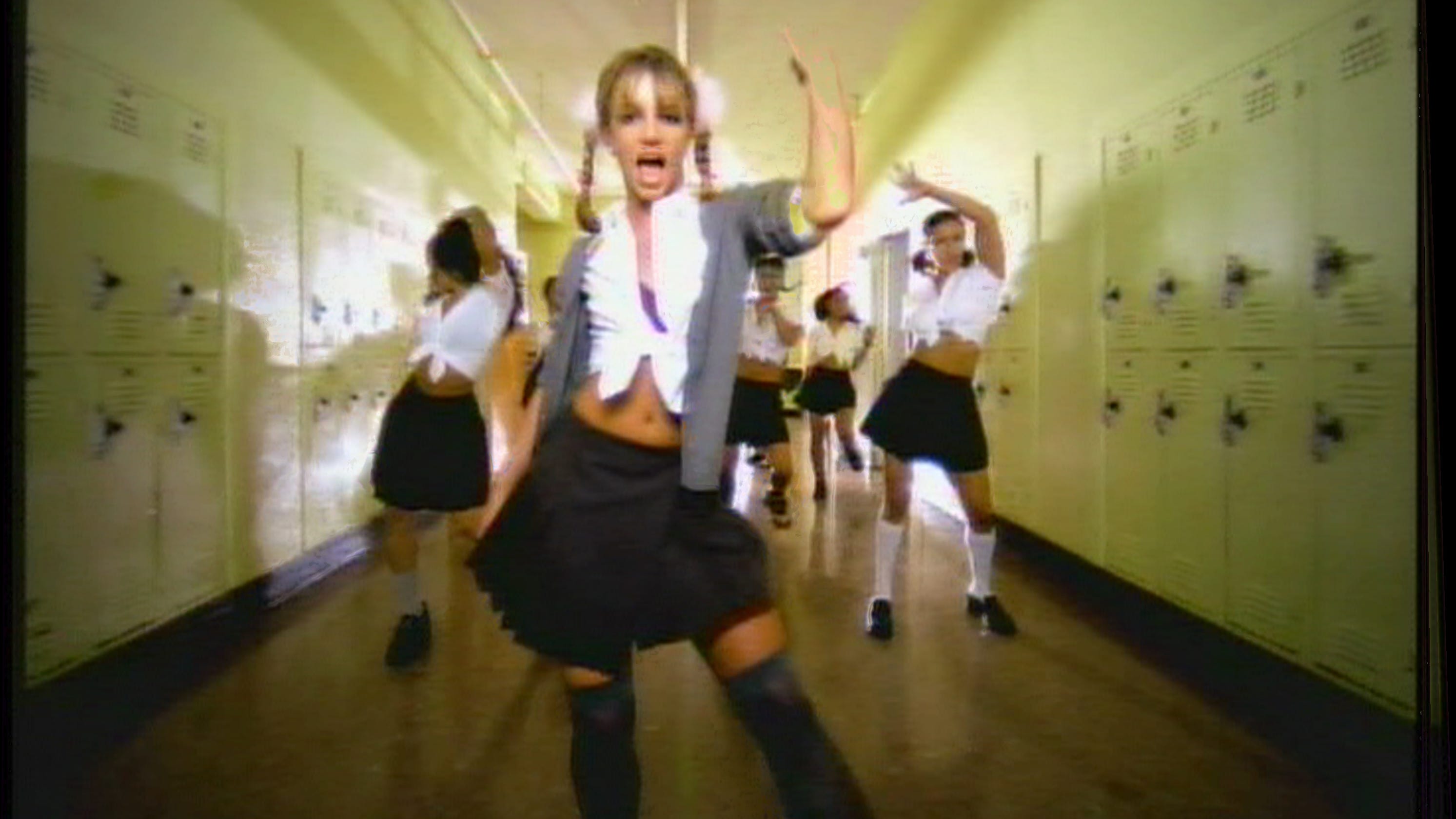
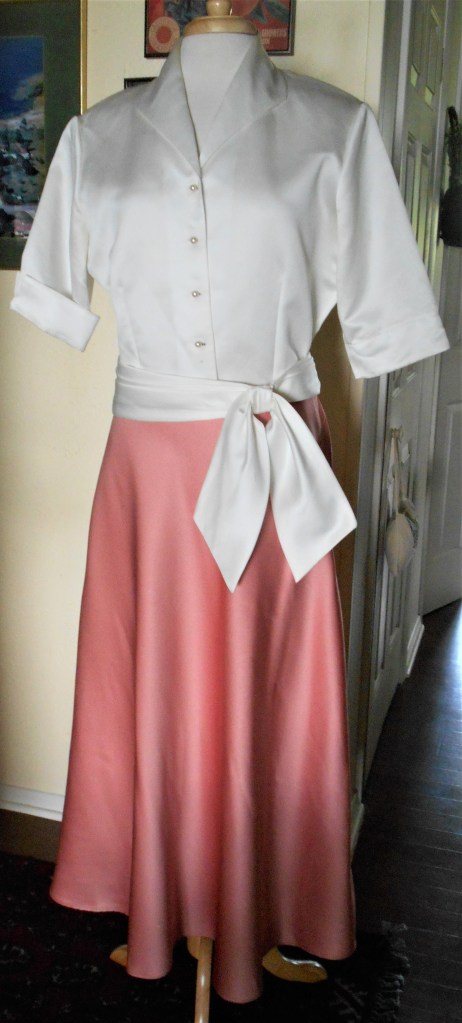
In 2004, my mother and I were bridesmaids in my aunt’s Colorado wedding where we wore matching peach satin skirts and ivory blouses with pearl buttons. Even as the years have passed, the two identical blouses have remained burrowed deep in our closets. Unsurprisingly, my original child’s blouse no longer fits… that is, unless I wanted to dress like Britney Spears from her “…Baby One More Time” music video.

Britney Spears in her “…Baby One More Time” music video

Maybe some other time…

For now, my mother’s blouse fits me fine and recalls to mind memories of my aunt’s autumn wedding day in Steamboat Springs. Here’s what the blouse looked like when paired with the peach skirt:

Look, 303 ! Doesn’t this bring back memories ?

A bridesmaid’s blouse worn as a costume to the opera ? That almost sounds like a crafty trick from L’Elisir d’Amore !

Toi, Toi, Toi,

Mary Martha

Cast and Credits:

L’Elisir d’Amore ─ Gaetano Donizetti (1832)
Live in HD air date: October 13, 2012
(Encore seen: June 29, 2016)

Cast:
Adina ─ Anna Netrebko
Nemorino ─ Matthew Polenzani
Belcore ─ Mariusz Kwiecien
Dulcamara ─ Ambrogio Maestri

Credits:
Conductor ─ Maurizio Benini
Production ─ Bartlett Sher
Set Designer ─ Michael Yeargan
Costume Designer ─ Catherine Zuber
Lighting Designer ─ Jennifer Tipton
Live in HD Director ─ Gary Halvorson
Host ─ Deborah Voigt